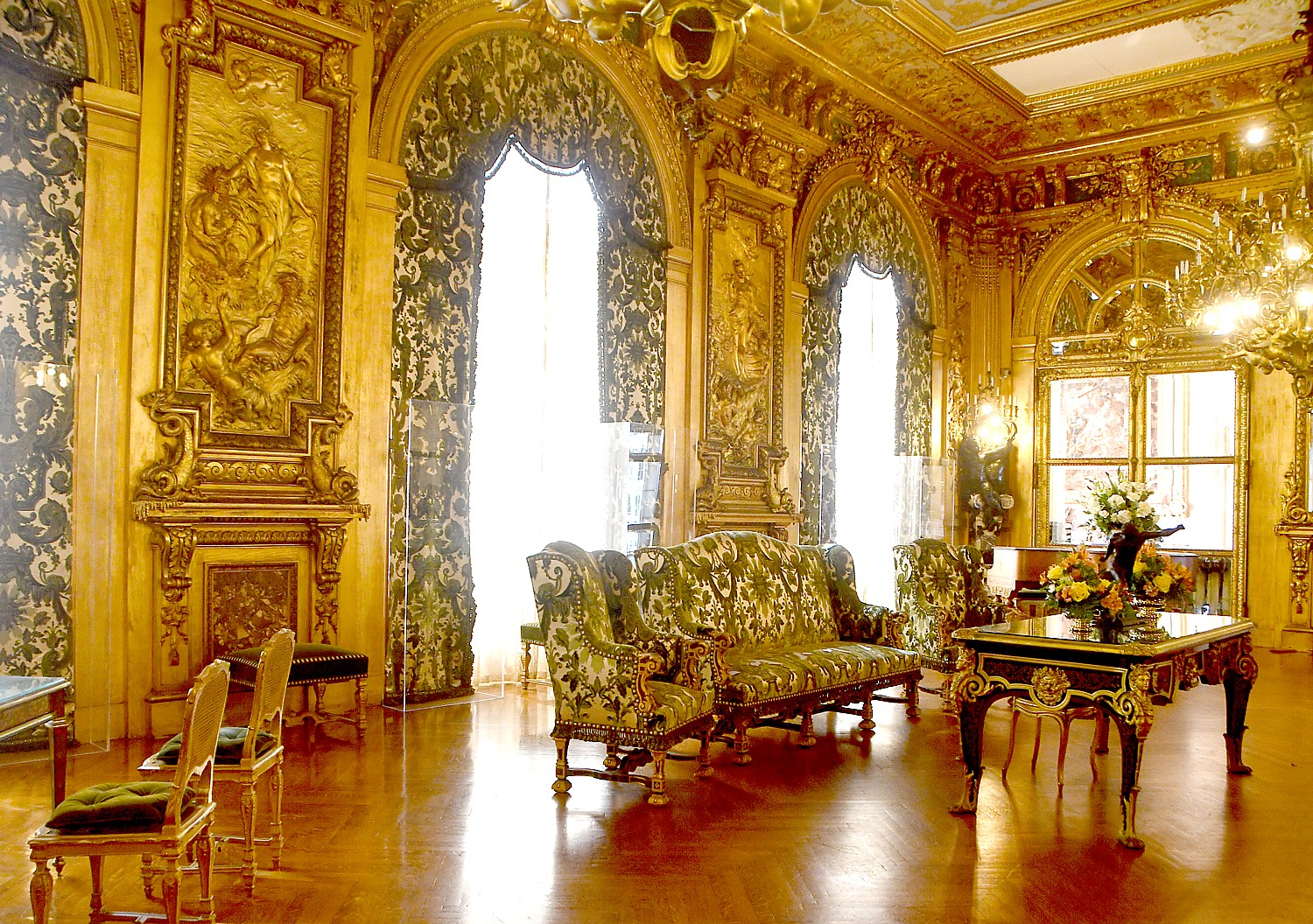
NEWPORT, R.I. – The Preservation Society of Newport County is offering new virtual tours of its historic houses and recent exhibitions as a free activity for people to enjoy while the house museums are closed.
Visitors to the Preservation Society’s website, NewportMansions.org, now can take self-guided 3-D tours through The Elms, Marble House, Isaac Bell House and Hunter House. They can also virtually experience two previous exhibitions at Rosecliff: “John James Audubon: Obsession Untamed” and “Tiffany Glass: Painting With Color and Light.”
“We have had a phenomenal reaction to this,” Preservation Society CEO and Executive Director Trudy Coxe said. “Everybody has been through a Newport Mansion, but it gives you the opportunity, on a room-by-room basis, to zoom in on an object you might not have noticed.”
Preservation Society Research Fellow Sébastien Dutton is working to complete more of these virtual tours, and they will be posted as they are finished. This work is being supervised by Leslie Jones, Director of Museum Affairs and Chief Curator.
“This technology allows us to digitize the interiors of all our historic properties, in an effort not only to bring these spaces and their content to the public, but also as a matter of our core preservation principles,” Jones said. “It allows for us to not only visually account for the interiors and their aesthetics and the placement of objects, but it also allows us to have accurate measurements of every floor space, every ceiling height, down to the millimeter.”
The Preservation Society of Newport County, Rhode Island, celebrating its 75th anniversary in 2020, is a nonprofit organization accredited by the American Alliance of Museums. It is dedicated to preserving and interpreting the area’s historic architecture, landscapes, decorative arts and social history. Its 11 historic properties – seven of them National Historic Landmarks – span more than 250 years of American architectural and social development. For more information, visit NewportMansions.org.
This is huge for New York State’s tourism and recreational
opportunities: Governor Andrew M. Cuomo’s is proposing a $300 million plan
to reimagine the Erie Canal by creating recreational activities on the Canal to
boost tourism and recreational
fishing, mitigate flooding, enhance irrigation and restore wetlands.
“When the Erie Canal was created in the
19th century it set the state and the nation on a path to
prosperity, and this year we will repurpose the canal to fit our state’s
21st century needs,” Governor
Cuomo said. “This bold and visionary plan to transform
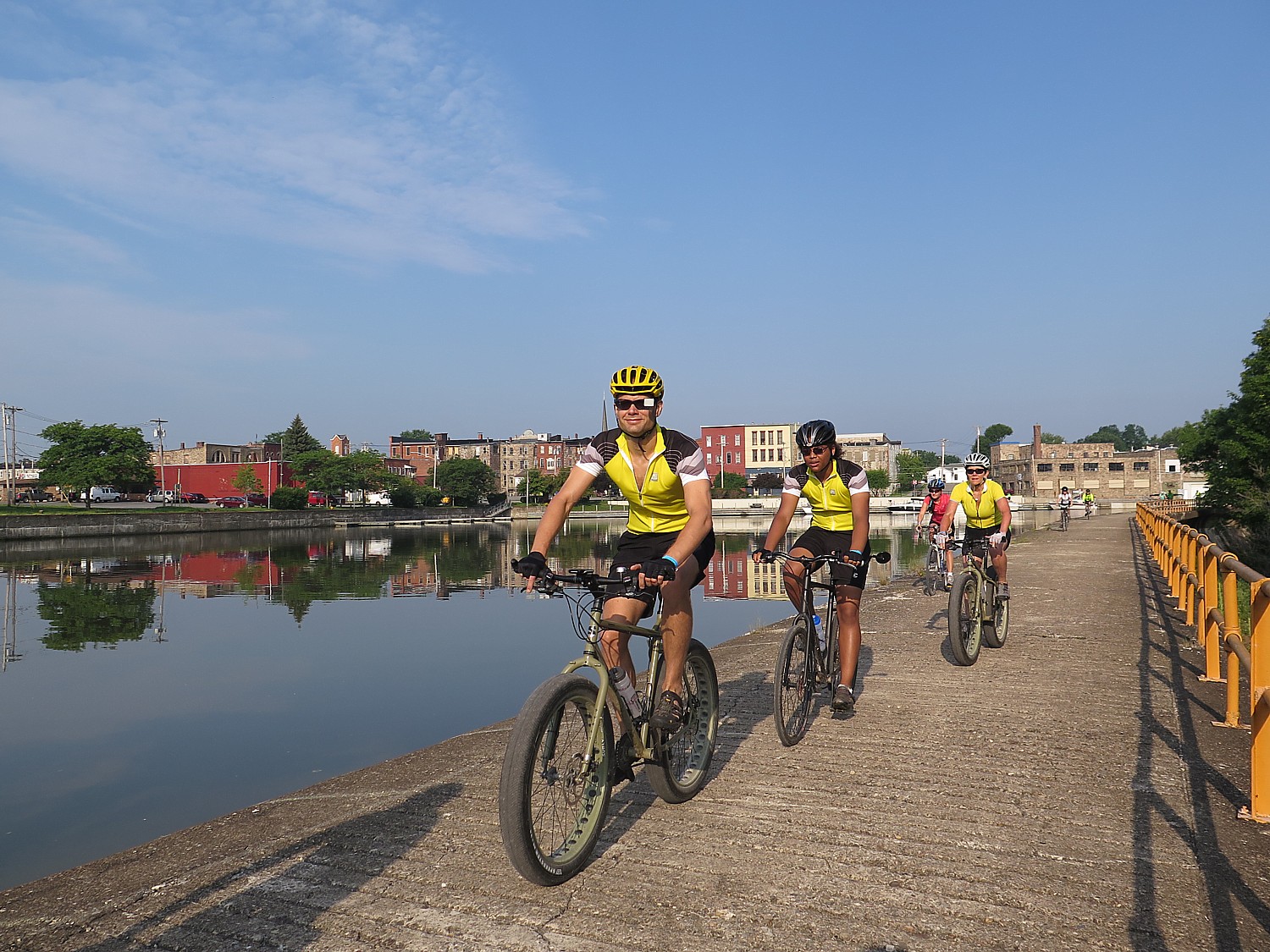
this historic waterway will build on the success of the Empire State Trail (750
miles of connected bikeways), grow tourism across Upstate New York,
improve resilience of today’s Canal communities and ensure the
economic sustainability of the waterway into the future.”
“The canals have played a crucial role in New York’s history and
growth, and with the implementation of these new exciting projects, the canals
will remain a vital force and make a positive contribution to the economic
well-being and quality of life in the 225 communities they travel through,”
said Lieutenant Governor Kathy Hochul.
A first phase of funding starting this year – through the New
York Power Authority Board which oversees the Canal Corporation as a subsidiary
– includes a $100 million economic development fund to invest
in communities along the Canal and a separate $65 million investment
in solutions that will help prevent ice jams and related flooding in the
Schenectady area.
The remaining $135 million of the plan’s funding will subsequently be allocated
to research recommended by the Reimagine Task Force, as well
as to solutionsrelated to flood mitigation,
invasive species prevention and ecosystem restoration.
New Economic Development Fund for Canal Communities
In the first phase of the program, a $100 million economic
development fund will support projects that adaptively reuse canal
infrastructure to enhance water recreation, tie the Canal’s new
recreational improvements to the Governor’s Empire State Trail,
celebrate historic canal structures, and develop unique canalside
attractions and activities. Roughly $25 million of that will be allocated
immediately to a set of initial projects:
Connecting Communities: The “Brockport Loop” project in Monroe County will
connect SUNY College at Brockport to the Empire State
Trailand the village of Brockport through
the transformation of a canal guard-gate into a
pedestrian bridge and overlook, with a supporting grant of $2 million
from the Ralph Wilson Foundation.
Celebrating “Iconic Infrastructure”:Interactive, hydro-powered illumination of Canal “movable
dams” – initially in
Amsterdam and Canajoharie in the
Mohawk River valley – will celebrate the Canal’s
heritage and its history as an engineering marvel.
Expanding Water Recreation: A new whitewater destination, at the north end of Cayuga Lake near Seneca
Falls, will rely on existing water control infrastructure to construct an
active water sports course adjacent to the Montezuma National
Wildlife Refuge, to increase eco-tourism and sport visitors to the region.
Adapting Industrial Property for New
Uses: Winner of the Reimagine the Canals competition,
a canalside pocket neighborhood, will be developed by Madison
County in Central New York at a former industrial
property in Canastota along the Old Erie Canal –
demonstrating a new model for 21st century canalside living.
Developing Destination Accommodations: The
historic Guy Park Manor, on the Mohawk River in
Amsterdam, will be reborn as a hospitality destination and a
pedestrian bridge constructed
across the already-existing Canal lock will provide
access to additional overnight accommodation along the Empire
State Trail on the opposite side of the river.
World-Class Fishing and Restored Wetlands
To create world-class fishing in Western New York, the new
plan recommends managing water releases from the Canal to enhance fish
habitat, improve angling opportunities, and extend the fall fishing season in
Lake Ontario tributaries. It also includes funding to expand public
fishing access along key streams in Orleans, Monroe and Niagara
Counties. In addition, it identifies a program to divert Canal water to restore and
re-nourish wetlands in Central New York that were compromised a
century ago by the Canal’s construction. This will allow areas in
close proximity to the Montezuma National Wildlife Refuge, a migratory
stopover for more than 1 million birds each
year, to be significantly enhanced to further
attract naturalists, locals, and visitors from throughout the region and
beyond.
Ideas in this plan originated from the Reimagine the
Canals Task Force recommendations, launched by
Governor Cuomo in May of 2019 to pursue a
comprehensive investigation of how the 195-year-old Erie Canal
could be reimagined for the 21st century. The Reimagine
the Canals Task Force Report was just released.
The Task Force engaged with municipal leaders, stakeholders, local
business owners, scientists and other experts, along with community
members, to identify opportunities and solutions that support a
new vision for future investments in the waterway. Many of the ideas that the
Task Force explored came from the completed Reimagine the Canals competition, held
last year by the New York Power Authority and New York State Canal
Corporation. SUNY’s Rockefeller Institute of Government, on behalf of
the Task Force, conducted a series of outreach sessions during the summer
in five canal communities – Lockport, Brockport, Schenectady, Utica and
Syracuse – to solicit new ideas from the public at large. Ideas were also
solicited on a Reimagine the Canals website, offering more
distant canal users an opportunity to provide their views to the Task Force.
The “Reimagine” initiative builds on successful
efforts by Governor Cuomo to invest in the canal corridor, including
the state’s Downtown Revitalization Initiative and successful Taste NY program, which have stoked new industries,
businesses and housing in canal communities. Harnessing the Canal’s full
potential to attract more tourism and recreation is a key focus of the
Initiative. Governor Cuomo and state agency and authority staff
will collaborate with Empire Line communities and continue to consult with
Task Force members and other stakeholders to ensure the success
of projects as they move forward.
There are 1.6 million trips taken annually on the Erie Canal Trailway,
the former towpath used by mules and horses to pull barges in the canals’ early
days. The Trailway is part of Governor Cuomo’s Empire State Trail,
which at 750 miles will be the largest state multi-use trail network when
completed in late 2020. Governor DeWitt Clinton began work on the original
Erie Canal on July 4, 1817.
In addition to investing $300 million in the Canal System, there are
also plans to create two new state parks in the
Hudson Valley, add 4,000 acres of land to parks and introduce a $3 billion
“Restore Mother Nature” bond act.
Meanwhile, registration has opened for the
22nd Annual Cycle the Erie, eight-day 400-mile, fully supported biking/camping
trip, from Buffalo to Albany, operated by Parks & Trails NY, taking place
July 12-19, 2020. For information on
Cycle the Erie Canal, call Parks & Trails New York, 518-434-1583, email eriecanaltour@ptny.org or visit www.ptny.org/cycle-the-erie-canal.
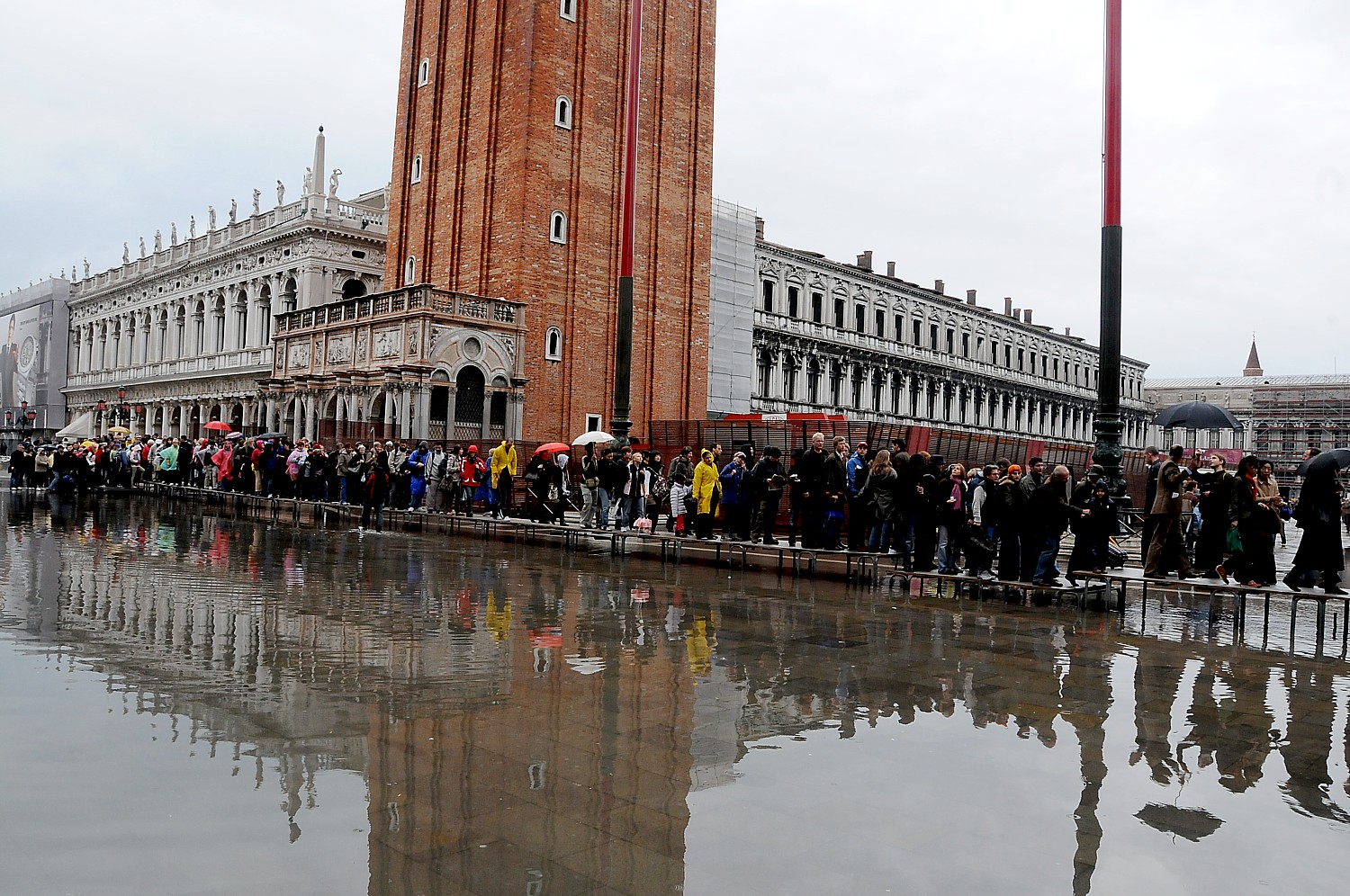
Save Venice, an American nonprofit organization, has formed an Immediate Response Fund for artistic and cultural heritage recovery following the extreme floods (acque alte) that devastated Venice between November 12-17, 2019. The Embassy of Italy in Washington DC and Save Venice are partnering to raise funds for the Immediate Response Fund, which will support urgent relief efforts and preventative conservation. Donations can be made at savevenice.org/donate by selecting the Immediate Response Fund, and will be matched by Save Venice, dollar for dollar, up to $100,000 through February 2020.
“Save Venice was born in the aftermath
of the terrible floods of November 1966, and the November 2019 floods
underscore the urgency of our mission,” said Save Venice Chairman Frederick Ilchman. “The Immediate Response
Fund will allow Save Venice to move quickly to mitigate the effects of
corrosive saltwater and deposits in flooded churches, museums, and comparable
public buildings, to support emergency conservation treatment for paintings,
stonework, floors, wooden furnishings, and books and archival documents, as
well as to undertake preventative conservation to minimize damage from future
floods. We will continue to do what our track record proves we do best: protect
Venice’s irreplaceable artistic heritage.”
The Italian Ambassador, Armando Varricchio, noted, “Venice has deep
historical roots and is a modern and vibrant city, innovative and open to the
future with a strong entrepreneurial and industrial background. Venice and
Venetians are resilient. They will rise to this challenge,” adding that “the legacy
of the past, the energy and dynamism of nowadays Venice are the solid
foundations on which to build a bright future for the city.”
Dr. Ilchman said, “We are honored to
partner with the Embassy of Italy on this important initiative to make a difference
for Venice, and we express our gratitude to Ambassador Varricchio.”
Headquartered in New
York City, Save Venice maintains a full-time office in Venice with staff
members diligently overseeing each conservation site. They are collaborating
with conservators and local authorities to assist with damage assessment and
plans for the recovery process. As new environmental challenges arise, Save
Venice and its family of experts are prepared to devise and implement
additional preservation protocols. The Board of Directors of Save Venice is
convinced that the time to act is now.
Save
Venice is a leading American non-profit organization dedicated to
preserving the artistic heritage of Venice, Italy for the world. Founded in
response to the floods of 1966, the worst in recorded history, and incorporated
in 1971, Save Venice has since worked tirelessly to preserve, protect, and
promote the art and culture of Venice and has funded the conservation of more
than 550 projects comprising over 1,000 individual artworks. In 2015, Save
Venice established the Rosand Library & Study Center in Venice, creating a
nexus for the research of Venetian art, history, and conservation. Save Venice
also provides grants for fellowships, exhibitions, and publications to advance
Venetian scholarship and conservation.
Each year, the National Trust for Historic
Preservation puts out an emergency call to protect the most endangered historic
places. This year’s list of America’s 11 Most Endangered Historic Places sheds
light on important examples of our nation’s heritage that are at risk of
destruction or irreparable damage. Over 300 places have been listed in its
32-year history, and in that time, fewer than 5 percent of listed sites have
been lost.
The 2019 list includes a diverse mix of
historic places across America that face a range of challenges and threats,
from climate change to inappropriate development to neglect and disuse.
Find out what you can do to support these
irreplaceable sites:
Primarily settled by formerly enslaved
people after the Civil War, Dallas’ Tenth Street Historic District includes a
collection of buildings dating from the late 19th to early 20th century. A 2010
change to a local ordinance allowed the city to obtain demolition permits for
houses less than 3,000 square feet without Landmark Commission review, which is
substantially increasing the rate of demolition. To date, at least 70 of the
district’s 260 homes have been demolished.
Nashville’s Music Row is a world-class
musical mecca that harbors more than 200 music-related businesses, making it
unlike any other place in the world. Out of its modest homes and large
commercial buildings has emerged an unmatched canon of music recordings across
a wide variety of musical styles, which has delighted music fans for
generations.
Industrial Trust Company Building, Providence, Rhode Island
An iconic part of the Providence skyline,
the 1928 Industrial Trust Company Building is under threat due to deterioration
and deferred maintenance after six years of vacancy. While this site is located
within a qualified “Opportunity Zone” (an area eligible for capital gains tax
incentive benefits), there is no redevelopment plan for the so-called Superman
Building, and its future is in question. Read More.
Ancestral Places of Southeast Utah, Southeast Utah
Listed in the Green Book, the Excelsior
Club was a leading private African American social club in the Southeast,
hosting artists like Nat King Cole and Louis Armstrong during its heyday. The
Art Moderne building needs significant investment. The property is currently
listed for sale for $1.5 million, but even if a buyer is found, a reuse plan
and significant investments are necessary to ensure a strong future. Read more.
Hacienda Los Torres—built in 1846 during
the height of Puerto Rico’s coffee industry by Jose Maria Torres—is one of the
last historic coffee plantation houses on the island and one of the oldest
remaining structures in Puerto Rico. It’s also associated with the “Grito de
Lares” revolt and the Spanish-American War.
Long-term deterioration and the effects of
multiple hurricanes, including Hurricane Maria in 2017, threaten this historic
site. Support saving Hacienda Los Torres.
This complex, a unique example of early
Modernism with bas-reliefs depicting scenes of everyday life, was New York
State’s first housing project constructed specifically for African Americans.
Today, the site is vacant and many of its structures are open to the elements.
The Buffalo Municipal Housing Authority has proposed demolishing the complex to
construct replacement housing.
The Bismarck-Mandan Rail Bridge connects
Bismarck and Mandan, North Dakota. Constructed in 1883, it was the first rail
bridge built across the upper Missouri River. The iconic bridge has been
recognized as an International Site of Conscience for the role it played in
opening the western United States to white settlement—and the resulting
profound impacts to Native American communities—but it has been proposed for
demolition by railway company BNSF.
The Coast Guard is in consultation with
BNSF and other parties under Section 106 of the National Historic Preservation
Act. The Coast Guard has proposed a conditional permit that would require BNSF
to retain the historic bridge until after an adjacent new bridge is
constructed, in order to allow time to identify a preservation solution for the
Bismarck-Mandan Rail Bridge. Tell the Coast Guard not to allow demolition of this
iconic bridge.
For more information, follow us on Twitter and join the conversation using the
hashtag #11Most.
Niagara Falls, NY – The much-anticipated Niagara Falls Underground Railroad Heritage Center, an experiential museum that reveals authentic stories of Underground Railroad freedom seekers and abolitionists in Niagara Falls, has just opened, May 4. A project of the Niagara Falls Underground Railroad Heritage Commission in cooperation with the Niagara Falls National Heritage Area, a program of the National Park Service, the Heritage Center inspires visitors to recognize modern injustices that stem from slavery and to take action toward an equitable society. It is located in the former 1863 U.S. Custom House attached to the new Niagara Falls Amtrak Station.
“As the first new cultural attraction in the City of Niagara Falls in over 35 years, opening the Underground Railroad Heritage Center is an incredibly significant event, both to the people of Niagara Falls, and throughout the world,” said Bill Bradberry, President and Chair, Niagara Falls Underground Railroad Heritage Commission
The Heritage Center’s permanent exhibition, One More River to Cross, features the rich stories of the Underground Railroad in Niagara Falls, the crucial role played by its location and geography, and the actions of its residents – particularly its African American residents. The Heritage Center’s immersive exhibits and cutting-edge interpretation affirmatively align with the principles of the International Coalition of Sites of Conscience, whose mission is to connect the past to modern social justice issues – “to turn memory to action.”
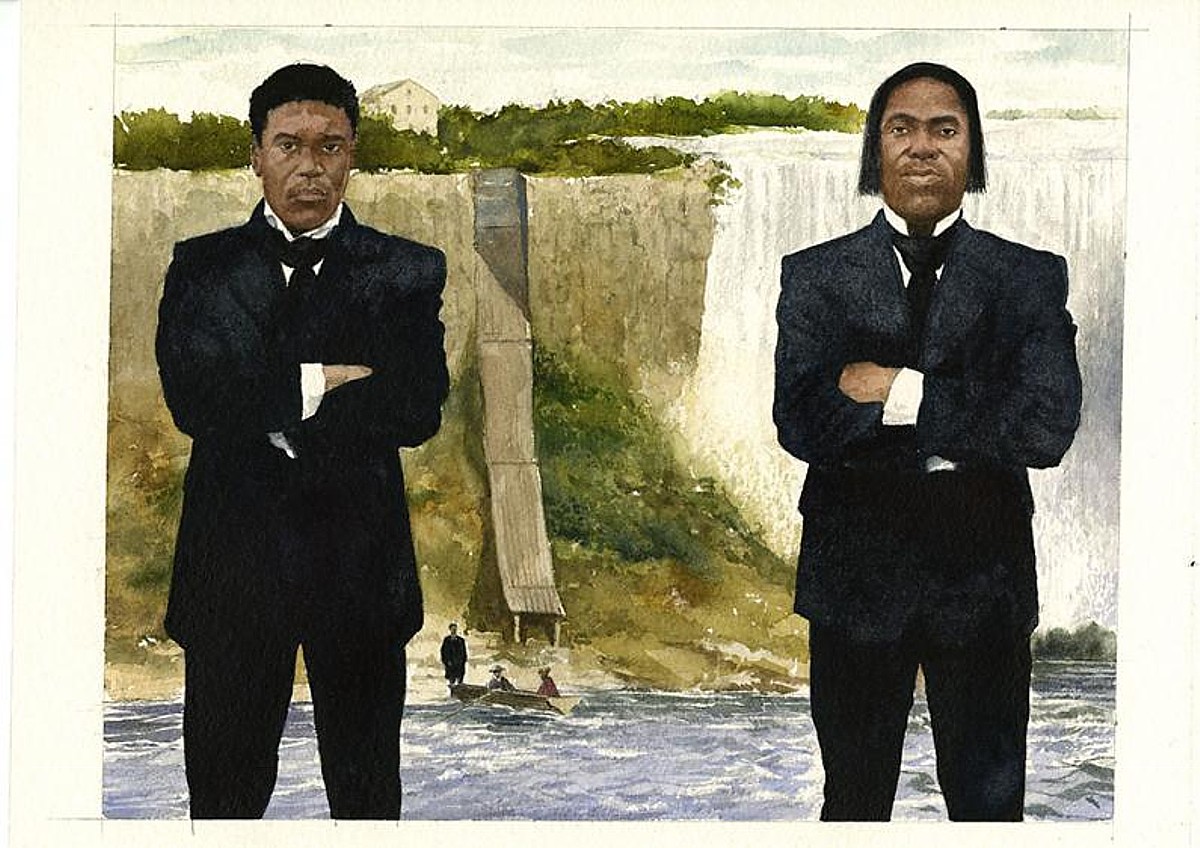
Through painstaking research, the exhibition presents engaging digital media, graphics, scenic built environments and facilitated dialogic programming as part of the visitor experience. Scenic exhibit components include a recreation of the Cataract House – a premier international hotel that employed an entirely African American wait staff, who helped uncounted numbers of freedom seekers to freedom in Canada, just across the Niagara River. Also included is a recreation of the International Suspension Bridge, built in 1848, and rebuilt in 1855 to incorporate rail traffic, where Harriet Tubman and other freedom seekers crossed the imaginary line from slavery to freedom. Stories are brought to life with powerful images by award winning illustrator and fine artist E.B. Lewis and voice-overs by Emmy Award winning actor Keith David.
“From the very beginning, the objective for the Heritage Center was to create an immersive experience that brings to life the stories of ordinary individuals who fought for freedom,” said Ally Spongr, Director and Curator, Niagara Falls Underground Railroad Heritage Center.
The new Heritage Center focuses on stories of courageous self-emancipation by freedom seekers. Throughout the exhibition visitors experience these stories and hear from individuals past and present with the hope that these stories and connections will allow for deeper engagement, consideration of new or different perspectives, and motivation to action.
“The Niagara Falls Underground Railroad Heritage Center will not only shine a light on the significant role Niagara played at this critical time in our nation’s history but the stories of the brave men and women whose contributions to this movement we must never forget. I want to commend the Heritage Commission for their painstaking efforts to bring this educational and interactive experience to life for generations to come,” said Niagara Falls Mayor Paul Dyster.
This project is led by the Niagara Falls Underground Railroad Heritage Commission, chaired by Bill Bradberry, directed and curated by Ally Spongr, and based on research by lead historian Dr. Judith Wellman. The Heritage Center’s design-build teams include Studio Tectonic of Boulder, Colorado, Richard Lewis Media Group of Boston, Massachusetts, and Universal Services Associates, Inc., of Philadelphia, Pennsylvania.
Niagara Falls Underground Railroad Heritage Commission, 825 Depot Avenue W., Niagara Falls, NY 14305, niagarafallsundergroundrailroad.org.
Vagabond Small Group Tours of Ireland’s 12-day “Giant Irish Adventure” circumnavigates the island nation.
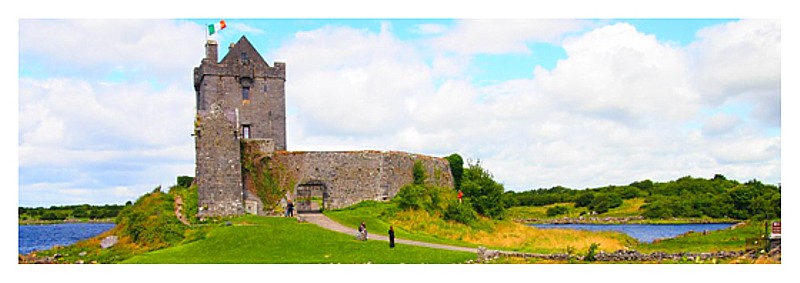
COUNTY WICKLOW, Ireland–Vagabond Small Group Tours of Ireland’s 12-day “Giant Irish Adventure” circumnavigates the island nation. Beginning in Dublin, guests poke around impregnable fortresses, ring forts, beehive huts, manor houses and castles. The common element to the sites is the stone – indestructible and a metaphor for the Irish spirit
Nature’s stone edifices also play a role in the Giant Irish Adventure that includes Ireland’s highest mountain range called the Macgillycuddy Reeks or black stacks of glacial-carved sandstone; the Cliffs of Moher of shale and limestone overlooking the Atlantic; and the Giant’s Causeway, a natural sculpture playground of basalt columns created by volcanic activities in the Atlantic Ocean a millennia ago.
Per person double rate of €2,769 includes the services of a highly trained professional Vagabond tour guide for 12 full days; 11 nights accommodation (4 nights B&B, 6 nights hotel, 1 night in a castle); 11 full Irish breakfasts; guided walks; entrance to most of the historical and archaeological sites and to some natural sites; demonstrations of local craftsmen at work; and all relevant fees and taxes. See: https://vagabondtoursofireland.com/tour/irish-tours-12-day-giant-irish-adventure/.
This tour caters to active travelers who want time aplenty to explore where they are by foot. Hikes of up to two hours are daily highlights. Some activities such as horseback riding, sea kayaking and surfing and biking in Killarney National Park are optional. The tour is flexible and guests can arrange to opt out of one activity and into another.
Among the historic stone structures guests may visit Dunluce Castle is a cliff-edge ruin from the 13th century, with views over the Irish Sea to Scotland; Stone Ring Fort (1700 BC) constructed by Bronze Age farmers as defenses against cattle thieves with such precision that no mortar was required; Glenveigh Castle and Gardens. a Victorian (1867) edifice in what is now Glenveagh National Park; the original owner drove poor tenants from the land so he could transform it into an aristocrats’ hunting playground; Donegal Castle was built in the 15th century on the site of a one-time Viking fortress; Abbeyglen Castle Hotel where the mountains of Connemara meet the sea was constructed in 1832 (overnight here); Beehive huts (Clochán) date to 5th century monastic settlements (think Luke Skywalker’s retreat in Star Wars); Blarney Castle dates to medieval times; kissing the Blarney Stone is said to bestow the gift of eloquence; Rock of Cashel or St. Patrick’s Rock from the 12th century boasts a Romanesque chapel harboring ancient frescoes.
On the daily walks and hikes, guests explore: Slieve Gullion Mountain, the highest point in Ireland which harbors Neolithic passage tombs; Cliffside Trail including 132 steps to Giants Causeway; Slieve League, the highest sea cliffs in Europe; Croagh Patrick, the famous holy mountain where every step taken means a sin forgiven; Cliffs of Moher, 700-foot sea cliffs; Kilkee Cliff Walk overlooking the Atlantic; Glacial valley of Lough Annascaul.
Governor Andrew M. Cuomo announced that the New York State Board for Historic Preservation has recommended adding 23 properties, resources and districts to the State and National Registers of Historic Places. The nominations reflect the striking diversity of New York State’s history and include the home of historic painter George Bellows in the Mid-Hudson Valley, a pocket park in Manhattan, one of the oldest tool and machine manufacturing facilities in Buffalo, and an 1855 eclectic Catskills retreat once home to “The Soda Fountain King” John Matthews.
“These nominations will help communities across this great state preserve the historic landmarks and sites that shaped New York’s rich heritage,” Governor Cuomo said. “By recognizing the very fabric of our cities and towns, New York is shining light on important sites and resources in every region, while supporting community development and encouraging residents and visitors alike to experience the diverse history and culture found in every corner of the state.”
State and National Registers listing can assist property owners in revitalizing buildings, making them eligible for various public preservation programs and services, such as matching state grants and state and federal historic rehabilitation tax credits. Since the Governor signed legislation to bolster the state’s use of rehabilitation tax credits in 2013, the state and federal program has spurred $3 billion of investment in historic commercial properties.
“This designation is an important step in helping the owners and caretakers preserve and improve these assets,” said Rose Harvey, Commissioner of the Office of Parks, Recreation and Historic Preservation. “The preservation of these diverse places will help bolster prosperity and quality of life across New York State.”
The State and National Registers are the official lists of buildings, structures, districts, landscapes, objects and sites significant in the history, architecture, archeology and culture of New York State and the nation. There are more than 120,000 historic buildings, structures and sites throughout the state listed on the National Register of Historic Places, individually or as components of historic districts. Property owners, municipalities and organizations from communities throughout the state sponsored the nominations.
Once the recommendations are approved by the state historic preservation officer, the properties are listed on the New York State Register of Historic Places and then nominated to the National Register of Historic Places, where they are reviewed and, once approved, entered on the National Register. More information and photos of the nominations are available on the Office of Parks, Recreation and Historic Preservation website.
Capital Region
Dunix, Cornwallville – The 1855 Catskill Mountain farmstead was purchased and transformed into a fanciful summer retreat for the family of “The Soda Fountain King” John Matthews (1808-1870), whose fortune was derived from pioneering soda fountain apparatus.
Whitehall Fire Station, Whitehall – The station was completed in 1913 to house the village’s first mechanized, gas-powered fire engine and moved by a team of horses to its present location in 1932 after its original site was claimed for the relocation of railroad tracks.
Central New York
Lipe-Rollway Corporation Building J, Syracuse – Constructed 1920-21, the building is a key site in the city’s diverse manufacturing heritage, known for round-the-clock production of transmissions for tanks and heavy equipment such as the 600-pound transmission for the M-4 General Sherman Tank.
Wampsville Presbyterian Church, Wampsville – The edifice of the first religious organization in Wampsville was built in 1830, altered in 1878, and expanded in 1891 and 1912-1915 while retaining many of its original architectural features.
Finger Lakes
The Lyons Downtown Historic District, Lyons – The district includes 256 resources that reflect the long history of Lyons from late 18th century settlement to early 19th century canal town and later as a governmental and industrial center that lasted well into the 20th century.
Long Island
The Japanese Bridge, Shelter Island – Built c.1905, the ornamental landscape feature designed by engineer and inventor Ernest L. Ransome is one of the only surviving traces of the estate of Francis Marion Smith, the owner of the Pacific Coast Borax Company.
Mid-Hudson Valley
George W. Bellows House, Woodstock – The house was built in 1921 as a summer residence by George Bellows (1882-1925), one of the most prominent young members of the “Ashcan School” of art, who was best known for this early work – typically of boxing matches and urban life painted in a rough, energetic, and bold style.
Kingston City Almshouse, Kingston – Constructed between 1872-1874, the Italianate style structure provided a home for Kingston’s aging and impoverished residents until 1948.
John H. and Sarah Trumbull House, Kingston – Built in 1876, the home was designed by noted architect Arthur Crooks, who blended Gothic features with the Stick style to create an impressive house nestled into the large rocks and ledges in the landscape.
New Guinea Community Site, Hyde Park – The archaeologically significant historic site within Hackett Hill Park was the location of an early free black community, active from ca. 1790 to ca. 1850 during the prolonged process of emancipation in New York, when rural settlements on or near established towns attracted recently freed black migrants who were looking for work, searching for family members separated during slavery, or hoping to find havens away from their former masters.
The Vernooy-Bevier Stone House, Wawarsing – The property includes a limestone house likely dating to the mid-point of the 18th century, as well as a remarkable collection of later 19th century farm outbuildings.
Mohawk Valley
The Upper Genesee Street Historic District, Utica – The buildings in the city’s commercial core embody the history of the community from 1825 to 1972, representing its years of economic success, subsequent decline, and efforts at rejuvenation as a pioneering project of the Urban Renewal program.
The Oneida Downtown Commercial Historic District, Oneida – The district reflects the historic evolution of the city, which emerged as a regional transportation hub and industrial center after the Civil Warthanks to the Oneida Feeder Canal and the Utica-Syracuse Railroad.
New York City
Earl Hall, Manhattan – Completed in 1902, the building was among the earliest structures erected on the Morningside Heights campus of Columbia College; it is also an important work by preeminent architecture firm McKim, Mead & White. Earl Hall is also important in LGBT history as the home of the Student Homophile League, officially recognized by the university in 1967, making Columbia the first university in the United States with a gay student group. Beginning in 1970, regularly scheduled gay dances in Earl Hall became one of the most important gay social events in New York City.
Greenacre Park, Manhattan – The 6,360-square-foot park on East 51st Street exemplifies the mid-20th century vest-pocket park movement, which promoted the creation of small urban parks to celebrate urban life after decades of urban renewal and the destruction of vast swathes of urban fabric.
Old Town of Flushing Burial Ground (Martin’s Field), Queens – The burial ground is the final resting place for approximately 1,000 individuals buried between 1840 and 1898, most of whom were Flushing’s poorest citizens, with a large percentage of African American and Native American descent.
The Ridgewood Reservoir, Brooklyn/Queens – Constructed beginning in 1865, the main distributing reservoir for the City of Brooklyn provided water to allow Brooklyn to become the third largest city in the country by 1890, supply the steam engines that made Brooklyn an industrial powerhouse, and become the largest beer producing city in the United States.
The Saxe Embroidery Company Building, Bronx – The 1904 factory building was initially constructed for a family-owned business specializing in embroidered medallions and monograms and ultimately housed a range of small-scale local manufacturing enterprises.
LANAI, Manhattan – Built in 1911, LANAI (now known as ARGO) is the oldest known surviving example of a shallow draft luxury houseboat designed by renowned built builder John Trumpy, built at the Mathis Yacht Building Company.
Western New York
Ingleside Home, Buffalo – Erected in 1929, the Colonial Revival building was designed to serve the institution that provided social and psychological counseling services as well as health care exclusively to women in need through 1976.
Niagara Machine & Tool Works Factory, Buffalo – The 1910 factory is one of the oldest and most important tool and machine manufacturing facilities – specializing in presses, punches, and rotary sheets for government defense contracts – built and operated in Buffalo in the 20th century.
Westminster House Club House, Buffalo – The 1909 building is one of the only remaining buildings in the city affiliated with the Settlement House Movement, whose social workers conducted extensive community outreach within the surrounding neighborhood, as well as offering educational and recreational programming at the club house.
The West End Historic District, Springville – The intact enclave of residential and religious architecture that grew up west of the village center during the 19th and 20th centuries, spurred by the 1878 opening of the Springville & Sardinia railroad.
During Vėlinės in Lithuania, ancient cemeteries are afloat with flowers and sinking in the sea of candles. People come to remember dead heroes and prominent poets of the nation, but they also don’t forget the unknown graves of dead people whose relatives might not be around anymore to light a candle.
Looking for a unique experience this Halloween? Head to Lithuania, where Day of the Dead is celebrated by the whole nation, and the country offers unique glimpses into the world of crypts, crosses and ancient cemeteries.
Take one of the special tours – visit old cemeteries of Vilnius, adrift in flowers and candles; take a tour of the underground crypts of Vilnius Cathedral; head to the old pagan Lithuanian capital, Kernave, and see pilkapiai – ancient cemeteries with no crosses; take excursions to the seaside and southern Lithuania, visit national parks and local cemeteries with UNESCO-recognized cross-making traditions; head to the extraordinary Hill of Crosses – a site of pilgrimage in northern Lithuania with over 200,000 of crosses of all shapes and sizes. The first crosses were put on the hill by the relatives of the dead rebels of 1831 revolt against the Russian tsar.
On the first day of November, Lithuanian offices, shops and schools close, roads become packed with cars, families reunite, and everyone heads to one special place – the cemetery.
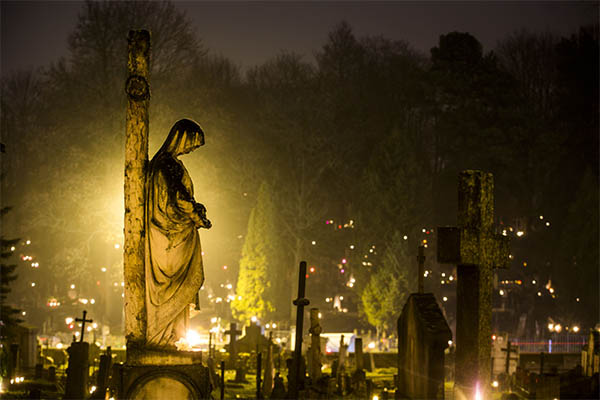
Lithuanian cemeteries are already different from what you’d find in other countries – they rather resemble a botanical park, sinking in the sea of trees, adorned with flowers and beautiful tombstones. On November 1st, Lithuanians celebrate Vėlinės (vėlė means “soul” and ilgėtis means “to long”) – the Day of the Dead, which is not as joyful an occasion as El Dia de Los Muertos in Mexico, but rather the day of remembrance and reunion that bears deep traditions. Cemeteries become the place of family gatherings, where young and old arrange flowers and light candles. When the sun sets, the cemeteries become enchanting, alive and mysterious from the sea of flickering candlelights and the aroma of thousands of fresh flowers.
When golden trees and low-hanging sun create special autumn atmosphere, it’s a perfect time to visit Lithuania and to get enchanted by the scenery and traditions, to explore some off-the-beaten track activities, and to see some old Lithuanian customs put into action.
According to the old Lithuanian tradition, this is the time to remember the ancestors and to re-think one’s place in the world. When Lithuania finally accepted Christianity (last country to be “baptized” in Europe), pagan and Christian traditions blended into one over time, giving special significance and depth to the Lithuanian Day of the Dead.
The Old Cemeteries of Vilnius
The Old Vilnius Cemeteries belong in the list of European historical cemetery heritage.
There are three main cemeteries in Vilnius city center: the first one, Rasų Cemetery, was founded in 1796, and is the eternal home to famous Lithuanian poets, artists and politicians, such as the activist and folklorist Jonas Basanavicius, and composer and painter M.K. Ciurlionis. This was the first cemetery that was founded outside of the city, on a hill surrounded by old oak trees. The name of the place – Rasos – suggests this used to be an ancient pagan ceremony site.
The Bernardine Cemetery was established in 1810 by the Bernardine monks of the the Church of St. Francis of Assisi. As most cemeteries in the city center, it was closed by the Soviets and remained mostly unchanged from that time, with burials allowed only in existing family graves.
Antakalnis Cemetery is commonly referred to as the Military Cemetery. 12 of the 14 Soviet Union protest victims from 1991 TV tower attack are buried here, as well as the victims of Soviet Medininkai Massacre. Among other perished soldiers there are graves of Polish soldiers from 1919-20, Lithuanian, German and Russian soldiers who have fallen in World War I and thousands of French soldiers of Napoleon’s Army, whose remains were found in Vilnius and reburied in Antakalnis in 2001.
During Vėlinės, these old cemeteries are afloat with flowers and sinking in the sea of candles – people come to remember the dead heroes or prominent poets of the nation, but they also don’t forget the unknown graves of dead people whose relatives might not be around anymore to light a candle.
Lithuanian Cross-Making and the Hill of Crosses
If you feel like venturing outside of Vilnius, Southern Lithuanian region of Dzukija and Lithuanian seaside will offer a special glimpse into the culture of Lithuanian cemeteries, with their distinctive crosses and breathtaking nature that surrounds them.
The Lithuanian art of cross-making was recognized to be unique and added to the UNESCO World Heritage list. Since Lithuania was the last country of Europe to abandon paganism and convert to Catholicism in the 14th century, pagan and Catholic elements intertwine in Lithuanian crosses – which were forbidden by Tsarist Russia and the Soviet Union.
Lithuania’s Hill of Crosses, located in the northern Lithuania, is a unique and enchanting place, with over 200,000 of crosses of every shape and size, and attracting thousands of Catholic pilgrims as well as curious tourists. People started leaving crosses on the hill after the 1831 uprising against the Russian tsar – relatives put crosses to commemorate dead rebels, since they had no bodies to bury. During Soviet occupation, the KGB bulldozed the hill twice – but today, the Hill of Crosses stands tall again as the symbol of resistance and faith.
Pre-Christian Cemeteries
You can also find cemeteries in Lithuania that have no crosses – these are pre-Christian pilkapiai dating from 12-13th century – abandoned in the 14th century – but still reminding everyone of pagan Lithuania. The most prominent site of pilkapiai is in Kernave, whose first residents arrived in the 9th century BC, and which later became an important pagan city.
Similarly, you wouldn’t find any crosses in the ethnic Jewish cemeteries, or the cemeteries of Lithuanian Turkic minorities – Tatars and Karaites.
Lithuanian Cemetery Excursions by Vilnius in Love:
Royal Mausoleum. A visit to the crypts of Vilnius Cathedral
Uzupis neighborhood. The Bernardine Cemetery
The old Military Cemetery of Antakalnis
Rasu Cemetery
The pagan capital Kernaveand pilkapiai
The Hill of Crossesin Northern Lithuania
National Park of Dzukija
National Park of Curonian Spit
Jewish Vilnius
Trakai Castleand old Karaites cemetery
Vilnius in Love is a tour guide company that offers customizable and personalized tours across all regions of Lithuania. Hiring guides who are very well versed in local history, they are able to offer trips to unique destinations and rare attractions. Contact VilniusinLove.com to learn more.
The Broadmoor of Colorado Springs, The Dunhill Hotel of Charlotte, Mayflower Park Hotel of Seattle, West Baden Springs Hotel of Indiana, Amway Grand Plaza of Grand Rapids were among the winners of Historic Hotels Awards of Excellence for 2017 by Historic Hotels of America® and Historic Hotels Worldwide®. The winners were announced at a special ceremony and gala at The Omni Homestead Resort (1766) in Hot Springs, Virginia. Honors were given in multiple categories ranging from Hotelier of the Year and Hotel Historian of the Year to Best Historic Resort, Historic Hotelier of the Year, and Lifetime Achievement.
Each year, these Historic Hotels Awards of Excellence honor, encourage, and recognize the most exemplary historic hotels, hoteliers, and leadership practices. The Historic Hotels Awards of Excellence are presented to historic hotels and hoteliers demonstrating innovative leadership, stewardship, and contribution to furthering the recognition, preservation, and celebration of these preeminent historic hotels and their histories.
From more than 200 nominees, the following Historic Hotels of America and Historic Hotels Worldwide hotels and hoteliers were honored with these prestigious annual awards for 2017:
Best Small Historic Inn/Hotel (Under 75 Guestrooms): The Dunhill Hotel (1929) Charlotte, North Carolina
Best Historic Hotel (76-200 Guestrooms): Mayflower Park Hotel (1927) Seattle, Washington
Best Historic Hotel (201-400 Guestrooms): West Baden Springs Hotel (1902) West Baden Springs, Indiana
Best Historic Hotel (Over 400 Guestrooms): Amway Grand Plaza (1913) Grand Rapids, Michigan
Lifetime Achievement Award: Duane and Kelly Roberts at The Mission Inn Hotel & Spa (1876) Riverside, California
“The winners of the 2017 Historic Hotels Awards of Excellence represent more than 231 years of history and include the finest iconic and legendary historic hotels from across the United States of America and from around the world,” said Lawrence Horwitz, Executive Director of Historic Hotels of America and Historic Hotels Worldwide. “We applaud these magnificent historic hotels and their hoteliers for their dedication, passion, stewardship and success in preserving these treasures and their stories for future generations of travelers.”
Award recipients are selected from nominees received from historic hotels, historic preservation supporters, prior award recipients, and leadership from Historic Hotels of America and Historic Hotels Worldwide. As official programs of the National Trust for Historic Preservation, Historic Hotels of America and Historic Hotels Worldwide provide the recognition to travelers, civic leaders, and the global cultural, heritage, and historic travel market that member hotels are among the finest historic hotels across America and around the world. The Historic Hotels Annual Awards of Excellence program recognizes the pinnacle of this distinct group of nominees in a range of categories.
Historic Hotels of America® is the official program of the National Trust for Historic Preservation for recognizing and celebrating the finest Historic Hotels. Historic Hotels of America has more than 300 member historic hotels which have all faithfully maintained their authenticity, sense of place, and architectural integrity in the United States, including 46 states, the District of Columbia, the U.S. Virgin Islands, and Puerto Rico. Historic Hotels of America is comprised of mostly independently owned and operated historic hotels. More than 30 of the world’s finest hospitality brands, chains, and collections are represented in Historic Hotels of America. To be nominated and selected for membership into this prestigious program, a hotel must be at least 50 years old; has been designated by the U.S. Secretary of the Interior as a National Historic Landmark or listed in or eligible for listing in the National Register of Historic Places; and recognized as having historic significance. For more information, visit HistoricHotels.org.
Historic Hotels Worldwide® is a prestigious collection of historic treasures, including historic hotels, castles, chateaus, palaces, academies, haciendas, villas, monasteries, and other historic lodging spanning ten centuries. Historic Hotels Worldwide represents the finest global collection of more than 260 historic hotels in more than 36 countries. Historic Hotels Worldwide is dedicated to promoting heritage and cultural travel to prestigious historic treasures. Hotels inducted into Historic Hotels Worldwide are authentic historic treasures, demonstrate historic preservation, and celebrate historic significance. Embracing luxury hotel brands, chains, collections, and the finest independent historic hotels, participation is limited to those distinctive historic hotels that adhere to the following criteria: minimum age for the building is 75 years or older; historically relevant as a significant location with a historic district, historically significant landmark, place of a historic event, former home of a famous person, or historic city center; hotel celebrates its history by showcasing memorabilia, artwork, photography, and other examples of its historic significance; recognized by national preservation or heritage buildings organization or located within UNESCO World Heritage Site; presently used as historic hotel. To learn more visit www.HistoricHotelsWorldwide.com
Some 35 to 40,000 years ago, humans took up residence in six caves in the Swabian Jura, and left behind unique evidence of their creative endeavours. These are the oldest works of art and musical instruments yet discovered anywhere in the world. Hailed as an archaeological sensation, the caves featuring the oldest Ice Age art were added to the list of World Heritage Sites in 2017.
Only the most outstanding testimonies to the history of mankind are awarded the status of UNESCO World Heritage Site, and many of them are in Germany. Thousands of years of history have left behind a significant legacy, and it is the continuous goal of UNESCO to keep these valuable sites protected. Two places from very different eras are now coming into the spotlight of international recognition at the same time: the caves of the Ice Age in Baden-Württemberg, dating back 40,000 years, and architecture of the Bauhaus era, which began in 1919.
The UNESCO World Heritage Committee has named the caves of the Ice Age in the Swabian Jura in Baden-Württemberg to its list. More than 50 artifacts mostly made of bone and ivory, were discovered in six caves in the Ach- and Lonetal. These archaeological sites and prehistoric works of art from the Ice Age allow researchers to draw conclusions about the earliest traces of human settlement.
Visitors to Germany will experience the works of the Ice Age in various historical museums in Baden-Württemberg. The Prehistoric Museum Blaubeuren is a central museum for the Paleolithic period of the state of Baden-Württemberg. It displays, among other original finds, the “Venus vom Hohlenfels” and three flutes of the Ice Age. At various locations, visitors can not only marvel at the objects, but also try working with stone tools.
The museum of the University Tübingen displays a 40,000-year-old figure of a horse made of mammoth ivory, called “Vogelherdpferd“, and a cave named “Vogelherdhöhle“ is part of the archaeological park Niederstotzingen. Other artifacts from the era of hunters and gatherers are on display in the permanent Stone Age exhibition of the Landesmuseum Württemberg in Stuttgart.
UNESCO World Heritage Sites of the Bauhaus Era
The committee also decided to allow visitors to tour further Bauhaus buildings listed among the UNESCO World Heritage Sites. In addition to the architectural sites already included in 1996, the Bundesschule of the General German Trade Union Confederation in Bernau, as well as five arcades in Dessau-Rosslau are now added to the UNESCO World Heritage List. The exterior of the Bauhaus Memorial Bundesschule Bernau, north of Berlin, is open to the public all year round. Visits of the interiors are possible through guided tours, organized by the Association baudenkmal bundesschule bernau e.V., and visitors can tour the Dessau-Törten settlement.
Petra Hedorfer, chairman of the board of the GNTB, said, “Germany is already the number one cultural destination of Europeans today. With our theme campaign “UNESCO World Heritage Sites in Germany – Sustainable Culture and Nature Tourism,” in 2014 we have communicated responsible tourism to these particular cultural heritage sites worldwide. The inclusion of further unique testimonies of the cultural history of humanity on the UNESCO World Heritage list will give Destination Germany new impulses. As part of the 100th anniversary of the Bauhaus in 2019, we are preparing a further theme campaign.”
Detailed information on UNESCO World Heritage sites in Germany is available online at www.germany.travel.