Tag Archives: historic hotels

Historic Hotels Worldwide® Names Top 25 Most Historic Bars and Lounges for 2025

The Elephant Bar at Raffles Hotel Le Royal in Phnom Penh, Cambodia is a legendary bar with a rich history and unique charm. Built in 1929, the bar has welcomed illustrious guests—from Charlie Chaplin to W. Somerset Maugham—and famously hosted Jacqueline Kennedy during her 1967 visit to Cambodia, creating its signature cocktail, the Femme Fatale, in her honor.

WASHINGTON, D.C. – Historic Hotels Worldwide®, a prestigious program that recognizes and celebrates authentic historic hotels around the world, announced The 2025 Top 25 Historic Hotels Worldwide Most Historic Bars and Lounges list. This collection of 25 bars and lounges in historic hotels tells a global story of how hotels provide spaces for guests to gather, socialize, and connect, while enjoying a handcrafted drink and a unique cultural experience.

Geographically, bars and lounges located in countries with a strong pub or cocktail culture, or ones heavily influenced by these cultures, are heavily represented on this list. Drinking culture is deeply ingrained in the social fabric of both the United Kingdom and Germany, where a third of the bars included on this list are located. Many of the venues described in this list are hidden gems, although several famous establishments like the American Bar at The Savoy London (1889) and the Long Bar at Raffles Singapore (1887) were clear choices for inclusion on this list. But whether well-known, or a well-kept secret, all of the historic bars and lounges selected for this list preserve their original architecture, accented by interior design, and historic ambiance, making for a more complete historic experience for guests. The owners and managers of these hotels invest in their preservation, and the bartenders and mixologists know the cultural legacy that they uphold with every glass that they pour. Because of the people behind these historic hotels, today, cultural and heritage travelers can experience all of these unique destination bars and lounges.

Castlemartyr Resort (1210) Cork, County Cork, Ireland
Knights Bar
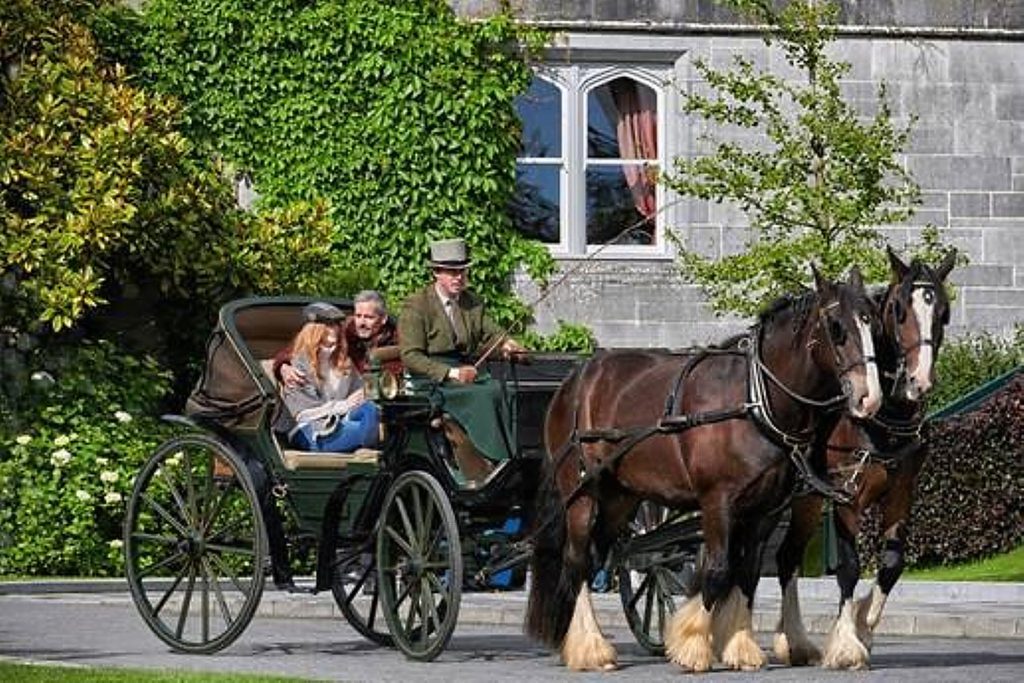
At the heart of Castlemartyr Resort’s 18th-century Manor House is the historic Knights Bar. The historic bar is aptly named, as the historic castle complex was built by the Knights Templar in 1210. To truly appreciate the space, guests should look up. The Knights Bar ceiling showcases a stunning Rococo-style design installed by the Lafranchini brothers in the 18th century. These Swiss decorators became famous in Ireland for their distinctive Rococo-style stucco ceiling and wall designs that can be seen in grand mansions throughout Ireland to this day. Rococo style is an exceptionally ornamental and dramatic style of architecture, art, and decoration. The style combines asymmetry, curving scrolls, gilding, white and pastel colors, sculpted molding, and trompe-l’œil frescoes to create surprise and drama. The space has welcomed many visitors over the years, as it was first used as a ballroom for the Boyle Family in the 1800s, and later as a chapel for the daily Mass by the Carmelite Order, who owned the Manor House in the early 1900s. Today, Knights Bar is an elegant, classical locale to enjoy a beverage—from cocktails to Afternoon Tea—in the historic ambiance. Knights Bar is a stylish choice for enjoying a relaxing drink, elegantly providing a warm and intimate atmosphere for guests. Castlemartyr Resort was inducted into Historic Hotels Worldwide in 2022.

Hacienda de los Santos (1710) Alamos, Sonora, México
Cantina de Zapata
Family-owned and operated, Hacienda de los Santos is a historic resort encompassing three restored Colonial-style mansions, as well as a sugar mill that dates to the 17th century. The space that Cantina de Zapata at Hacienda de los Santos now occupies was originally part of the estate’s early operation as a sugar mill. In 1999, the sugar mill was converted into a cantina for the resort. The bar top and space behind the bar date to the 19th century and originated in Cuernavaca, Mexico, and were disassembled down to the smallest piece and then reassembled at Hacienda de los Santos. The style of the cantina might best be described as “Old Mexico,” deeply authentic yet crafted for today’s travelers. According to the owner, families travel great distances to show their children the history that is displayed within Hacienda de los Santos’s cantina, and a rancher from the United States once remarked that “this cantina is my favorite bar in the world.” The memorabilia throughout the cantina are a feast for the eyes of any first-time visitor. Many early firearms, chaps, swords, and other historic memorabilia adorn the walls, including more than 200 inlaid silver spurs of Mexican origin. Among the memorabilia, the hotel owner’s most prized historic photograph is displayed in the cantina. The photo depicts Mexican General Álvaro Obregón standing with Pancho Villa, U.S. General John J. Pershing, and a young 1st Lt. George S. Patton, standing on the bridge in El Paso. The photo was given to the hotel’s owner by Obregón’s grandson, who celebrated his 93rd birthday at the hotel. (The cantina was recently included on The 2025 Top 25 Historic Hotels Worldwide® Most Magnificent Art Collections list for its décor.) The cantina offers a wide range of spirits, including 200 Tequila labels. The Margarita is the bar’s most popular cocktail, made with fresh Mexican limes, a large shot of Blanco Tequila, Controy, sweetener, and plenty of ice. Hacienda de los Santos was inducted into Historic Hotels Worldwide in 2015.

Hotel Taschenbergpalais Kempinski Dresden (1713) Dresden, Germany
Bar 1705
Built in the early-18th century by a Saxon king, and located in Dresden’s historic city center, Hotel Taschenbergpalais Kempinski Dresden is a beautiful combination of historic palace architecture and contemporary elegance. Bar 1705 is named after the year the original palace was commissioned, but the bar’s ambiance evokes the sophistication of the 1920s, a bold nod to the spirit of the Prohibition Era in the United States. Inspired by iconic venues such as the Oak Room in New York City, the bar combines rich wood paneling, Art Deco-style details, and intimate lighting to create a refined, yet lively, atmosphere, with live music on select nights. Deep red leather seating and dark wood finishes set the tone for an elegant experience. Friendly and creative bartenders are eager to serve original cocktails inspired by the Roaring Twenties, or a guest’s favorite classic cocktail. During the warmer months, guests can also enjoy their drinks in the peaceful inner courtyard of the Taschenbergpalais, making Bar 1705 a year-round destination for connoisseurs and curious explorers alike. Hotel Taschenbergpalais Kempinski Dresden was inducted into Historic Hotels Worldwide in 2017 and dates to 1713.

Hotel Château Gütsch (1859) Lucerne, Switzerland
American Bar
High above Lucerne, Switzerland, the American Bar at historic Hotel Château Gütsch invites guests to enjoy creative cocktails in a 19th-century castle, with sweeping views over Lake Lucerne and the Alps. Signature drinks like the Gütsch Spritz and Yoda’s Fav reflect a playful, yet refined cocktail menu crafted with regional flair. The interior design of the American Bar elevates the spirit of the Belle Époque, in harmony with the historic character of the hotel. Throughout the public areas within the American Bar, historic photographs and details offer guests glimpses into the past. The bar’s serene, elegant setting makes it a favorite among cultural travelers, who appreciate the timeless atmosphere, quality drinks, and one of the most iconic views in Switzerland. The fairytale castle was built in 1859 and, while the interior has been tastefully modernized, the setting remains steeped in history. The château has long been a landmark in the region, attracting writers, artists, and dignitaries for generations. The American Bar offers a variety of signature cocktails, each crafted with regional ingredients and a flair for storytelling. The American Bar is not just a place to enjoy a drink—itis a place for guests to enjoy spectacular views, surrounded by castle walls and Alpine skies. For cultural travelers seeking authenticity and elegance, the American Bar is a must-visit destination. Hotel Château Gütsch was inducted into Historic Hotels Worldwide in 2024 and dates to 1859.

Britannia Hotel (1870) Trondheim, Norway
Britannia Bar
Set in the historically and culturally significant city of Trondheim, Norway, Britannia Hotel boasts an impressive history, with connections to polar expeditions, meetings that helped plan Norway’s independence, and royal receptions. Britannia Bar opened in the early 1960s and the new bar became a cornerstone of the hotel’s social life. By the late 1980s, the hotel expanded its lobby area and relocated Britannia Bar upstairs to its current location. The historic basement space was transformed into Pianobaren, a vibrant piano bar featuring live music and dancing, while the new Britannia Bar became a more refined, cocktail focused lounge with private adjoining salons. Both Britannia Bar and Pianobaren became legendary venues in Trondheim, each with its own atmosphere and loyal following. (Fun fact: the current mayor of Trondheim, Kent Ranum, once worked as a bartender in Pianobaren during the 1990s.) Today, Britannia Bar is the perfect retreat after a long day of exploring—and sets the standard when it comes to cocktails. The hotel’s artistic signature cocktails reflect the history of Britannia Hotel through a series of unique portraits and flavors. The Executive Bar Manager at Britannia Bar, Øyvind Lindgjerdet, developed a series of signature cocktails inspired by art and history. Individuals who played important roles in establishing and operating the hotel in its early days are honored with a signature cocktail, paired on the menu with a short biography and a portrait painted by Lindgjerdet. Explore all of Britannia Bar’s Portraits of Britannia cocktails here. The bar was also recognized in 2025 as the recipient of the Best Cocktail Bar, Best Cocktail Menu, and Best Bartender in Norway by the Bartenders’ Choice Awards. Britannia Hotel was inducted into Historic Hotels Worldwide in 2024 and dates to 1870.

Sofitel Winter Palace Luxor (1886) Luxor, Egypt
Victorian Lounge
Nestled within the legendary Sofitel Winter Palace Luxor, the Victorian Lounge is a tribute to the grandeur of 19th-century Egypt and the Golden Age of European exploration. Since 1886, this historic salon has welcomed luminaries from around the world—including royalty, aristocrats, and famed archaeologists, like Lord Carnarvon and Howard Carter, who once roamed the halls during the discovery of Tutankhamun’s tomb. With its soaring ceilings, gilded mirrors, and plush period furnishings, the lounge retains much of its original charm. Guests can relax in refined tranquility beneath glittering chandeliers while enjoying views of the hotel’s beautifully manicured Royal Gardens—a tranquil haven where kings and queens once strolled. The soft melodies from the grand piano, often played during Afternoon Tea or evening cocktails, add to the timeless atmosphere and sense of place. The lounge’s signature cocktail, Tutankhamun’s Elixir, is a fragrant blend of hibiscus tea, date syrup, fresh lime, and mint—a nod to Egypt’s botanical heritage and a tribute to its most famous pharaoh. Crafted in the 1950s by a bartender inspired by Luxor’s mystique, it remains a guest favorite today. Whether enjoying Afternoon Tea, a quiet cocktail, or just simply soaking in the ambiance, visitors are invited to step back in time and experience the elegance and mystery that have defined the Winter Palace for more than a century. Sofitel Winter Palace Luxor was inducted into Historic Hotels Worldwide in 2014.

Raffles Singapore (1887) Singapore
Long Bar
The world-famous Long Bar at Raffles Singapore is home to the Singapore Sling, widely regarded as the national drink of Singapore. The hotel opened in 1887, when the Sarkies Brothers acquired the building for the development of a luxury hotel in Singapore, and the hotel became one of the most sought-after destinations in Southeast Asia. The Singapore Sling was first created in 1915 by Raffles Singapore bartender Ngiam Tong Boon. A gin-based cocktail, the Singapore Sling also contains pineapple juice, lime juice, curaçao, and Bénédictine. Grenadine and cherry liqueur give the cocktail its signature pink hue. When the hotel bar opened in the early-20th century, it was common to see gentlemen nursing glasses of gin or whiskey, but it was not socially acceptable for women to do so. Women were expected to stick to juices and teas—including the hotel’s iconic Afternoon Tea. Inspired by the women who wanted a hard drink, bartender Ngiam Tong Boon created a cocktail that looks like plain fruit juice, but is infused with gin and liqueurs. He made the beverage pink to give it a feminine flair which, together with the clear alcohol, led guests to think that it was a socially acceptable drink for women. Of course, today, guests can choose to order the drink simply because it is delicious—or select another fantastic option from the Long Bar’s cocktail menu. Raffles Singapore was inducted into Historic Hotels Worldwide in 2018.

The Savoy London (1889) London, England, United Kingdom
American Bar
The American Bar at The Savoy London is a true icon in the world of hospitality, renowned as the longest continually operating cocktail bar in London. For more than 130 years, the American Bar has hosted an extraordinary roster of guests, including Winston Churchill, Ernest Hemingway, and Marilyn Monroe, each drawn to the American Bar by its legendary cocktails and timeless elegance. Reportedly, the first cocktail that Neil Armstrong and Buzz Aldrin consumed after returning to Earth following the Apollo 11 moon landing was created by Joe Gilmore, the head bartender at the American Bar, who sent a flask of the cocktail to NASA. The American Bar’s history is woven into the very fabric of cocktail culture: Ada “Coley” Coleman, the American Bar’s pioneering head bartender, invented the celebrated Hanky Panky here, while her successor, Harry Craddock, compiled The Savoy Cocktail Book, which remains a bartender’s bible to this day. The American Bar’s Art Deco-style interior, adorned with historic photographs and memorabilia, evokes a sense of glamour and intimacy, while live piano music and immaculately dressed bartenders in white jackets preserve the classic charm of this iconic bar. Today, the new Liquid Moments menu is a tribute to The Savoy’s remarkable legacy, transforming key moments from the hotel’s history into a collection of 17 signature cocktails. Each drink is inspired by a story or person that has shaped the narrative of the hotel. For example, Tea O’Clock pays homage to The Savoy’s famed Afternoon Tea tradition, blending vodka, Lillet Blanc, and strawberries with an Afternoon Tea blend—a nod to over a century of elegant gatherings. A Yeoman’s Toast refers to the Tower of London’s Beefeaters, while New Heights commemorates the hotel’s installation of London’s first electric elevator; the salt used to ferment the blackberries pays homage to the smelling salts that guests were given as a fainting precaution when using the hotel’s “Ascending Room.” With every cocktail, guests are invited to savor not just a drink, but a liquid moment—a taste of the stories, innovations, and personalities that have defined The Savoy and the American Bar for generations. The Savoy London was inducted into Historic Hotels Worldwide in 2011 and dates to 1889.

Fairmont Le Chateau Frontenac (1893) Quebec City, Quebec, Canada
1608 Bar
Named for the year that Quebec City was founded, 1608 Bar offers one of the largest varieties of top Quebec cheeses in Canada, coupled with the top wine selections that the world has to offer. Overlooking the St. Lawrence River, the 1608 Bar showcases one of the province’s most stunning views. Inside, the room is lit by a sparkling handcrafted chandelier, which illuminates the circular brass bar and marble countertop. Old Quebec City’s 1608 Bar offers guests tranquil, timeless elegance in which to savor regional charcuterie and cheeses and gourmet light bites. Guests can sit at the sleek bar or cozy up by the inviting fireplace. Although the 1608 Bar is a recent addition to Fairmont Le Chateau Frontenac, the bar is located in a historic lounge space with an original wood-paneled ceiling. The interior designer was inspired by the heritage of the space to create a unique destination bar that feels like a clock stopped in time; guests can see a Canada goose frozen mid-flight in a corner of the bar. The lounge’s original bookshelves and leather sofas allude to its former role as a quiet reading and writing room for guests. Wine lovers should make 1608 Bar a drink stop on their way to or from the hotel’s signature restaurant, Champlain, which has a phenomenal wine collection and has received Wine Spectator’s “Best of” Award of Excellence annually since 2016. Fairmont Le Chateau Frontenac was inducted into Historic Hotels Worldwide in 2012 and dates to 1893.

Fairmont Hotel Vier Jahreszeiten (1897) Hamburg, Germany
Jahreszeiten Bar
Tucked beside the grand entrance of the historic Fairmont Hotel Vier Jahreszeiten, the iconic Jahreszeiten Bar is not only Hamburg’s smallest bar, but is also one of its most storied. Located in what was once the private office of the hotel’s founder, Friedrich Haerlin, the bar exudes turn-of-the-century elegance. Original vintage Rolls-Royce leather seats invite guests into a space of refined intimacy, while the sweeping mahogany counters and antique mirrored shelves recall a bygone era of European glamour. Among the architectural and interior design highlights of the Jahreszeiten Bar is the two-story design, with views over the Inner Alster Lake, and a bespoke gallery cabinet containing some of the rarest single malt whiskeys in the world—each bottle is a collector’s item, with a story. Visitors should take a moment to look for the wooden pineapple, which has been discreetly placed in the bar. In fact, the pineapple motif can be found throughout the hotel, which is a traditional symbol of hospitality. A longstanding commitment to hospitality is a tradition at the hotel. The beverage manager at Jahreszeiten Bar, Enrico Wilhelm, is a master bartender with over 20 years of service, who curates not just drinks, but unforgettable memories. From the cocktail menu, guests can enjoy more than 70 carefully selected whiskeys and 25 gins, many of which are historic or limited-edition bottlings. Classic cocktails are served with precision, and occasionally, stories of visiting dignitaries or local legends fill the air—making each visit feel like stepping into a living piece of Hamburg’s hospitality history. Fairmont Hotel Vier Jahreszeiten was inducted into Historic Hotels Worldwide in 2023 and dates to 1897.

Sofitel Legend Old Cataract Aswan (1899) Aswan, Egypt
The Bar
Set within the timeless grandeur of Sofitel Legend Old Cataract Aswan’s historic palace wing, The Bar is a cultural landmark in its own right—where travelers, writers, royalty, and diplomats in Aswan, Egypt, have gathered for more than a century. It was here that Agatha Christie sipped cocktails while writing Death on the Nile (1937), and where Winston Churchill paused for moments of quiet reflection. The Bar’s heritage is steeped in such moments, serving as a backdrop for conversations that shaped both literature and politics. The Bar’s signature drink, the Nubian Sunset, is a vibrant blend of hibiscus syrup, date purée, fresh lemon juice, and a hint of gin—crafted in honor of the local landscape and first introduced by a veteran bartender seeking to capture the essence of twilight over the Nile. The Bar retains original Edwardian design features, from hand-carved wood paneling and antique mirrors to the art-lined walls and arched windows overlooking the Nile. The ambiance of The Bar is refined and elegant, where Moorish and Victorian design influences enhance the rich textures, soft lighting, and the quiet sophistication of The Bar. The Bar offers more than just a drink—The Bar invites guests to relive the Golden Age of travel, to walk in the footsteps of legends, and to become a part of a story that is still unfolding, in one of Egypt’s most iconic settings. Sofitel Legend Old Cataract Aswan was inducted into Historic Hotels Worldwide in 2014 and dates to 1899.

The Caledonian Edinburgh (1903) Edinburgh, Scotland, United Kingdom
The Court
Drinks at The Court inside The Caledonian Edinburgh take guests on a journey through time, to an era when this historic Scottish hotel was a stop on the Caledonian Railway. This historic bar embodies the history and character of its rich past, combining vintage luxury and Midcentury Modern-style design elements. The Court is brimming with railway-era memorabilia and architecture, thoughtfully preserved over the past 120 years. The sandstone archways leading to The Court were once the hotel’s direct entry to the railroad station’s concourse and ticket office. Within the bar, guests can discover artifacts like the hotel’s Roll of Honour, a historic document listing the names of seventy Caledonian Station Hotel employees who fought in World War I. Discovered by the hotel’s concierge team in 2015, the Roll of Honour has hung in The Court ever since. Guests can enjoy this history, as well as a traditional bar experience. Renovated in 2024, The Court features a grand cocktail bar, exceptional all-day dining, as well as a patisserie, lounge, and live music, ranging from jazz to harp music, depending on the time of day. The Caledonian Edinburgh was inducted into Historic Hotels Worldwide in 2018 and dates to 1903.

Raffles London at The OWO (1906) London, England, United Kingdom
The Spy Bar
Deep underground, in the clandestine depths of the luxurious Raffles London at The OWO, The Spy Bar offers a unique experience worthy of the historic building’s espionage past. “OWO” refers to the Old War Office, once the primary headquarters for the influential British War Office, and the epicenter of British intelligence and military strategy in the early-20th century. The Spy Bar is a subterranean speakeasy hidden away from the rest of the hotel. This atmospheric cocktail bar serves intoxicating drinks with a dash of mystery. One can almost imagine James Bond being a patron of The Spy Bar—in fact, author Ian Fleming was very familiar with rooms #006 and #007, where The Spy Bar is now located, when he worked in the building for the British Naval Intelligence Division during World War II. The entrance lobby to The Spy Bar was once a guard room, and other rooms along this corridor were used for briefing, debriefing and interrogating spies who were working behind enemy lines in occupied Europe during the Second World War. The bar’s signature drink is the crisp Vesper Martini, à la Casino Royale, and the bar is stocked with bottles inspired by the fictional spy. Mounted on the wall behind the backbar is half an Aston Martin DB5, an ode to British craftsmanship, timeless design, and secrecy. The bar sustains its secretive and exclusive allure in large part through its no-photography policy, and is only accessible by request. The bar hosts monthly takeovers with renowned international bars and features a DJ for weekly Vinyl Nights on Thursdays, enhancing the multisensory experience. Raffles London at The OWO was inducted into Historic Hotels Worldwide in 2023 and dates to 1906.

The Grand York (1906) York, England, United Kingdom
The 1906 Bar
Guests at The Grand York, a historic former North Eastern Railway administrative building in York, England, can sink into one of The 1906 Bar’s comfortable lounge chairs and allow its expert bartenders to serve a fantastic menu of drinks, from classic and signature cocktails, to a collection of premium spirits and whiskeys. The Grand York’s whiskey collection has favorite labels from Scotland, Wales, the United States, Japan, and Sweden. Located in Yorkshire, The 1906 Bar also serves a variety of quality lagers and the region’s finest ales. Reminiscent of luxury clubs, and named for the year that the building opened, The 1906 Bar boasts high-backed leather chairs and loungers in front of palatial fireplaces. On Friday and Saturday evenings, The 1906 Bar becomes energized by live music. Guests can see evidence of the hotel’s historic past through details around the bar and hotel. Guests can look for the honeybee motif and green tile in the lobby, as well as the color choices throughout—including in the bar—which reflect the colors and symbols used by the North Eastern Railway: reddish brown and cream buff. Combining history and heritage, The Grand York is a luxurious choice for a stay in York, and The 1906 Bar offers guests a place to relax after a day of sightseeing. The Grand York was inducted into Historic Hotels Worldwide in 2018 and dates to 1906.

Villa Copenhagen (1912) Copenhagen, Denmark
T37
Located in what once was the Central Post & Telegraph Head Office in Copenhagen, Denmark, today, Villa Copenhagen offers luxurious and unique accommodations in the heart of the ancient Nordic city. The hotel’sT37 bar is a popular spot for both locals to enjoy afterwork drinks, and for travelers to relax after a day spent exploring around the city. “T37” was used as a secret code for social events taking place in the room, where postal workers at the central post office would gather, surrounded by letters and packages. The entrance to the bar is original to the central post office. Visitors will notice that the entrance is unusually tall and wide; this is because horse-drawn carriages would have to fit through the entrance to pick up the mail to be delivered around the city. Hanging from the ceiling around the bar area, visitors can see satchel straps from post bags. T37 exudes sophistication and elegance, and its historic heritage is evident in both its drinks and distinctive ambiance. The bold color scheme honors the bar’s past, while creating a cozy and inviting atmosphere for visitors to relax with a refreshing drink. Villa Copenhagen was inducted into Historic Hotels Worldwide in 2019 and dates to 1912.

Rosewood London (1914) London, England, United Kingdom
Scarfes Bar
Scarfes Bar, located inside the luxurious Rosewood London in Holborn, is a sophisticated cocktail lounge that blends British heritage with contemporary flair. Scarfes Bar opened in 2013 and is named after the English satirical cartoonist and illustrator, Gerald Scarfe. Since the 1960s, Scarfe’s work has appeared in The New Yorker, The Sunday Times, and even on the album cover of Pink Floyd’s The Wall (1979), among many other popular publications, ephemera, and animations. His satirical artwork adorns the walls of the bar named in his honor and have even inspired the bar’s menu. Alongside the tongue-in-cheek illustrations, Scarfes Bar is defined by its elegance, with its roaring fireplace, plush velvet armchairs, and shelves lined with over 1,000 vintage books. Inspired by Gerald Scarfe’s Long Drawn Out Trip: A Memoir (2019), the Long Drawn Out Sip menu explores his work through the medium of dreams, both whimsical and nightmarish, in which cocktails serve as liquid doorways to his surreal outlook on the world. With a cocktail menu that pays tribute to Scarfe’s whimsical imagination, and a curated selection of refined small bites, Scarfes Bar offers a uniquely immersive experience, where art, music, and mixology converge. Rosewood London was inducted into Historic Hotels Worldwide in 2015 and dates to 1914.

Sofitel Legend Casco Viejo – Panama City (1917) Panama City, Panama
Ammi
Located in the center of Casco Viejo, a UNESCO World Heritage Site, Sofitel Legend Casco Viejo- Panama City is an iconic waterfront hotel offering an unmatched luxury experience for heritage and cultural travelers and business travelers alike. Perched atop the historic hotel, Ammi sky bar offers guests an energetic and sophisticated atmosphere. A vibrant rooftop retreat with views of the Pacific Ocean and the city’s glittering skyline, Ammi offers guests private terraces, live Latin music, and an open kitchen. At night, the bar transforms into a pulsating social hub, where expertly crafted cocktails—such as the Margarita al Pastor and the Golden Fashioned-complement the rhythmic energy of the space. Whether sipping under the stars or dancing to tropical beats, Ammi invites guests to celebrate life in one of the most iconic locations in the city. Guests can enjoy dazzling city and ocean views in all directions. With six separate terraces, Casco Viejo’s best rooftop bar draws locals and hotel guests alike, to enjoy alfresco dining, as well as DJs and live music. Originally Club Unión of Panama City, the hotel—which has hosted guests including Albert Einstein, Helen Keller, and Queen Elizabeth II of the United Kingdom—offers guests an immersive experience into Panamanian culture, heritage, and history. Sofitel Legend Casco Viejo – Panama City was inducted into Historic Hotels Worldwide in 2022 and dates to 1917.

Amerikalinjen (1919) Oslo, Norway
Pier 42
One of Oslo, Norway’s most historic hotels, Amerikalinjen offers guests a chance to unwind at Pier 42. The luxury hotel was once the headquarters of the Norwegian America Line, established in 1919, a shipping company that carried thousands of Norwegian emigrants across the Atlantic in search of new lives in the United States. This landmark building served as a gateway to dreams, opportunities, and exploration—a spirit that Pier 42 proudly honors today. In fact, the bar takes its name from Pier 42 in New York, where these Norwegian ships would dock after their long ocean crossings. Inspired by the Golden Age of transatlantic travel, diplomacy, and adventure, Pier 42 offers a modern cocktail experience rooted in this rich maritime history. The spirit of exploration and connection that once defined this building lives on throughout the hotel and its bar, welcoming travelers, locals, and adventurers alike. Pier 42 features original architectural elements from the Norwegian America Line building. The walls are decorated with historical photographs, authentic maritime memorabilia, and ship blueprints. Throughout the space, guests will find tributes to notable passengers and crew who crossed the Atlantic Ocean, including engraved brass plaques and interpretive storytelling integrated into the design of the bar. The bar’s signature cocktail is the Emigration, blending ingredients from all continents—Tequila, lemongrass, Rooibos, wine, citrus, and ice—symbolizing a safe journey and new beginnings. The atmosphere at Pier 42 is elegant yet welcoming, blending New York City’s Art Deco-style with Nordic minimalism. Soft leather banquettes, nautical brass details, and warm lighting help to create a space that feels both timeless and comfortable, reflecting the romance of a bygone era of travel combined with modern luxury. Visiting Pier 42 allows guests to truly drink in history, making it a must-visit destination for guests seeking an authentic cultural experience in Oslo. Amerikalinjen was inducted into Historic Hotels Worldwide in 2019.

The Fullerton Hotel Singapore (1924) Singapore
Rooftop Bar at The Lighthouse
Once the site of a functioning lighthouse that illuminated Marina Bay in Singapore, guiding ships into the port, the rooftop bar at The Lighthouse restaurant now serves as a beacon of refined luxury with panoramic views at The Fullerton Hotel Singapore. The lighthouse’s history dates to December 14, 1958, when the Fullerton Light opened atop the Fullerton Building. Local officials intended the new signal to replace the century-old lighthouse on Fort Canning Hill. The aerobeacon was so bright that its beams could be seen by ships as far as 20 miles away. Decommissioned in 1979, the Fullerton Light is now the home of The Lighthouse restaurant and its rooftop bar. The bar crowns the original lighthouse structure, part of the colonial-era General Post Office building, which was transformed into The Fullerton Hotel Singapore in 2001. With unobstructed 360-degree views of Marina Bay and the city skyline, The Lighthouse’s ambiance is both intimate and majestic—perfect for sunset cocktails or celebratory toasts. The open-air setting, complemented by soft white awnings and a curated menu of Italian-inspired cocktails and tapas, creates a sophisticated yet relaxed atmosphere that pays homage to the bar’s maritime past, while embracing modern luxury. Please note that the bar and restaurant are currently only open to city guests for dining in on select holidays, such as New Year’s Eve, Valentine’s Day, and National Day. The bar and restaurant spaces are available to reserve for private events throughout the year. The Fullerton Hotel Singapore was inducted into Historic Hotels Worldwide in 2011 and dates to 1924.

Hotel New Grand (1927) Yokohama, Japan
Sea Guardian II
Since opening in 1927, Hotel New Grand has witnessed the history of the port city of Yokohama, Japan. The Main Building, which dates to 1927, has welcomed many notable figures, including General Douglas MacArthur, Charlie Chaplin, and Babe Ruth. From the guestrooms, restaurants, and banquet halls in the Tower adjacent to the Main Building, guests can enjoy spectacular panoramic views of the Port of Yokohama, such as the Bay Bridge, Osanbashi Pier, as well as spectacular nighttime views of the Minato Mirai district. The must-try bar at Hotel New Grand is Sea Guardian II, a British-style lounge located on the first floor of the historic Main Building. The bar is known for its intimate, club-like atmosphere, with comfortable leather and velvet upholstered chairs, dark wood accents, and low lighting. At the black marble bar top, guests should look for their fellow visitors enjoying a sunset-colored drink in a Martini glass. The Yokohama cocktail was invented in the late-19th century by bartender Louis Eppinger at the Yokohama Grand Hotel. In fact, Hotel New Grand is considered to be the successor to Yokohama Grand Hotel, hence the hotel’s name. Made with gin, vodka, absinthe or pastis, orange juice, and grenadine, the orange-pink hue is said to have been inspired by the view over Yokohama Bay at twilight. Hotel New Grand was inducted into Historic Hotels Worldwide in 2012.

Raffles Hotel Le Royal (1929) Phnom Penh, Cambodia
Elephant Bar
The Elephant Bar at Raffles Hotel Le Royal in Phnom Penh, Cambodia, is a legendary bar with a rich history and unique charm. Built in 1929 as part of the hotel’s original east wing, the bar has welcomed illustrious guests—from Charlie Chaplin to W. Somerset Maugham—and famously hosted Jacqueline Kennedy during her 1967 visit to Cambodia. In her honor, the Elephant Bar created its signature cocktail, the Femme Fatale, a luxurious blend of sparkling wine, cognac, and crème de fraise des bois, which is still served today. The Elephant Bar’s ambiance blends historic charm and tropical sophistication, with wicker chairs, leather sofas, and large French windows framed by arched colonnades. Guests can sip on a Femme Fatale or another expertly mixed cocktail while enjoying live music in a refined yet relaxed atmosphere. Alongside its history, glamour, and connection to the former First Lady, the bar is known for its gin collection. The Elephant Bar at Raffles Hotel Le Royal offers over 200 different types of gin, including the legendary Sipsmith Raffles 1915, as well as the hotel’s own locally crafted, signature Elephant Bar Gin. On the Elephant Bar’s menu is a special two-hour Gin Experience, where guests can sample unlimited gin cocktails, drawing from 50 gin labels, and enjoy a curated gin tasting. Raffles Hotel Le Royal was inducted into Historic Hotels Worldwide in 2018.

Fairmont Le Chateau Montebello (1930) Montebello, Quebec, Canada
Bar Le Foyer
More than just a bar, Bar Le Foyer is at the very center of this historic resort, where special memories are made, true to the spirit of hospitality that has defined Fairmont Le Chateau Montebello for generations. This historic bar is located near the very heart of the resort’s historic log chateau: a monumental six-sided fireplace, a true architectural feat that dominates the space, with a hexagonal hearth featuring six blazing faces, and towering 65 feet/20 meters over the chateau’s lobby. Nestled within this space, steeped in history and warmth, is Bar Le Foyer. Family-friendly, Bar Le Foyer offers spaces for multigenerational guests to play board games and sip on hot chocolate served from the bar. Guests can also enjoy reading in cozy armchairs, lulled by the crackling fire. Bar Le Foyer is a natural extension of the ambiance of the chateau’s lobby—a place of warmth, human connection, and comfort, deeply rooted in Canadian heritage. The signature cocktail, the Old Fashioned Montebello, made with Maker’s Mark bourbon, pure Quebec maple syrup, a twist of orange, and a few dashes of bitters, perfectly embodies this spirit. Like the space, the drink is an invitation to slow down, savor the moment, and reconnect with what truly matters, in a setting that has stood the test of time without losing its splendor. For travelers seeking authenticity, Bar Le Foyer is more than a sensory experience; it is a living testament to the Canadian art of living—a place where exceptional architecture meets contemporary hospitality. Fairmont Le Chateau Montebello was inducted into Historic Hotels Worldwide in 2017 and dates to 1930.

Alvear Palace Hotel (1932) Buenos Aires, Argentina
Lobby Bar and Alvear Roof Bar
Since opening in 1932, Alvear Palace Hotel has been a beacon of excellence for discerning travelers who desire French-inspired elegance during their stay in Buenos Aires, Argentina. Located in La Recoleta, a fashionable neighborhood with the city’s best restaurants, antique shops, boutiques, and cultural centers, the hotel has attracted locals and tourists alike for nearly a century. The hotel’s architectural design is inspired by the majesty of the Second French Empire, which is evident in the renowned Lobby Bar. Embracing warmth and refined hospitality, Alvear Palace Hotel features opulent interiors, premier amenities, and careful attention to the comfort of every guest. The Lobby Bar is the beating heart of the Recoleta neighborhood, and is a long-favored spot by influential business leaders and socialites, where polished French oak paneling and a graceful ambiance sets the tone. Here, guests and visitors alike can enjoy gourmet bites and masterfully crafted cocktails, in a setting that honors the Golden Age of mixology and the spirited heritage of Buenos Aires’s high society. Another must-see bar at the hotel is the Alvear Roof Bar, located on the 11th floor and offering unforgettable views of the city. Both signature bars are luxurious, but the Lobby Bar provides a more elegant setting for guests, whereas the Alvear Roof Bar offers guests a more stylish and modern option. Inside or out, Alvear Palace Hotel offers travelers ideal spaces to relax in style. Alvear Palace Hotel was inducted into Historic Hotels Worldwide in 2014.

SO/ Berlin Das Stue (1938) Berlin, Germany
Stue Bar
Within the bustling embassy district of Berlin, historic SO/ Berlin Das Stue borders the lush Tiergarten Park and the Berlin Zoo. In fact, one wing of the hotel faces the zoo’s outdoor exhibits, which feature ostriches, antelopes, and Przewalski’s horses. The hotel’s bar, the Stue Bar and terrace, is an extraordinary destination in the heart of Berlin’s Tiergarten district, which delights guests with its eclectic décor and unique atmosphere. Built in 1938, the original building served as the Royal Danish Embassy for the better part of four decades. Its rebirth as a hotel in 2009 turned the aging office building into a stylish and exciting hotel, with a focus on art and luxurious amenities. This heritage-rich setting gives the bar its unique ambiance, blending classic grandeur with contemporary flair. Guests can unwind at the Stue Bar, relaxing in stylish lounge chairs or sitting at the bar, while enjoying views of the Berlin Zoo. The sounds of animals occasionally drift in, adding a whimsical touch to the experience. Stepping out onto the shady, verdant terrace enhances the experience. The bar is known for its refined cocktail menu, including the signature SO/ Martini, and a wide selection of whiskey and vermouth. Occasionally, the space transforms into a live music venue, showcasing Berlin’s vibrant jazz and soul music scene. The combination of historic architecture, refined interior design, and whimsical surroundings creates a truly distinctive and immersive experience in the heart of Berlin’s Tiergarten district. SO/ Berlin Das Stue was inducted into Historic Hotels Worldwide in 2018.

Half Moon (1954) Montego Bay, Jamaica
Lester’s Bar
Lester’s Bar at Half Moon resort in Montego Bay, Jamaica, is a refined and culturally rich destination bar named in honor of Michael Lester (1906-1972), a Polish-born artist who made Jamaica his home. His bold, expressive depictions of the Jamaican people and the country’s landscapes took the Jamaican art scene by storm in the mid-20th century, and one of his most iconic pieces, Junkanoo, is displayed prominently above the bar. An integral part of the Half Moon experience, Lester’s Bar is both a gathering place and a celebration of Jamaican artistry and hospitality. This intimate bar offers a quiet retreat where art, conversation, craft cocktails, and music all come together. The bar’s ambiance is accented by polished wood, elegant finishes, and a sense of timeless Caribbean sophistication. The cocktail menu includes a mix of international favorites, as well as locally inspired creations, such as the Junkanoo Sour, which features Jamaican rum, tropical fruit, and a touch of flamed cinnamon. Vibrant, smoky, and layered with warmth, the Junkanoo Sour is the signature cocktail of Lester’s Bar at Half Moon. The cocktail honors the art and spirit of Lester’s Bar in equal measure. For lucky guests, cocktails are often complemented by the soothing sounds of live music. Half Moon has been a fixture of Jamaica’s picturesque North Coast since 1954 and was inducted into Historic Hotels Worldwide in 2023.

“Congratulations to the selections for this year’s inaugural Top 25 Historic Hotels Worldwide Most Historic Bars and Lounges list. These elegant and timelessly fashionable historic settings have been preserved or reimagined, as places where heritage and cultural travelers can relax and enjoy a night off in luxury,” said Lawrence Horwitz, Executive Vice President, Historic Hotels of America and Historic Hotels Worldwide. “Each of the bars and lounges on the list celebrates the history of its hotel or region, all united by impeccable hospitality, fascinating stories, unique surroundings, and expertly crafted drinks.”

Historic Hotels Worldwide® is a prestigious and distinctive collection of historic treasures, including luxury historic hotels built in former castles, chateaus, palaces, academies, haciendas, villas, monasteries, and other historic lodging spanning ten centuries. Historic Hotels Worldwide represents the finest and most distinctive global collection of more than 320 historic hotels in more than 46 countries. Hotels inducted into Historic Hotels Worldwide are authentic historic treasures, demonstrate historic preservation, and celebrate historic significance. Eligibility for induction into Historic Hotels Worldwide is limited to those distinctive historic hotels that adhere to the following criteria: minimum age for the building is 75 years or older; historically relevant as a significant location within a historic district, historically significant landmark, place of a historic event, former home of a famous person, or historic city center; hotel celebrates its history by showcasing memorabilia, artwork, photography, and other examples of its historic significance; recognized by national preservation or heritage buildings organization or located within a UNESCO World Heritage Site; and presently used as a historic hotel. For more information, visit HistoricHotelsWorldwide.com.

For more travel features, visit:

goingplacesfarandnear.com

Going Places @ longislandpress.com

www.longislandpress.com                                   

goingplacesnearandfar.wordpress.com

moralcompasstravel.info

travelwritersmagazine.com/TravelFeaturesSyndicate/

goingplacesfarandnear.tumblr.com/

instagram.com/going_places_far_and_near/

instagram.com/bigbackpacktraveler/

‘Like’ us on facebook.com/NewsPhotoFeatures

X: @TravelFeatures

Threads: @news_and_photo_features

Bluesky: @newsphotosfeatures.bsky.social

Historic Hotels Worldwide® Announces 2025 Top 25 Most Magnificent Art Collections

Sofitel Legend The Grand Amsterdam possesses a rich history that dates to the 1500s and was inducted into Historic Hotels Worldwide in 2018. This storied hotel is a perfect place for art lovers, with its rich history and original works of art by illustrious Dutch painters and sculptors.  © Karen Rubin/goingplacesfarandnear.com

Washington, D.C. – Historic Hotels Worldwide® announced The 2025 Top 25 Historic Hotels Worldwide Most Magnificent Art Collections list. Historic Hotels Worldwide is a global collection of authentic historic hotels known for their stunning architecture, colorful gardens, and romantic settings—that are often enhanced with historic, museum-quality art collections.

The highlighted hotels exhibit unique art collections for guests to enjoy, and many of these historic hotels are committed to supporting artists, art movements, and diversity in art. The historic hotels, inns, and resorts of Historic Hotels Worldwide view their art collections as an expression of their hospitality and community values, many collecting art with the aim of supporting local or national heritage preservation efforts and local artists. This art is meant to be enjoyed by all who visit, work, or stay at these hotels. These art collections can be viewed and experienced through furniture, paintings, sculptures, augmented reality, textiles, tablets, fountains, and even some hotel buildings that are considered to be standalone works of art.

From Hong Kong to Montreal, Historic Hotels Worldwide offer guests opportunities to experience a variety of original artwork, from the works of Dutch Masters and graffiti artists, to Mexican muralists and Pop Art disrupters. The list below, in chronological order by the date the historic building was established, highlights a variety of Historic Hotels Worldwide members that are truly museums where guests can stay the night.

Castello Dal Pozzo Resort (1000s) Oleggio Castello, Italy
Built as a castle fortress in Italy’s Piedmont region by the Visconti Family in the eleventh century, Castello Dal Pozzo became a coveted prize, fiercely contested by numerous noble families of Italy for over eight centuries. Over this period, the castle fortress was shaped by developing architectural styles, taking design elements from trends across Europe. The castle’s artistry is first evident through the Neoclassical, Gothic Revival, and Tudor Revival-style design elements. The historic hotel has been stewarded by the Dal Pozzo family for six generations, and functions as a gallery for the family’s collection of antiques and art. Marquis Claudio Dal Pozzo d’Annone, an ancestor of the current owners, led the restoration and restructuring of the ancient estate in the 19th century. He was a passionate scholar of the 16th-century Gothic style, and the castle reflects his artistic passion through both British and Italian design influences. Within the castle, the stencils on the walls, the decorations on the tiles, and the decorations on the furniture all come directly from the book of drawings, Of Ecclesiastical Monuments by Augustus Pugin. Complementing Claudio’s architectural and interior design elements is the family’s own art collection and antique furniture, which can be found in both guestrooms and public areas throughout the castle. Castello Dal Pozzo Resort was inducted into Historic Hotels Worldwide in 2024.

San Clemente Palace Kempinski (1131) Venice, Italy
San Clemente Palace Kempinski is set on the exclusive island of San Clemente in the heart of the Venetian Lagoon. The original structure of the hotel dates to the 12th century, and today, it is one of Italy’s most enchanting getaways. Inducted into Historic Hotels Worldwide in 2016, San Clemente Palace Kempinski is an active supporter of the art world and artists. The palace’s interiors blend cool contemporary and dramatic Renaissance styles, with lofty six-meter-tall ceilings, and intricate details like terrazzo flooring and Murano glass chandeliers. Meanwhile, annual art installations appear across the estate throughout the year, especially near the famous Venice Biennale. In recent years, San Clemente Island hosted many world-renowned contemporary artworks by leading artists such as Igor Mitoraj, Tony Cragg, Sylvie Fleury, Gregor Hildebrandt, Carole A. Feuerman, Joana Vasconcelos, Shan Shan Sheng, and Julian Opie. Since San Clemente Island’s location is close to the main event spaces of the Biennale, the hotel has become an ideal location for artists and art admirers. The permanent collection of San Clemente Palace Kempinski includes artwork from the hotel owners’ collections, select pieces bought from former exhibitions, and gifted works. The palace’s corridors display art produced by emerging artists to support their craft. Temporary exhibitions can typically be viewed in the lobby, church, and gardens. Guests and visitors can request a private tour of the island’s art and the palace by contacting the concierge.

Hotel Hacienda de Abajo (1493) Tazacorte, La Palma, Spain
Hotel Hacienda de Abajo in Tazacorte, on the western end of La Palma in Spain’s Canary Islands, was built in the 17th century by Pedro José de Sotomayor Topete Massieu Van Dalle, and the Casa Principal of Tazacorte stayed in the family for centuries. Today, Hotel Hacienda de Abajo reflects the history of the Sotomayor Topete Family and their devotion to arts and culture. The noble families that resided in the grand home imported art to adorn the halls from all over the globe, as the island was a major hub for sea trade. Tapestries, furniture, paintings, gilded mirrors, and delicate Chinese porcelain traveled from every corner of the world to decorate the Casa Principal of Tazacorte. Over 1,300 works of art are part of Hacienda de Abajo’s collection, comprised of the estate’s historic art collection and new acquisitions. Guests may catch a glimpse of French and Flemish tapestries of the 16th, 17th, and 18th centuries; delight in an art gallery with European and American paintings, some dating to the 15th century; appreciate porcelain pieces and Chinese statues from the Tang, Ming, and Qing dynasties; observe European religious carvings from the 16th to the 18th centuries, and much more. This art collection is the largest contribution to the art heritage of the island of La Palma since the 17th century. The result is that Hotel Hacienda de Abajo is an unconventional museum, with an elegant but comfortable atmosphere. Tours of the estate, art collection, and grounds are available upon request. Hotel Hacienda de Abajo was inducted into Historic Hotels Worldwide in 2021.

Bernini Palace Hotel (1400s) Florence, Italy
The historic Bernini Palace Hotel is located in a 15th-century palace in the heart of Florence, Italy, the birthplace of the Italian Renaissance. The palace was once owned by the powerful Della Pera family, financiers known for their investments throughout Europe. The most famous artwork in the hotel, which was inducted into Historic Hotels Worldwide in 2015, was installed in the 19th century and depicts the unification of Italy. In the mid-19th century, the palace was an elegant hotel, and Florence was the new capital of the Kingdom of Italy (1865–1871). The hotel was just a short walk from the newly unified kingdom’s parliament, so the hotel’s owner changed its name to the Columbia Parlamento Hotel, making it popular with incoming members of parliament. Many guests stayed at the hotel while working, and others met at the palace for informal discussions. Among the many artistic treasures of Bernini Palace Hotel is a large, frescoed hall on the first floor with portraits of the protagonists in the Italian unification. Around 1880, an unknown artist (or artists) painted a series of frescoes on the walls of the hall, depicting important figures in the unification of Italy. The series was never completed, as guests can plainly see that there are 20 empty frames visible along the walls. Visitors can be on the lookout for grotesque motifs, which include winged harpies emerging from a variety of bizarrely colored flowers, as well as leering masks, expressive heads suspended in the void, and dragons with tattered wings. The former Sala Parlamento is now a grand breakfast room for guests and is also available to rent for private events. The marvelous, frescoed portraits allow guests to enjoy their meal while immersed in history.

Sofitel Legend The Grand Amsterdam (1578) Amsterdam, Netherlands
Sofitel Legend The Grand Amsterdam possesses a rich history that dates to the 1500s and was inducted into Historic Hotels Worldwide in 2018. This storied hotel is a perfect place for art lovers, with its rich history and original works of art by illustrious Dutch painters and sculptors. Artists such as Hildo Krop, Chris Lebeau, Willem Penaat, Joseph Mendes da Costa, John Rädecker, Karel Appel, and Johan Thorn Prikker have all created beautiful art pieces that are displayed at the hotel. The Princenhof building at Sofitel Legend The Grand Amsterdam even participated in the evolution of art in Amsterdam, as the Princenhof once served as Amsterdam’s city hall. In 1949, the renowned artist, Karel Appel, was asked to paint a mural for the canteen in Amsterdam’s city hall. This painting can still be admired at the entrance to the hotel’s Oriole Garden Bistro and Bridges restaurant. His style was vastly different from that of artist Chris Lebeau, who painted the room-filling mural in the hotel’s stunning Marriage Chamber. While the new artistic work was not well-received at the time, today, both murals are considered to be invaluable artistic treasures of the city. Hotel guests can discover the extensive collection of art during the daily historical tour at Sofitel Legend The Grand Amsterdam.

DOM Hotel (1600s) Rome, Italy
Located in the heart of Rome, the historic DOM Hotel is a 17th-century aristocratic palazzo on Via Giulia, one of the city’s most historic and iconic streets. Via Giulia was once home to numerous gardens and many prominent artists, including Raffaello, Benvenuto Cellini, and later, Francesco Borromini. Today, DOM Hotel, which was inducted into Historic Hotels Worldwide in 2019, displays its rich heritage through its preserved architecture and historical displays. Even its name is an homage to its past: “DOM” stands for “Deo Optimo Maximo” (“to the greatest god”), a Latin inscription found on the adjoining church. The hotel’s art collection can be seen throughout the hotel’s guestrooms and shared spaces. Inside DOM Hotel, guests and visitors can discover spaces adorned with refined décor, handcrafted furnishings, international works of art, and original architectural elements of the historic building. Restored and renovated for contemporary comfort, original structural components, such as the exposed brick walls and coffered wooden beam ceilings, were wisely preserved and serve as a natural backdrop to the hotel’s art and furnishings. Among them are an eclectic collection of original photographs, including those of Man Ray and Bert Stern, and three original Andy Warhol silkscreens from the Ladies and Gentlemen series. Also displayed are blocks of marble with ancient religious inscriptions dating back to the Renaissance, which were acquired from the church of Santa Lucia del Gonfalone. The guestrooms and suites at DOM Hotel are curated with original furnishings handcrafted by expert Italian artisans and international works of art. The suites include vases crafted in Belgium, artistic photographs, and original paintings by emerging Colombian artists.

Hacienda de los Santos (1685) Alamos, Sonora, Mexico
Family-owned and operated, Hacienda de los Santos is a historic resort composed of three renovated and restored Colonial-style mansions, as well as one sugar mill that dates to the 17th century. Cultural and heritage travelers will find beautiful religious art and custom designs at every turn on the resort’s grounds. The art of Hacienda de los Santos is a collection of works, especially religious art and objects from the last Mexican Revolution, which were all selected, uncovered, bestowed, or created for the resort by the hotel’s owners, the Swickard Family. In the early years of the resort’s renovations, religious art was found throughout the estate’s historic buildings and grounds. Today, much of that collection is displayed within the Chapel of the Saints. At the chapel, a Baroque-style altar was designed and created in recent years by Mexico’s expert woodcarver and artist, Agustín Parra of Tlaquepaque, Jalisco. The art collection of figures, retablos, and ex-votos on display in the chapel includes a carved figure of Saint Anne, which is the collection’s most historic single figure, dating back to the 16th century. Many of the carved religious figures on display came from other churches in Spain, Mexico, and Guatemala, passed from the churches into private hands long ago, and later placed into Hacienda de los Santos’s collection. Another hotspot for art at the hotel is in the Cantina area, where the Western and Mexican vintage art collection is primarily located. The Cantina dates to the mid-1800s and it was relocated from Cuernavaca, Mexico, to Hacienda de los Santos. Alongside handmade sombreros and silver spurs, the hotel owner’s most prized historic photograph is displayed in the Cantina. The photo depicts Mexican General Álvaro Obregón standing with Pancho Villa, U.S. General John J. Pershing, and a young 1st Lt. George S. Patton, standing on the bridge at El Paso. The photo was given to the hotel’s owner by Obregón’s grandson, who celebrated his 93rd birthday at the hotel. Hacienda de los Santos was inducted into Historic Hotels Worldwide in 2015, and was honored in 2021 as the recipient of the Best Historic Hotels Worldwide Hotel in the Americas for the 2021 Historic Hotels Annual Awards of Excellence.

Utne Hotel (1722) Utne, Norway
One of the most historic hotels in Norway, the iconic Utne Hotel is surrounded by the mountaintops of the magnificent Hardangerfjord. Utne Hotel opened its doors to guests in 1722, and was inducted into Historic Hotels Worldwide in 2012. With its intricate decorative details and vast collection of antiques, visiting this historic hotel is like walking into a living history book. Along with its own impressive collection of historic Norwegian art and interior design details, including the remarkable painted wood cupboards and wall panels of its formal dining room, Utne Hotel supports local artists through its Kunstanekset, or Art Annex. The Art Annex, which includes guestrooms, was created when Utne Hotel invited local Hardanger artists to decorate a guestroom in the Annex. The artists chose the colors and styles for the guestrooms that best harmonize with their art. Their choices resulted in assorted color themes for the guestrooms, each characterized by different artistic expressions. Some guestrooms feature graphics, collages, and oil and acrylic paintings. The Art Annex is an active gallery exhibit, and some of the art displayed may be available to purchase. “The art is done justice,” says featured artist Judith Elisabeth de Haan, “when guests live with the art during their visit and experience it through night and day.” Other featured artists include Solfrid Aksnes, Åse Berit Skeie Ulltang, Wim van den Toorn, Ingunn van Etten, and Johild Mæland. All of these artists are a part of the local artists forum, Harding Puls.

Alfiz Hotel (1749) Cartagena de Indias, Colombia
Alfiz Hotel is situated in the historic center of Cartagena de Indias, in a 17th-century Spanish Colonial-style house that once belonged to the British Consul and is located between the two oldest squares in the city. Within the walls of this beautiful time capsule, guests can discover the exciting stories of this historic house: a French liquor smuggler who lived there during the Colombian War of Independence, the residence of the British Consul, and later a renowned store for Cartagena’s merchants. A very special feature of Alfiz Hotel is the interior design of its eight exclusively themed guestrooms that reflect the most important stages in the city’s history, from the Spanish conquest to Colombia’s independence. These designs help provide each guest with a resting place that exudes simple elegance and a connection to the historic city of Cartagena, a UNESCO World Heritage Site. The decorative objects and original furniture, as well as religious works of art, are the perfect setting for those who wish to travel back in time and recall the past. Also notable is the hotel’s literary arts collection: there are more than 300 Gabriel García Márquez books in 22 languages in the hotel’s library. The author of well-known novels such as One Hundred Years of Solitude (1967) and Love in the Time of Cholera (1985) lived and worked for many years in Cartagena de Indias. When he learned of the existence of the hotel’s collection, García Márquez sent a personal greeting to the hotel’s owners! This autographed note is on display in the hotel’s library for guests to view. Alfiz Hotel was inducted into Historic Hotels Worldwide in 2014.

Las Casas Filipinas de Acuzar (1780) Bagac, Philippines
Las Casas Filipinas de Acuzar tells the story of Filipino heritage through both historic and modern art. Inducted into Historic Hotels Worldwide in 2017, and home to Jose Acuzar’s collection of heritage houses, the resort offers historic lodgings restored by a team of artisans and craftsmen. For guests, the resort offers a series of arts and crafts workshops, where visitors can learn more about the different types of art created at the resort. Along with hands-on workshops, the resort offers a signature Heritage Walking Tour, an hour-long guided tour across the villages and ancestral houses within the resort. Guests can also experience an immersive tour of the resort’s workshops that offers guests a front-row seat to see artists and craftsmen creating new pieces. Of special interest to visitors who appreciate art is the Hotel de Oriente. An iconic structure within the resort, Hotel de Oriente’s majestic and striking architectural features are due to the intricacy of the woodwork seen throughout its walls, floors, and ceilings. A tour is not complete without a visit to this majestic building. In addition to providing luxurious experiences for travelers, Las Casas Filipinas de Acuzar’s Bellas Artes Projects (BAP) foundation invests in local and international artists. The foundation provides a platform for experimentation and interdisciplinary collaboration through artist residencies. Internationally acclaimed for its commitment to both hospitality and art, the resort was the recipient of the Historic Hotels Worldwide Best Social Media of a Historic Hotel for the 2024 Historic Hotels Worldwide Annual Awards of Excellence.

Engø Gård (1845) Tjøme, Norway
Originally built in 1845 as a popular summer country inn, Engø Gård’s art collection blossomed in the early-21st century when new owners brought their love of art to the historic inn. An art historian with a keen interest in Norwegian art, Nina Felling and her husband, Harald Andersen, acquired a wide collection of art by contemporary Norwegian artists, as well as works by other European artists. When their daughter and son-in-law took over the business in 2015, they continued to collect art, acquiring several new pieces every year. Over the past 25 years, following the hotel’s extensive restoration, this art collection has steadily grown. The paintings and photos are found throughout the hotel: in its restaurants, salons, spa, and guestrooms. The sculptures have been carefully placed in the garden next to the terrace restaurant and the spa. Notable pieces in the collection on display for guests include sculptures by Nico Widerberg and Nina Sundbye, paintings by Frans Widerberg and Kenneth Blom, and a drawing by Pablo Picasso. Engø Gård was inducted into Historic Hotels Worldwide in 2011.

Raffles Europejski, Warsaw (1857) Warsaw, Poland
Designed in the Neoclassical style by Italian-Polish architect Enrico Marconi, Raffles Europejski, Warsaw was intended to be the most extravagant hotel in the Russian Empire when it opened in Warsaw in 1857. Art has been present at the hotel since its grand opening. In its early decades, the hotel housed the Aleksander Krywult Salon, one of the first art galleries in Warsaw, and an art studio shared by several famous Polish artists, including Józef Chełmoński and Stanisław Witkiewicz. Raffles Europejski, Warsaw began amassing its own art collection in 2014, with the aim to collect works representative of the contemporary art scene in Poland. Today, Raffles Europejski, Warsaw’s art collection contains approximately 500 works of modern and contemporary Polish art. The collection features paintings, photographs, installations, graphics, posters, collages, blown glass, and drawings from both established and emerging Polish artists. The collection is spread throughout the hotel, and guests can admire the best examples of Polish art in the guestrooms and suites. The hotel’s lobby contains several outstanding artworks, such as Borders by Włodzimierz Jan Zakrzewski, a neon light installation welcoming guests in the entrance hall. Guests and visitors can engage with the art collection through hotel art tours, bookable through the art concierge, or by attending the hotel’s occasional art talks with artists and the collection manager. Every guestroom contains a catalog of the hotel’s art collection for guests’ enjoyment and enrichment. Raffles Europejski Warsaw was inducted into Historic Hotels Worldwide in 2018.

Hamilton Princess & Beach Club, A Fairmont Managed Hotel (1885) Hamilton, Bermuda
The art collection of Hamilton Princess & Beach Club – A Fairmont Managed Hotel in Hamilton, Bermuda, is truly remarkable. Inside the palatial pink hotel, established in 1885 and inducted into Historic Hotels Worldwide in 2018, is a renovated, contemporary gallery space featuring artworks from some of the greatest names in modern art, such as Pablo Picasso, Henri Matisse, and René Magritte. These innovators, who challenged perceptions of art, laid the foundation for a hotel collection that has embraced everything from the Pop Art and Op Art movements to Postmodernism. Guests and visitors alike can walk through the hotel and its grounds, surrounded by the works of those luminaries, as well as late-20th and early-21st-century artists, such as Shepard Fairey, Andy Warhol, Yayoi Kusama, and Keith Haring. The art collection is active, as new works are often moved or rotated around the resort, emphasizing that the hotel serves as an alternative gallery space. Hamilton Princess & Beach Club – A Fairmont Managed Hotel curates and arranges the artworks in a meaningful way to convey meaning within modern art. However, the layout also creates a memorable experience for guests and visitors to the hotel. Guests can embark on self-guided tours by contacting the hotel’s concierge. Private art tours for visitors to the hotel are also available through a local art docent.

Grand Hotel Huis ter Duin (1885) Noordwijk aan Zee, Netherlands
Located just a short distance from Amsterdam and The Hague, Grand Hotel Huis ter Duin is a historic seaside retreat with a fascinating art collection. Established in 1885, the hotel boasts a fascinating collection of paintings by Dutch artist George van Herwaarde. The collection consists of 50 paintings, each characterized by the pierrots that they depict. The pierrot is a character from 18th-century French pantomime performances, recognizable as a sad clown with a painted white face. Each painting tells a different story and shows the pierrots pictured with musical instruments, pets, food, and drinks. The paintings by George van Herwaarde can be found throughout the hotel. For instance, guests are followed by musical pierrots when ascending the grand stairs in the lobby. In the hotel’s guestrooms, guests can find cutouts of existing paintings hanging on the walls. An impressive piece hangs in Grand Hotel Huis ter Duin’s Michelin One Star restaurant, Latour. The restaurant is named after Château Latour, one of the most esteemed vineyards in the world, and the painting’s characteristic pierrot is pictured with the Château Latour in the background. Next to this painting, a self-portrait of George van Herwaarde can be found with his face painted as a pierrot. The hotel’s collection of George van Herwaarde paintings started in the 1990s. After the birth of her first grandson, the hotel’s owner bought a George van Herwaarde painting in honor of the special occasion. This was the start of a collection that grew to over 50 of his paintings, as well as a friendship between the owner and the artist. Grand Hotel Huis ter Duin was inducted into Historic Hotels Worldwide in 2011.

Riad El Amine Fès (1800s) Fes, Morocco
The historic Riad El Amine Fès dates to the early 19th century, when architectural innovations and movements swept through Fes, an ancient city known as the cultural heart of Morocco. The riad exemplifies traditional Arabic-Andalusian-style architecture, with its emphasis on geometric patterns, vibrant colors, and intricate tilework.   The architectural design style of this hotel can be classified as “riad,” which means “garden” in Arabic. In this form of garden architecture, the form is a rectangular garden that is divided into four quadrants, with intersecting paths that feature fountains in the middle. The hotel itself is a work of art, with beautiful tilework in every room, stained-glass windows, intricately carved moldings, and stunning ceilings—all complemented with paintings, carved mirrors, and sumptuous textiles hung throughout guestrooms and common areas. For guests who are interested in art, the hotel can arrange experiences to learn more about plaster design, Arabic calligraphy, and Zellige tile artistry from the tile master who helped restore the hotel. Riad El Amine Fès was inducted into Historic Hotels Worldwide in 2025.

Grand Hotel Tremezzo (1910) Tremezzina, Italy
Immersed in the beauty of Lake Como and offering a spectacular view of the surrounding Alps, the historic Grand Hotel Tremezzo is a treasured example of the finest preserved Italian palaces. With lush period furnishings, intricate architectural design details, and unparalleled views, Grand Hotel Tremezzo offers decadence alongside harmony and tranquility. Established in 1910, Grand Hotel Tremezzo was inducted into Historic Hotels Worldwide in 2012. A guest favorite of the hotel’s art pieces is the Happiness Fountain by Ico Parisi, a local Como architect and designer. The fountain is found in the estate’s park area, which the hotel describes as an open-air gallery. Dating back centuries, the land used to belong to Villa Carlotta, and its spectacular botanic garden features a variety of rare plants and trees. Within the palace walls, Grand Hotel Tremezzo exhibits an art collection owned by Valentina De Santis (owner of Grand Hotel Tremezzo) at the L’Escale Trattoria & Wine Bar. The hotel also displays a collection of silk scarfs from Antonio Ratti, a post-World War II textiles entrepreneur who created the Fondazione Antonio Ratti, one of the world’s greatest textile archives, in Como. In addition, there are original Art Nouveau-style pieces as well as antique furniture collected by the De Santis family throughout the palace and adjacent buildings. The estate’s 18th-century Villa Emilia, which includes the Grand Hotel Tremezzo’s T Spa, features original mosaic floors. The hotel offers private tours of the palace and its artwork.

Hotel Diplomat (1911) Stockholm, Sweden
Built as an Art Nouveau-style palatial mansion in 1911, and situated close to Sweden’s Royal Dramatic Theatre, the Royal Opera House, and prominent galleries, Hotel Diplomat is proud to be a welcoming refuge for artists and valued guests. The hotelier family that owns Hotel Diplomat, in collaboration with its partners, is pleased to share the private modern art collection that they curated for the hotel with visitors. Works by notable Swedish artists are displayed throughout the hotel, including carefully curated displays of photography by some of Sweden’s most renowned contemporary artists. This includes pieces by world-renowned artists, such as Denise Grünstein, Maria Friberg, Anneè Olofsson, Daniel Sandberg, Carl Fredrik Reuterswärd, Helene Schmitz, and David Svensson. In addition to its permanent art collection, the hotel rotates new, temporary exhibits in The Gallery. This art-forward approach to hospitality does not stop at the guestroom door. The guestrooms themselves were designed and decorated by co-owner and chairperson Anna Cappelen, in collaboration with interior designer Helene Follin from HOS Haga. Follin was inspired by the unique Art Nouveau-style building, blending traditional elegance with contemporary design. Hotel Diplomat was inducted into Historic Hotels Worldwide in 2020.

Villa Copenhagen (1912) Copenhagen, Denmark
Located in what was once the Central Post & Telegraph Head Office in Copenhagen, Denmark, Villa Copenhagen dates to 1912, and offers luxurious and unique accommodations in the heart of the ancient Nordic city. Visitors are treated to an intimate display of selected artworks by renowned artists, including Jaume Plensa, Gillian Ayres, Ian McKeever, Birk Bjørlo, Ann Edholm, Astrid Sylwan, Åke E:son Lindman, Minako Masui, Ulf Rollof, Bente Stokke, Camilla Løw, Sirous Namazi, and Pål Vigeland. This group also includes celebrated Danish artists, such as Per Kirkeby, Olafur Eliasson and the artist group, Superflex. Upon arrival at Villa Copenhagen, visitors are greeted by the mesmerizing works of esteemed Catalan sculptor, Jaume Plensa. This striking exhibit features two bronze sculptures: Julia and Minna’s Words. Deliberately positioned at the main entrance, Julia’s pensive form invites hotel guests and weary travelers to unburden themselves and join her in a moment of quiet contemplation. Delicately suspended from the foyer’s ceiling, the elegant shape of Minna’s Words teases curious art lovers with its coy expression, which is full of intrigue. Villa Copenhagen’s art collection possesses a multitude of qualities that make it truly fascinating and appealing to cultural and heritage travelers. Firstly, the collection boasts a diverse range of artistic styles, spanning from classical masterpieces to contemporary works, ensuring that there is something for every artistic preference. Moreover, the collection includes pieces from both renowned international artists and emerging talents, creating a dynamic and engaging mix of artistic voices. Each artwork has been thoughtfully placed throughout the hotel, adorning the hallways, restaurants, and public spaces, creating a unique environment that engages and captivates visitors. Villa Copenhagen was inducted into Historic Hotels Worldwide in 2019.

Hotel New Grand (1927) Yokohama, Japan
When guests enter Hotel New Grand through the historic main entrance and walk up the grand staircase to the second-floor lobby, guests can discover a majestic blend of European Art Deco-style and traditional Japanese architecture. The foyer features ornate white plaster, detailed with motifs modeled after ancient Indian art. Storytelling silk tapestries draped on the upper walls contrast with the white plaster, and patterned, washi paper lanterns hang from the ornate ceiling. The art in the lobby on the second floor of the main building is open to the public. In addition, there are two permanent galleries for visitors to learn about the history of the hotel, inviting guests to take a trip back in time. The galleries display items unique to the period of the hotel’s opening, such as photographs and pamphlets, typewriters and tableware, a chronological table, and even a 1/100 scale diorama model of the main building at the time of its opening. These exhibits are seen by many guests and visitors to the hotel. The historic building has been designated as a historic building by the city of Yokohama (1992), and as having a Heritage of Industrial Modernization by the Ministry of Economy, Trade, and Industry (2007). Hotel New Grand was inducted into Historic Hotels Worldwide in 2012 and dates to 1927. With its rich history and original works of art, Hotel New Grand is a Yokohama landmark that cannot be missed by art lovers traveling through the city.

Le Royal Monceau, Raffles Paris (1928) Paris, France
Established in 1928, Le Royal Monceau, Raffles Paris features the Art District Gallery by Bel-Air Fine Art Group, a private movie theater, a contemporary art bookshop, and even an art concierge. Acting as a gateway to the contemporary art scene in Paris, the culturally conscious Art District Gallery (a collaboration between the hotel and the Bel-Air Fine Art Group) welcomes artists, connoisseurs, collectors, patrons, and art professionals alike. Thematic exhibitions are displayed in the gallery and in the public spaces of this grand historic hotel. Visitors and guests also enjoy access to the first contemporary art bookshop within a Parisian luxury hotel, La Librairie des Arts. Keeping pace with the latest happenings on the cultural and arts circuits around the world, this specialty emporium holds more than 700 titles. This unique venue also sells accoutrements for artists and architects, alongside limited editions and literary works in unusual formats. The Katara Cinema offers integrated state-of-the-art sound and projection equipment in 35 mm, digital, and 3D. The screening room is available to organize private screenings, watch auctions, broadcast concerts, and organize seminars. The art concierge at Le Royal Monceau, Raffles Paris facilitates access to previews, openings, performances and concerts, guitar lessons, and even cultural activities for children. The hotel’s art blog can be found at Art For Breakfast. Le Royal Monceau, Raffles Paris was inducted into Historic Hotels Worldwide in 2017.

Molitor Hotel & Spa Paris MGallery Collection (1929) Paris, France
Molitor Hotel & Spa Paris MGallery Collection opened as an Art Deco-style sports complex with swimming pools in 1929. During its heyday, it was a popular attraction for the socialites of Paris. When the bathhouse closed in 1989 and was classified as a historical monument, it was taken over by street artists. They created their own open-air artists’ studio, using every surface of the building as a canvas. At first, graffiti started to appear on the outside walls of the building, then on the railings and inside the drained swimming pools. By the 1990s, layers of color brought new life, and the bathhouse was itself a work of art. These were some of the first graffiti works by street artists, who have since become very well-known. The site was a venue for concerts, parties, and fashion shows organized through the Compagnie des Maîtres-Nageurs, a group of lifeguards . Today, Molitor Hotel & Spa Paris MGallery Collection, which was inducted into Historic Hotels Worldwide in 2018, has a quirky personality and offers a remarkable experience to all who visit. True to its colorful past, the hotel continues to invite these artists to return and continue their work. Each of the 78 dressing cubicles surrounding the winter pool has been taken over by an artist, from floor to ceiling, to produce a gallery of contemporary urban art. In cubicle No. 166, visitors can discover the joyful universe of street art characters called Gouzous by Jace, and the malicious presence of the cartoon cat, Monsieur Chat, in cubicle No. 188. Visitors can interact with the collective 9eme Concept art stickers, Francs Colleurs; snap a photo of one of the walls of Marko93’s cubicle No. 114 to reveal what lies hidden there; and be carried away by the poetry of Mademoiselle Maurice’s origami in cubicle No. 40. To truly immerse themselves in the hotel’s art, the hotel recommends that guests take a private, guided tour and grab a copy of the book, Molitor, Vibrations Artistiques.

Lysebu (1946) Oslo, Norway
Originally a private residence established during World War I, and renovated right after World War II, today, Lysebu is a destination for outdoor enthusiasts wanting to explore Norway’s natural wonders. It is also an active partner of the Henie Onstad Art Center. In 2007, this Norwegian hotel began its collaboration with the arts center, which allowed Lysebu to exhibit works from the center’s collection. The in-house exhibit at Lysebu emphasizes Norwegian and Danish art, highlighting the connections that are the core of Lysebu’s nonprofit enterprise. In the late 1940s, Lysebu was donated to the Danish-Norwegian Cooperation Foundation, in appreciation for the aid that Norway received from Denmark during the German occupation. Lysebu is still owned by the Danish-Norwegian Cooperation Foundation, which uses the income generated by the hotel to support its greater mission. With this relationship in mind, Lysebu stands by the claim that it is more than a hotel or restaurant; displaying Danish and Norwegian art together is an expression of its core values and its history. After three years of collaboration between the hotel and the arts center, the relationship grew. Today, Lysebu is a central, permanent exhibition venue for art owned by the Henie Onstad Art Center. A variety of artists are represented in the halls of Lysebu, including Danish artists. The selection encompasses the works of important artists, whose abstract idiom renewed the visual arts in Norway after World War II, and for whom nature provided constant inspiration. Gunnvor Advoccat, Carl Nesjar, Knut Rumohr, Inger Sitter, Olav Strømme, Kåre Tveter, and Jakob Weidemann are just a few of the artists whose works have been displayed at Lysebu. The hotel displays art throughout the historic building, including the halls containing the guestrooms, where visitors can appreciate it. Lysebu was inducted into Historic Hotels Worldwide in 2011 and dates to 1946.

Fairmont The Queen Elizabeth (1958) Montreal, Quebec, Canada
Designed by the prestigious architects of the Canadian National Railway Company, Fairmont The Queen Elizabeth is a legendary hotel in Montreal. Established in 1958 and inducted into Historic Hotels Worldwide in 2017, it was among the first hotels in North America to feature modern amenities like escalators and central air-conditioning. Furthermore, this spectacular historic hotel has an art collection to match its historic grandeur. The collection combines at least 123 works by 37 renowned contemporary artists from Quebec and other Canadian provinces, including Michel de Broin, Patrick Coutu, Nicolas Grenier, and Geneviève Cadieux. This amazing assortment of sculptures, paintings, photographs, and drawings from a myriad of disciplines will surprise both art amateurs and aficionados. The hotel’s owner, Ivanhoé Cambridge, curated the hotel with the philosophy that art enlivens spaces and fuels an exchange of ideas, while creating a sense of community among staff and visitors. The hotel also believes that investing in art contributes to Quebec’s cultural heritage and Montreal’s identity. Because of this initiative, the hotel’s attention to design attracts art admirers, tourists, and locals alike. Much of the hotel’s collection is exhibited in the public areas of the hotel. Pieces can be found lining the walls of guest floor hallways, meeting rooms, and executive suites. Fairmont The Queen Elizabeth offers private art tours with a local guide upon request, which last approximately 90 minutes.

Hotel de Mendoza (1968) Guadalajara, Jalisco, Mexico
Hotel de Mendoza’s curated art collection emphasizes and celebrates the rich history of Guadalajara and the state of Jalisco. Hotel de Mendoza was built on the site where the historic Santa Maria de Gracia Convent was founded in 1588, the first Catholic convent of the city. During the hotel’s construction, the original arcade of the convent’s façade and the arches that adjoin the 16th-century temple were preserved. These 16th-century architectural features can be seen from the pool area today. Among the artwork exhibited at the hotel is its 20th-century Mexican art collection, which includes Rangeliano furniture hand-painted by Alejandro Rangel Hidalgo, and beautiful Baroque-style paintings by the contemporary Mexican artist, Agustín Parra Echauri. Parra, who was originally commissioned by Pope John Paul II, was named the official supplier to the Vatican. The hotel also exhibits a beautiful mural painted by the celebrated Mexican artist José Maria Servin. Hotel de Mendoza was inducted into Historic Hotels Worldwide in 2016.

The Murray Hong Kong (1969) Hong Kong, China
The Murray Hong Kong, a member of Historic Hotels Worldwide since 2019, dates to 1969, and displays an eclectic, modern art collection that reflects the city’s international, cosmopolitan influences. A monument to Modernism, the Central District high-rise was first established as the Murray Building, an office for government workers in Hong Kong. However, the structure was then transformed into a luxury hotel in 2018. It was originally designed by innovative British Modernist architect Ron Phillips, who also participated in the hotel’s renovation during the 2010s. The renovations preserved the building’s signature Midcentury Modern-style architectural features, such as soaring exterior archways, high ceilings, and recessed windows. The hotel complemented the design with bold sculptures, provocative paintings, and other pieces by artists from all over the world. On The Murray’s lawns, guests and visitors are greeted by a variety of sculptures: Flow by Iraqi-born Dame Zaha Hadid; The Bite and Ginkgo Mantle by David Harber, based in the United Kingdom; Awilda’s White Head by Spanish artist Jaume Plensa; Intimidad by another Spanish artist, Isabel Miramontes; and Glitter, a stainless-steel piece set against the manicured hedgerow by renowned Hong Kong artist Mok Yat San. Guests can step inside and discover more artworks in the hotel’s lobby, halls, and Popinjays rooftop bar and restaurant. The Murray Hong Kong occasionally offers public tours of its artwork.

“Historic hotels are themselves often works of art to be preserved and, naturally, art collections complement these special places,” said Lawrence Horwitz, Executive Vice President, Historic Hotels of America and Historic Hotels Worldwide. “Support for artists and endowments to acquire and sustain art collections has been a tradition of many of the founders and builders of historic hotels; fortunately, this tradition continues through the dedication of current ownership and their passion for making it easy for guests of these iconic and legendary hotels to experience some of the finest art collections in the world—while staying at a historic hotel.”

Historic Hotels Worldwide® is a prestigious and distinctive collection of historic treasures, including luxury historic hotels built in former castles, chateaus, palaces, academies, haciendas, villas, monasteries, and other historic lodging spanning ten centuries. Historic Hotels Worldwide represents the finest and most distinctive global collection of more than 320 historic hotels in more than 46 countries. Hotels inducted into Historic Hotels Worldwide are authentic historic treasures, demonstrate historic preservation, and celebrate historic significance. Eligibility for induction into Historic Hotels Worldwide is limited to those distinctive historic hotels that adhere to the following criteria: minimum age for the building is 75 years or older; historically relevant as a significant location within a historic district, historically significant landmark, place of a historic event, former home of a famous person, or historic city center; hotel celebrates its history by showcasing memorabilia, artwork, photography, and other examples of its historic significance; recognized by national preservation or heritage buildings organization or located within a UNESCO World Heritage Site; and presently used as a historic hotel. For more information, visit HistoricHotelsWorldwide.com.

For more travel features, visit:

goingplacesfarandnear.com

Going Places @ longislandpress.com

www.longislandpress.com                                   

goingplacesnearandfar.wordpress.com

moralcompasstravel.info

travelwritersmagazine.com/TravelFeaturesSyndicate/

goingplacesfarandnear.tumblr.com/

instagram.com/going_places_far_and_near/

instagram.com/bigbackpacktraveler/

‘Like’ us on facebook.com/NewsPhotoFeatures

X: @TravelFeatures

Threads: @news_and_photo_features

Bluesky: @newsphotosfeatures.bsky.social

The 2025 Top 25 Historic Hotels of America® Most Magnificent Art Collections List Announced

Merging nature with architecture, the iconic Victorian castle framework of Mohonk Mountain House in New Paltz, NY, has inspired many artists over the years, as have the wooden Summerhouses found throughout the trails and grounds of the property . The historic resort has been named to the 2025 Top 25 Historic Hotels of America’s Most Magnificent Art Collections List© Karen Rubin/goingplacesfarandnear.com

WASHINGTON D.C. – Historic Hotels of America®  announced its selections for The 2025 Top 25 Historic Hotels of America® Most Magnificent Art Collections List. A program of the National Trust for Historic Preservation, Historic Hotels of America is a collection of authentic historic hotels known for their stunning architecture, colorful gardens, and romantic settings—amenities that are often enhanced with historic, museum-quality art collections.

Historic hotels across the United States offer guests the opportunity to experience and enjoy a variety of artwork, including furniture, paintings, mixed media, sculpture, augmented reality, fountains and more. Many historic hotels inducted into Historic Hotels of America were founded by passionate art collectors, such as the Palmer House®, A Hilton Hotel and the JW Marriott Savannah Plant Riverside District. Others in the program are managed, in part, by art museum professionals, such as staff at the historic 21c Museum Hotels in St. LouisLouisvilleDurhamCincinnatiLexington, and Chicago. The 21c Museum Hotel Durham and 21c Museum Hotel Lexington were selected for this list, but all historic 21c Museum Hotels are multi-venue contemporary art museums, coupled with boutique hotels in historic buildings, which present over twenty exhibitions each year for communities and guests to enjoy. Another member of the program, The Hermosa Inn in Paradise, Arizona, was built by an artist to be his studio and home before he opened it up to guests.

The list below, in chronological order by the date the historic hotel building was established, highlights a variety of Historic Hotels of America members that are truly museums where you can stay the night.

The Red Lion Inn (1773) Stockbridge, Massachusetts
The Red Lion Inn in Stockbridge, Massachusetts, celebrates the arts through its second-floor Fitz Gallery, collaborations with the Berkshire Art Center, and the hundreds of decorative arts permanently on display at the inn. Guests can discover an eclectic array of paintings, sculptures, blown glass, drawings, and antique décor in guest rooms, dining areas, and halls. Much of the lobby’s antique furniture was originally selected by Mrs. Plumb, the wife of the inn’s proprietor in the late 1800s. A passionate collector, she preserved a remarkable array of furnishings and artworks. One of the most treasured parts of the collection is the inn’s 221 decorative teapots, but visitors can also spot traditional works by Norman Rockwell and contemporary pieces by Machine Dazzle. The inn, which was depicted in Rockwell’s 1967 masterpiece, Stockbridge Main Street at Christmas, offers a stay in the “Norman Rockwell Firehouse,” a charming one-bedroom village house designed to echo the spirit of his studio. Outfitted with period furnishings and adorned with his art, the space offers a uniquely intimate connection to Rockwell’s world. Plus, the Norman Rockwell Museum is located in Stockbridge and just a short drive from the inn. The Red Lion Inn was inducted into Historic Hotels of America in 1989 and is a Charter Member.

The Omni Homestead Resort (1766) Hot Springs, Virginia
The art collection at The Omni Homestead Resort in Hot Springs, Virginia, includes approximately 138 pieces of original art. Most notable is its John James Audubon collection: eighteen first-edition art prints, published in The Birds of America in London between 1827 and 1838, and displayed today in the American Audubon Dining Room. These pieces are engraved with aquatint and hand-colored on wove paper by R. Havell, set within a French mat under UV-protected glass. A wide variety of bird species are depicted in various forms and actions. The Ingalls family, who owned and developed the resort between the late 19th and early 21st centuries, acquired the collection for The Homestead in the early 1900s. In addition to the Audubon collection, the Resort displays original artwork by artists including oil paintings of the Old Course by Andras Bality; 20 pieces from W.H. Lee Baskerville, whose painting of the Jefferson Pools can be found in the hotel lobby; 23 realist-style portraits from Paul Bertholet, depicting the Presidents who visited the hotel between 1789 and 2009; and four works by plein-air artist Ed Hatch, whose work depicts Virginia’s countryside and can be viewed within the Warm Springs Pools Gallery. The Omni Homestead Resort is a charter member of Historic Hotels of America, inducted in 1989, and it was designated a National Historic Landmark by the U.S. Secretary of the Interior.

Mills House Charleston, Curio Collection by Hilton (1852) Charleston, South Carolina
Guests of Mills House Charleston, Curio Collection by Hilton in Charleston, South Carolina, will find a thoughtfully curated collection of original artwork found throughout the property including guest rooms and suites, bespoke gathering spaces, first floor community areas, and dining concepts. Established in 1852 as a private home, The Mills House underwent a multi-million-dollar renovation in 2022 debuting this collection amongst the reimagined spaces. Linked by a common thread–all female artists and subjects–the collection features a mix of artistic styles, mediums, and materials to create compelling and dynamic visual displays throughout the property. While some of the artwork reflects notable, historical female figures, others nod to themes of female empowerment, identity, and connection to the city. The collection also includes three custom installations – a series of suspended sculptural magnolia blossoms; a framed piece featuring mounted vintage teaspoons; and a mirrored acrylic box filled with hand-formed black roses – each of which pay homage to a signature element iconic to the Charleston experience. Featured artists include Kalisher Studio; Sara Gsilva; Chloe Purpero; Lisa Krannichfeld; Suzanne Creighton; Lela Brunet; Alyson Fox; Michelle Ellingsworth; Tracy Murrell; Marta Spendowska; Heather Evans Smith; Lauren HB Studio; Jill King; KLC Studios; Holly Bishop; Bridget Davies; and Jen Swearington. The collection also includes three custom installations: a series of suspended sculptural magnolia blossoms; a framed piece featuring mounted vintage teaspoons; and a mirrored acrylic box filled with hand-formed black roses. Mills House Charleston, Curio Collection by Hilton was inducted into Historic Hotels of America in 2024.

Mohonk Mountain House (1869) New Paltz, New York
Mohonk Mountain House in New Paltz, New York, has an extensive art collection of over 1,800 pieces, many of which highlight the people and the scenery of the Hudson Valley. Merging nature with architecture, the iconic Victorian castle framework of the Mountain House has inspired many artists over the years, as have the wooden Summerhouses found throughout the trails and grounds of the property. This artwork evokes a sense of inviting nature inside—a key tenant of the hotel’s hospitality vision. The most well-known artists in the Mohonk collection are Daniel Huntington and Henry Van Ingen. Huntington, a native New Yorker, first exhibited his work at the National Academy of Design in 1836, and painted landscapes in the tradition of the Hudson River School, as well as portraits. It is believed that he was the first artist to portray Mohonk Lake and its environs. Huntington also painted portraits of both Albert K. Smiley and Eliza P. Smiley—founders of the mountain resort hotel—during his time at Mohonk Mountain House. Many of the hotel’s pieces by Henry Van Ingen, including oil paintings that are exhibited in the Central Staircase and Winter Lounge, were selected by Albert K. Smiley. A guidebook to the oil paintings is available in the Mohonk Gift Shop: Paintings at Mohonk: Visions of our Surroundings by Sanford A. Levy. The hotel offers a House History tour three days a week and also offers a free self-guided tour through its augmented reality Hidden Histories app. Mohonk Mountain House was inducted into Historic Hotels of America in 1991, and it is designated a National Historic Landmark by the U.S. Secretary of the Interior.

Palmer House®, A Hilton Hotel (1871) Chicago, Illinois
When guests arrive in the lobby of the Palmer House, A Hilton Hotel in Chicago, Illinois, and look up, they know that they have entered a work of art. Above them is the magnificent ceiling adorned with 21 Grecian murals by French artist Louis Pierre Rigal and the majestic Tiffany & Co. 24-karat gold Winged Angels. Throughout the hotel, design is paramount. A visit to see the art collection at the Palmer House is almost like visiting an extension of the Art Institute of Chicago. The hotel’s founders, Bertha and Potter Palmer, were great art collectors, and Bertha Palmer bestowed much of their collection to the Art Institute of Chicago in her will. Her sons supplemented the bequest with a donation of thirty-two additional paintings and pastels. In 1922, the Palmer collection was installed in galleries 25 and 26, which are the present-day galleries 206 and 207, respectively, in the museum’s Allerton Building. The core of their collection was Impressionist paintings, which included works by artists such as Claude Monet, Pierre-Auguste Renoir, Camille Pissarro, and Edgar Degas. Many of these paintings are now among the highlights of the museum’s permanent collection. When the Palmers began collecting Impressionist art in the 1890s, it was considered radical, even controversial. It is due to Mrs. Palmer’s forward-thinking nature, influence, and willingness to pursue her own taste, rather than follow trends, that Chicago is home to one of the greatest collections of Impressionism in the world. Listed on the National Register of Historic Places, Palmer House®, A Hilton Hotel was inducted into Historic Hotels of America in 2007.

Palace Hotel (1875) San Francisco, California
The Palace Hotel shares with visitors and guests some of San Francisco’s best-loved art, as well as newly purchased and commissioned works. Two of the more well-known artists with works at the hotel are Maxfield Parrish and Antonio Sotomayor. The Pied Piper of Hamelin was commissioned for Maxfield Parrish to paint for the hotel’s reopening in 1909. Inspired by the legendary tale dating back to 1284, the painting depicts the Pied Piper leading citizens out of the town of Hamelin, Germany. Featuring 27 expressive faces—including 24 children, 2 women, and the Pied Piper—the work is colorful and extremely life-like. Today, The Pied Piper is displayed in its namesake bar. The Palace Hotel also houses two murals by San Francisco artist Antonio Sotomayor, who immigrated to California from Bolivia in 1923. Sotomayor’s “Lotta Panel” depicts San Francisco’s favorite actor, Lotta Crabtree, and the “Emperor Norton Panel” immortalizes the city’s infamous character, Emperor Norton I, self-proclaimed Emperor of the United States and Protector of Mexico. Sotomayor was the hotel’s chief artist for a time and became famous for his works found throughout San Francisco, from the opera to restaurants and bars. When asked how he felt about the locations of some of his works of art, he responded: “Why paint if you don’t want people to see it? … A bar is one of the best ways to reach a large number of people. And think of how much more accessible it is than a museum!” Palace Hotel was inducted into Historic Hotels of America in 2010 and it is celebrating its 150th anniversary in 2025.

The Mission Inn Hotel & Spa (1876) Riverside, California
Any visit to The Mission Inn Hotel & Spa in Riverside, California, is a thrilling journey through an exquisite art collection. The historic hotel, designated a National Historic Landmark by the U.S. Secretary of the Interior, is a living museum that houses a vast art collection, including sculptures, paintings, stained-glass panels, wood carvings, ceramics, metalwork, and architectural elements. The art represents various themes, with a focus on California’s history and religious artifacts. The art collection is estimated to be 350+ works, with many of them being paintings, sculptures, and stained glass. Standouts in the collection include Henry Chapman Ford oil paintings depicting the California Missions. Several spaces in the hotel were purpose-built to house certain artwork, such as the St. Francis Chapel, featuring seven stained-glass windows by Louis C. Tiffany, an oil-on-wood painting (“The Marriage of Mary and Joseph”) by Baltazar de Echave above the wedding altar, and an ornate Mexican Baroque-style altar screen. The historic hotel’s Spanish Art Gallery was designed in 1914 to display a vast collection of paintings from around the world, collected by the Miller hotelier family. The room itself is a work of art: regal 17th-century European décor in a warm palette of gold offers sophistication. The venue features a grand marble staircase with wrought iron, a ceiling richly draped in a gilded canopy, and a centuries-old door of carved pomegranate. The sheer volume and diversity of the hotel’s collection make it unique, reflecting Frank A. Miller’s belief that art should be accessible to everyone. Visitors there can enjoy rare access to priceless works of art that were collected with deep respect and admiration for their histories and craftsmanship. Miller, the inn’s original founder, once said, “it pays to give people something different, and that is when you put thought and sentiment into a thing and make it really characteristic, then only do you have the right to call it a success.” The Mission Inn Hotel & Spa was inducted into Historic Hotels of America in 1996.

Lancaster Arts Hotel (1881) Lancaster, Pennsylvania
The historic Lancaster Arts Hotel serves as one of Lancaster, Pennsylvania’s premiere art galleries. The hotel introduces the work of established artists to a broader audience and promotes the rich fabric of the arts in Lancaster County. The art at Lancaster Arts Hotel is not confined to a single gallery space; it is woven into the very fabric of the building. Guests encounter original art in every hallway, guest room, and public space, including the lobby, the corridors, meeting rooms, and the on-site restaurant, John J. Jeffries. The Blanche Nevin Room and Art Gallery Boardroom serve dual purposes as functional meeting spaces and curated art environments, while each guest room features one-of-a-kind pieces that create a personalized, gallery-like experience for every visitor. Boasting a mixture of paintings and sculptures, and a combination of 16 local artists on display throughout the hotel at any given time, the hotel has featured over 32 artists since opening in 2006. Many of the pieces on display are available for sale based on the artist’s discretion. While tours are not given, the artwork is displayed throughout the hotel and guests are welcome to view the paintings at any time. The hotel building was once a 19th-century tobacco warehouse, and much later renovated, restored, and turned into a vibrant hotel, which was inducted into Historic Hotels of America in 2008.

Union League Club of Chicago (1886) Chicago, Illinois
Union League Club of Chicago is the steward of Chicago’s second largest private art collection. The ULCC’s art collection began in 1891 when a club member donated a watercolor painting, Cologne Cathedral by Ross Sterling Turner, to the organization. An art committee within the club formed in 1892 and it was instrumental in the development of the 1893 Columbian Exposition, as well as the acquisition of art for members to enjoy. Today, the club’s collection comprises over 700 paintings, drawings, sculptures, prints, and photographs. The collection contains pieces in different mediums by Gertrude Abercrombie, Miyako Ito, Hebru Brantley, The Harry Who Artists, Angel Otero, Kerry James Marshall, Roger Brown, Dawoud Bey, Richard Hunt, and many others. Visitors can view the collection throughout the first eight floors of the club, in its ballrooms, meeting rooms, hallways, and stairwells. On the third floor, a dedicated art gallery space exhibits local, emerging artists. Self-guided and docent-led tours are available. Union League Club of Chicago was inducted into Historic Hotels of America in 2021.

Casa Monica Resort & Spa (1888) St. Augustine, Florida
The ambiance of Casa Monica Resort & Spa in St. Augustine, Florida, exquisitely joins together the hotel’s historic roots with a bohemian aesthetic to being open, curious, and adventurous. The hotel’s founder, Richard C. Kessler, collected masterful works in oil, blown glass, and porcelain from around the world, and the hotel’s Corporate Director of Galleries has bolstered the Kessler aesthetic by upholding a high bar for what is exhibited at the resort and the resort’s gallery, The Grand Bohemian Art Gallery. Oil paintings, sculptures, and antiques may be enjoyed in the resort’s restaurants, hallways, and guestrooms. One of the resort’s most impressive series is the Five Women of Saint Augustine by Marianne Lerbs. This series depicts the history of St. Augustine through the lives of five courageous women, who successfully and resiliently made their marks on the city. In November 2022, Kessler issued an open call to emerging artists across the United States to search for “The Next Original.” Out of more than 1,800 artists, Mr. Kessler handpicked nine finalists to display their work. All nine finalists were named The Next Original Artists of 2022 after inspiring Mr. Kessler in their own unique way. Not only is their work hung in the Grand Bohemian Gallery, but guests can also experience monthly artist receptions and live painting experiences with the winners as part of the resort Artist in Residence program. Visit the Casa Monica Resort & Spa and its Grand Bohemian Art Gallery to see the collection. With a reservation, gallery staff will create a memorable walk-through of the hotel and gallery collection for hotel guests and art patrons. Private gallery events may also be arranged. Casa Monica Resort & Spa was inducted into Historic Hotels of America in 2001.

The Pfister Hotel (1893) Milwaukee, Wisconsin
The Pfister Hotel’s art collection is reportedly the largest Victorian art collection of any hotel in the world. Collected by Guido and Charles Pfister, the historic Milwaukee, Wisconsin hotel keeps at least 80 pieces of 19th and early 20th-century Salon and Genre works on permanent display. Drawn from a variety of styles and subject matters, and gracing the setting for which they were selected, the collection offers guests a rare glimpse into the tastes and sensibilities that enlivened the Belle Epoque. As guests make their way through the lobby, they are greeted by the two bronze statues called The Pikemen dating back to the opening of the hotel. Also in the lobby are the well-known Pfister Lions, “Dick” and “Harry.” Charles Pfister used to introduce them as “Mason” and “Jefferson” to his guests, after the intersecting streets where the property stands in downtown Milwaukee. Moving through the hotel, nearly all the art embraces a style that was very much in vogue in the early 1900s and complements the hotel’s history. The landscapes, portraits, and sculptures are distributed throughout the hotel, and serve as a welcome invitation at the top of each stairway or down a long corridor. Currently, The Pfister offers self-guided tours of the art collection as well as scheduled tours with the hotel’s current Artist in Residence. The Pfister Hotel was inducted into Historic Hotels of America in 1994.

XV Beacon (1903) Boston, Massachusetts
Not only is this Boston hotel a work of art, designed by renowned Boston architect William Gibbons Preston, but the XV Beacon also distinguishes itself with an extensive art collection of its own. The prized pieces of its collection include an ancient Roman mosaic; canvases by America’s foremost portraitist Gilbert Stuart, whose images of President Washington are impressed into the nation’s imagination; works by contemporary abstract painter Maggi Brown, and much more. This collection has given the XV Beacon its status as a hidden gem in the Boston arts and cultural scene. Specially commissioned works by Martha Lloyd, Joe Greene, Tony Evanko, Ben Freeman, and other artists hang in XV Beacon’s guestrooms. The hotel explains, “When travel stress hits, nothing grounds the soul like art.” In Mooo…. Restaurant’s wine cellar, a stunning Roman mosaic dating back to the fourth to the fifth century A.D. depicts two cavorting deer amidst flowers, amphorae, and fish. At this storied hotel, old becomes new again. XV Beacon’s art collection reflects self-awareness of its place in history and, simultaneously, its commitment to environmentally sound policies and practices. XV Beacon was inducted into Historic Hotels of America in 2016.

The Mansion at Ocean Edge (1907) Brewster, Massachusetts
The Mansion at Ocean Edge began as a summer estate for a prominent family and, now open to the public, continues to provide guests with an unmatched vacation experience on the New England coast. In 2024, the hotel partnered with local photographer Steven Koppel to document the beauty of the Brewster Flats. The Brewster Flats, which touches the hotel’s private beach, extends over 12,000 acres along the shore of Cape Code. Koppel’s impressionist technique brings a still scene to life and injects emotion into an already breathtaking sight. Fourteen of his photographs are on display at the hotel. Two examples from the series are pieces titled “Celebration” and “Resilience,” the first of which captures wavy seagrass and dramatic skyline to communicate the beauty of the flats, and the latter uses long exposure to show movement. This series is on display in the hall and stairway leading from The Mansion down to the Mansion Ballroom, which then proceeds down to access the beach. Occasionally, the hotel offers plein air painting events, invites an Irish artist to visit during the Taste of Ireland celebration every March, and other artistic events throughout the year. The Mansion at Ocean Edge was inducted into Historic Hotels of America in 2022.

JW Marriott Savannah Plant Riverside District (1912) Savannah, Georgia
Built on the site of a coal power plant dating back to 1912, the JW Marriott Savannah Plant Riverside District in Savannah, Georgia, is not only home to a signature Grand Bohemian Gallery, but is a gallery in and of itself, featuring curated and commissioned work from world-renowned artists. From paintings and murals to sculptures and statues, imperial Bösendorfer pianos, and even museum-quality installations and historical artifacts, each piece is hand-selected to draw guests deeper into owner and developer Richard C. Kessler’s vision. The energy-themed Generator Hall, the previous site of the historic Georgia Power Plant, features not only traditional artwork but also art in the form of natural science. On display are museum-quality geodes, citrines, and amethysts measuring up to 9 feet, as well as fossils and meteorites. The crown jewel of the hotel, Chromina Joule, sits center-stage in Generator Hall. The 135-foot-tall chrome dinosaur created by paleopathologist, David Trexler, is an exact replica of one of the largest dinosaurs in the world that was found in 1860 in Colorado. The art comes to life at this historic hotel through interactive tours offered Wednesday through Sunday. JW Marriott Savannah Plant Riverside District was inducted into Historic Hotels of America in 2022.

21c Museum Hotel Lexington (1914) Lexington, Kentucky
21c Museum Hotel Lexington is a new hotel located in the historic Fayette National Bank Building in Lexington, Kentucky. The adaptation of the historic space mixes contemporary design with historic Beaux Arts International-inspired details, bringing new life to the 100-year-old building. Like all 21c Museum Hotels, this hotel offers 7,000 square feet of contemporary art exhibition space open to the public at no cost, as well as an 88-room boutique hotel, restaurant, and bar. Permanent installations include “Spectralline” by New York design studio SOFTLab (located in the lobby), “BRASS” by American artists Leslie Lyons and JB Wilson (located in the Lockbox restaurant), and Totally in Love by Dutch artist Pieke Bergmans (located on the street outside the hotel). On display now through November 2025 is a new exhibit, Still, Life! Meaning and Mending in Contemporary Art. The works collected share a common relation to the disruptive forces that came to bear during the COVID-19 pandemic, including the intersections of global conflict, disease, civic protest, and the climate crisis. Artists in the exhibit include Valerie Hegarty, Portia Munson, Beverly McIver, Omar Victor Diop, and Nate Lewis. Listed on the National Register of Historic Places, 21c Museum Hotel Lexington was inducted into Historic Hotels of America in 2019.

Historic Hotel Bethlehem (1922) Bethlehem, Pennsylvania
Historic Hotel Bethlehem in Bethlehem, Pennsylvania, is home to eight murals painted by George Gray in 1936. Seven of these murals currently hang proudly in the Mural Ballroom, and the eighth hangs directly outside of the Mural Ballroom. In 1936, the American Hotels Corporation took over the management of Hotel Bethlehem and commissioned George Gray to paint the history of Bethlehem for this hotel. It was part of a vast new mural program for the corporation’s upscale hotels. Measuring up to 30 feet wide, the artworks became minor landmarks in their cities. The murals painted for Historic Hotel Bethlehem depict stories related to the historic city’s past: “The Walking Purchase (1737)”; “The Founding of Bethlehem (1741)”; “General Benjamin Franklin’s Visit (1755)”; “The Liberty Bell in Bethlehem (1777)”; “General Casimir Pulaski (Father of the American Calvary) visit (1778)”; “Asa Packer & the founding of Lehigh University (1865)”; “Iron & Steel Industry”; and an eighth mural of a map of The Walking Purchase. Gray painted more than 200 murals in his lifetime, most of which were commissioned by the American Hotels Corporation. Today, only 26 of his hotel murals survive. The murals at Historic Hotel Bethlehem are the only set in its original location and one of only two complete surviving sets painted by Gray. Historic Hotel Bethlehem is located within a National Historic Landmark District and is adjacent to a UNESCO World Heritage Site. The hotel was inducted into Historic Hotels of America in 2002.

La Fonda (1922) Santa Fe, New Mexico
Since its founding, La Fonda on the Plaza has played a pivotal role in establishing Santa Fe as a premier destination for art and culture. From its earliest years, the hotel began acquiring works by leading Pueblo artists and has long supported Santa Fe’s renowned Indian Market by continuing to collect pieces by Indigenous creators. Today, original artwork hangs in every guestroom, each piece thoughtfully connected to the people who designed, built, and owned the hotel. Among the distinguished artists featured at La Fonda is Gerald Cassidy, who created ten dramatic canvases illustrating life in the West, along with a detailed map of the Southwest that still hangs in the Santa Fe Room. Paul Lantz contributed striking murals of Mexican village life. More recently, contemporary Indigenous artists such as Tony Abeyta and Jordan Craig have enriched the hotel’s collection with their vibrant, evocative works, continuing La Fonda’s tradition of celebrating Native American artistry. La Fonda offers one of the most comprehensive art and history tours in Santa Fe, led by a dedicated team of 50 volunteer docents. These complimentary tours run Wednesday through Saturday and are open to the public. The hotel’s popular Artist-in-Residency Program supports emerging talent and runs throughout the year, allowing guests to engage directly with working artists. In August 2023, La Fonda released the second edition of its acclaimed art book, In Every Room: A Story of the Art. A proud member of Historic Hotels of America since 1991, La Fonda continues to celebrate and preserve the artistic spirit that defines Santa Fe.

The George Washington Hotel (1922) Washington, Pennsylvania
In the 1930s, the popular George Washington Hotel in Washington, Pennsylvania, commissioned a prominent local artist named Malcolm Parcell to create six murals for The Pioneer Room, a dining venue at the popular hotel. Depicting artistic interpretations of the National Road and Washington, Pennsylvania, Parcell’s artwork became regarded as an important cultural attraction in just a matter of months. The murals show idealized depictions of six American icons: “The Conestoga Wagon,” “Pony Express,” “Pack Horse,” “Stage Coach,” “Lafayette visits Washington,” and “David Bradford’s Escape.” Malcolm Parcell painted these murals over the course of six months, during which time he was a guest of the hotel. Each mural is presented with a handwritten caption describing the artwork. The murals are the largest and longest-lasting set of murals by Parcell, who won the 1925 Carnegie Prize for Art. The George Washington Hotel was inducted into Historic Hotels of America in 2023—a century after its founding in 1923.

The Eliot Hotel (1925) Boston, Massachusetts
The Eliot Hotel, a premier boutique destination in the heart of Boston, presents a distinguished and carefully curated art collection that seamlessly blends contemporary and classic sensibilities. The collection features an impressive array of pieces, including the dynamic black paintings by renowned artist James Jamie Nares and a bold red sculpture by Bill Thompson, both prominently displayed in the hotel’s elegant lobby. Adding to the hotel’s rich artistic heritage, original murals created with gold leaf by Boston artist Iris Marcus adorn the historic 1925 elevators, preserving their classic beauty while introducing a modern artistic twist. Each guest room at The Eliot is uniquely adorned with carefully selected artwork, offering a distinctive ambiance tailored to every visitor. Art is a defining element of The Eliot’s boutique charm, thanks to the vision of Dora Ullian, the hotel’s owner and a passionate art enthusiast with an eclectic taste. Further enhancing its artistic presence, The Eliot collaborates annually with Orly Khon to design a striking art installation at the hotel’s entrance, engaging not only guests but also the surrounding community. Additionally, the private dining room is home to an expansive mural by local graffiti artist Sam Malpass, providing a bold and unexpected artistic touch to the space. Whether admiring the original murals, discovering thought-provoking installations, or enjoying the sophisticated charm of the guest rooms, visitors to The Eliot are immersed in a one-of-a-kind artistic journey. The Eliot Hotel was inducted into Historic Hotels of America in 2024.

Hacienda Del Sol Guest Ranch Resort (1929) Tucson, Arizona
Surrounded by the stunning Santa Catalina Mountain Range, Tuscon, Arizonia’s Hacienda Del Sol Guest Ranch Resort complements natural beauty with a collection of welded steel sculpture displayed throughout the grounds. The collection was curated by Jeff Timan (Director of Gardening & Art, as well as a Resort Partner) and his wife, along with Gift Shop Manager Robyn Kessler. It features artists such as Rigsby Frederick, Steven Derks, Carlos Carulo, and Lou Pearson. Guests are invited to stroll through the grounds and enjoy over 100 pieces of artwork installed throughout the 34-acre resort. The most distinctive pieces are two original sculptures by the late Lou Pearson and one by Carlos Carulo. Contemporary artist Carulo found a prominent place in the resort’s gardens for his sculpture The Bull, which is placed so that it appears to protect the Terraza Garden Patio, the open-air casual restaurant. Across Hacienda Del Sol Guest Ranch Resort, guests can find sculptures, paintings, pottery, photography, and tilework perfectly accenting and enhancing the natural landscape of the Sonoran Desert and culture of the Southwest. The art on display is often inspired by the culture of the Southwest region, many pieces exhibiting traces of Native American and Mexican influences as well as more modern contemporary work from celebrated artists. Tours of the hotel art collection are available for groups and guests upon request. Hacienda Del Sol Guest Ranch Resort was inducted into Historic Hotels of America in 2009.

The Hermosa Inn (1935) Paradise Valley, Arizona
Once the private residence and studio of the famed cowboy artist Lon Megargee, The Hermosa Inn in Paradise Valley, Arizona, has long been a favorite desert retreat for fans of Megargee’s art and those simply looking to get away in style. Megargee is most famous for collaborating with Stetson, known for its hats, and in particular for painting The Last Drop from His Stetson. Megargee’s long career and the inn itself can be traced back to his teenage years, when he worked as a ranch hand in Arizona before pursuing a formal art education. In 1935, after much success, he invested in six acres of land outside Phoenix and built “Casa Hermosa.” It became his home and art studio first, and then he opened up his home as a guest ranch. The inn changed owners several times since Megargee’s time there, but it remains a testament to Megargee’s life and accomplishments thanks to careful stewardship. Guests today can enjoy Megargee’s own library and wine cellar, as well as original works of art by Megargee or ones complementary to his vision. The inn regularly hosts special events and classes where guests can enjoy hands-on experiences inspired by the property’s artistic heritage. The Hermosa Inn was inducted into Historic Hotels of America in 2011.

21c Museum Hotel Durham (1937) Durham, North Carolina
21c Museum Hotel Durham, a destination hotel and contemporary art museum, opened in 2015 at a historic former bank building. Inside, there are over 10,500 square feet of art-filled event space, and its collection of 21st-century art includes over 5,000 works in all media from painting, sculpture, and photography to film, video, performance, and Virtual and Augmented Reality. Established artists including Kehinde Wiley, Jennifer Steinkamp, Yinka Shonibare C.B.E RA, and Kara Walker are represented in the collection, alongside a wide range of artists now emerging onto the global stage, such as Ebony G. Patterson, Titus Kaphar, Hank Willis Thomas, and many others. Inside and outside the building, guests can happen upon the 21c flock of Cracking Art Group Fuchsia Penguins. These four-foot-tall sculptures made of recycled plastic migrate through the building each day. It is part of the hotel’s mission to broaden the audience for—and deepen the appreciation of—contemporary art, and it does this by providing exhibits and programming for locals and visitors alike to engage with art in a variety of ways. Often, this involves bringing artists to Durham and hosting local artists for talks, exhibition tours, and performances. Listed on the National Register of Historic Places, 21c Museum Hotel Durham was inducted into Historic Hotels of America in 2019.

The Wort Hotel (1941) Jackson, Wyoming
The Wort Hotel in Jackson, Wyoming, displays over 175 pieces of original contemporary and traditional Western-themed art. The collection is defined by its sculptured bronze works, acrylics, and oil paintings. The Wort Hotel is especially proud of its hand-carved, Western-themed wooden doors, which are attached to eight guestrooms. Art is around every corner at The Wort Hotel. Highlights from the collection include 13 original Lyle Waggoner sculptures, 50 Ray McCarty paintings, and 12 illustrations by John Clymer. The hotel also has works by Gerry Metz and Joe Velazquez. Art collector and The Wort Hotel’s owner Bill Baxter says of the collection, “From our standpoint, this is a tribute to the importance and history of The Wort Hotel, that we connect it authentically with the West and the experience of the cowboy and cowgirl and the American Indian and the landscape…it just seemed appropriate to us to amplify those connections with beautiful, original Western art.” The artwork is spread throughout the hotel, in public spaces, the bar, and restaurant, as well as select guestrooms. These guestrooms have original artwork, as well as custom furnishings and bedding, in accordance with the guestroom’s theme. Additionally, the Ray McCarty artwork ties into the hotel’s gambling history. The hotel features a self-guided walking tour with photos and descriptions of key pieces of art. A brochure provides an overview of the artists, as well as the names of each piece featured at the hotel. This is a free tour available to any guests who stop into the hotel to have a look. The Wort Hotel was inducted into Historic Hotels of America in 2002.

The Statler (1956) Dallas, Texas
The Statler is a Midcentury Modern Dallas, Texas, landmark with an art collection that includes sculpture, a panoramic mural, and photographs by artists including Jack Lubin and Brad Oldham. The history of The Statler’s art collection is as interesting to explore as the works are to look at: much of it was original to the hotel but was lost when the hotel was sold in 1988, only to be rediscovered in the 2010s. One lost-and-found piece is a painting by Jack Lubin that was once displayed in the former Empire Room. This painting was covered in 1988 but rediscovered in 2013. The hotel had it professionally restored and carefully transferred to the lobby area behind the front desk. The Statler went to great lengths to restore its recovered artwork and guests at the hotel today can enjoy works of art that were almost lost forever. On the 19th-floor rooftop pool is Llinda Llee Llama, a sculpture by Brad Oldham, which pays homage to the real-life Llinda Llee, a llama who enjoyed being paraded around the streets of Dallas, riding in limos, and visiting sick children in the late 1950s and 1960s. She is The Statler’s Brand Ambassador and has been an ongoing, iconic part of the hotel’s style and art integrations. Miniature replica statues can be found in each guestroom. The Statler was inducted into Historic Hotels of America in 2018.

Mauna Kea Beach Hotel (1964) Kohala Coast, Hawaii
Mauna Kea Beach Hotel’s art collection includes over 550 pieces, featuring a blend of Hawaiian, Pacific Rim, and Southeast Asian art. It showcases various mediums, with a notable focus on cultural heritage, including Hawaiian quilts, kapa artworks, antiques, and traditional artifacts. Many of these pieces were personally commissioned by hotel founder Laurance S. Rockefeller in the 1960s, with the aim of preserving and celebrating the region’s rich history. The collection includes rare, historical items such as 30 Hawaiian quilts crafted by local artist Meali’i Kalama and a group of talented women, as well as 14 kapa pieces by Hawaiian artist Malia Blanchard Solomon. These quilts and kapa works emphasize Hawaii’s cultural and historical significance, with the quilts also representing loyalty during the overthrow of the Hawaiian monarchy. Displayed throughout the hotel, including in guest rooms and the seventh-floor gallery, the collection is available for guests to explore both physically and digitally. The hotel offers a self-guided art tour through a new app and hosts a free Art Tour every Saturday. Guests can view these works, including the intricate quilts and kapa pieces, which reflect the depth of Hawaiian traditions. The hotel’s ongoing $200 million restoration project, in partnership with Hawaii’s Bishop Museum, ensures the longevity of the collection. This initiative, along with educational tools like an app and podcast, allows guests to engage with the art’s history and significance, making Mauna Kea Beach Hotel a must-visit for cultural heritage travelers seeking a deeper understanding of Hawaii’s artistic and historical legacy.

“The authenticity and originality of historic hotels is illustrated in the one-of-a-kind art collections many of them display for guests,” said Lawrence Horwitz, Executive Vice President, Historic Hotels of America and Historic Hotels Worldwide. “Support for artists and endowments to acquire and sustain art collections has been a tradition of many of the founders and builders of historic hotels; fortunately, this tradition continues through the dedication of current ownership and their passion for making it easy for guests of these iconic and legendary hotels to experience some of the finest art collections across the United States of America—while staying at a historic hotel.”

Historic Hotels of America® is the official program of the National Trust for Historic Preservation for recognizing and celebrating the finest historic hotels from across the United States of America. The National Trust for Historic Preservation was chartered by U.S. Congress in 1949 and is a private 501(c)(3) nonprofit organization. The National Trust for Historic Preservation is leading the movement to save places where our history happened. To be nominated and selected for membership in this prestigious program, a hotel must be at least 50 years old; designated by the U.S. Secretary of the Interior as a National Historic Landmark or listed in or eligible for listing in the National Register of Historic Places; and recognized as having historical significance. Of the more than 300 historic hotels inducted into Historic Hotels of America from 44 states, the District of Columbia, Puerto Rico, and the U.S. Virgin Islands, all historic hotels faithfully preserve their authenticity, sense of place, and architectural integrity. For more information, visit HistoricHotels.org.

For more travel features, visit:

goingplacesfarandnear.com

Going Places @ longislandpress.com

www.longislandpress.com                                   

goingplacesnearandfar.wordpress.com

moralcompasstravel.info

travelwritersmagazine.com/TravelFeaturesSyndicate/

goingplacesfarandnear.tumblr.com/

instagram.com/going_places_far_and_near/

instagram.com/bigbackpacktraveler/

‘Like’ us on facebook.com/NewsPhotoFeatures

X: @TravelFeatures

Threads: @news_and_photo_features

Bluesky: @newsphotosfeatures.bsky.social

6 Historic Places Where You Can Vacation Like a President This President’s Day

A U.S. National Historic Landmark, the Old Faithful Inn has been a member of Historic Hotels of America since 2012. This iconic holiday destination is located in the heart of Yellowstone National Park, specifically next to its legendary Old Faithful geyser. Among the illustrious guests: U.S. Presidents like Warren G. Harding and Calvin Coolidge; First Lady Laura Bush stayed in 2002. Two earlier presidents, Chester A. Arthur and Theodore Roosevelt, had camped at the site back long before the Old Faithful Inn opened. © Karen Rubin/goingplacesfarandnear.com 

In the spirit of honoring past leaders and indulging in a touch of luxury, what better way to celebrate President’s Day than by immersing oneself in the historic footsteps of former U.S. presidents? From the majestic views of the Grand Canyon to the quaint charm of the Sheridan Inn in Wyoming, and from the opulent Broadmoor in Colorado to the iconic Old Faithful Inn in Yellowstone National Park, there’s a wealth of presidential vacation spots waiting to be explored. Imagine basking in the same ambiance that once hosted the likes of Theodore Roosevelt, Calvin Coolidge, and Bill Clinton. 

Uncover fascinating tales of presidential visits, cultural significance, and the timeless allure of these remarkable retreats. Join us on a journey through history and luxury, as you vacation like a president this President’s Day.

El Tovar, Grand Canyon National Park, South Rim

Widely considered the crown jewel of the Historic National Park Lodges, El Tovar is located directly on the Grand Canyon’s Rim and first opened its doors in 1905. The hotel was designed by Charles Whittlesey, Chief Architect for the Atchison, Topeka, and Santa Fe Railway.  The Chicago architect envisioned the hotel as a cross between a Swiss chalet and a Norwegian Villa. This was done to appeal to the tastes of the elite from that era, who at the time considered European culture the epitome of refinement. The hotel was built from local limestone and Oregon pine. It cost $250,000 to build, and many considered it the most elegant hotel west of the Mississippi River. 

In 1987 the Hotel was designated a National Historic Landmark. In the past, the hotel has hosted such luminaries as Albert Einstein, Western author Zane Grey, Sir Paul McCartney, Oprah Winfrey, and countless others. 

U.S. Presidents who have stayed at El Tovar include Theodore Roosevelt, William Howard Taft, Gerald Ford, George H.W. Bush, Herbert Hoover, Calvin Coolidge, Dwight Eisenhower, and Bill Clinton.

The Sheridan Inn, Sheridan, Wyoming

Constructed in 1892 as part of a railway extension program, the Sheridan Inn was designed by Omaha architect Thomas R. Kimball. Drawing inspiration from Scottish hotels, the architect included the iconic wraparound porch and a bountiful number of dormered windows in his design. In a short six months, the Inn was constructed and upon completion was the first building in the area furnished with electrical power and bathtubs, giving adventurous travelers a taste of Eastern luxury in the West and was considered the finest hotel between Chicago and San Francisco.

Buffalo Bill Cody frequented the Sheridan Inn as part owner and soon turned the Sheridan Inn into the headquarters for his Wild West Show, from which he auditioned new members from the iconic front porch of the Inn. Local Sheridan cowboys and cowgirls were recruited, including George Gardner and Tode Bard, to join the show and travel to Europe with Buffalo Bill.

With a massive ballroom and a dining room table large enough to seat 165 people, the Sheridan Inn was the social hub for the area, hosting grand dances and dinners. The 64 hotel rooms hosted new residents of Sheridan who stayed at the Inn while their houses were being built and ranchers would spend their weekends at the Inn. Early prices at the Sheridan Inn were one dollar per night and fifty cents for lunch or dinner. Over the years, The Sheridan Inn drew notable guests from far and wide, such as Ernest Hemingway, President Hoover, Will Rogers, and Bob Hope.

Today guests can choose from one of the Inn’s 22 rooms, which have been uniquely designed and named after important figures in Buffalo Bill’s life. Reserving a room involves looking over a Room Menu and selecting from such options as the “Sitting Bull Room” or “Annie Oakley Room”. Each suite presents the times and individual histories of the person in the room’s overall finish and furnishings, artifacts, and exhibits.

THE BROADMOOR, Colorado Springs, CO

The Broadmoor has hosted many (actually, most) U.S. presidents in its 106-year history, including Dwight Eisenhower, who would visit the resort regularly to play golf and learn from pro-Ed Dudley. Fun fact: George W. Bush gave up drinking after a big 40th birthday celebration at the resort’s The Golden Bee gastropub. From the Obamas to the Roosevelts, The Broadmoor has had its share of presidential stays in this uniquely Western resort, which spans 5,000 acres and is a gateway to the Rocky Mountains.

One can roam the hallway between Broadmoor West and the West Tower to see The Broadmoor’s photo gallery. The gallery includes framed portraits of distinguished guests (including presidents) who have stayed at the resort over the decades, from Prince Harry to Bob Hope. 

The Oasis at Death Valley, Death Valley, California 

The Oasis at Death Valley was originally called Furnace Creek and is a true American oasis where 80,000 gallons of ancient water rise to the surface every day.  The Native Americans, prospectors, settlers, and 49ers all knew about the water there and the oasis. Eventually, the land was purchased by the Pacific Borax Company which mined and hauled borax out of the valley with the famed Borax 20 Mule Teams of the 1880s.  The mules and miners were based at Furnace Creek.

The resort was originally built by the Pacific Borax Company in the late 1920s and would become the getaway winter spot for Hollywood celebrities such as Clark Gable, and Ronald Reagan, and where George Lucas filmed scenes from the original Star Wars movies because of the stunning natural beauty in daylight. 

Over the years in addition to the Inn, the Ranch was expanded, and amenities and facilities were added for the enjoyment of travelers and vacationers including casual lodging, restaurants, a general store, a golf course, tennis courts, a gas station, official U.S Post Office (Zip Code 92328), RV parking and of course, a saloon.

Old Faithful Inn, Yellowstone National Park, WY

A U.S. National Historic Landmark, the Old Faithful Inn has been a member of Historic Hotels of America since 2012. This iconic holiday destination is located in the heart of Yellowstone National Park, specifically next to its legendary Old Faithful geyser. The hotel itself was originally constructed upon the grounds of the former Upper Geyser Basin Hotel, which had collapsed during the 1890s. Its initial owner had been Jay Cooke, a prominent railroad tycoon who had long entertained the idea of preserving the area that now constitutes Yellowstone National Park. Cooke’s team at the Northern Pacific Railroad subsequently debuted the Upper Geyser Basin Hotel in 1883 and was thus obligated to construct a replacement when the former was destroyed a decade later. 

Opening in 1904, the newly created “Old Faithful Inn” immediately became one of Yellowstone’s most popular attractions. The hotel was soon hosting many influential people over the following decades, including U.S. Presidents like Warren G. Harding and Calvin Coolidge. Two earlier presidents, Chester A. Arthur and Theodore Roosevelt, had camped at the site back long before the Old Faithful Inn opened. Lastly, First Lady Laura Bush stayed at this iconic inn in 2002. 

Cody and Yellowstone National Park, Wyoming 

Many presidents have been spotted in the state’s northwestern region known as Cody Yellowstone, which includes the town of Cody, as well as parts of Yellowstone National Park. To start, Chester A. Arthur visited Yellowstone National Park in 1883 with a large entourage and was intent on having an authentic Western experience. Arthur kept in touch with the outside world and engaged in presidential business with one daily mail courier on horseback who delivered and received Arthur’s messages.

President Calvin Coolidge visited Cody on July 4, 1927, for the opening of the Buffalo Bill Museum, the first of five museums that comprise the Buffalo Bill Center of the West. Theodore Roosevelt was a big fan of the state, and he made several trips during his presidential tenure and returned to Wyoming to vacation after he left Washington. In 1903, during his final visit to the park for a two-week vacation, he visited the Norris Geyser Basin where he spent two nights at the Norris Hotel. During that trip, he laid the cornerstone for the park’s Roosevelt Arch. Although the arch is in the state of Montana at the northern entrance to Yellowstone, Wyoming celebrates the grand structure too, as most of the park is in Wyoming.

Years later, Theodore’s fifth cousin Franklin took office, and he also left his mark on Yellowstone Country. When he visited the park, he avoided the park hotels, many with multiple floors and no elevators, and instead was a guest of the lodge manager in his single-floor park home, which could better accommodate his wheelchair while at the same time keeping it from public view.

Some other notable names include President George H.W. Bush, President Bill and First Lady Hillary Clinton, President Barack Obama and his family, First Lady Melania Trump, and President Jimmy Carter dined at the employee pub at the park’s Lake Lodge where he signed the wall of the pub, still visible to guests today. Lastly, President Warren Harding visited the park in 1923, shortly before he died, and the staff in the park named a geyser after him.

For more travel features, visit:

goingplacesfarandnear.com

Going Places @ theisland360.com/travel

goingplacesnearandfar.wordpress.com

moralcompasstravel.info

travelwritersmagazine.com/TravelFeaturesSyndicate/

goingplacesfarandnear.tumblr.com/

instagram.com/going_places_far_and_near/

instagram.com/bigbackpacktraveler/

‘Like’ us on facebook.com/NewsPhotoFeatures

Twitter: @TravelFeatures 

Boars Head Resort Hosts “Midnight at the Masquerade” Murder Mystery Dinner, Jan. 15

The Boars Head Resort, Charlottesville, VA, is hosting a “Midnight at the Masquerade” Murder Mystery Dinner on Sunday, January 15.

The rustle of silks and feathers under muted conversation was probably the last thing heard by the tragically and unexpectedly deceased at the Billionaires’ Club Annual Masquerade Ball. With a mystery under each feathery façade, unmasking the killer may be quite a challenge. It’s up to you to determine which partygoer is guilty, bring this crime to justice and save the party.

The Boars Head Resort, Charlottesville, VA, is hosting a “Midnight at the Masquerade” Murder Mystery Dinner on Sunday, Jan. 15, 2023.

Attend this unique masquerade ball and murder mystery dinner and help get this soiree back on track by trading clues with other guests, gathering information and solving the crime before the masked menace gets away! 

The evening begins at 5:30 pm with bar service, dinner starts at 6 pm and the “show” starts at 7 pm. (Recommended for guests 18 or older.)

The event ticket is $90 (plus service fee) for public tickets. A Murder Mystery overnight package available that includes tickets, the buffet and luxurious accommodations. 

Dinner Attire: Come as you are but if you are feeling more festive and want to dress for the part don your evening wear, ball gowns, Venetian masks, suits and tuxes for this high-class night of masks and murder. 

To book, https://boarsheadresort.ticketspice.com/murder-mystery-dinner-2023.

Boars Head Resort, 200 Ednam Drive, Charlottesville, VA 22903, 844-611-8066, 434-296-2181, boarsheadresort.com, https://www.boarsheadresort.com/MURDER

A member of Historic Hotels of America, historichotels.org.

For more travel features, visit:

goingplacesfarandnear.com

Going Places @ theisland360.com

goingplacesnearandfar.wordpress.com

moralcompasstravel.info

www.huffingtonpost.com/author/karen-rubin

travelwritersmagazine.com/TravelFeaturesSyndicate/

goingplacesfarandnear.tumblr.com/

instagram.com/going_places_far_and_near/

instagram.com/bigbackpacktraveler/

‘Like’ us on facebook.com/NewsPhotoFeatures

Twitter: @TravelFeatures

1886 Crescent Hotel to Lockdown for Paranormal Investigators, Jan. 10

The 1886 Crescent Hotel, known for its ghostly inhabitants and eerie events, will be opening its doors to a select group of paranormal investigators on the night of January 10, 2023.

The 1886 Crescent Hotel, known for its ghostly inhabitants and eerie events, will be opening its doors to a select group of paranormal investigators on the night of January 10, 2023. This exclusive event will allow 50 brave individuals to explore the hotel’s active spaces and guest rooms, equipped with state-of-the-art paranormal sensors.

The Crescent Hotel in Eureka Springs, Arkansas, will be on full lockdown, therefore investigators will stay overnight at the Basin Park Hotel, which is also known for its paranormal experiences (12 Spring St., Eureka Springs, AR 72632, 877-456-9679, https://www.basinpark.com/). Both hotels are members of Historic Hotels of America (historichotels.org).

The night will begin with a welcome reception in Basin Park Hotel’s Jack Rabbett Whisky Bar, where investigators will have the opportunity to meet each other and discuss their plans for the evening. At 8:30 PM, they will be shuttled to the Crescent and go into lockdown. From that point on, investigators will have unrestricted access to the hotel and will be able to explore as they please, with the help of experienced guides.  The investigation will continue until 2AM when guest will be returned to the Basin Park with many stories to tell.

Participants are encouraged to document their experiences and share them on social media, but no outside light sources will be permitted on the property.

This one-of-a-kind event is not for the faint of heart, and spots are limited to 50 participants.

An Overnight Guest Room is required, January 10, and rates start at $149.

The reservationist will reserve your place in the lockdown

The cost of the lockdown is $250 per person and includes:

Welcome reception

Transportation between hotels

Paranormal investigation at the Crescent Hotel

You must call, 877-342-9766, to book your space and use promo code: Lockdown.

1886 Crescent Hotel & Spa, 75 Prospect Ave., Eureka Springs AR 72632, 877-342-9766, https://crescent-hotel.com/.

For more travel features, visit:

goingplacesfarandnear.com

Going Places @ theisland360.com

goingplacesnearandfar.wordpress.com

moralcompasstravel.info

www.huffingtonpost.com/author/karen-rubin

travelwritersmagazine.com/TravelFeaturesSyndicate/

goingplacesfarandnear.tumblr.com/

instagram.com/going_places_far_and_near/

instagram.com/bigbackpacktraveler/

‘Like’ us on facebook.com/NewsPhotoFeatures

Twitter: @TravelFeatures

Black Monarch Hotel, One of Most Haunted Hotels, Opens Bela Lugosi-Dracula Themed Room

The Black Monarch Hotel in the historic mining town of Victor, Colorado, are thrilled to reveal its newest room: Bela Lugosi’s Dracula, a hotel room themed around the icon and cult phenomenon. (photo by Cait Falc)

After “one of the U.S.’s most haunted hotels” (The Metro UK) garnered international acclaim for its Victorian gothic aesthetic and serial-killer themed rooms, the owners of the Black Monarch Hotel in the historic mining town of Victor, Colorado, are thrilled to reveal its newest room: Bela Lugosi’s Dracula, a hotel room themed around the icon and cult phenomenon whose unique characterization of Count Dracula forever transformed pop culture’s portrayal of vampires. 

“We are very proud to be working directly with the Lugosi Estate and are excited to highlight Bela Lugosi’s legacy at the Black Monarch,” said owner and designer Adam Zimmerli.

Born in Hungary, Lugosi’s early version of Dracula, which he created on the Broadway stage in 1927, perfected the dark shadowy figure walking among us that now perpetuates vampire lore. The new Black Monarch room will feature a floor to ceiling 15-foot photorealistic mural of Bela Lugosi, as well as licensed Bela Lugosi as Dracula merchandise as decoration, prints of photos from the family archive, and a first-edition copy of the only family-authorized biography of Bela Lugosi as provided by Lynne Lugosi Sparks, Bela Lugosi’s granddaughter and CEO of LUGOSI LLC. The partnership between the Black Monarch and the Lugosi Estate also include plans for a collaborative merch line, and a screening of the 1931 film Dracula hosted by Lugosi Sparks at the Black Monarch in 2021.

Further cementing Bela Lugosi’s place in film history, in 1963, his son, Bela G. Lugosi, brought the landmark case against Universal Studios (Lugosi v Universal) for the unauthorized use of his father’s name and likeness on merchandise. This case paved the way for the California Celebrity Rights Act enacted in 1985, making the right to exploit the name and likeness of a celebrity a property right which survives his or her death. Bela G. Lugosi and the Lugosi Estate continue to protect the commercial use of Bela Lugosi’s name and likeness. 

“It is an honor to include the Bela Lugosi Dracula room at the Black Monarch under the official license of LUGOSI LLC,” Zimmerli says.

The Bela Lugosi room is part of an extensive list of renovations at the Black Monarch that include detailed painting of the elaborate exterior in a gothic motif, a 30′ x 50′ exterior mural of Nicola Tesla by nationally-recognized mural artist Chad Bolsinger, an atrium room, a restored antique claw foot bathtub, and more themed rooms. To support this one-of-a-kind project, visit the recently-launched Indiegogo campaign

The Black Monarch Hotel gained notoriety the moment it opened in May 2019 for its phenomenally dark story: this former brothel, casino and saloon from the Gold Rush era, allegedly haunted, was renovated to reflect its dark history. The building’s gorgeous character from 1899 was preserved while also painted black and gold to reflect an immersive stay in a decadent opium den. The rooms are themed after serial killers like H.H. Holmes and Elizabeth Bathory, and are brimming with taxidermy, naughty Victorian pop-up books, tomes on Satanism and other oddities and curiosities. The Black Monarch has been featured in Travel + Leisure, Lonely Planet, the Daily Mail, the Metro, the Guardian, Refinery29, Inked and more. The hotel recently hosted the Haunted Writer’s Retreat in February of 2020; writers attended horror writing workshops led by Josiah Hesse and Erin K. Barnes, experienced walks to the local cemetery, learned about the wild mining town history, and immersed themselves in literary isolation a la The Shining, all in the dead of winter.

In the late 1800s during the town of Victor’s heyday, what was then called the Monarch Hotel served miners and international travelers as the Gold Rush fueled their indiscretions. It played host to uproarious parties, accumulating a Wild West lore unrivaled in pulp novels.

The Monarch fell to tragedy in 1899 after a great fire, and the hotel was rebuilt. After its transformation, however, something was amiss. Those working the hotel bar reported strange sights that they could not explain: a woman’s silhouette in the window when no one was there, gazing upon Victor’s main street. The sounds of women laughing and men yelling in the middle of the night. Perhaps it was the ghost of the miner whose life was cut short. Perhaps it was the spirits of weary madams or ladies of the night who witnessed the vivid spectrum of humanity within its walls. Perhaps it was just the settling of a beautiful old Victorian building. Guests will ultimately judge for themselves.

With luxe bedding, a full kitchen, a shared bathroom and modern amenities, The Black Monarch Hotel is a delightful blend of unique and comfortable–with a twist. “There’s something for everyone at the Black Monarch, whether you’re looking for a quiet mountain getaway or an unconventional leap into another world.”

The Black Monarch Hotel, 301 Victor Ave,, Victor, CO 80860, blackmonarchhotel.com.

For more travel features, visit:

goingplacesfarandnear.com

goingplacesnearandfar.wordpress.com

moralcompasstravel.info

www.huffingtonpost.com/author/karen-rubin

travelwritersmagazine.com/TravelFeaturesSyndicate/

goingplacesfarandnear.tumblr.com/

instagram.com/going_places_far_and_near/

‘Like’ us on facebook.com/NewsPhotoFeatures

Twitter: @TravelFeatures

Newly Renovated Dromoland Castle Brings Modern Luxury to 16th Century Ireland Living this Winter

Set on 450 acres of parkland, Dromoland Castle dates back to 16th century Ireland when it was home of the O’Brien family, whose lineage dates back 1,000 years to Brian Boru, one of the last High Kings of Ireland. Converted to a hotel in the 1960s and fresh off a $20 million renovation and restoration, Dromoland Castle exhibits the best of its regal Irish heritage.

As frosty days turn to long nights, there’s no need to escape the cold. Put the winter doldrums aside and embrace the best that the season has to offer, Downton Abbey-style, at Ireland’s Dromoland Castle. Think: Cozy spaces. Evenings spent by the fire. Brisk walks through the countryside. Days idle by, with opportunities to enjoy falconry or horseback riding. Warm up with afternoon tea or a signature spa treatment. Nights are for indulging in an artful take on traditional Irish ingredients at The Earl of Thomond Restaurant before retiring to the cocktail bar for a tarot-card inspired libation or a glass of Irish whiskey. Then, it’s off to the stately guest rooms for a restful night before beginning another day as a royal.

If Ireland’s temperate climate isn’t enough to lure travelers from the States – though it’s chilly, the daily low rarely dips below freezing – Dromoland Castle in County Clare has a number of winter specials on offer. Stay two nights and receive a special rate that includes a five-course Table d’Hote Dinner in the Earl of Thomond Restaurant. The two-night package starts at $700 based on double occupancy. Or, gather your gal pals for a special wine weekend from February 21–22. The getaway includes a six-course meal that showcases the best of the Co. Clare culinary scene, paired with six different wines. Rates start at $881 for the two-night package. 

Set on 450 acres of parkland with 97 rooms and suites, Dromoland Castle dates back to the 16th century when it was home of the O’Brien family, whose lineage dates back 1,000 years to Brian Boru, one of the last High Kings of Ireland. Converted to a hotel in the 1960s and fresh off a $20 million renovation and restoration, Dromoland Castle exhibits the best of its regal Irish heritage.

Central to Dromoland Castle’s appeal is its location. Just 15 minutes from Shannon Airport, Dromoland sits at the gateway to the Wild Atlantic Way – the 1,553-mile route along Ireland’s west coast. Dotted with small fishing villages, the trail passes vivid seascapes, with plenty of opportunities to stop to enjoy a local catch. The Cliffs of Moher, a UNESCO World Heritage Site, is just an hour’s drive from the Castle. And the limestone, lunar-like landscape of the Burren National Park is only 45 minutes away.

Though surrounded by Ireland’s famously dramatic landscapes, Dromoland Castle is just an hour away from Galway, which will be the European Capital of Culture in 2020. The arts abound, as the city has been designated a UNESCO City of Film, and it has a vibrant musical, theater and literature scene. Dublin, home to the newly opened Museum of Literature Ireland, is 2.5 hours east.

Families: Multigenerational families have the perfect venue at Dromoland, which features something for each age group – tennis lessons, bespoke golf clinics, horse and buggy rides, archery, garden tours, falconry, bubble baths on demand, and even a genealogy expert to help trace any Irish familial roots.

Golf: No one does greens better than Ireland. With its 18-hole parkland course, Dromoland offers expert lessons at its School of Golf, as well as a newly renovated driving range that feature “power tees,” eliminating the need for bending down to replace a tee each time.

Dromoland is perfectly suited to enjoy Ireland’s famed links courses  – Lahinch, Ballybunion and Tralee –­ as well as the new Adare Manor, which will host the Ryder Cup in 2026. Stay at Dromoland and transfer between the courses via helicopter – which the Castle can arrange – or simply take advantage of Dromoland’s ability to book a tee time.

Weddings: All of Dromoland Castle can be rented out for royally lavish weddings. Among the Irish touches: The bride can make her entrance via horse and carriage; bagpipers can create fanfare as the guests arrive; tents or even glass pavilions can be erected on-site; step dancers can perform; and fireworks over the golf course will end the evening with a pop!

Dromoland Castle, Newmarket-On-Fergus, Co. Clare, Ireland, Tel: +353 61 368144, USA: 800-346-7007, Email: sales@dromoland.ie,  https://www.dromoland.ie/vacation-ireland/.

For more travel features, visit:

goingplacesfarandnear.com

goingplacesnearandfar.wordpress.com

moralcompasstravel.info

www.huffingtonpost.com/author/karen-rubin

travelwritersmagazine.com/TravelFeaturesSyndicate/

goingplacesfarandnear.tumblr.com/

instagram.com/going_places_far_and_near/

‘Like’ us on facebook.com/NewsPhotoFeatures

Twitter: @TravelFeatures

Top 25 Most Haunted Historic Hotels of America

Jekyll Island Club Resort, Jekyll Island, Georgia, is among this year’s Historic Hotels of America Top 25 Most Haunted Hotels © Karen Rubin/goingplacesfarandnear.com

WASHINGTON, DC—Halloween 2019 – Just in time for Halloween 2019, Historic Hotels of America has released its list of Most Haunted Historic Hotels. A membership organization of more than 300 hotels with long and storied histories, some hotels have reported ghosts and paranormal activity throughout the halls and in guestrooms giving those who stay a fright – and they don’t just come out at Halloween. From ghosts who have been around since the Revolutionary War to jilted lovers, heartbroken, there are an abundance of ghostly sightings in historic hotels.

Here is a listing of the Top 25 Most Haunted Hotels:

Concord’s Colonial Inn (1716) Concord, Massachusetts
The original part of the Inn was built in the early 1700s before the Revolutionary War. With such a long and robust history, it’s no wonder there are spirits that still wander the halls of this historic hotel. One of the most famous, haunted and sought-after guestrooms is room 24. During the Revolutionary War, the right side of the Inn was privately owned by Dr. Timothy Minot. When patriot soldiers were injured at the Battles of Lexington and Concord at the North Bridge, they were brought to his home to be cared for. Dr. Minot used what is now the Liberty Room as a hospital and room 24 as an operating room. Several soldiers who were operated on in room 24 died during surgery. They were then carried directly downstairs into room 27, which was used as a morgue. It’s no wonder then that guests have reported lights flickering in room 27 or turning on and off completely. One guest woke up in the middle of the night and every light was on in the room, including the television! Others have heard hushed whispers coming from the closet and have seen the door to the room slamming shut on its own.

The Red Lion Inn (1773) Stockbridge, Massachusetts
Ghostly rumors continue to swirl at the inn which has seen the likes of many paranormal investigators and mediums. The fourth floor, in particular, has been said to have the most activity. Both cleaning staff and guests have claimed to see a “ghostly young girl carrying flowers” and “a man in a top hat.” It has been said that guests have awoken to the feeling of someone standing over them at the foot of the bed. Cold spots, unexplained knocks, and electrical disturbances have all been reported. Guestroom 301 is also known to be a haunted hot spot. 

Omni Parker House, Boston (1855) Boston, Massachusetts
This hotel was opened by Harvey Parker and he was involved with the operations of the building until his death in 1884. Over the years, many guests have reported seeing him inquiring about their stay—a true “spirited” hotelier even after his death. 

The Sagamore (1883) Bolton Landing, New York
The Sagamore has its own American ghost story. Opened in 1883 as a playground resort for summer residents of Millionaire’s Row, this rambling historic hotel sits in a 6 million-acre state park and is rumored to accommodate a ghost or two. Stories persist of the ghost of a silver-haired woman wearing a blue polka-dot dress descending from the second floor to the Trillium, the hotel’s fine dining restaurant. 

1886 Crescent Hotel & Spa (1886) Eureka Springs, Arkansas
The 1886 Crescent Hotel, well known today as being a mountaintop spa resort in the Arkansas Ozarks, was once used as a Cancer Curing Hospital which was under the control of the hospital’s owner, reported charlatan Norman Baker from Muscatine, Iowa.  Baker operated his Eureka Springs’ facility from 1937 until December 1940. There are many paranormal patrons with terrifying tales to tell. Among those are Michael, the Irish stonemason who, while constructing the building back in 1885, fell to his death in the footprint of what is now Room 218. He has thought to be a frequent visitor to the room since the day of his death. There’s also Theodora – a patient and helper during the days when the hotel was owned Norman Baker, resides in Room 419. Guests have reported that she will put bags in front of the door from the inside making it hard for guests to open their door upon their return. Dozens and dozens of ghost like encounters, and creepy, unexplained occurrences happen at this hotel on a regular basis.

Jekyll Island Club Resort (1887) Jekyll Island, Georgia
Over the years, the Jekyll Island Club Resort has seen many families come and go since it opened in 1887. With all that time, comes the stories and mysteries, the staff, as well as guests have encountered firsthand. One such encounter involves the family of J.P. Morgan. Sans Souci, one of the buildings at the Jekyll Island Club Resort, is a handsome four-story structure erected in 1896 as one of the first condominiums to ever be built. It was built originally for families to use, including the family of J. Pierpont Morgan. His family rooms were located on the third floor, north end of the property facing the Jekyll River. He was particularly fond of the large porch which graced the front of his apartment allowing him a beautiful view of the river. Mr. Morgan was a lover of cigars. As the story goes, one could tell where he was by following the trail of smoke. In order to avoid criticisms for his favorite hobby, he would rise early every morning by 5 am to have a smoke on the porch. While most contemporary guests are not rising at such an early hour for a cigar, those who have stayed in the Morgan’s old apartment swear they have awakened to the faint smell of cigar smoke wafting about when there is absolutely no one else awake.

Union Station, Nashville, Tennessee is among this year’s Historic Hotels of America Top 25 Most Haunted Hotels © Karen Rubin/goingplacesfarandnear.com

Union Station Nashville, Autograph Collection (1900) Nashville, Tennessee
One of Nashville’s most iconic landmarks, Union Station Hotel resides in a building that previously served as the city’s buzzing railway station. Guests are reminded of the building’s rich history through another kind of encounter: with the hotel’s resident ghost, Abigail. Legend has it that during World War II a young woman, Abigail, said goodbye to her soldier on the Union Station train platform before he shipped off to France. When she arrived at that same spot to greet him on his return, she was instead met with word that he was killed in action. Distraught, Abigail threw herself in front of a passing locomotive. The forlorn spirit of Abigail, still looking for her lost love, can reportedly be seen wandering the main terminal and her presence felt in Room 711. Now known as the Abigail Room, guests can request to stay in the haunted suite, which is decorated unlike any other room in the hotel with antique furnishings, a four-poster bed and artwork inspired by her tale. 

Moana Surfrider, A Westin Resort & Spa (1901) Honolulu, Hawaii
On February 28, 1905, the untimely death of Jane Stanford, co-founder of Stanford University, made headlines everywhere. Stanford, who was vacationing in Hawaii following a strychnine poisoning attempt on her life, died in her room at the Moana. There have been reports that the ghost of Stanford still frequents the hotel, whose beautiful ocean vistas brought her short-lived peace. Guests and hotel staff have said that they’ve seen her walking at night trying to find her room. 
Omni Mount Washington Resort, Bretton Woods (1902) New Hampshire
Known affectionately by staff members as “the princess”, Caroline Foster, was a long-time inhabitant of the hotel. Princess Caroline Foster’s ties to the resort go back to its inception when her husband, railroad tycoon Joseph Stickney, built the grand resort in 1902. Incorporating special accommodations for his wife, construction of the resort included an indoor swimming pool and a private dining room for Caroline known today as the “Princess Room.” A prominent figure at the resort since its opening, many guests who have visited continue to report sightings of the regal Caroline. Visions of an elegant woman in Victorian dress are often spotted in the hallways of the hotel, there are light taps on doors when no one is outside and items suddenly disappear and then reappear in the exact place they were lost. But perhaps the most common sighting of the beloved Caroline is in room 314, where guests report seeing a vision of the woman sitting at the edge of their bed. 

The Seelbach Hilton Louisville (1905) Louisville, Kentucky
Legend says two lovers were to be married at the hotel in 1907, but the groom met an untimely death on his way to the wedding. His distraught bride threw herself down the elevator shaft, falling ten stories to her death. The bride is said to continue to haunt the halls of this historic hotel. 

Mizpah Hotel (1907) Tonopah, Nevada
Built in 1907 and beautifully restored to its former grandeur and glory. The hotel is home to several ghostly figures. One of which is the former bellhops has been seen roaming the halls of the hotel trying to give guests a hand with their luggage. The town of Tonopah was well known for silver mining and just beneath the Mizpah are old mining tunnels. The hotel had a run-in with a few very greedy miners and lost out on a large sum of money. As legend is told, three miners dug a hole into the old bank safe and robbed the hotel. One of the men turned his back on his two accomplices and shot them. He left them for dead and took off with the money and was never been caught. To this day, those two miners still lurk in the basement of the Hotel.

The Omni Grove Park Inn (1913) Asheville, North Carolina
There is a strange, but gentle spirit residing within the gray, granite walls of Asheville’s historic Grove Park Inn. Known simply as the “Pink Lady”, she has been seen, felt and experienced by hotel employees and guests for nearly a century. Although the Pink Lady is believed to have met her demise on the Palm Court floor after falling two stories from the fifth floor to the third floor, she has been seen and experienced in a number of places throughout the resort. The Pink Lady has been described as a dense pinkish smoke with a presence that can be felt by guests throughout the grounds of the Inn.

La Fonda (1922) Santa Fe, New Mexico
Shot to death in 1867 in the hotel lobby, John P. Slough, Chief Justice of the Territorial Supreme Court, is said to have never left. Meanwhile, a distraught salesman, who jumped into the hotel well after losing a card game, has been seen emerging from the fountain by visitors and guests alike. 

The Emily Morgan San Antonio- a DoubleTree by Hilton Hotel (1924) San Antonio, Texas
The Emily Morgan is known to be one of the most haunted hotels in all of Texas. According to various reports, even some given by the hotel’s own management team, the most haunted floors are the seventh, ninth and fourteenth floors in addition to the basement.
It was these particular floors that at one time functioned as the psychiatric ward, surgery level, waiting area and morgue, respectively. At the Emily Morgan, almost all of the paranormal reports involve ghosts and spirits from days gone by when the building was the medical building.
Guests have reported strange things occurring on these particular levels. Those staying on the fourteenth level of the Emily Morgan generally have one thing to say: that the smell is acutely reminiscent of a hospital. Guests have reported to opening the doors to the hallways only to find a scene from a hospital waiting right inside.

Francis Marion Hotel (1924) Charleston, South Carolina
In the early 1930s, New Yorker Ned Cohen was visiting his Southern lady friend in Charleston. Whatever happened was never clear, but he was found face down, body smashed in the middle of King Street facing toward the old Citadel’s parade grounds. Today, visitors hear eerie and unexplained sounds at night, all too familiar to the bell staff and room attendants walking the halls. Sounds of rustling silk drapes, rattling windows, and an unexplained vision of a man questioning either himself or the witness. Some see the ghost in short sleeves, others just feel his presence throughout the hotel. 

Hawthorne Hotel (1925) Salem, Massachusetts
The city of Salem is notorious for the Salem Witch Trials in 1692 and is prone to hauntings and spirits of its own. The hotel has ghost stories, mostly attributed to the sea captains who were returning to their gathering place. In particular, guests staying in rooms 612 and 325 have reported of lights turning off and on and experiencing a general uneasy feeling throughout the rooms. 

Hotel Viking (1926) Newport, Rhode Island
Hotel Viking has had many guests and staff members come and go, reporting stories of spirited guests. The story that has been reported repeatedly is of a little boy is often seen cleaning the floors of the historic wing of the hotel. There have been about 10 different guests regaling a similar story of a young boy cleaning. This has also been confirmed by most of the housekeeping staff. 

Hotel Saranac, Curio Collection by Hilton (1927) Saranac, New York
This historic hotel was built on foundation of a former High School. It is the only hotel building remaining of 13 luxury hotels that once served this community. While fires led to the downfall of some of the area’s hotels, survived by design: made of steel and brick, Hotel Saranac was the area’s first fireproof hotel. The hotel had a civil defense tower on top, where it is said that Boy Scouts would wait to watch for Russian Bombers. Room 308 – Emily Balsam, was a guest at Hotel Saranac and worked at a local college. She had a cat. The story is told that she was not feeling well for a while and got tired of people checking on her and just wanted to be left alone. She had her phone disconnected and stopped all housekeeping.  She did not want to be disturbed for any reason. No one saw much of her after that. At some point the guest and staff started to complain about the smell coming from that room and the cat always “crying” and Emily refused to answer the door. The manager at the time went up to talk to her and found she had been dead for weeks and the cat was still alive. The cat was taken to a shelter but it is said that the ghost of Emily’s cat can still be heard crying or scratching at the wall, perhaps wandering the hotel looking for her.  

Hotel Monteleone (1886) New Orleans, Louisiana
A maid, known as “Mrs. Clean” reputedly haunts the hotel. Paranormal researchers once asked why she stayed, and the maid, whose mother, grandmother, and great-grandmother also worked at the hotel, said she was picking up after housekeeping to ensure high standards.

Fairmont Sonoma Mission Inn & Spa (1927) Sonoma, California
It is said that ghosts haunt where they were the happiest. Fairmont Sonoma Mission Inn & Spa welcomes guests past and present and tells the tales of guests who never wanted to leave. When the evenings are still and the fog rolls in from the Bay, a hauntingly beautiful woman has been seen strolling the hallways of the Inn in period dress. Victoria, as she is fondly referred to by many of the Inn’s tenured employees and whose family traces back to the founding fathers of Sonoma Valley, is said to have celebrated her wedding and many anniversaries at the resort.

Hassayampa Inn (1927) Prescott, Arizona
The year it opened, the Hassayampa Inn developed its most famous legend. A very young bride named Faith Summers checked into a balcony suite with her much older husband in 1927. According to the story, Faith’s husband went out to buy cigarettes and never returned. Faith waited for three days and then took her life in despair. Since then, countless hotel guests and employees have reported encounters with a young woman throughout the hotel crying at the end of a bed, dressed in a pink gown in the hallway, appearing and disappearing from rooms. One housekeeper saw a woman by a bed, holding flowers and crying. When asked if she needed help, the woman vanished. Kitchen staff have reported feeling Faith’s presence in the kitchen, right before the burners on the stove suddenly went out. Others have reported strange cold spots in Faith’s honeymoon suite. The heartbroken ghost appears unable to move on from her anguish. Many think that though Faith is heartbroken, she enjoys staying at the Hassayampa Inn.

The Don CeSar (1928) St. Pete Beach, Florida
Over the years there have been a number of reported “sightings” and strange occurrences at this historic hotel. Although there are various stories, the most common presence felt through the building is that of  Mr. Thomas Rowe, the man who brought the Don CeSar to life and is the focal point of the love story surrounding the hotel. It is rumored that people have reported seeing Mr. Rowe throughout the hotel, on the beach, and even interacting with guests and staff. In the evening it has been reported that from time to time guests have looked up to the windows on the fifth floor and see the figure of a man watching from above. 

Lord Baltimore Hotel (1928) Baltimore, Maryland
Over the course of its more then 90-year history, the Lord Baltimore Hotel has had reports of paranormal activity. Built in 1928, the hotel was one of the tallest building in the city (the Great Fire of 1904 destroyed Downtown Baltimore) and around the time of the Great Depression, there were at least 20 documented reports of “jumpers” from the 19th floor rooftop deck. The most spoken about is that of a couple who attended an event at the hotel with their daughter – and then proceeded to jump off the building. Their daughter, “Molly,” is typically seen in the halls wearing a white dress and playing with a red ball. There has also been a lot of paranormal speculation around a handprint of a child on a wall in one of the hotel’s penthouses that won’t go away.

Omni Shoreham Hotel, Washington, DC (1930) Washington, DC
During the Shoreham’s early years, three people died unexpectedly in suite 870. At that time the apartment was occupied by one of the hotel’s owners, Henry Doherty. Juliette Brown, the family’s housekeeper dropped dead mysteriously one night at 4 am. Doherty’s daughter and wife also perished mysteriously in the same suite. During its vacancy there were claims of mysterious noises, doors slamming shut and furniture moving—many of which happened around 4 am, the time of Juliette’s death. 

Tubac Golf Resort and Spa (1959) Tubac, Arizona
There have been hauntings throughout the resort that have been reported by guests by at least four unique ghosts including a boy, a lady in gray, a very active gentleman spirit, and a cowboy. Some of these spirits are believed to date back to the early age of the resort when it was the Otero Ranch. The haunts have been investigated by the Phoenix, Arizona Paranormal Society and featured on the “Haunted Series, Arizona.”
“The spirits reported to reside within these Historic Hotels of America have been described as sad to happy, shy to friendly, slowly meandering to in a rush, in work clothes to elaborately dressed, and range from young to old,” said Lawrence Horwitz, Executive Director, Historic Hotels of America and Historic Hotels Worldwide. “Some pre-date the construction of the hotel and others figure prominently from the early years of the historic hotels.”

For a complete listing of haunted historic hotels, visit https://www.historichotels.org/MostHaunted.php.

Historic Hotels of America is the official program of the National Trust for Historic Preservation for recognizing and celebrating the finest Historic Hotels. Historic Hotels of America has more than 300 historic hotel members. These historic hotels have all faithfully maintained their authenticity, sense of place, and architectural integrity in the United States of America, including 44 states, the District of Columbia, the U.S. Virgin Islands, and Puerto Rico. Historic Hotels of America is comprised of mostly independently owned and operated historic hotels. More than 30 of the world’s finest hospitality brands, chains, and collections are represented in Historic Hotels of America. To be nominated and selected for membership into this prestigious program, a hotel must be at least 50 years old; have been designated by the U.S. Secretary of the Interior as a National Historic Landmark or listed in or eligible for listing in the National Register of Historic Places; and recognized as having historic significance. For more information, visit HistoricHotels.org

For more travel features, visit:

goingplacesfarandnear.com

goingplacesnearandfar.wordpress.com

moralcompasstravel.info

www.huffingtonpost.com/author/karen-rubin

travelwritersmagazine.com/TravelFeaturesSyndicate/

goingplacesfarandnear.tumblr.com/

instagram.com/going_places_far_and_near/

‘Like’ us on facebook.com/NewsPhotoFeatures

Twitter: @TravelFeatures

The Willard Hotel Celebrates Bicentennial at Center of Washington DC Political Society

The lobby of the historic Willard Hotel, which celebrates its 200th anniversary in 2018, was where people who wanted to meet influential politicians would hang out, providing the term “lobbyist”. © Karen Rubin/goingplacesfarandnear.com

Washington, DC– For 200 years, one Washington DC hotel has remained an anchor in a town that has undergone countless transformations and been called home by US Presidents. In 2018, the Willard InterContinental celebrates its bicentennial, bringing two centuries of colorful anecdotes, architectural evolution and historical preeminence. The long-standing venue is currently receiving a substantial room refurbishment, refreshing guest rooms while maintaining the essence and charm of a bygone era.

With its inception as a row house on the corner of 14th Street and Pennsylvania Avenue in 1818, The Willard spent the first 30 years under a series of different names, managed by a slew of different operators. It wasn’t until 1847 that Henry Willard was named manager, spearheading a complete makeover, tearing down the original façade and replacing it with a new brick exterior and larger interior. It was around this time that the property was named the Willard’s City Hotel and would remain this way until 1901 when it was torn down to make way for the magnificent, Beaux-Arts style structure that exists today, hosting a number of monumental events that have made the history books.

Given its close proximity to The White House and many other government buildings, The Willard has attracted a great number of U.S. presidents, foreign dignitaries and celebrities over the years, beginning with Martin van Buren in 1841. The Willard has since welcomed almost every U.S. president, giving rise to the hotel’s nickname, the “Residence of Presidents.”

It was also in the mid 1800s when Kentucky Statesman Henry Clay first introduced Mint Julep to Washington  in The Willard’s Round Robin Bar. The southern favorite beverage would later become the hotel’s signature drink, serving 20,000 of them each year.

The walls of The Willard have witnessed some of the nation’s most notable happenings, from the inauguration of Abraham Lincoln in 1861, where the President-elect took up residence in the days leading up to his Presidency, to welcoming Dr. Martin Luther King in the hotel’s lobby in 1963, as he sat with his closest advisers making final edits to his famous “I Have a Dream” speech. After closing its doors in 1968 for 18 years, The Willard was saved from demolition and reopened in 1986 with a complete renovation, paving the way for more historical moments, including a visit from the Dalai Lama in 2016.

After such an illustrious track record, The Willard is taking some time in 2018, as it commemorates its 200th anniversary, to give all 335 rooms and suites a well-deserved makeover. To be completed by April, the final design is still being kept under wraps but the property has disclosed that it involves 355 new Nespresso machines, 355 new Cubie alarm clocks, 5,000 slippers, 25,101 yards of carpet, 49,900 yards of wall covering, 300 pieces of reupholstered furniture and 1,350 pieces of refinished wood furniture. With the room revamp, also comes a reimagining of The Willard’s highly-praised authentic French brasserie, Café du Parc where hotel patrons and locals alike will be able to enjoy the addition of a new private dining room and reinvented menu. Of course, The Willard’s old standby’s and foodie favorites will still be available for guests to enjoy whether it be a traditional spot of afternoon tea in the hotel’s famous Peacock Alley, which serves the likes of 30,000 scones a year, or a perfectly brewed cup of coffee at Le Bar, one of 23,725 served yearly.

Throughout the years, The Willard has developed a number of unique programs including the Kids Concierge, which offers a selection of amenities and activities, including a children’s library and a treasure chest of board games and toys to ensure that even the youngest of guests have a luxury experience to remember. This popular offering gives out 1,500 “Millie” bucks per year, a coveted reward which earns little ones a sweet treat from Le Bar. In 2018, both newcomers and longtime patrons can enjoy the hotel’s newest program, History Happy Hour. Held monthly, the two-hour event distills American history through cocktails, while providing attendees a hands-on mixology class, perfect for both cocktail aficionados and history buffs. This educational yet entertaining event is led by the legendary bartender, Jim Hewes, who has been serving up cocktails for over 30 years at the iconic Round Robin Bar.

The Willard, which is a member of Historic Hotels of America (historichotels.org), has stood the test of time and the 200th year anniversary will reflect on its expansive and vivid history. A pioneer in hospitality, The Willard has created and maintained traditions that will be remembered for years to come, whether it be the labor of love involved in the 255 ornaments hung on the beloved Christmas tree that graces the lobby each year or the 600 hours spent each year building the acclaimed gingerbread display. Many have walked through The Willard’s halls, from renowned politicians and celebrities, to tourists visiting the Nation’s Capital for the first time, or blushing brides celebrating their special day inside the hotel’s exquisite Crystal Ballroom, aptly named for the crystals on display and welcoming an astounding 7,000 wedding guests each year.

Want to experience the historic luxurious Willard InterContinental? Celebrate its 200th birthday by bringing the family on the next trip to Washington, D.C. with the Family Package. This offer includes priority access to The Willard’s Kids Concierge, a $75 food and beverage credit, a sweet or savory amenity upon arrival, complimentary internet and complimentary parking daily for one vehicle. Starting at $349 a night.

For The Willard Intercontinental, 2018 is both a year to reminisce and reinvent. For more information, visit www.washington.intercontinental.com for details or call (202) 628-9100.


For more travel features, visit:

goingplacesfarandnear.com

www.huffingtonpost.com/author/karen-rubin

goingplacesnearandfar.wordpress.com

moralcompasstravel.info

travelwritersmagazine.com/TravelFeaturesSyndicate/

goingplacesfarandnear.tumblr.com/

instagram.com/krubin0830/

instagram.com/famtravltr/

‘Like’ us on facebook.com/NewsPhotoFeatures

Twitter: @TravelFeatures