Tag Archives: Historic Hotels of America

Top 25 Historic Hotels of America® Most Historic Bars, Taverns, Speakeasies for 2025

One of the bars at the historic Fairmont San Francisco, which has been named to Historic Hotels of America’s 2025 Top 25 Most Historic Bars, Taverns and Speakeasies list © Karen Rubin/goingplacesfarandnear.com

WASHINGTON, D.C. – Historic Hotels of America ®, the official program of the National Trust for Historic Preservation for recognizing and celebrating the finest historic hotels from across the United States of America, announced The 2025 Top 25 Historic Hotels of America Most Historic Bars, Taverns, and Speakeasies list. This collection of 25 bucket list lounges and pubs located in historic hotels across the United States highlights the ways in which history can be experienced through expertly crafted drinks, live entertainment, and good company.

Many of the venues selected for this list are hidden gems, although several well-known establishments like the Carousel Bar at Hotel Monteleone (1886) and the Tonga Room at Fairmont San Francisco (1907) can also be found on this list. Whether well-known or well-kept secrets, these historic bars, taverns, and speakeasies preserve their original architectural styles, interior design, and historic ambiance, making for a more complete historic experience for guests. While perusing this list, Historic Hotels of America recommends keeping the effects of Prohibition in mind: during this era, the 18th Amendment to the Constitution prohibited the sale, transportation, and manufacture of alcoholic beverages. Bars in the United States were forced to close after the 18th Amendment passed, making a historic bar that opened before 1920 an uncommon find, even among historic hotels. While some of the historic taverns on this list survived Prohibition (1920-1933) through food service and non-alcoholic drinks, most of the bars on this list opened after Prohibition, although these bars are located in very historic spaces. There are exceptions, one of which is The Cave speakeasy at Omni Mount Washington (1902), which clearly opened at an opportune moment. Hotels often have the infrastructure in place to quickly pivot when hospitality laws change, so one hotel on this list was the first to get a liquor license in its respective city. Another was the first “daylight” bar in its state. Cultural and heritage travelers can experience all of these historic bars, taverns, and speakeasies today.

Nassau Inn (1756) Princeton, New Jersey
Yankee Doodle Tap Room
Tucked within the walls of the historic Nassau Inn in Princeton, New Jersey, the Yankee Doodle Tap Room is more than just a bar; it is a living piece of American history. With a history of hospitality going back to 1756, the inn has served as a beloved gathering place for Princeton University students, longtime residents, dignitaries, and visitors for generations. In the tavern, rough-hewn wood beams and solid oak furniture set the scene, with many tables still bearing the carved initials of past patrons—among them, none other than Albert Einstein. The tavern’s centerpiece and namesake is situated above the grand oak bar, a striking 13-foot mural by Norman Rockwell, painted in 1937. The piece, titled Yankee Doodle, whimsically portrays the American legend in Rockwell’s signature style, and remains a source of fascination and pride. Rockwell also hand-painted the original Yankee Doodle Tap Room sign, which greets guests to this day. A walk through the dining room reveals framed senior portraits of notable Princeton alumni, paying tribute to the inn’s deep-rooted connection to the university. The Nassau Inn even played a part in Princeton’s sartorial traditions—the iconic beer jackets worn by students are said to have originated here after Prohibition, offering a washable solution to evenings spent enjoying the tap room’s lively atmosphere. With its distinctive American gastropub menu, regular live entertainment, and welcoming ambiance, the Yankee Doodle Tap Room remains a cherished piece of both Princeton’s cultural fabric and American history. Nassau Inn was inducted into Historic Hotels of America in 2024.

Beekman Arms and Delamater Inn (1766) Rhinebeck, New York
Tavern at the Beekman Arms | Signature Drink: Taconic Rye Old Fashioned
Since 1704, travelers and locals alike in Rhinebeck, New York, have gathered at the site of the historic Beekman Arms and Delamater Inn. The current iteration of the Beekman Arms was added to the original tavern in 1766, and this historic building has been welcoming guests ever since—many of whom changed the course of American history. During the Revolutionary War, the Fourth Regiment of the Continental Army performed drills on the front lawn in preparation for the war, and locals took refuge here when the British burned down the state capital, Kingston, across the river. Reportedly, George Washington, Philip Schuyler, Benedict Arnold, and Alexander Hamilton all slept, ate, drank, argued, and laughed here. In 1804, New York’s gubernatorial candidates both had their headquarters in local Rhinebeck taverns: Morgan Lewis was based at the Beekman Arms, while Vice President Aaron Burr was based down the street at Kips Tavern. Throughout the 19th century, Beekman Arms served as the center for civic and social life in Rhinebeck, where tea parties, public auctions, and even religious services by traveling preachers were held. In 1888, Benjamin Harrison and his running mate, Levi P. Morton, assembled at the inn with their supporters, where they learned that the convention had picked them to run for the presidency. Today, visitors will find that few changes have been made to the Beekman Arms’s original structure, with its strong oak beams and broad-plank wood floors. The bar area, referred to as the Tavern, is the oldest part of the inn. Inside, the original fireplace warms patrons during cooler months, and visitors can see a stained-glass depiction of the tavern as it looked in 1704, which is hung behind the bar. The Tavern serves a full kitchen menu and offers table service, as well as seating at the bar. The Tavern takes pride in carrying local spirits and draft beers. The signature drink at Beekman Arms and Delamater Inn is the Taconic Rye Old Fashioned, made with a local rye whiskey from Taconic Distillery. The Tavern at the Beekman Arms offers casual dining, walk-ups at the bar, and may also be reserved for special occasions. Beekman Arms and Delamater Inn was inducted into Historic Hotels of America in 2006.

The Red Lion Inn (1773) Stockbridge, Massachusetts
The Lion’s Den | Signature Drink: Bloody Mary/Red Lion Ale
Established in 1773 by Silas Pepoon as a quaint tavern in Stockbridge, Massachusetts, The Red Lion Inn is more than a genteel place where travelers to the Berkshires can enjoy a Bloody Mary. Its history dates to a tumultuous time in New England history, when the tavern was a gathering place for local citizens rallying against British rule and soldiers in with the Continental Army. The staff at the inn theorize that that the original signage reflects Pepoon’s devotion to American independence: the green tail is said to represent the Colonies breaking away from Great Britain, as embodied by the red lion on the sign. In April 1937, The Red Lion Inn’s bar took on a new life when Innkeeper Heaton Treadway unveiled The Lion’s Den—a surprise for his father, a U.S. Representative who voted to end Prohibition—upon obtaining the inn’s first liquor license after more than 90 years of being dry. Since then, The Lion’s Den has thrived as a spirited hideaway, becoming a hub for live entertainment. From jazz nights to surprise acoustic sets, “The Den” has hosted a wide range of artists, including James Taylor, Arlo Guthrie, Mark Bryan of Hootie & the Blowfish, jazz legend Howard Paul, avant-garde icon Machine Dazzle, Emmett Skky, and members of both Jackson Browne’s and Lyle Lovett’s bands. The Red Lion Inn’s Bloody Mary is a guest favorite, but the signature Red Lion Ale should not be missed. This malty, farmhouse-style brew is crafted exclusively for the inn by Big Elm Brewing in nearby Sheffield, Massachusetts. Steeped in history and alive with music, The Lion’s Den at The Red Lion Inn continues to be a place where stories unfold—one sip, one song, and one night at a time. The Red Lion Inn was inducted as a Charter Member of Historic Hotels of America in 1989.

The Willard InterContinental, Washington, D.C. (1818) Washington, District of Columbia
Round Robin Bar | Signature Drink: The Mint Julep
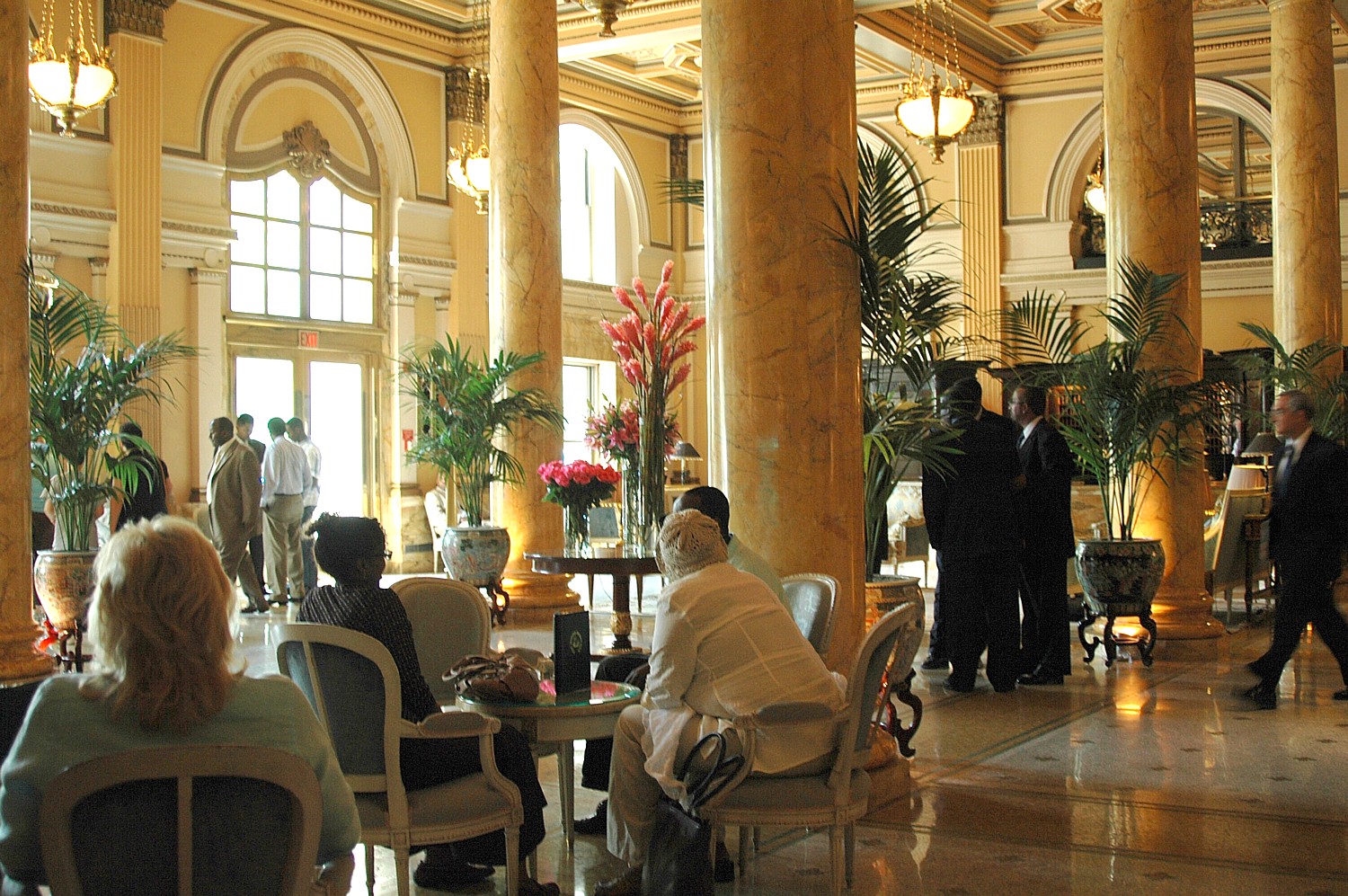
Regarded as the “Oval Office of Bars,” the stately Round Robin Bar at The Willard InterContinental, Washington, D.C. has stood as a gathering place for the District’s social and political elite since before the Civil War. Its history and proximity to the White House make it truly one-of-a-kind. Established in 1847, and one of the oldest bars in the city, the Round Robin Bar has long served as a meeting ground for presidents, diplomats, and members of Congress. The bar has also long been a favorite haunt for the city’s journalistic elite. The Gridiron Club, which used to host its annual dinners at the hotel, would pack the bar before and after the signature annual event. The National Press Club was established at the hotel in 1908, and its members have been devotees of the bar ever since. In fact, when the hotel reopened in 1986 after being closed for 18 years, the Board of Governors of the National Press Club was there to reopen the Round Robin Bar and continue its historic legacy. The bar’s signature cocktail is the Mint Julep, made with bourbon, famously introduced to the city by Kentucky politician Henry Clay at the hotel. Crafted today with Woodinville “Willard InterContinental” bourbon, fresh mint, and turbinado sugar, the Mint Julep is more than a refreshing sip; it is a tribute to diplomacy, heritage, and timeless Southern hospitality. The Round Robin Bar serves over 20,000 Mint Juleps every year. Today, visitors can explore the bar’s rich legacy through historic photographs lining the oak-paneled walls, while enjoying a specially curated menu with a variety of timeless classics, seasonal creations, and rare pours. With elevated bites and a robust zero-proof cocktail menu, every detail at the Round Robin Bar is steeped in storytelling and craftsmanship, making it an essential destination for travelers seeking a taste of American history. The Willard InterContinental, Washington, D.C. was inducted into Historic Hotels of America in 2010 and dates to 1818.

Omni Parker House (1855) Boston, Massachusetts
The Last Hurrah | Signature Drink: Boston Cream Pie Martini
The Last Hurrah is a historic Boston bar inspired by a book modeled after an infamous local politician, where storied history meets expertly crafted spirits. Since 1971, The Last Hurrah has been a beloved fixture of the historic Omni Parker House, established in 1855 and centrally located in downtown Boston. The bar’s name comes from Edwin O’Connor’s novel, The Last Hurrah (1956), a thinly disguised chronicling of the escapades of Boston Mayor James Michael Curley. Curley was a charismatic Irish-American politician, called the “Mayor of the Poor,” who dominated Boston politics for the first half of the 20th century. He hosted daily luncheons in the Parker House’s main dining room, delighting curious onlookers, and impressing the waitstaff by tipping silver dollars. Throughout the bar, visitors can scan the displays of vintage photos and see the many notable figures who have stayed, dined, or visited the Parker House throughout its history, including Amelia Earhart, Eleanor Roosevelt, and Babe Ruth, to name a few. A full wall on the second floor is dedicated to photos of John F. Kennedy and Mayor Curley. Another historic touch at The Last Hurrah is the Ponzi Corner, a cheeky and thoughtfully curated nod to one of Boston’s most infamous characters, Charles Ponzi, whose fraudulent investment operations inspired the phrase “Ponzi scheme.” Ponzi’s offices were across the street, and he frequented the hotel’s restaurants. History can also be sampled at the bar, where the signature cocktail is a spirited tribute to one of the hotel’s most iconic creations: the Boston Cream Pie, invented at the hotel in 1856. Inspired by this culinary classic, mixologists at The Last Hurrah reimagined it as a decadent cocktail. This indulgent drink delivers a taste of historic Boston in an elevated setting, blending 1 oz vanilla vodka, 1 oz Baileys Irish Cream, and 1 oz chocolate liqueur. Appointed in soft leather upholstery and rich mahogany, The Last Hurrah is a Boston tradition and more than just a bar—it is a window into Boston’s rich literary, political, and culinary history. Omni Parker House was inducted into Historic Hotels of America in 2006.

The Menger Hotel (1859) San Antonio, Texas
The Menger Bar | Signature Drink: Old Fashioned
Nestled in the heart of San Antonio, Texas, just steps away from the legendary Alamo, The Menger Hotel stands as a living testament to Texas history and hospitality. The Menger Hotel was founded in 1859 by German immigrant William Menger, who had founded the first commercial brewery in Texas just a few years earlier. One of the most historic spaces in the hotel is the Menger Bar, a faithful reproduction of the House of Lords Pub in England. In 1898, Colonel Leonard Wood and his Lieutenant Colonel (and future President of the United States), Theodore Roosevelt, set up an enlistment table at The Menger Bar, where they recruited over 1,250 men to form the Rough Riders, the famous volunteer regiment in the Spanish-American War. Want to learn more? Ask the bartender. They can tell you the stories that made this bar famous—and even point out the bullet holes where Roosevelt fired his gun to get the crowd’s attention. The signature drink is the Old Fashioned, served in a heavy-bottomed tumbler and garnished with an orange zest twist. The Menger Hotel was inducted as a Charter Member of Historic Hotels of America in 1989.

Napa River Inn (1884) Napa, California
The Fink | Signature Drink: O.G. Mai Tai
Visitors to Napa, California, can find the region’s best cocktails within a historic setting at The Fink, a playful cocktail bar founded in 2023 at the historic Napa River Inn. The bar occupies one of Napa Valley’s most historically significant commercial spaces: the foot of the grain silos within the warehouse and storage buildings of the Historic Napa Mill, which has anchored Main Street in Napa, California, since 1884. The bar’s historic building dates to 1944, when the building served as the Napa Milling Company. The mill installed the iconic 84-ft-tall grain silos to allow feed materials stored in the silos to be mixed in bulk quantities. Today, these imposing silos can be seen across downtown Napa, and visitors to The Fink can appreciate these elements from the building’s industrial heritage as part of the bar’s historic ambiance, as the venue maintains the character of this important piece of Napa’s agricultural and industrial history. Guests literally drink where history happened, within the same brick walls that housed government-bonded wines over 130 years ago, where riverboat captains planned routes, and where Napa Valley’s agricultural center was developed. In 2023, Napa Valley vintner Judd Finkelstein—owner of Judd’s Hill Winery—transformed the space into The Fink. Finkelstein designed the bar as a tiki-inspired boathouse that pays homage to the late 1800s, when the Historic Napa Mill was Napa’s commercial center, and river commerce dominated regional business. There is not just one signature drink, but the O.G. Mai Tai may be the perfect embodiment of the bar’s historical narrative. This house-made creation features authentic ingredients, including house-made orgeat syrup, and a carefully selected blend of two Jamaican rums, plus one from Martinique. The bar is known for its sophisticated ambiance—with a touch of kitsch and industrial flair—and offers a unique experience that combines the best of Napa’s wine culture with innovative mixology. Napa River Inn was inducted into Historic Hotels of America in 2004.

Palace Hotel (1875) San Francisco, California
Pied Piper | Signature Drink: Martini
Steeped in rich history, the Pied Piper bar at San Francisco’s iconic Palace Hotel stands as a true testament to timeless elegance. A landmark in San Francisco since its debut in 1875, Palace Hotel was the first luxury hotel in the city and, at the time, was the largest hotel in the world. After the 1906 San Francisco earthquake, a revitalized Palace Hotel opened its doors in 1909, including its new Pied Piper bar. Named after the famous Maxfield Parrish mural that graces its walls, the establishment has served as a gathering place for locals and travelers alike since its earliest days, welcoming generations of patrons, each experiencing its unique charm and allure. The dimly lit ambiance evokes the warm and intimate atmosphere of a private club, featuring a jewel-tone palette with rich wood paneling and an ornate mosaic tile floor. Guests can enjoy comfortable, relaxed dining while enjoying fresh California fare and an extensive selection of wine, beer, spirits, and classic cocktails with a modern San Francisco twist. Notably, the bar is known for its Martini specials. Pied Piper held “Martini Madness” happy hours in the 1970s and 1980s, and when Mad Men was airing on television in the early 2000s, the bar relaunched a Pied Piper classic cocktail collection that included the Old Fashioned, Manhattan, Vodka Gimlet, Whiskey Sour, and the classic Martini. The Pied Piper bar is interwoven with the fabric of San Francisco’s vibrant past, having served as a backdrop for historic meetings, along with countless moments of camaraderie, celebration, and connection. With its ornate décor, warm ambiance, and a legacy of exceptional service, the Pied Piper bar continues to invite guests to create their own treasured memories within its walls. Palace Hotel, which celebrates 150 years of hospitality in 2025, was inducted into Historic Hotels of America in 2010.

The Mission Inn Hotel & Spa (1876) Riverside, California
Presidential Lounge | Signature Drink: W.H. Taft’s Soixante Quinze
The luxurious Presidential Lounge at The Mission Inn Hotel & Spa in Riverside, California, exudes sophistication. Every corner, from the hand-carved bar to the dimly lit nooks, whispers of political strategy, literary musings, and social revolutions. The Presidential Lounge was originally a two-story, four-bedroom family suite. In 1903, President Theodore Roosevelt was on the campaign trail in California and retired for the evening to his suite. The following day, the inn’s owner, Frank Miller, enlisted Roosevelt’s aid in the ceremonial replanting of one of Riverside’s two parent navel orange trees in the hotel’s main courtyard. Dressed in a top hat and tails, and armed with a shovel, the President planted the tree that would help spawn California’s navel orange industry. Following his departure, the rooms he occupied were christened as the Presidential Suite in honor of his visit. The presidential connection was solidified several decades later when Richard Nixon married Thelma Catherine “Pat” Ryan in the Presidential Lounge. Today, guests can see portraits of the presidents who have visited The Mission Inn Hotel & Spa. These presidential portraits are replicas of the presidents’ official portraits, painted by Bonnie Brown and commissioned by Duane Roberts, the inn’s owner and historic preservationist. The signature drinks at the Presidential Lounge are a nod to presidential guests: W.H. Taft’s Soixante Quinze, Herbert Hoover’s Honey Buzz, Reagan’s Orange Blossom Martini, and Teddy Roosevelt’s Espresso Martini. The Mission Inn Hotel & Spa is a marvel of Mission Revival-style architecture blended with elements of Spanish Gothic, Moorish, and Mediterranean Revival styles. The Presidential Lounge retains these stylistic flourishes, with rich wood accents, original tile work which includes a mosaic of the presidential seal, stained-glass windows depicting Maximilian I, Holy Roman Emperor, and Mary of Burgundy, ornate ceilings, and antique furnishings, making the Presidential Lounge a museum, as well as a bar. The Mission Inn Hotel & Spa was inducted into Historic Hotels of America in 1996 and dates to 1876.

Hotel Monteleone (1886) New Orleans, Louisiana
Carousel Bar | Signature Drink: Vieux Carre
Overlooking Royal Street in the French Quarter since 1886, Hotel Monteleone is a New Orleans landmark and is home to perhaps the best-known bar on this list: the Carousel Bar, which opened inside Hotel Monteleone in 1949 as the city’s first and only rotating bar. Built inside the hotel’s former Swan Room, the Carousel Bar quickly became famous for its slowly rotating bar. Reinventions and redesigns of the space turned the bar into the delightfully ostentatious merry-go-round that it is today. Guests lucky enough to find an empty seat at the bar—or with the fortitude to stand in line—enjoy a gentle rotation every 15 minutes. If the ride on the bar is not important, guests can opt for table service while relaxing in one of the stationary lounge areas surrounding the bar. The cocktail menu features crafted cocktails, non-alcoholic cocktails, and bar bites. Preceding the arrival of the Carousel Bar by several years, the hotel’s signature drink, the Vieux Carre cocktail, was invented at Hotel Monteleone in 1938 by Head Bartender Walter Bergeron. The hotel is famous for its literary connections, which are described in detail in The 2024 Top 25 Historic Hotels of America® Most Literary Hotels List, and the bar’s most famous return guest was Truman Capote. A regular at the Carousel Bar, he jokingly told its patrons that he had been born inside the establishment. Hotel Monteleone was inducted into Historic Hotels of America in 1999.

The Algonquin Hotel Times Square, Autograph Collection (1901) New York, New York
Blue Bar | Signature Drinks: The Hamlet and Dorothy Parker
The Blue Bar at The Algonquin Hotel Times Square, Autograph Collection is not just a storied bar: it is a living piece of New York City’s cultural fabric. First opening in 1933, just after the repeal of Prohibition, the Blue Bar quickly became the after-hours home to some of the 20th century’s most iconic artists, writers, and performers. The Blue Bar’s legacy is intertwined with the Algonquin Round Table, the legendary group of writers, critics, and wits who frequented the hotel and helped define American literary culture. Although their debates and bon mots were often shared in the dining room, their evenings routinely spilled into the Blue Bar, where the creative conversations continued over cocktails. Served today, the Dorothy Parker cocktail pays homage to one of the most notable members of the Algonquin Round Table. But why is the bar blue? John Barrymore, a frequent guest and one of the era’s most celebrated actors, famously persuaded the hotel to install blue lighting gels above the bar’s fixtures. He believed that the cooler hues were more flattering for a pale complexion—especially his own. This theatrical touch gave the bar its name and signature glow, which remains a beloved feature to this day. The Hamlet cocktail honors one of Barrymore’s most famous roles. Today, visitors can enjoy the unmistakable caricatures of Al Hirschfeld, the legendary artist and longtime Algonquin regular, whose whimsical line drawings immortalized Broadway’s biggest stars. In a city constantly evolving, the Blue Bar remains a timeless refuge, both intimate and grand, where the city’s cultural heritage is not only preserved, but experienced. A stop at the Blue Bar is an opportunity to sip where history was made and sit in the very space that helped shape New York’s literary and theatrical identity. The Algonquin Hotel Times Square, Autograph Collection was inducted into Historic Hotels of America in 2023 and dates to 1901.

Omni Mount Washington (1902) Bretton Woods, New Hampshire
The Cave | Signature Drink: Prohibition Punch
Tucked beneath the historic Omni Mount Washington in Bretton Woods, New Hampshire, The Cave speakeasy has served drinks for over 100 years. Originally constructed in 1902 as a squash court, it was later transformed into a bar and became one of the most famous speakeasies in Northern New England during the Prohibition era. The bar featured several secretive elements to avoid detection by law enforcement, including a trapdoor for storing whiskey, a stash of teacups for discreet drinking, and a removable brick in the wall that offered a view of the road so that patrons could see police officers approaching from the driveway. The bar’s lore runs deep, with stories suggesting that Joseph Kennedy helped supply the resort with liquor during this time. Babe Ruth was a regular guest, and Bob Hope is said to have performed at the resort in the 1920s. Today, The Cave still carries the mystique of its past, with its stone walls and tucked-away location serving as a nod to the rebellious glamour of the Prohibition years. The Cave’s signature drink is Prohibition Punch, a colorful and flavorful cocktail that reflects the bar’s roots in the Prohibition era. Made with Bacardí, Malibu, and Goslings dark rum, Peach Schnapps, orange juice, pineapple juice, and grenadine, the cocktail captures the spirit of a time when gathering for a drink required secrecy and a bit of flair. While rich in history, The Cave remains a relaxing and inviting space for guests. It is a favorite après-ski spot in the winter, and a year-round favorite for guests looking to unwind. Outfitted with televisions, The Cave is also a popular place for guests to catch a game, blending the speakeasy’s historic character with casual, modern ambiance. Omni Mount Washington Resort was inducted as a Charter Member of Historic Hotels of America in 1989.

Le Pavillon, New Orleans, a Tribute Portfolio Hotel (1907) New Orleans, Louisiana
Bar 1803 | Signature Drink: That Voodoo Woman
Tucked within Le Pavillon, New Orleans, a Tribute Portfolio Hotel—built in 1907 and woven into the fabric of New Orleans’s history—Bar 1803 is a spirited tribute to the historic hotel’s Prohibition-era past. Once a discreet gathering place for politicians and local dignitaries, the bar’s original incarnation was accessed via a secret underground passage connecting the hotel’s basement to another building two blocks away. This basement is also rumored to be where the assassination of politician Huey Long was plotted. Today, Bar 1803 honors its speakeasy legacy with floor-to-ceiling velvet drapery, a hidden menu tucked discreetly on the hotel’s website for only the most inquisitive to discover, and a moody atmosphere, featuring a bewitching portrait of Napoleon Bonaparte—complete with a surprising optical illusion. Named after the year that Napoleon signed the Louisiana Purchase, the bar draws cultural and heritage travelers and late-night visitors eager to explore its secret history and rich architectural design, recently reimagined through a five-year preservation effort. While soaking in the history of this setting, guests can savor elevated versions of New Orleans classics—from seafood gumbo to shrimp po’boys—and sip signature cocktails, such as the blood-orange-kissed, That Voodoo Woman. Upon request, guests can pair their evening libations with an expert-led hotel history tour, which may include a peek at Napoleon’s original Carrera marble bathtub upstairs, in the hotel’s Napoleon Suite. Live music sets the tone on select evenings. Le Pavillon, New Orleans, a Tribute Portfolio Hotel was inducted into Historic Hotels of America in 1994.

Fairmont San Francisco (1907) San Francisco, California
Tonga Room & Hurricane Bar | Signature Drinks: Classic Tiki Cocktails
The Tonga Room & Hurricane Bar at the Fairmont San Francisco is a unique and iconic tiki bar known for its immersive, over-the-top atmosphere and commitment to the tiki aesthetic. The tiki bar’s popularity stems from its blend of unmatched décor, handcrafted cocktails, and lively entertainment, all set within a space that was once a grand indoor swimming pool. The concept was born in the late 1940s, when the hotel’s owner decided that the Fairmont Plunge pool could be put to better use. He decided to convert the pool area into a restaurant and bar named after the S.S. Tonga, a real ship found moored in the mud nearby. Guests were soon dining on Chinese food, enjoying exotic drinks on the schooner’s deck, gazing into the blue water of the former Fairmont Plunge, now featuring a floating stage for the orchestra, in the Tonga Room. The ambiance was heightened by staged tropical storms, complete with lightning and misty rain falling from concealed sprinklers. The Tonga Room is a treasured local landmark to this day. The space is still filled with nautical details, like ship masts, rigging, and salvaged wood, along with traditional tiki elements like lava rocks and wood carvings. The Island Groove band plays nightly on the floating barge, and the dance floor is made from the remains of a lumber schooner, providing a lively and fun atmosphere. Naturally, the Tonga Room is known for its Mai Tai, Fog Cutter, Zombie, and other classic tiki cocktails served in unique glassware. The Tonga Room still features simulated tropical rainstorms, adding a sense of drama to the immersive experience. Fairmont San Francisco was inducted into Historic Hotels of America in 2001 and dates to 1907.

Hotel Boulderado (1909) Boulder, Colorado
License No. 1 | Signature Drink: Espresso Martini
When Hotel Boulderado first opened its doors in 1909, Boulder, Colorado, was a dry city. While national Prohibition lasted from 1920 until 1933, Boulder’s own liquor laws stretched from 1907 until 1967. After the restrictions were repealed in the city, Hotel Boulderado was one of the first to get a liquor license in Boulder, and the hotel opened the Catacombs Restaurant and Bar in 1969. Before the basement space was turned into a restaurant and bar, it was originally used for storage, laundry services, and heating in the historic hotel. A local legend says that during the Prohibition era, tunnels connected different underground spaces around Boulder. However, there is no historical or physical evidence that shows that this local legend is real. In 2014, using this local lore as inspiration, the hotel transformed its basement restaurant space into a new bar called License No. 1. This underground speakeasy-style cocktail lounge is a tribute to the elegant Western charm of early-20th century Boulder. Guests can step back in time with classic, handcrafted libations, chef-prepared small plates, and a lively atmosphere when they enter this hidden gem in the heart of downtown Boulder. The energy in the room is fueled by the bar’s signature cocktail: the Espresso Martini. Mixologists at License No. 1 whip up the perfect Espresso Martini, made with Hoodoo Chicory Liqueur, Café Bustelo instant coffee (trust the bartenders on this), and local vodka infused with Boxcar Coffee Roasters coffee beans. Today, License No. 1 continues with the very same liquor license that was first issued in 1969 and is known as a unique location for a fun date night, to catch intimate live music performances, or enjoy a comedy show. Hotel Boulderado was inducted into Historic Hotels of America in 1996.

The Gunter Hotel San Antonio Riverwalk (1909) San Antonio, Texas
Bar 414
Housed within the walls of The Gunter Hotel San Antonio Riverwalk, a historic Texas hotel that dates to 1909, Bar 414 is more than just a bar—it is a living tribute to a pivotal moment in American music history. The name refers to the guestroom at The Gunter Hotel San Antonio Riverwalk where iconic blues artist, Robert Johnson, had his very first recording session in November 1936. The atmosphere of the space evokes a speakeasy, with saloon flair, and Bar 414 invites guests to step into a story that helped shape blues, rock, and modern music. Bar 414 is a cultural and sensory experience—a place where music, myth, and mixology converge under the roof of one of San Antonio’s most iconic hotels. It has a moody, speakeasy-inspired ambiance—equal parts refined and intimate. With dim lighting, plush leather seating, and vintage jazz and blues softly playing in the background, the space exudes a timeless, romantic allure. Locals know it as a hidden gem in downtown San Antonio, while travelers often discover it through its connection to Robert Johnson. Tucked behind an ornate gallery wall in the lobby, Bar 414 reveals itself through a concealed door wrapped in custom artwork by Chicago artist Jordan Martins. A shadow box displaying vintage guitar picks quietly hints at the bar’s name, a tribute to Robert Johnson’s historic recording session in Room 414. In that guestroom, Johnson recorded many of his most enduring songs, including “Sweet Home Chicago” and “Cross Road Blues.” These recordings became foundational to American blues and rock music. Today, Bar 414 honors this legacy not only in name, but in spirit, paying tribute to the mystique and artistry of that recording session. The Gunter Hotel has hosted notable guests since its opening—from military generals and presidents, to musicians and celebrities—making the bar a natural gathering place for stories to unfold. The echoes of jazz, blues, and Prohibition-era secrecy still linger in the bar, offering guests a direct connection to San Antonio’s rich cultural history. The Gunter Hotel San Antonio Riverwalk was inducted into Historic Hotels of America in 2025.

The Mayflower Hotel, Autograph Collection (1925) Washington, District of Columbia
Edgar Bar & Kitchen | Signature Drink: The Centennial
Edgar Bar & Kitchen, located in The Mayflower Hotel, Autograph Collection in Washington, D.C., offers libations in a sophisticated yet inviting atmosphere. Edgar Bar & Kitchen features two bars, a small lounge area, a full dining room, and Tolson, a private events space. The name, Edgar, pays homage to one of the city’s most infamous power players, J. Edgar Hoover, first Director of the Federal Bureau of Investigation. During his time in Washington, Hoover dined at the hotel almost daily with his assistant, Clyde Tolson, for 20 years. Hoover was known for ordering the exact same items from the menu every time that he dined at this historic hotel: cottage cheese, grapefruit, and iceberg lettuce. He always brought his own salad dressing. Today, the bar and restaurant feature ephemera from the hotel’s illustrious history, including vintage liquor bottles. Edgar Bar is awash in dark wood, deep green subway tile, and vintage elements that play into the approachability of this bistro-inspired space. In honor of the hotel’s 2025 centennial celebration, Edgar Bar’s signature drink is currently The Centennial. This riff on the Old Fashioned uses the hotel’s specialty WhistlePig 10-year Rye Barrel Pick, which has been fat-washed with bacon, and WhistlePig’s Barrel-Aged Maple Syrup for a smoky, savory sip. The Centennial is served on a silver tray with a custom Mayflower coaster as a keepsake. The Mayflower Hotel, Autograph Collection was inducted as a Charter Member of Historic Hotels of America in 1989 and dates to 1925.

Hassayampa Inn (1927) Prescott, Arizona
Glass Bar | Signature Drink: Dirty Martini
Stepping into the Glass Bar at the historic Hassayampa Inn in Prescott, Arizona, is like stepping back in time. Known for its ornate, carved-wood ceilings, stained-glass accents, and hand-etched glass details, the Glass Bar radiates an ambiance that is both intimate and grand. Every detail tells a story, whispering echoes of Prescott’s past while inviting guests to create memories of their own. The hotel dates to 1927, but this Arizona city has hosted Prescott Frontier Days—known as the World’s Oldest Rodeo and inducted into the Pro Rodeo Hall of Fame—since 1888. Hassayampa Inn was built to provide the growing town of Prescott with a proper, modern inn, and travelers coming from all over the country to attend the annual event have stayed at the inn. For the past 19 years, the hotel bar has been helmed by Huck Johnson. More than just the lead bartender, Huck is a historian, offering tales of the inn’s past with the same care that he pours into his signature Dirty Martini with blue cheese-stuffed olives—a local favorite. The Glass Bar is not just known for its unique atmosphere, but also for its rich history of live music. Terry Furlong, of the Grass Roots, performed at the Glass Bar for over a decade, filling the room with soulful melodies that became the soundtrack to countless nights. Long before that, the bar hosted singing cowboys—including Tom Mix and his friends in the early 1900s—bringing the spirit of the Old West alive through music and storytelling. Hassayampa Inn was inducted into Historic Hotels of America in 1996.

Mayflower Park Hotel (1927) Seattle, Washington
Oliver’s | Signature Drink: Martini
Enjoying a cocktail at the Mayflower Park Hotel, which opened in 1927, has been a Seattle tradition since 1949. The bar was first known as the Carousel Room, a small, cozy bar, and the first hotel bar in Seattle, and perhaps in the entire state of Washington. When the bar was reimagined by new owners in 1976, Washington State blue laws still prohibited anyone from looking into a bar where hard liquor was sold. When the blue laws were struck down, the owners added 10 floor-to-ceiling windows, each with 25 panes of glass, making Oliver’s the first daylight bar in the state. An elegant downtown bar, Oliver’s is still filled with natural light due to its stunning floor-to-ceiling windows. The tabletops are made from marble, salvaged by the hotel’s owner from a historic building down the street, and an imported Italian crystal chandelier hangs above the bar’s patrons. Located on a busy corner in downtown Seattle, Oliver’s is the perfect place to unwind, people-watch, and enjoy the stunning downtown location. Oliver’s is famous for its award-winning Martini. In fact, it was the hotel’s general manager who created the Seattle Classic Martini Challenge after an innocent challenge to other hospitality leaders in the city. Mayflower Park Hotel was inducted into Historic Hotels of America in 1999.

Hilton Baton Rouge Capitol Center (1927) Baton Rouge, Louisiana
The Tunnel Speakeasy
Tucked beneath the Hilton Baton Rouge Capitol Center in Baton Rouge, Louisiana, The Tunnel Speakeasy is more than just a hotel bar: it is a hidden piece of Baton Rouge’s history. The bar and lounge is located inside an actual underground tunnel once used by Louisiana governors and legislators to avoid the press and to move discreetly between this historic hotel and another hotel across the street. Infamous politician Huey Long worked and stayed in the Hilton Baton Rouge Capitol Center (then known as the Heidelberg Hotel) throughout his political career and even conducted business from his suite while under a looming impeachment from his governorship. The media frenzy often caused the need for a quick escape, which The Tunnel provided. Today, original brick archways, low lighting, and vintage décor create a rich, Prohibition-era atmosphere. Memorabilia throughout the bar highlights the hotel’s storied past, including visits from figures like Huey Long and John F. Kennedy. For travelers looking to sip in a lounge with a past, The Tunnel is a hidden gem worth discovering. Much like the speakeasies during Prohibition, guests cannot simply walk into The Tunnel Speakeasy on a whim. Space is limited and the vibe is “hush hush,” so reservations are necessary to gain entry. Once a visitor makes their reservation, a text message is sent to their phone with instructions to enter. While the cocktail menu rotates, it leans into classic spirits and vintage recipes, including absinthe—a nod to the indulgent tastes of the early 1900s. Live music plays inside The Tunnel on Thursday nights, called Gin Joint Jams, featuring local artists. Hilton Baton Rouge Capitol Center was inducted into Historic Hotels of America in 2007 and dates to 1927.

Hilton Cincinnati Netherland Plaza (1931) Cincinnati, Ohio
The Lounge at 1931 | Signature Drink: Chef’s Old Fashioned
Guests can step into The Lounge at 1931 inside the Hilton Cincinnati Netherland Plaza and experience a stunning tribute to Art Deco-style design, history, and hospitality. The hotel was dry when it opened in 1931 during Prohibition, but it opened with a breathtaking interior that blended French Art Deco-style with Louis XV-style flourishes and theatrical flair. The Lounge at 1931 was introduced during a major renovation in the early 1980s. Surrounding the bar area are original murals painted by Louis Grell, which were completed during the early days of the hotel’s opening. These vibrant works of art illustrate the themes of recreation and imagination, with the distinct outline of the Carew Tower featured in each mural. Visitors will also find other notable Cincinnati landmarks subtly woven into the depicted scenes, reinforcing the hotel’s artistic narrative and celebrating the city’s character. Overhead, the ceiling and portals reflect Egyptian influences with their step pyramid designs, while the ziggurat-shaped fountain at the far end of the Palm Court commands attention with its intricate details: a ram’s head flanked by majestic sea horses wearing lotus crowns. Crafted by the famed Rookwood Pottery studio in the Mount Adams neighborhood of Cincinnati, these design features—alongside dolphins and mermaids woven throughout the space—represent traditional Art Deco-style motifs of protection, youth, and guardianship for travelers. The signature drink at The Lounge at 1931 is the Chef’s Old Fashioned, created using New Riff Single NP Select Bourbon sourced from across the river in Kentucky. The large ice cube contains simple syrup and bitters, so as the ice cube melts, the drink transforms. This signature cocktail is garnished with a twist of orange and an Amarena cherry. Today, the bar remains a timeless destination—where history, design, and hospitality converge into an unforgettable experience for guests. Hilton Cincinnati Netherland Plaza was inducted into Historic Hotels of America in 1991.

The Hotel Hershey® (1933) Hershey, Pennsylvania
Iberian Lounge | Signature Drink: Hershey’s® Kisses™ Signature Chocolate Martini
The Iberian Lounge is deeply rooted in the history of The Hotel Hershey®, which opened in 1933 and was designed to resemble a beautiful Spanish villa that Milton S. Hershey visited while traveling with his late wife, Kitty. Because the hotel opened during Prohibition, the Iberian Lounge was originally intended to be a reading lounge, not a bar. When the 18th Amendment was repealed in late 1933, The Hotel Hershey® added a wine cellar and cocktail lounge to the Garden Terrace. It was not until 1968 that the Iberian Lounge became a bar and lounge. In keeping with the Spanish-inspired aesthetic of The Hotel Hershey®, the Iberian Lounge was designed toevoke a Spanish-inspired atmosphere, with oriental rugs, oak-paneled ceiling and columns, tinted walls, comfortable chairs and settees, and a charming fireplace. One of the most eye-catching features of the Iberian Lounge is the mural depicting a Spanish waterfront scene, painted by the hotel’s original interior designer, Robert von Ezdorf. The mural creates an optical illusion that the tile pathway is always directed towards the viewer, no matter where the viewer stands. The designs found in the mural are repeated in the lobby, on the balconies, and throughout the mosaic tile flooring. Naturally, the hotel is known for its signature chocolate cocktails, including the Hershey’s® Kisses™ Signature Chocolate Martini, but is also proud to serve over 100 whiskies from around the world, as well as savory fare, like the guest favorite, Bavarian pretzel and cheese board. From its origins as a reading lounge to its transformation into a refined bar decades later, the space embodies nearly a century of American history, hospitality, and dedication to the company’s core purpose to support the Milton Hershey School. The Hotel Hershey® was inducted into Historic Hotels of America in 1991.

The Hermosa Inn (1935) Paradise Valley, Arizona
LON’s Last Drop | Signature Drink: Last Drop
LON’s Last Drop is inspired by the history and people behind The Hermosa Inn, originally built in 1935 by cowboy artist, Lon Megargee. A true renaissance man of the Southwest, Megargee constructed the estate as his home and studio, using hand-formed adobe bricks and local materials. He added the role of host to his repertoire when he opened up his home as a guesthouse, welcoming artists, writers, and other likeminded intellectuals. The restaurant and bar are located in the area that once served as Megargee’s studio. These spacesdretain much of the studio’s original character, offering guests a rare glimpse into Arizona’s artistic and architectural heritage. The bar features exposed sections of Megargee’s original adobe walls, allowing guests to see the hay, straw, and clay composition that was typical of the era. The original adobe fireplace remains a focal point, evoking the warmth and spirit of Megargee’s time. In a nod to the bar’s artistic origins, it also displays prints of Megargee’s work, including his most iconic piece, The Last Drop from His Stetson, commissioned over a century ago by the Stetson Hat Company. Icons from Whitney Houston to Stephen Hawking and Sandra Day O’Connor have visited The Hermosa Inn. The signature cocktail at the bar is, fittingly, the Last Drop, crafted with High West Double Rye whiskey, Luxardo Apricot Liqueur, sweet vermouth, and blood orange. It honors Megargee’s wild spirit, while offering a refined taste of the region that he called home. LON’s Last Drop blends rustic charm with understated elegance. It is known for its warm, welcoming ambiance—a place where locals and travelers alike gather under candlelight. With its handcrafted textures, historical details, and Southwestern spirit, the atmosphere is relaxed yet refined: intimate, story-filled, and unmistakably Arizona. The Hermosa Inn was inducted into Historic Hotels of America in 2011.

The Wort Hotel (1941) Jackson, Wyoming
Silver Dollar Bar
The Silver Dollar Bar at The Wort Hotel has entertained and enticed guests since the earliest days of tourism in Jackson Hole, Wyoming. From the early days of cowboys and poker games, the Silver Dollar Bar has remained a lasting tradition in Jackson Hole. Adjacent to the bar, the Silver Dollar Showroom provides the best nightlife in Jackson Hole, including Bluegrass Tuesdays with local favorite, One Ton Pig. Four times a year, the Silver Dollar Showroom in the Silver Dollar Bar provides a unique offering for music lovers by hosting a noteworthy singer-songwriter for a special performance. Previous Showroom Sessions have featured 4-time Grammy Award winner, Steve Wariner; 10-time CMA Musician of the Year recipient, Mac McAnally; and legendary jazz guitarist, Doc Powell. The name of the bar comes from the 65-foot-long serpentine bar inlaid with 2,032 uncirculated 1921 silver dollars from the Denver Mint. In fact, more than 4,000 uncirculated 1921 Morgan silver dollars can be found throughout The Wort Hotel. The best displays of these silver dollars can be found inlaid in the original Silver Dollar Bar and in the Silver Dollar Showroom’s bar. The silver dollars were inlaid using a technique that would make it impossible for patrons to pry the coins from the bar. Holes were drilled into the Formica bar, slightly smaller than the silver dollars, and then the coins were shrunk with dry ice and pressed into the holes. When the silver dollars expanded, the coins were solidly encased within the Formica bar. The bar menu features signature items like burgers, elk gyros, and the hotel’s famous corn chowder, along with a large wine list and unique cocktails. The Wort Hotel was inducted into Historic Hotels of America in 2002 and dates to 1941.

The Statler Dallas, Curio Collection by Hilton (1956) Dallas, Texas
Bourbon & Banter | Signature Drink: Porto Old Fashioned
The underground speakeasy at The Statler Dallas, Curio Collection by Hilton—a historic Midcentury Modern-style hotel in Dallas, Texas—was originally home to the hotel’s famed barbershop. Now a speakeasy-style lounge, Bourbon & Banter was once where guests and celebrities performing in the hotel during the 1950s and 1960s stopped in for a trim or shave before attending events, business meetings, or performing on stage in The Statler Ballroom. Since the hotel’s spectacular renovation and reopening in 2017, the space has been home to Bourbon & Banter, where visitors can find history-minded cocktails including a Porto Old Fashioned (Basil Hayden Dark Rye Whiskey, Sagamore Small Batch Rye Whiskey, port wine reduction, chocolate and orange bitters) and a Barrel-Aged Manhattan (WhistlePig Piggyback Rye Whiskey, vermouth blend, Angostura and orange Bitters) crafted by well-known mixologists in Dallas. Like the best speakeasies, this one is tucked out of the way, with the entry in an alcove with a 1950s-era phone booth next to a classic shoeshine stand. After entering the secret code on the phone, guests can discover the speakeasy’s elevated yet relaxed atmosphere, with Old Hollywood photos and news clippings adorning the walls. When guests enter the speakeasy, they should keep an eye out for the photograph of the original hotel building, circa 1956, when The Statler opened, in order to get a peek into the past. Opening at 7 p.m., live jazz music plays every Thursday, comedy showcases are on tap on select Wednesdays, and the speakeasy space can be reserved for private events. Reservations are required in order to get the entry code to the speakeasy. The Statler Dallas, Curio Collection by Hilton was inducted into Historic Hotels of America in 2018.

“Congratulations to the selections for this year’s inaugural Top 25 Historic Hotels of America Most Historic Bars, Taverns, and Speakeasies list. These historic settings have been preserved or reinvented as fun and authentic destinations, where culture-minded travelers can relax and enjoy a night off,” said Lawrence Horwitz, Executive Vice President, Historic Hotels of America and Historic Hotels Worldwide. “While it is a collection of very different venues with their own aesthetics, vibes, and styles, each of the bars on the list celebrates the history of its city and its community, all united by impeccable hospitality, fascinating stories, unique surroundings, and expertly crafted drinks.”

Historic Hotels of America® is the official program of the National Trust for Historic Preservation for recognizing and celebrating the finest historic hotels from across the United States of America. The National Trust for Historic Preservation was chartered by U.S. Congress in 1949 and is a private 501(c)(3) nonprofit organization. The National Trust for Historic Preservation is leading the movement to save places where our history happened. To be nominated and selected for membership in this prestigious program, a hotel must be at least 50 years old; designated by the U.S. Secretary of the Interior as a National Historic Landmark or listed in or eligible for listing in the National Register of Historic Places; and recognized as having historical significance. Of the more than 300 historic hotels inducted into Historic Hotels of America from 44 states, the District of Columbia, Puerto Rico, and the U.S. Virgin Islands, all historic hotels faithfully preserve their authenticity, sense of place, and architectural integrity. For more information, visit HistoricHotels.org.

For more travel features, visit:

goingplacesfarandnear.com

Going Places @ longislandpress.com

www.longislandpress.com                                   

goingplacesnearandfar.wordpress.com

moralcompasstravel.info

travelwritersmagazine.com/TravelFeaturesSyndicate/

goingplacesfarandnear.tumblr.com/

instagram.com/going_places_far_and_near/

instagram.com/bigbackpacktraveler/

‘Like’ us on facebook.com/NewsPhotoFeatures

X: @TravelFeatures

Threads: @news_and_photo_features

Bluesky: @newsphotosfeatures.bsky.social

The 2025 Top 25 Historic Hotels of America® Most Magnificent Art Collections List Announced

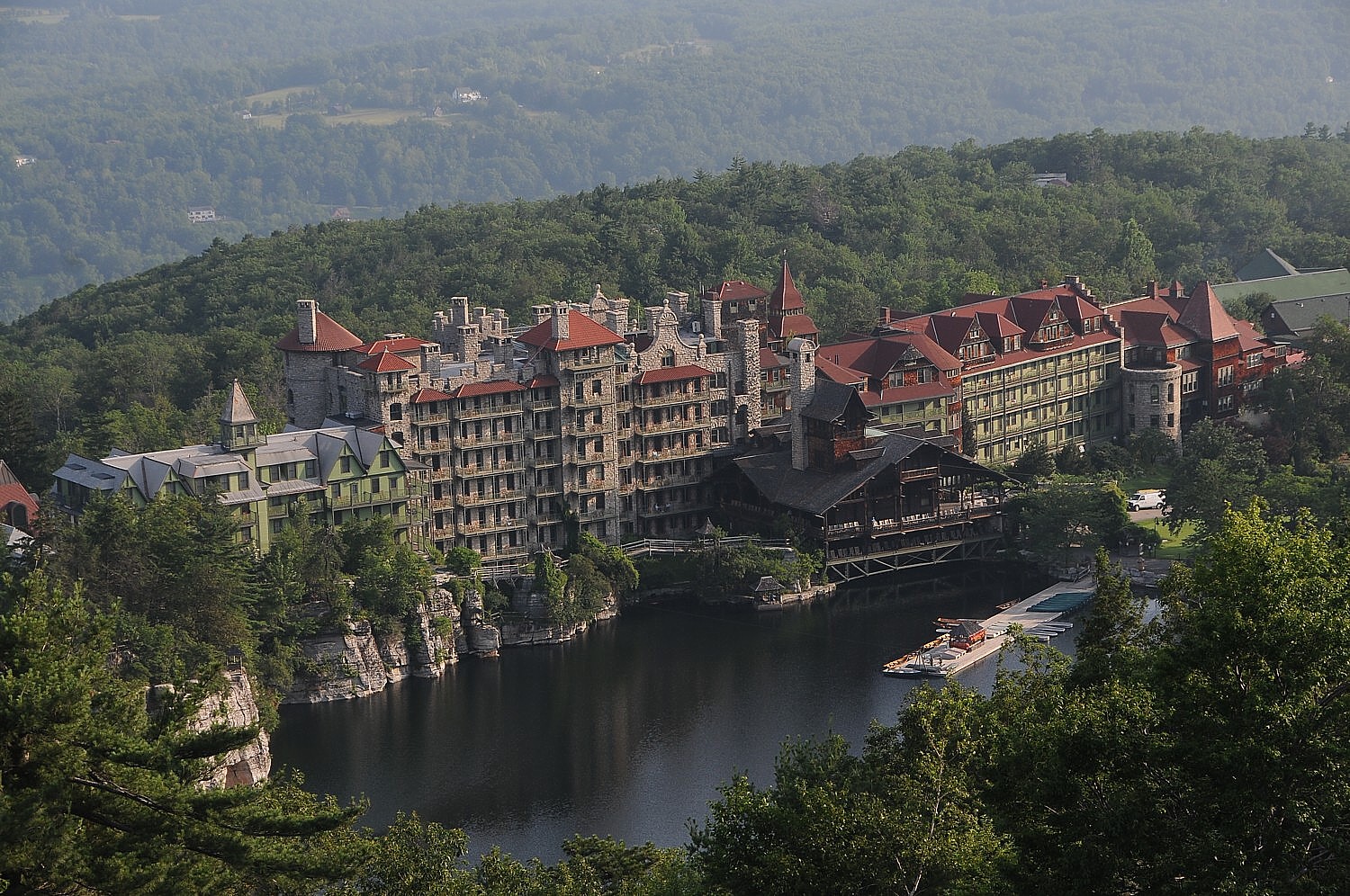
Merging nature with architecture, the iconic Victorian castle framework of Mohonk Mountain House in New Paltz, NY, has inspired many artists over the years, as have the wooden Summerhouses found throughout the trails and grounds of the property . The historic resort has been named to the 2025 Top 25 Historic Hotels of America’s Most Magnificent Art Collections List© Karen Rubin/goingplacesfarandnear.com

WASHINGTON D.C. – Historic Hotels of America®  announced its selections for The 2025 Top 25 Historic Hotels of America® Most Magnificent Art Collections List. A program of the National Trust for Historic Preservation, Historic Hotels of America is a collection of authentic historic hotels known for their stunning architecture, colorful gardens, and romantic settings—amenities that are often enhanced with historic, museum-quality art collections.

Historic hotels across the United States offer guests the opportunity to experience and enjoy a variety of artwork, including furniture, paintings, mixed media, sculpture, augmented reality, fountains and more. Many historic hotels inducted into Historic Hotels of America were founded by passionate art collectors, such as the Palmer House®, A Hilton Hotel and the JW Marriott Savannah Plant Riverside District. Others in the program are managed, in part, by art museum professionals, such as staff at the historic 21c Museum Hotels in St. LouisLouisvilleDurhamCincinnatiLexington, and Chicago. The 21c Museum Hotel Durham and 21c Museum Hotel Lexington were selected for this list, but all historic 21c Museum Hotels are multi-venue contemporary art museums, coupled with boutique hotels in historic buildings, which present over twenty exhibitions each year for communities and guests to enjoy. Another member of the program, The Hermosa Inn in Paradise, Arizona, was built by an artist to be his studio and home before he opened it up to guests.

The list below, in chronological order by the date the historic hotel building was established, highlights a variety of Historic Hotels of America members that are truly museums where you can stay the night.

The Red Lion Inn (1773) Stockbridge, Massachusetts
The Red Lion Inn in Stockbridge, Massachusetts, celebrates the arts through its second-floor Fitz Gallery, collaborations with the Berkshire Art Center, and the hundreds of decorative arts permanently on display at the inn. Guests can discover an eclectic array of paintings, sculptures, blown glass, drawings, and antique décor in guest rooms, dining areas, and halls. Much of the lobby’s antique furniture was originally selected by Mrs. Plumb, the wife of the inn’s proprietor in the late 1800s. A passionate collector, she preserved a remarkable array of furnishings and artworks. One of the most treasured parts of the collection is the inn’s 221 decorative teapots, but visitors can also spot traditional works by Norman Rockwell and contemporary pieces by Machine Dazzle. The inn, which was depicted in Rockwell’s 1967 masterpiece, Stockbridge Main Street at Christmas, offers a stay in the “Norman Rockwell Firehouse,” a charming one-bedroom village house designed to echo the spirit of his studio. Outfitted with period furnishings and adorned with his art, the space offers a uniquely intimate connection to Rockwell’s world. Plus, the Norman Rockwell Museum is located in Stockbridge and just a short drive from the inn. The Red Lion Inn was inducted into Historic Hotels of America in 1989 and is a Charter Member.

The Omni Homestead Resort (1766) Hot Springs, Virginia
The art collection at The Omni Homestead Resort in Hot Springs, Virginia, includes approximately 138 pieces of original art. Most notable is its John James Audubon collection: eighteen first-edition art prints, published in The Birds of America in London between 1827 and 1838, and displayed today in the American Audubon Dining Room. These pieces are engraved with aquatint and hand-colored on wove paper by R. Havell, set within a French mat under UV-protected glass. A wide variety of bird species are depicted in various forms and actions. The Ingalls family, who owned and developed the resort between the late 19th and early 21st centuries, acquired the collection for The Homestead in the early 1900s. In addition to the Audubon collection, the Resort displays original artwork by artists including oil paintings of the Old Course by Andras Bality; 20 pieces from W.H. Lee Baskerville, whose painting of the Jefferson Pools can be found in the hotel lobby; 23 realist-style portraits from Paul Bertholet, depicting the Presidents who visited the hotel between 1789 and 2009; and four works by plein-air artist Ed Hatch, whose work depicts Virginia’s countryside and can be viewed within the Warm Springs Pools Gallery. The Omni Homestead Resort is a charter member of Historic Hotels of America, inducted in 1989, and it was designated a National Historic Landmark by the U.S. Secretary of the Interior.

Mills House Charleston, Curio Collection by Hilton (1852) Charleston, South Carolina
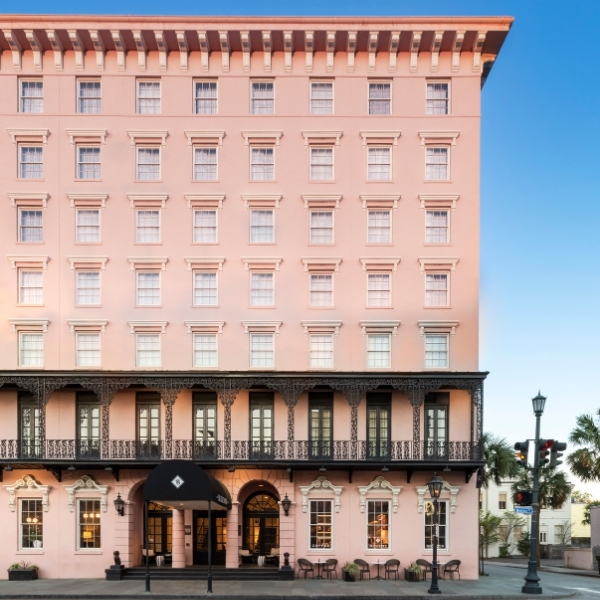
Guests of Mills House Charleston, Curio Collection by Hilton in Charleston, South Carolina, will find a thoughtfully curated collection of original artwork found throughout the property including guest rooms and suites, bespoke gathering spaces, first floor community areas, and dining concepts. Established in 1852 as a private home, The Mills House underwent a multi-million-dollar renovation in 2022 debuting this collection amongst the reimagined spaces. Linked by a common thread–all female artists and subjects–the collection features a mix of artistic styles, mediums, and materials to create compelling and dynamic visual displays throughout the property. While some of the artwork reflects notable, historical female figures, others nod to themes of female empowerment, identity, and connection to the city. The collection also includes three custom installations – a series of suspended sculptural magnolia blossoms; a framed piece featuring mounted vintage teaspoons; and a mirrored acrylic box filled with hand-formed black roses – each of which pay homage to a signature element iconic to the Charleston experience. Featured artists include Kalisher Studio; Sara Gsilva; Chloe Purpero; Lisa Krannichfeld; Suzanne Creighton; Lela Brunet; Alyson Fox; Michelle Ellingsworth; Tracy Murrell; Marta Spendowska; Heather Evans Smith; Lauren HB Studio; Jill King; KLC Studios; Holly Bishop; Bridget Davies; and Jen Swearington. The collection also includes three custom installations: a series of suspended sculptural magnolia blossoms; a framed piece featuring mounted vintage teaspoons; and a mirrored acrylic box filled with hand-formed black roses. Mills House Charleston, Curio Collection by Hilton was inducted into Historic Hotels of America in 2024.

Mohonk Mountain House (1869) New Paltz, New York
Mohonk Mountain House in New Paltz, New York, has an extensive art collection of over 1,800 pieces, many of which highlight the people and the scenery of the Hudson Valley. Merging nature with architecture, the iconic Victorian castle framework of the Mountain House has inspired many artists over the years, as have the wooden Summerhouses found throughout the trails and grounds of the property. This artwork evokes a sense of inviting nature inside—a key tenant of the hotel’s hospitality vision. The most well-known artists in the Mohonk collection are Daniel Huntington and Henry Van Ingen. Huntington, a native New Yorker, first exhibited his work at the National Academy of Design in 1836, and painted landscapes in the tradition of the Hudson River School, as well as portraits. It is believed that he was the first artist to portray Mohonk Lake and its environs. Huntington also painted portraits of both Albert K. Smiley and Eliza P. Smiley—founders of the mountain resort hotel—during his time at Mohonk Mountain House. Many of the hotel’s pieces by Henry Van Ingen, including oil paintings that are exhibited in the Central Staircase and Winter Lounge, were selected by Albert K. Smiley. A guidebook to the oil paintings is available in the Mohonk Gift Shop: Paintings at Mohonk: Visions of our Surroundings by Sanford A. Levy. The hotel offers a House History tour three days a week and also offers a free self-guided tour through its augmented reality Hidden Histories app. Mohonk Mountain House was inducted into Historic Hotels of America in 1991, and it is designated a National Historic Landmark by the U.S. Secretary of the Interior.

Palmer House®, A Hilton Hotel (1871) Chicago, Illinois
When guests arrive in the lobby of the Palmer House, A Hilton Hotel in Chicago, Illinois, and look up, they know that they have entered a work of art. Above them is the magnificent ceiling adorned with 21 Grecian murals by French artist Louis Pierre Rigal and the majestic Tiffany & Co. 24-karat gold Winged Angels. Throughout the hotel, design is paramount. A visit to see the art collection at the Palmer House is almost like visiting an extension of the Art Institute of Chicago. The hotel’s founders, Bertha and Potter Palmer, were great art collectors, and Bertha Palmer bestowed much of their collection to the Art Institute of Chicago in her will. Her sons supplemented the bequest with a donation of thirty-two additional paintings and pastels. In 1922, the Palmer collection was installed in galleries 25 and 26, which are the present-day galleries 206 and 207, respectively, in the museum’s Allerton Building. The core of their collection was Impressionist paintings, which included works by artists such as Claude Monet, Pierre-Auguste Renoir, Camille Pissarro, and Edgar Degas. Many of these paintings are now among the highlights of the museum’s permanent collection. When the Palmers began collecting Impressionist art in the 1890s, it was considered radical, even controversial. It is due to Mrs. Palmer’s forward-thinking nature, influence, and willingness to pursue her own taste, rather than follow trends, that Chicago is home to one of the greatest collections of Impressionism in the world. Listed on the National Register of Historic Places, Palmer House®, A Hilton Hotel was inducted into Historic Hotels of America in 2007.

Palace Hotel (1875) San Francisco, California
The Palace Hotel shares with visitors and guests some of San Francisco’s best-loved art, as well as newly purchased and commissioned works. Two of the more well-known artists with works at the hotel are Maxfield Parrish and Antonio Sotomayor. The Pied Piper of Hamelin was commissioned for Maxfield Parrish to paint for the hotel’s reopening in 1909. Inspired by the legendary tale dating back to 1284, the painting depicts the Pied Piper leading citizens out of the town of Hamelin, Germany. Featuring 27 expressive faces—including 24 children, 2 women, and the Pied Piper—the work is colorful and extremely life-like. Today, The Pied Piper is displayed in its namesake bar. The Palace Hotel also houses two murals by San Francisco artist Antonio Sotomayor, who immigrated to California from Bolivia in 1923. Sotomayor’s “Lotta Panel” depicts San Francisco’s favorite actor, Lotta Crabtree, and the “Emperor Norton Panel” immortalizes the city’s infamous character, Emperor Norton I, self-proclaimed Emperor of the United States and Protector of Mexico. Sotomayor was the hotel’s chief artist for a time and became famous for his works found throughout San Francisco, from the opera to restaurants and bars. When asked how he felt about the locations of some of his works of art, he responded: “Why paint if you don’t want people to see it? … A bar is one of the best ways to reach a large number of people. And think of how much more accessible it is than a museum!” Palace Hotel was inducted into Historic Hotels of America in 2010 and it is celebrating its 150th anniversary in 2025.

The Mission Inn Hotel & Spa (1876) Riverside, California
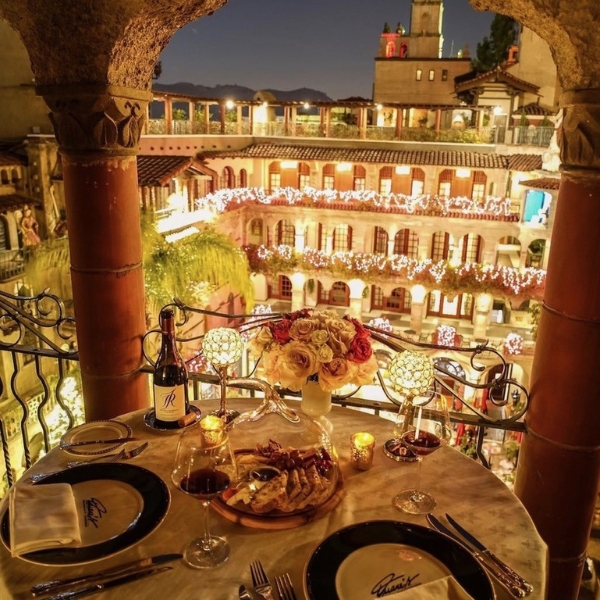
Any visit to The Mission Inn Hotel & Spa in Riverside, California, is a thrilling journey through an exquisite art collection. The historic hotel, designated a National Historic Landmark by the U.S. Secretary of the Interior, is a living museum that houses a vast art collection, including sculptures, paintings, stained-glass panels, wood carvings, ceramics, metalwork, and architectural elements. The art represents various themes, with a focus on California’s history and religious artifacts. The art collection is estimated to be 350+ works, with many of them being paintings, sculptures, and stained glass. Standouts in the collection include Henry Chapman Ford oil paintings depicting the California Missions. Several spaces in the hotel were purpose-built to house certain artwork, such as the St. Francis Chapel, featuring seven stained-glass windows by Louis C. Tiffany, an oil-on-wood painting (“The Marriage of Mary and Joseph”) by Baltazar de Echave above the wedding altar, and an ornate Mexican Baroque-style altar screen. The historic hotel’s Spanish Art Gallery was designed in 1914 to display a vast collection of paintings from around the world, collected by the Miller hotelier family. The room itself is a work of art: regal 17th-century European décor in a warm palette of gold offers sophistication. The venue features a grand marble staircase with wrought iron, a ceiling richly draped in a gilded canopy, and a centuries-old door of carved pomegranate. The sheer volume and diversity of the hotel’s collection make it unique, reflecting Frank A. Miller’s belief that art should be accessible to everyone. Visitors there can enjoy rare access to priceless works of art that were collected with deep respect and admiration for their histories and craftsmanship. Miller, the inn’s original founder, once said, “it pays to give people something different, and that is when you put thought and sentiment into a thing and make it really characteristic, then only do you have the right to call it a success.” The Mission Inn Hotel & Spa was inducted into Historic Hotels of America in 1996.

Lancaster Arts Hotel (1881) Lancaster, Pennsylvania
The historic Lancaster Arts Hotel serves as one of Lancaster, Pennsylvania’s premiere art galleries. The hotel introduces the work of established artists to a broader audience and promotes the rich fabric of the arts in Lancaster County. The art at Lancaster Arts Hotel is not confined to a single gallery space; it is woven into the very fabric of the building. Guests encounter original art in every hallway, guest room, and public space, including the lobby, the corridors, meeting rooms, and the on-site restaurant, John J. Jeffries. The Blanche Nevin Room and Art Gallery Boardroom serve dual purposes as functional meeting spaces and curated art environments, while each guest room features one-of-a-kind pieces that create a personalized, gallery-like experience for every visitor. Boasting a mixture of paintings and sculptures, and a combination of 16 local artists on display throughout the hotel at any given time, the hotel has featured over 32 artists since opening in 2006. Many of the pieces on display are available for sale based on the artist’s discretion. While tours are not given, the artwork is displayed throughout the hotel and guests are welcome to view the paintings at any time. The hotel building was once a 19th-century tobacco warehouse, and much later renovated, restored, and turned into a vibrant hotel, which was inducted into Historic Hotels of America in 2008.

Union League Club of Chicago (1886) Chicago, Illinois
Union League Club of Chicago is the steward of Chicago’s second largest private art collection. The ULCC’s art collection began in 1891 when a club member donated a watercolor painting, Cologne Cathedral by Ross Sterling Turner, to the organization. An art committee within the club formed in 1892 and it was instrumental in the development of the 1893 Columbian Exposition, as well as the acquisition of art for members to enjoy. Today, the club’s collection comprises over 700 paintings, drawings, sculptures, prints, and photographs. The collection contains pieces in different mediums by Gertrude Abercrombie, Miyako Ito, Hebru Brantley, The Harry Who Artists, Angel Otero, Kerry James Marshall, Roger Brown, Dawoud Bey, Richard Hunt, and many others. Visitors can view the collection throughout the first eight floors of the club, in its ballrooms, meeting rooms, hallways, and stairwells. On the third floor, a dedicated art gallery space exhibits local, emerging artists. Self-guided and docent-led tours are available. Union League Club of Chicago was inducted into Historic Hotels of America in 2021.

Casa Monica Resort & Spa (1888) St. Augustine, Florida
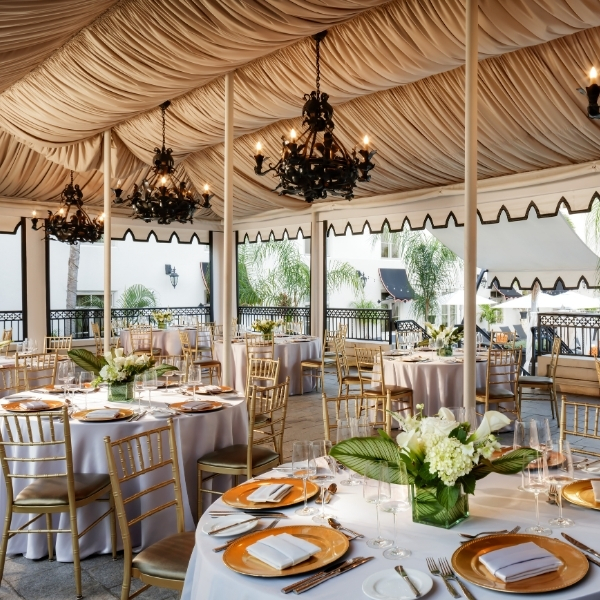
The ambiance of Casa Monica Resort & Spa in St. Augustine, Florida, exquisitely joins together the hotel’s historic roots with a bohemian aesthetic to being open, curious, and adventurous. The hotel’s founder, Richard C. Kessler, collected masterful works in oil, blown glass, and porcelain from around the world, and the hotel’s Corporate Director of Galleries has bolstered the Kessler aesthetic by upholding a high bar for what is exhibited at the resort and the resort’s gallery, The Grand Bohemian Art Gallery. Oil paintings, sculptures, and antiques may be enjoyed in the resort’s restaurants, hallways, and guestrooms. One of the resort’s most impressive series is the Five Women of Saint Augustine by Marianne Lerbs. This series depicts the history of St. Augustine through the lives of five courageous women, who successfully and resiliently made their marks on the city. In November 2022, Kessler issued an open call to emerging artists across the United States to search for “The Next Original.” Out of more than 1,800 artists, Mr. Kessler handpicked nine finalists to display their work. All nine finalists were named The Next Original Artists of 2022 after inspiring Mr. Kessler in their own unique way. Not only is their work hung in the Grand Bohemian Gallery, but guests can also experience monthly artist receptions and live painting experiences with the winners as part of the resort Artist in Residence program. Visit the Casa Monica Resort & Spa and its Grand Bohemian Art Gallery to see the collection. With a reservation, gallery staff will create a memorable walk-through of the hotel and gallery collection for hotel guests and art patrons. Private gallery events may also be arranged. Casa Monica Resort & Spa was inducted into Historic Hotels of America in 2001.

The Pfister Hotel (1893) Milwaukee, Wisconsin
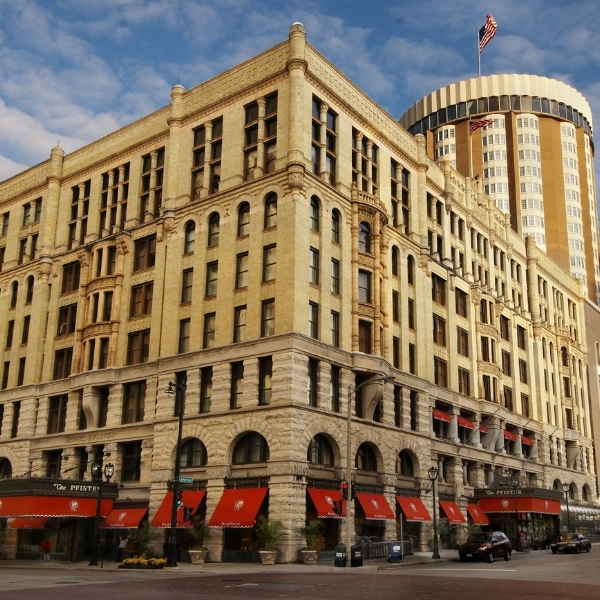
The Pfister Hotel’s art collection is reportedly the largest Victorian art collection of any hotel in the world. Collected by Guido and Charles Pfister, the historic Milwaukee, Wisconsin hotel keeps at least 80 pieces of 19th and early 20th-century Salon and Genre works on permanent display. Drawn from a variety of styles and subject matters, and gracing the setting for which they were selected, the collection offers guests a rare glimpse into the tastes and sensibilities that enlivened the Belle Epoque. As guests make their way through the lobby, they are greeted by the two bronze statues called The Pikemen dating back to the opening of the hotel. Also in the lobby are the well-known Pfister Lions, “Dick” and “Harry.” Charles Pfister used to introduce them as “Mason” and “Jefferson” to his guests, after the intersecting streets where the property stands in downtown Milwaukee. Moving through the hotel, nearly all the art embraces a style that was very much in vogue in the early 1900s and complements the hotel’s history. The landscapes, portraits, and sculptures are distributed throughout the hotel, and serve as a welcome invitation at the top of each stairway or down a long corridor. Currently, The Pfister offers self-guided tours of the art collection as well as scheduled tours with the hotel’s current Artist in Residence. The Pfister Hotel was inducted into Historic Hotels of America in 1994.

XV Beacon (1903) Boston, Massachusetts
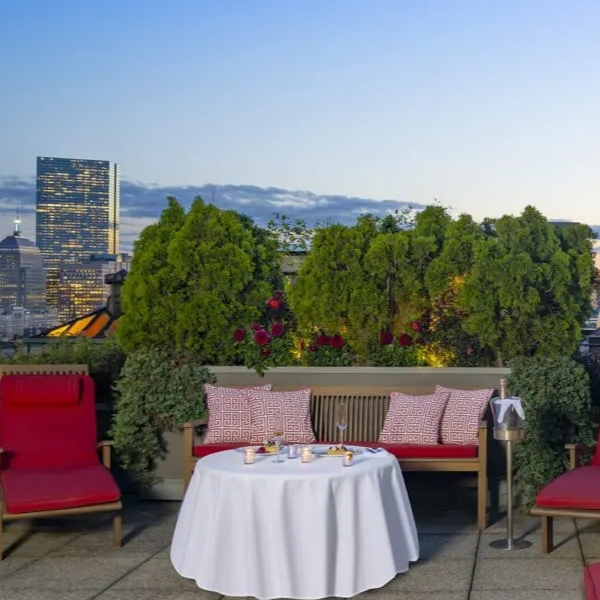
Not only is this Boston hotel a work of art, designed by renowned Boston architect William Gibbons Preston, but the XV Beacon also distinguishes itself with an extensive art collection of its own. The prized pieces of its collection include an ancient Roman mosaic; canvases by America’s foremost portraitist Gilbert Stuart, whose images of President Washington are impressed into the nation’s imagination; works by contemporary abstract painter Maggi Brown, and much more. This collection has given the XV Beacon its status as a hidden gem in the Boston arts and cultural scene. Specially commissioned works by Martha Lloyd, Joe Greene, Tony Evanko, Ben Freeman, and other artists hang in XV Beacon’s guestrooms. The hotel explains, “When travel stress hits, nothing grounds the soul like art.” In Mooo…. Restaurant’s wine cellar, a stunning Roman mosaic dating back to the fourth to the fifth century A.D. depicts two cavorting deer amidst flowers, amphorae, and fish. At this storied hotel, old becomes new again. XV Beacon’s art collection reflects self-awareness of its place in history and, simultaneously, its commitment to environmentally sound policies and practices. XV Beacon was inducted into Historic Hotels of America in 2016.

The Mansion at Ocean Edge (1907) Brewster, Massachusetts
The Mansion at Ocean Edge began as a summer estate for a prominent family and, now open to the public, continues to provide guests with an unmatched vacation experience on the New England coast. In 2024, the hotel partnered with local photographer Steven Koppel to document the beauty of the Brewster Flats. The Brewster Flats, which touches the hotel’s private beach, extends over 12,000 acres along the shore of Cape Code. Koppel’s impressionist technique brings a still scene to life and injects emotion into an already breathtaking sight. Fourteen of his photographs are on display at the hotel. Two examples from the series are pieces titled “Celebration” and “Resilience,” the first of which captures wavy seagrass and dramatic skyline to communicate the beauty of the flats, and the latter uses long exposure to show movement. This series is on display in the hall and stairway leading from The Mansion down to the Mansion Ballroom, which then proceeds down to access the beach. Occasionally, the hotel offers plein air painting events, invites an Irish artist to visit during the Taste of Ireland celebration every March, and other artistic events throughout the year. The Mansion at Ocean Edge was inducted into Historic Hotels of America in 2022.

JW Marriott Savannah Plant Riverside District (1912) Savannah, Georgia
Built on the site of a coal power plant dating back to 1912, the JW Marriott Savannah Plant Riverside District in Savannah, Georgia, is not only home to a signature Grand Bohemian Gallery, but is a gallery in and of itself, featuring curated and commissioned work from world-renowned artists. From paintings and murals to sculptures and statues, imperial Bösendorfer pianos, and even museum-quality installations and historical artifacts, each piece is hand-selected to draw guests deeper into owner and developer Richard C. Kessler’s vision. The energy-themed Generator Hall, the previous site of the historic Georgia Power Plant, features not only traditional artwork but also art in the form of natural science. On display are museum-quality geodes, citrines, and amethysts measuring up to 9 feet, as well as fossils and meteorites. The crown jewel of the hotel, Chromina Joule, sits center-stage in Generator Hall. The 135-foot-tall chrome dinosaur created by paleopathologist, David Trexler, is an exact replica of one of the largest dinosaurs in the world that was found in 1860 in Colorado. The art comes to life at this historic hotel through interactive tours offered Wednesday through Sunday. JW Marriott Savannah Plant Riverside District was inducted into Historic Hotels of America in 2022.

21c Museum Hotel Lexington (1914) Lexington, Kentucky
21c Museum Hotel Lexington is a new hotel located in the historic Fayette National Bank Building in Lexington, Kentucky. The adaptation of the historic space mixes contemporary design with historic Beaux Arts International-inspired details, bringing new life to the 100-year-old building. Like all 21c Museum Hotels, this hotel offers 7,000 square feet of contemporary art exhibition space open to the public at no cost, as well as an 88-room boutique hotel, restaurant, and bar. Permanent installations include “Spectralline” by New York design studio SOFTLab (located in the lobby), “BRASS” by American artists Leslie Lyons and JB Wilson (located in the Lockbox restaurant), and Totally in Love by Dutch artist Pieke Bergmans (located on the street outside the hotel). On display now through November 2025 is a new exhibit, Still, Life! Meaning and Mending in Contemporary Art. The works collected share a common relation to the disruptive forces that came to bear during the COVID-19 pandemic, including the intersections of global conflict, disease, civic protest, and the climate crisis. Artists in the exhibit include Valerie Hegarty, Portia Munson, Beverly McIver, Omar Victor Diop, and Nate Lewis. Listed on the National Register of Historic Places, 21c Museum Hotel Lexington was inducted into Historic Hotels of America in 2019.

Historic Hotel Bethlehem (1922) Bethlehem, Pennsylvania
Historic Hotel Bethlehem in Bethlehem, Pennsylvania, is home to eight murals painted by George Gray in 1936. Seven of these murals currently hang proudly in the Mural Ballroom, and the eighth hangs directly outside of the Mural Ballroom. In 1936, the American Hotels Corporation took over the management of Hotel Bethlehem and commissioned George Gray to paint the history of Bethlehem for this hotel. It was part of a vast new mural program for the corporation’s upscale hotels. Measuring up to 30 feet wide, the artworks became minor landmarks in their cities. The murals painted for Historic Hotel Bethlehem depict stories related to the historic city’s past: “The Walking Purchase (1737)”; “The Founding of Bethlehem (1741)”; “General Benjamin Franklin’s Visit (1755)”; “The Liberty Bell in Bethlehem (1777)”; “General Casimir Pulaski (Father of the American Calvary) visit (1778)”; “Asa Packer & the founding of Lehigh University (1865)”; “Iron & Steel Industry”; and an eighth mural of a map of The Walking Purchase. Gray painted more than 200 murals in his lifetime, most of which were commissioned by the American Hotels Corporation. Today, only 26 of his hotel murals survive. The murals at Historic Hotel Bethlehem are the only set in its original location and one of only two complete surviving sets painted by Gray. Historic Hotel Bethlehem is located within a National Historic Landmark District and is adjacent to a UNESCO World Heritage Site. The hotel was inducted into Historic Hotels of America in 2002.

La Fonda (1922) Santa Fe, New Mexico
Since its founding, La Fonda on the Plaza has played a pivotal role in establishing Santa Fe as a premier destination for art and culture. From its earliest years, the hotel began acquiring works by leading Pueblo artists and has long supported Santa Fe’s renowned Indian Market by continuing to collect pieces by Indigenous creators. Today, original artwork hangs in every guestroom, each piece thoughtfully connected to the people who designed, built, and owned the hotel. Among the distinguished artists featured at La Fonda is Gerald Cassidy, who created ten dramatic canvases illustrating life in the West, along with a detailed map of the Southwest that still hangs in the Santa Fe Room. Paul Lantz contributed striking murals of Mexican village life. More recently, contemporary Indigenous artists such as Tony Abeyta and Jordan Craig have enriched the hotel’s collection with their vibrant, evocative works, continuing La Fonda’s tradition of celebrating Native American artistry. La Fonda offers one of the most comprehensive art and history tours in Santa Fe, led by a dedicated team of 50 volunteer docents. These complimentary tours run Wednesday through Saturday and are open to the public. The hotel’s popular Artist-in-Residency Program supports emerging talent and runs throughout the year, allowing guests to engage directly with working artists. In August 2023, La Fonda released the second edition of its acclaimed art book, In Every Room: A Story of the Art. A proud member of Historic Hotels of America since 1991, La Fonda continues to celebrate and preserve the artistic spirit that defines Santa Fe.

The George Washington Hotel (1922) Washington, Pennsylvania
In the 1930s, the popular George Washington Hotel in Washington, Pennsylvania, commissioned a prominent local artist named Malcolm Parcell to create six murals for The Pioneer Room, a dining venue at the popular hotel. Depicting artistic interpretations of the National Road and Washington, Pennsylvania, Parcell’s artwork became regarded as an important cultural attraction in just a matter of months. The murals show idealized depictions of six American icons: “The Conestoga Wagon,” “Pony Express,” “Pack Horse,” “Stage Coach,” “Lafayette visits Washington,” and “David Bradford’s Escape.” Malcolm Parcell painted these murals over the course of six months, during which time he was a guest of the hotel. Each mural is presented with a handwritten caption describing the artwork. The murals are the largest and longest-lasting set of murals by Parcell, who won the 1925 Carnegie Prize for Art. The George Washington Hotel was inducted into Historic Hotels of America in 2023—a century after its founding in 1923.

The Eliot Hotel (1925) Boston, Massachusetts
The Eliot Hotel, a premier boutique destination in the heart of Boston, presents a distinguished and carefully curated art collection that seamlessly blends contemporary and classic sensibilities. The collection features an impressive array of pieces, including the dynamic black paintings by renowned artist James Jamie Nares and a bold red sculpture by Bill Thompson, both prominently displayed in the hotel’s elegant lobby. Adding to the hotel’s rich artistic heritage, original murals created with gold leaf by Boston artist Iris Marcus adorn the historic 1925 elevators, preserving their classic beauty while introducing a modern artistic twist. Each guest room at The Eliot is uniquely adorned with carefully selected artwork, offering a distinctive ambiance tailored to every visitor. Art is a defining element of The Eliot’s boutique charm, thanks to the vision of Dora Ullian, the hotel’s owner and a passionate art enthusiast with an eclectic taste. Further enhancing its artistic presence, The Eliot collaborates annually with Orly Khon to design a striking art installation at the hotel’s entrance, engaging not only guests but also the surrounding community. Additionally, the private dining room is home to an expansive mural by local graffiti artist Sam Malpass, providing a bold and unexpected artistic touch to the space. Whether admiring the original murals, discovering thought-provoking installations, or enjoying the sophisticated charm of the guest rooms, visitors to The Eliot are immersed in a one-of-a-kind artistic journey. The Eliot Hotel was inducted into Historic Hotels of America in 2024.

Hacienda Del Sol Guest Ranch Resort (1929) Tucson, Arizona
Surrounded by the stunning Santa Catalina Mountain Range, Tuscon, Arizonia’s Hacienda Del Sol Guest Ranch Resort complements natural beauty with a collection of welded steel sculpture displayed throughout the grounds. The collection was curated by Jeff Timan (Director of Gardening & Art, as well as a Resort Partner) and his wife, along with Gift Shop Manager Robyn Kessler. It features artists such as Rigsby Frederick, Steven Derks, Carlos Carulo, and Lou Pearson. Guests are invited to stroll through the grounds and enjoy over 100 pieces of artwork installed throughout the 34-acre resort. The most distinctive pieces are two original sculptures by the late Lou Pearson and one by Carlos Carulo. Contemporary artist Carulo found a prominent place in the resort’s gardens for his sculpture The Bull, which is placed so that it appears to protect the Terraza Garden Patio, the open-air casual restaurant. Across Hacienda Del Sol Guest Ranch Resort, guests can find sculptures, paintings, pottery, photography, and tilework perfectly accenting and enhancing the natural landscape of the Sonoran Desert and culture of the Southwest. The art on display is often inspired by the culture of the Southwest region, many pieces exhibiting traces of Native American and Mexican influences as well as more modern contemporary work from celebrated artists. Tours of the hotel art collection are available for groups and guests upon request. Hacienda Del Sol Guest Ranch Resort was inducted into Historic Hotels of America in 2009.

The Hermosa Inn (1935) Paradise Valley, Arizona
Once the private residence and studio of the famed cowboy artist Lon Megargee, The Hermosa Inn in Paradise Valley, Arizona, has long been a favorite desert retreat for fans of Megargee’s art and those simply looking to get away in style. Megargee is most famous for collaborating with Stetson, known for its hats, and in particular for painting The Last Drop from His Stetson. Megargee’s long career and the inn itself can be traced back to his teenage years, when he worked as a ranch hand in Arizona before pursuing a formal art education. In 1935, after much success, he invested in six acres of land outside Phoenix and built “Casa Hermosa.” It became his home and art studio first, and then he opened up his home as a guest ranch. The inn changed owners several times since Megargee’s time there, but it remains a testament to Megargee’s life and accomplishments thanks to careful stewardship. Guests today can enjoy Megargee’s own library and wine cellar, as well as original works of art by Megargee or ones complementary to his vision. The inn regularly hosts special events and classes where guests can enjoy hands-on experiences inspired by the property’s artistic heritage. The Hermosa Inn was inducted into Historic Hotels of America in 2011.

21c Museum Hotel Durham (1937) Durham, North Carolina
21c Museum Hotel Durham, a destination hotel and contemporary art museum, opened in 2015 at a historic former bank building. Inside, there are over 10,500 square feet of art-filled event space, and its collection of 21st-century art includes over 5,000 works in all media from painting, sculpture, and photography to film, video, performance, and Virtual and Augmented Reality. Established artists including Kehinde Wiley, Jennifer Steinkamp, Yinka Shonibare C.B.E RA, and Kara Walker are represented in the collection, alongside a wide range of artists now emerging onto the global stage, such as Ebony G. Patterson, Titus Kaphar, Hank Willis Thomas, and many others. Inside and outside the building, guests can happen upon the 21c flock of Cracking Art Group Fuchsia Penguins. These four-foot-tall sculptures made of recycled plastic migrate through the building each day. It is part of the hotel’s mission to broaden the audience for—and deepen the appreciation of—contemporary art, and it does this by providing exhibits and programming for locals and visitors alike to engage with art in a variety of ways. Often, this involves bringing artists to Durham and hosting local artists for talks, exhibition tours, and performances. Listed on the National Register of Historic Places, 21c Museum Hotel Durham was inducted into Historic Hotels of America in 2019.

The Wort Hotel (1941) Jackson, Wyoming
The Wort Hotel in Jackson, Wyoming, displays over 175 pieces of original contemporary and traditional Western-themed art. The collection is defined by its sculptured bronze works, acrylics, and oil paintings. The Wort Hotel is especially proud of its hand-carved, Western-themed wooden doors, which are attached to eight guestrooms. Art is around every corner at The Wort Hotel. Highlights from the collection include 13 original Lyle Waggoner sculptures, 50 Ray McCarty paintings, and 12 illustrations by John Clymer. The hotel also has works by Gerry Metz and Joe Velazquez. Art collector and The Wort Hotel’s owner Bill Baxter says of the collection, “From our standpoint, this is a tribute to the importance and history of The Wort Hotel, that we connect it authentically with the West and the experience of the cowboy and cowgirl and the American Indian and the landscape…it just seemed appropriate to us to amplify those connections with beautiful, original Western art.” The artwork is spread throughout the hotel, in public spaces, the bar, and restaurant, as well as select guestrooms. These guestrooms have original artwork, as well as custom furnishings and bedding, in accordance with the guestroom’s theme. Additionally, the Ray McCarty artwork ties into the hotel’s gambling history. The hotel features a self-guided walking tour with photos and descriptions of key pieces of art. A brochure provides an overview of the artists, as well as the names of each piece featured at the hotel. This is a free tour available to any guests who stop into the hotel to have a look. The Wort Hotel was inducted into Historic Hotels of America in 2002.

The Statler (1956) Dallas, Texas
The Statler is a Midcentury Modern Dallas, Texas, landmark with an art collection that includes sculpture, a panoramic mural, and photographs by artists including Jack Lubin and Brad Oldham. The history of The Statler’s art collection is as interesting to explore as the works are to look at: much of it was original to the hotel but was lost when the hotel was sold in 1988, only to be rediscovered in the 2010s. One lost-and-found piece is a painting by Jack Lubin that was once displayed in the former Empire Room. This painting was covered in 1988 but rediscovered in 2013. The hotel had it professionally restored and carefully transferred to the lobby area behind the front desk. The Statler went to great lengths to restore its recovered artwork and guests at the hotel today can enjoy works of art that were almost lost forever. On the 19th-floor rooftop pool is Llinda Llee Llama, a sculpture by Brad Oldham, which pays homage to the real-life Llinda Llee, a llama who enjoyed being paraded around the streets of Dallas, riding in limos, and visiting sick children in the late 1950s and 1960s. She is The Statler’s Brand Ambassador and has been an ongoing, iconic part of the hotel’s style and art integrations. Miniature replica statues can be found in each guestroom. The Statler was inducted into Historic Hotels of America in 2018.

Mauna Kea Beach Hotel (1964) Kohala Coast, Hawaii
Mauna Kea Beach Hotel’s art collection includes over 550 pieces, featuring a blend of Hawaiian, Pacific Rim, and Southeast Asian art. It showcases various mediums, with a notable focus on cultural heritage, including Hawaiian quilts, kapa artworks, antiques, and traditional artifacts. Many of these pieces were personally commissioned by hotel founder Laurance S. Rockefeller in the 1960s, with the aim of preserving and celebrating the region’s rich history. The collection includes rare, historical items such as 30 Hawaiian quilts crafted by local artist Meali’i Kalama and a group of talented women, as well as 14 kapa pieces by Hawaiian artist Malia Blanchard Solomon. These quilts and kapa works emphasize Hawaii’s cultural and historical significance, with the quilts also representing loyalty during the overthrow of the Hawaiian monarchy. Displayed throughout the hotel, including in guest rooms and the seventh-floor gallery, the collection is available for guests to explore both physically and digitally. The hotel offers a self-guided art tour through a new app and hosts a free Art Tour every Saturday. Guests can view these works, including the intricate quilts and kapa pieces, which reflect the depth of Hawaiian traditions. The hotel’s ongoing $200 million restoration project, in partnership with Hawaii’s Bishop Museum, ensures the longevity of the collection. This initiative, along with educational tools like an app and podcast, allows guests to engage with the art’s history and significance, making Mauna Kea Beach Hotel a must-visit for cultural heritage travelers seeking a deeper understanding of Hawaii’s artistic and historical legacy.

“The authenticity and originality of historic hotels is illustrated in the one-of-a-kind art collections many of them display for guests,” said Lawrence Horwitz, Executive Vice President, Historic Hotels of America and Historic Hotels Worldwide. “Support for artists and endowments to acquire and sustain art collections has been a tradition of many of the founders and builders of historic hotels; fortunately, this tradition continues through the dedication of current ownership and their passion for making it easy for guests of these iconic and legendary hotels to experience some of the finest art collections across the United States of America—while staying at a historic hotel.”

Historic Hotels of America® is the official program of the National Trust for Historic Preservation for recognizing and celebrating the finest historic hotels from across the United States of America. The National Trust for Historic Preservation was chartered by U.S. Congress in 1949 and is a private 501(c)(3) nonprofit organization. The National Trust for Historic Preservation is leading the movement to save places where our history happened. To be nominated and selected for membership in this prestigious program, a hotel must be at least 50 years old; designated by the U.S. Secretary of the Interior as a National Historic Landmark or listed in or eligible for listing in the National Register of Historic Places; and recognized as having historical significance. Of the more than 300 historic hotels inducted into Historic Hotels of America from 44 states, the District of Columbia, Puerto Rico, and the U.S. Virgin Islands, all historic hotels faithfully preserve their authenticity, sense of place, and architectural integrity. For more information, visit HistoricHotels.org.

For more travel features, visit:

goingplacesfarandnear.com

Going Places @ longislandpress.com

www.longislandpress.com                                   

goingplacesnearandfar.wordpress.com

moralcompasstravel.info

travelwritersmagazine.com/TravelFeaturesSyndicate/

goingplacesfarandnear.tumblr.com/

instagram.com/going_places_far_and_near/

instagram.com/bigbackpacktraveler/

‘Like’ us on facebook.com/NewsPhotoFeatures

X: @TravelFeatures

Threads: @news_and_photo_features

Bluesky: @newsphotosfeatures.bsky.social

2024 Historic Hotels of America® Annual Awards of Excellence Winners Announced

Gina Petrone at the Hotel del Coronado (1888), the famous hotel in San Diego, California immortalized in the film, “Some Like it Hot,” was named Hotel Historian of the Year © Karen Rubin/goingplacesfarandnear.com

WASHINGTON, DC — Historic Hotels of America® announced the winners of the 2024 Historic Hotels of America Annual Awards of Excellence. Historic Hotels of America is the official program of the National Trust for Historic Preservation for recognizing, celebrating, and promoting the finest historic hotels in the United States.

Award recipients were announced and honored on the evening of November 21, at the 2024 Historic Hotels Annual Awards of Excellence Ceremony and Gala at The Omni Homestead Resort in Hot Springs, Virginia, in front of an audience of more than 200 industry leaders, owners, general managers, senior management, and representatives of the world’s finest historic hotels. 

The Omni Homestead Resort, founded in the scenic Allegheny Mountains in 1766, is the most historic resort in the United States. It is famous for its iconic Warm Springs Pools and championship fairways. TIME Magazine recently included The Omni Homestead Resort on its list of the “World’s Greatest Places 2024.” The awards ceremony was the final event of the 2024 Historic Hotels Annual Conference held there the week of November 18.

During the ceremony, 19 distinct awards of the Historic Hotels of America Annual Awards of Excellence were presented to hoteliers and hotels, recognizing them as the best of the best among their peers. Winners were selected from nominations by historic hotels, preservation supporters, prior award recipients, community leaders, and leadership from Historic Hotels of America. As an official program of the National Trust for Historic Preservation, Historic Hotels of America provides the recognition to travelers, civic leaders, and the global cultural, heritage, and historic travel market that member hotels are among the finest historic hotels from across the United States of America. The Historic Hotels Annual Awards of Excellence Program recognizes the pinnacle of this distinct group.

From more than 500 nominations received, the awards committee evaluated and, after careful consideration, selected the following 2024 Historic Hotels of America Awards of Excellence winners:

Historic Hotels of America New Member of the YearThis award is presented to a new member hotel that best demonstrates immediate engagement, activation, and passionate support of Historic Hotels of America.
Winner: Hotel Iroquois (1902) Mackinac Island, Michigan

Historic Hotels of America Best Social Media of a Historic Hotel
This award is presented to a hotel that actively engages consumers by sharing the best of its history through social media, including Facebook, Twitter/X, and Instagram with interesting historical facts and stories.
Winner: Historic Hotel Bethlehem (1922) Bethlehem, Pennsylvania

Historic Hotels of America Sustainability Champion
This award is presented to a hotel that best implements and practices innovative green initiatives and programs, demonstrating historic preservation is the ultimate green.
Winner: Mauna Kea Beach Hotel (1964) Kohala Coast, Hawaii

Historic Hotels of America Best Small Historic Inn/Hotel (Under 75 Guestrooms)
This award is presented to a hotel under 75 guestrooms that best celebrates its history in the guest experience and provides exceptional customer hospitality and service.
Winner: The Inn at Leola Village, Est. 1867 (1867) Leola, Pennsylvania

Historic Hotels of America Best Historic Hotel (76-200 Guestrooms)This award is presented to a hotel with 76-200 guestrooms that best celebrates its history in the guest experience and provides exceptional customer hospitality and service.
Winner: The Jefferson Hotel (1895) Richmond, Virginia

Historic Hotels of America Best Historic Hotel (201-400 Guestrooms)This award is presented to a hotel with 201-400 guestrooms that best celebrates its history in the guest experience and provides exceptional customer hospitality and service.
Winner: Fairmont Century Plaza (1961) Los Angeles, California

Historic Hotels of America Best Historic Hotel (Over 400 Guestrooms)
This award is presented to a hotel over 400 guestrooms that best celebrates its history in the guest experience and provides exceptional customer hospitality and service.
WinnerJW Marriott Savannah Plant Riverside District (1912) Savannah, Georgia

Historic Hotels of America Best City Center Historic HotelThis award is presented to a hotel located in a city center that best celebrates its history in the guest experience and provides exceptional customer hospitality and service.
Winner: The Willard InterContinental Washington, DC (1818) Washington, District of Columbia

Historic Hotels of America Best Historic Resort
This award is presented to a historic resort that best celebrates its history in the guest experience and provides exceptional customer hospitality and service.
Winner: Colonial Williamsburg Resorts: Williamsburg Lodge, Autograph Collection, and Colonial Houses (1750) and Williamsburg Inn (1937) Williamsburg, Virginia

Historic Hotels of America Best Historic Restaurant
This award is presented to a restaurant that is part of a historic hotel that offers the finest cuisine, historic atmosphere, and exceptional customer service.
Winner: Garden Court at Palace Hotel (1875) San Francisco, California

Historic Hotels of America Ambassador of the Year (25+ Years of Service)This award is presented to an individual who has dedicated their career to a historic hotel for at least 25 years, has been an exemplary ambassador and steward of the history and stories of a historic hotel, and has shown exemplary hospitality and service to the hotel and its guests.
Winner: Cindy White at The Omni Homestead Resort (1766) Hot Springs, Virginia

Historic Hotels of America Hotel Historian of the Year:This award is presented to a hotel historian who best demonstrates a passion for preserving, displaying, and interpreting the history of their hotel, a true ambassador of the past.
Winner: Gina Petrone at Hotel del Coronado (1888) San Diego, California

Historic Hotels of America Legendary Family Historic Hoteliers of the Year: This award is presented to a multi-generational family ownership entity or management company that has served as an exemplary role model in the operation of the historic hotels entrusted to its stewardship, demonstrated a long-term legacy of commitment to historic preservation, and been an active champion for Historic Hotels of America.
Winner: The Monteleone Family at Hotel Monteleone (1886) New Orleans, Louisiana

Historic Hotels of America Historic Hotelier of the YearThis award is presented to the recipient demonstrating the highest contribution to furthering the celebration of history at historic hotels as well as leadership and innovation.
Winner: John Murtha at Omni Parker House (1855) Boston, Massachusetts

Historic Hotels of America Lifetime Achievement AwardThis award is presented to individuals whose lifelong passion has resulted in the preservation and celebration of the history and stories of a legendary historic hotel.
Winner: Molly and Robert D. Hardie at The Hermitage Hotel (1910) Nashville, Tennessee; and Keswick Hall (1912) Charlottesville, Virginia
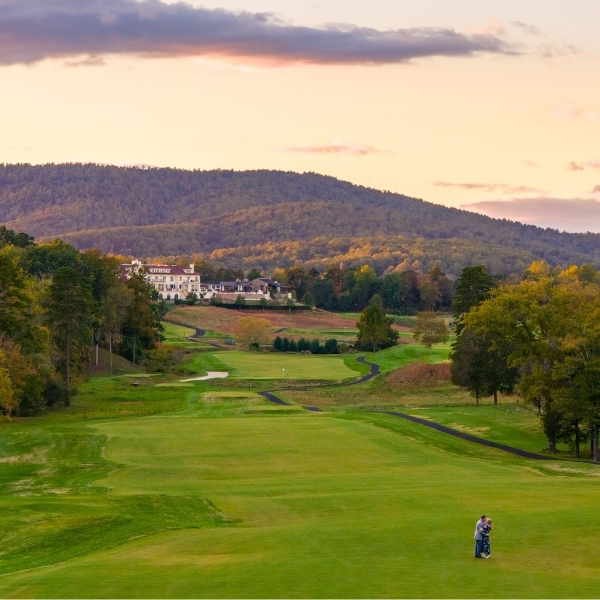
Historic Hotels of America Steward of History and Historic Preservation AwardThis award is presented to hospitality leaders whose passion and dedication to the historic preservation of a legendary hotel will ensure that future generations of travelers can experience its history.
Winner: Kelly and Duane Roberts at The Mission Inn Hotel & Spa (1876) in Riverside, California

Historic Hotels of America Legacy of Innovation & Inspiration Award
This award recognizes the extensive accomplishments of individuals in pioneering innovative concepts and programs, achieving uncommon success, being a thought leader on exceptional service, and being a force of inspiration in the hospitality industry, and whose commitment to historic preservation and exemplary record of long-term stewardship has resulted in the preservation of historic hotels and resorts.
Winner: Philip F. Anschutz at The Broadmoor (1918) Colorado Springs, Colorado

Historic Hotels of America Historian of the YearThis award is presented to an individual who is making a unique contribution to the research and preservation of history and whose work has encouraged a wide discussion, greater understanding, and increased enthusiasm for American History.
Winner: Anthea M. Hartig, Ph.D., serving as the Elizabeth MacMillan Director of the Smithsonian’s National Museum of American History

“It is an honor to congratulate all of the 2024 Historic Hotels of America Annual Awards of Excellence winners,” said Lawrence Horwitz, Executive Vice President, Historic Hotels of America and Historic Hotels Worldwide. “The winners are the finest historic hotels and hoteliers from across the United States. The historic hotels nominated include small historic inns, boutique hotels, lifestyle hotels, and resorts. They represent small towns to large cities to UNESCO World Heritage destinations. We applaud the dedication and passion of the thousands of individuals working at these iconic and legendary hotels that keep the stories alive from the past and make staying or celebrating special occasions at these historic hotels memorable experiences. The hotels on this list represent the very best spirit of perseverance and preservation of historic hotels. Through the many chapters these buildings have seen, it is the care of their staff, owners, and operators and the support of travelers that allow these stories to continue.”

To be nominated for the Historic Hotels of America Annual Awards of Excellence, the hotel must be a member of Historic Hotels of America, demonstrate how the hotel increased the recognition and celebration of the hotel’s history, heritage, historic preservation, and its membership, as well as how the hotel (through its ownership, leadership, and employees) contributes significantly as an industry leader in the designated award category.

Historic Hotels of America® is the official program of the National Trust for Historic Preservation for recognizing and celebrating the finest historic hotels across the United States of America. The National Trust for Historic Preservation was chartered by U.S. Congress in 1949 and is a private 501(c)(3) nonprofit organization. The National Trust for Historic Preservation is leading the movement to save places where our history happened. To be nominated and selected for membership in this prestigious program, a hotel must be at least 50 years old; designated by the U.S. Secretary of the Interior as a National Historic Landmark or listed in or eligible for listing in the National Register of Historic Places; and recognized as having historical significance. Of the more than 300 historic hotels inducted into Historic Hotels of America from 44 states, the District of Columbia, U.S. Virgin Islands, and Puerto Rico, all historic hotels faithfully preserve their sense of authenticity, sense of place, and architectural integrity.

For more information or to find and book a member hotel, visit HistoricHotels.org.

See also:

Historic Hotels Worldwide® Announces Winners Annual Awards of Excellence Winners

For more travel features, visit:

goingplacesfarandnear.com

Going Places @ longislandpress.com

goingplacesnearandfar.wordpress.com

moralcompasstravel.info

travelwritersmagazine.com/TravelFeaturesSyndicate/

goingplacesfarandnear.tumblr.com/

instagram.com/going_places_far_and_near/

instagram.com/bigbackpacktraveler/

‘Like’ us on facebook.com/NewsPhotoFeatures

Twitter: @TravelFeaturesThreads: @news_and_photo_feature

6 Historic Places Where You Can Vacation Like a President This President’s Day

A U.S. National Historic Landmark, the Old Faithful Inn has been a member of Historic Hotels of America since 2012. This iconic holiday destination is located in the heart of Yellowstone National Park, specifically next to its legendary Old Faithful geyser. Among the illustrious guests: U.S. Presidents like Warren G. Harding and Calvin Coolidge; First Lady Laura Bush stayed in 2002. Two earlier presidents, Chester A. Arthur and Theodore Roosevelt, had camped at the site back long before the Old Faithful Inn opened. © Karen Rubin/goingplacesfarandnear.com 

In the spirit of honoring past leaders and indulging in a touch of luxury, what better way to celebrate President’s Day than by immersing oneself in the historic footsteps of former U.S. presidents? From the majestic views of the Grand Canyon to the quaint charm of the Sheridan Inn in Wyoming, and from the opulent Broadmoor in Colorado to the iconic Old Faithful Inn in Yellowstone National Park, there’s a wealth of presidential vacation spots waiting to be explored. Imagine basking in the same ambiance that once hosted the likes of Theodore Roosevelt, Calvin Coolidge, and Bill Clinton. 

Uncover fascinating tales of presidential visits, cultural significance, and the timeless allure of these remarkable retreats. Join us on a journey through history and luxury, as you vacation like a president this President’s Day.

El Tovar, Grand Canyon National Park, South Rim

Widely considered the crown jewel of the Historic National Park Lodges, El Tovar is located directly on the Grand Canyon’s Rim and first opened its doors in 1905. The hotel was designed by Charles Whittlesey, Chief Architect for the Atchison, Topeka, and Santa Fe Railway.  The Chicago architect envisioned the hotel as a cross between a Swiss chalet and a Norwegian Villa. This was done to appeal to the tastes of the elite from that era, who at the time considered European culture the epitome of refinement. The hotel was built from local limestone and Oregon pine. It cost $250,000 to build, and many considered it the most elegant hotel west of the Mississippi River. 

In 1987 the Hotel was designated a National Historic Landmark. In the past, the hotel has hosted such luminaries as Albert Einstein, Western author Zane Grey, Sir Paul McCartney, Oprah Winfrey, and countless others. 

U.S. Presidents who have stayed at El Tovar include Theodore Roosevelt, William Howard Taft, Gerald Ford, George H.W. Bush, Herbert Hoover, Calvin Coolidge, Dwight Eisenhower, and Bill Clinton.

The Sheridan Inn, Sheridan, Wyoming

Constructed in 1892 as part of a railway extension program, the Sheridan Inn was designed by Omaha architect Thomas R. Kimball. Drawing inspiration from Scottish hotels, the architect included the iconic wraparound porch and a bountiful number of dormered windows in his design. In a short six months, the Inn was constructed and upon completion was the first building in the area furnished with electrical power and bathtubs, giving adventurous travelers a taste of Eastern luxury in the West and was considered the finest hotel between Chicago and San Francisco.

Buffalo Bill Cody frequented the Sheridan Inn as part owner and soon turned the Sheridan Inn into the headquarters for his Wild West Show, from which he auditioned new members from the iconic front porch of the Inn. Local Sheridan cowboys and cowgirls were recruited, including George Gardner and Tode Bard, to join the show and travel to Europe with Buffalo Bill.

With a massive ballroom and a dining room table large enough to seat 165 people, the Sheridan Inn was the social hub for the area, hosting grand dances and dinners. The 64 hotel rooms hosted new residents of Sheridan who stayed at the Inn while their houses were being built and ranchers would spend their weekends at the Inn. Early prices at the Sheridan Inn were one dollar per night and fifty cents for lunch or dinner. Over the years, The Sheridan Inn drew notable guests from far and wide, such as Ernest Hemingway, President Hoover, Will Rogers, and Bob Hope.

Today guests can choose from one of the Inn’s 22 rooms, which have been uniquely designed and named after important figures in Buffalo Bill’s life. Reserving a room involves looking over a Room Menu and selecting from such options as the “Sitting Bull Room” or “Annie Oakley Room”. Each suite presents the times and individual histories of the person in the room’s overall finish and furnishings, artifacts, and exhibits.

THE BROADMOOR, Colorado Springs, CO

The Broadmoor has hosted many (actually, most) U.S. presidents in its 106-year history, including Dwight Eisenhower, who would visit the resort regularly to play golf and learn from pro-Ed Dudley. Fun fact: George W. Bush gave up drinking after a big 40th birthday celebration at the resort’s The Golden Bee gastropub. From the Obamas to the Roosevelts, The Broadmoor has had its share of presidential stays in this uniquely Western resort, which spans 5,000 acres and is a gateway to the Rocky Mountains.

One can roam the hallway between Broadmoor West and the West Tower to see The Broadmoor’s photo gallery. The gallery includes framed portraits of distinguished guests (including presidents) who have stayed at the resort over the decades, from Prince Harry to Bob Hope. 

The Oasis at Death Valley, Death Valley, California 

The Oasis at Death Valley was originally called Furnace Creek and is a true American oasis where 80,000 gallons of ancient water rise to the surface every day.  The Native Americans, prospectors, settlers, and 49ers all knew about the water there and the oasis. Eventually, the land was purchased by the Pacific Borax Company which mined and hauled borax out of the valley with the famed Borax 20 Mule Teams of the 1880s.  The mules and miners were based at Furnace Creek.

The resort was originally built by the Pacific Borax Company in the late 1920s and would become the getaway winter spot for Hollywood celebrities such as Clark Gable, and Ronald Reagan, and where George Lucas filmed scenes from the original Star Wars movies because of the stunning natural beauty in daylight. 

Over the years in addition to the Inn, the Ranch was expanded, and amenities and facilities were added for the enjoyment of travelers and vacationers including casual lodging, restaurants, a general store, a golf course, tennis courts, a gas station, official U.S Post Office (Zip Code 92328), RV parking and of course, a saloon.

Old Faithful Inn, Yellowstone National Park, WY

A U.S. National Historic Landmark, the Old Faithful Inn has been a member of Historic Hotels of America since 2012. This iconic holiday destination is located in the heart of Yellowstone National Park, specifically next to its legendary Old Faithful geyser. The hotel itself was originally constructed upon the grounds of the former Upper Geyser Basin Hotel, which had collapsed during the 1890s. Its initial owner had been Jay Cooke, a prominent railroad tycoon who had long entertained the idea of preserving the area that now constitutes Yellowstone National Park. Cooke’s team at the Northern Pacific Railroad subsequently debuted the Upper Geyser Basin Hotel in 1883 and was thus obligated to construct a replacement when the former was destroyed a decade later. 

Opening in 1904, the newly created “Old Faithful Inn” immediately became one of Yellowstone’s most popular attractions. The hotel was soon hosting many influential people over the following decades, including U.S. Presidents like Warren G. Harding and Calvin Coolidge. Two earlier presidents, Chester A. Arthur and Theodore Roosevelt, had camped at the site back long before the Old Faithful Inn opened. Lastly, First Lady Laura Bush stayed at this iconic inn in 2002. 

Cody and Yellowstone National Park, Wyoming 

Many presidents have been spotted in the state’s northwestern region known as Cody Yellowstone, which includes the town of Cody, as well as parts of Yellowstone National Park. To start, Chester A. Arthur visited Yellowstone National Park in 1883 with a large entourage and was intent on having an authentic Western experience. Arthur kept in touch with the outside world and engaged in presidential business with one daily mail courier on horseback who delivered and received Arthur’s messages.

President Calvin Coolidge visited Cody on July 4, 1927, for the opening of the Buffalo Bill Museum, the first of five museums that comprise the Buffalo Bill Center of the West. Theodore Roosevelt was a big fan of the state, and he made several trips during his presidential tenure and returned to Wyoming to vacation after he left Washington. In 1903, during his final visit to the park for a two-week vacation, he visited the Norris Geyser Basin where he spent two nights at the Norris Hotel. During that trip, he laid the cornerstone for the park’s Roosevelt Arch. Although the arch is in the state of Montana at the northern entrance to Yellowstone, Wyoming celebrates the grand structure too, as most of the park is in Wyoming.

Years later, Theodore’s fifth cousin Franklin took office, and he also left his mark on Yellowstone Country. When he visited the park, he avoided the park hotels, many with multiple floors and no elevators, and instead was a guest of the lodge manager in his single-floor park home, which could better accommodate his wheelchair while at the same time keeping it from public view.

Some other notable names include President George H.W. Bush, President Bill and First Lady Hillary Clinton, President Barack Obama and his family, First Lady Melania Trump, and President Jimmy Carter dined at the employee pub at the park’s Lake Lodge where he signed the wall of the pub, still visible to guests today. Lastly, President Warren Harding visited the park in 1923, shortly before he died, and the staff in the park named a geyser after him.

For more travel features, visit:

goingplacesfarandnear.com

Going Places @ theisland360.com/travel

goingplacesnearandfar.wordpress.com

moralcompasstravel.info

travelwritersmagazine.com/TravelFeaturesSyndicate/

goingplacesfarandnear.tumblr.com/

instagram.com/going_places_far_and_near/

instagram.com/bigbackpacktraveler/

‘Like’ us on facebook.com/NewsPhotoFeatures

Twitter: @TravelFeatures 

1886 Crescent Hotel to Lockdown for Paranormal Investigators, Jan. 10

The 1886 Crescent Hotel, known for its ghostly inhabitants and eerie events, will be opening its doors to a select group of paranormal investigators on the night of January 10, 2023.

The 1886 Crescent Hotel, known for its ghostly inhabitants and eerie events, will be opening its doors to a select group of paranormal investigators on the night of January 10, 2023. This exclusive event will allow 50 brave individuals to explore the hotel’s active spaces and guest rooms, equipped with state-of-the-art paranormal sensors.

The Crescent Hotel in Eureka Springs, Arkansas, will be on full lockdown, therefore investigators will stay overnight at the Basin Park Hotel, which is also known for its paranormal experiences (12 Spring St., Eureka Springs, AR 72632, 877-456-9679, https://www.basinpark.com/). Both hotels are members of Historic Hotels of America (historichotels.org).

The night will begin with a welcome reception in Basin Park Hotel’s Jack Rabbett Whisky Bar, where investigators will have the opportunity to meet each other and discuss their plans for the evening. At 8:30 PM, they will be shuttled to the Crescent and go into lockdown. From that point on, investigators will have unrestricted access to the hotel and will be able to explore as they please, with the help of experienced guides.  The investigation will continue until 2AM when guest will be returned to the Basin Park with many stories to tell.

Participants are encouraged to document their experiences and share them on social media, but no outside light sources will be permitted on the property.

This one-of-a-kind event is not for the faint of heart, and spots are limited to 50 participants.

An Overnight Guest Room is required, January 10, and rates start at $149.

The reservationist will reserve your place in the lockdown

The cost of the lockdown is $250 per person and includes:

Welcome reception

Transportation between hotels

Paranormal investigation at the Crescent Hotel

You must call, 877-342-9766, to book your space and use promo code: Lockdown.

1886 Crescent Hotel & Spa, 75 Prospect Ave., Eureka Springs AR 72632, 877-342-9766, https://crescent-hotel.com/.

For more travel features, visit:

goingplacesfarandnear.com

Going Places @ theisland360.com

goingplacesnearandfar.wordpress.com

moralcompasstravel.info

www.huffingtonpost.com/author/karen-rubin

travelwritersmagazine.com/TravelFeaturesSyndicate/

goingplacesfarandnear.tumblr.com/

instagram.com/going_places_far_and_near/

instagram.com/bigbackpacktraveler/

‘Like’ us on facebook.com/NewsPhotoFeatures

Twitter: @TravelFeatures

Top 25 Most Haunted Historic Hotels of America

Jekyll Island Club Resort, Jekyll Island, Georgia, is among this year’s Historic Hotels of America Top 25 Most Haunted Hotels © Karen Rubin/goingplacesfarandnear.com

WASHINGTON, DC—Halloween 2019 – Just in time for Halloween 2019, Historic Hotels of America has released its list of Most Haunted Historic Hotels. A membership organization of more than 300 hotels with long and storied histories, some hotels have reported ghosts and paranormal activity throughout the halls and in guestrooms giving those who stay a fright – and they don’t just come out at Halloween. From ghosts who have been around since the Revolutionary War to jilted lovers, heartbroken, there are an abundance of ghostly sightings in historic hotels.

Here is a listing of the Top 25 Most Haunted Hotels:

Concord’s Colonial Inn (1716) Concord, Massachusetts
The original part of the Inn was built in the early 1700s before the Revolutionary War. With such a long and robust history, it’s no wonder there are spirits that still wander the halls of this historic hotel. One of the most famous, haunted and sought-after guestrooms is room 24. During the Revolutionary War, the right side of the Inn was privately owned by Dr. Timothy Minot. When patriot soldiers were injured at the Battles of Lexington and Concord at the North Bridge, they were brought to his home to be cared for. Dr. Minot used what is now the Liberty Room as a hospital and room 24 as an operating room. Several soldiers who were operated on in room 24 died during surgery. They were then carried directly downstairs into room 27, which was used as a morgue. It’s no wonder then that guests have reported lights flickering in room 27 or turning on and off completely. One guest woke up in the middle of the night and every light was on in the room, including the television! Others have heard hushed whispers coming from the closet and have seen the door to the room slamming shut on its own.

The Red Lion Inn (1773) Stockbridge, Massachusetts
Ghostly rumors continue to swirl at the inn which has seen the likes of many paranormal investigators and mediums. The fourth floor, in particular, has been said to have the most activity. Both cleaning staff and guests have claimed to see a “ghostly young girl carrying flowers” and “a man in a top hat.” It has been said that guests have awoken to the feeling of someone standing over them at the foot of the bed. Cold spots, unexplained knocks, and electrical disturbances have all been reported. Guestroom 301 is also known to be a haunted hot spot. 

Omni Parker House, Boston (1855) Boston, Massachusetts
This hotel was opened by Harvey Parker and he was involved with the operations of the building until his death in 1884. Over the years, many guests have reported seeing him inquiring about their stay—a true “spirited” hotelier even after his death. 

The Sagamore (1883) Bolton Landing, New York
The Sagamore has its own American ghost story. Opened in 1883 as a playground resort for summer residents of Millionaire’s Row, this rambling historic hotel sits in a 6 million-acre state park and is rumored to accommodate a ghost or two. Stories persist of the ghost of a silver-haired woman wearing a blue polka-dot dress descending from the second floor to the Trillium, the hotel’s fine dining restaurant. 

1886 Crescent Hotel & Spa (1886) Eureka Springs, Arkansas
The 1886 Crescent Hotel, well known today as being a mountaintop spa resort in the Arkansas Ozarks, was once used as a Cancer Curing Hospital which was under the control of the hospital’s owner, reported charlatan Norman Baker from Muscatine, Iowa.  Baker operated his Eureka Springs’ facility from 1937 until December 1940. There are many paranormal patrons with terrifying tales to tell. Among those are Michael, the Irish stonemason who, while constructing the building back in 1885, fell to his death in the footprint of what is now Room 218. He has thought to be a frequent visitor to the room since the day of his death. There’s also Theodora – a patient and helper during the days when the hotel was owned Norman Baker, resides in Room 419. Guests have reported that she will put bags in front of the door from the inside making it hard for guests to open their door upon their return. Dozens and dozens of ghost like encounters, and creepy, unexplained occurrences happen at this hotel on a regular basis.

Jekyll Island Club Resort (1887) Jekyll Island, Georgia
Over the years, the Jekyll Island Club Resort has seen many families come and go since it opened in 1887. With all that time, comes the stories and mysteries, the staff, as well as guests have encountered firsthand. One such encounter involves the family of J.P. Morgan. Sans Souci, one of the buildings at the Jekyll Island Club Resort, is a handsome four-story structure erected in 1896 as one of the first condominiums to ever be built. It was built originally for families to use, including the family of J. Pierpont Morgan. His family rooms were located on the third floor, north end of the property facing the Jekyll River. He was particularly fond of the large porch which graced the front of his apartment allowing him a beautiful view of the river. Mr. Morgan was a lover of cigars. As the story goes, one could tell where he was by following the trail of smoke. In order to avoid criticisms for his favorite hobby, he would rise early every morning by 5 am to have a smoke on the porch. While most contemporary guests are not rising at such an early hour for a cigar, those who have stayed in the Morgan’s old apartment swear they have awakened to the faint smell of cigar smoke wafting about when there is absolutely no one else awake.

Union Station, Nashville, Tennessee is among this year’s Historic Hotels of America Top 25 Most Haunted Hotels © Karen Rubin/goingplacesfarandnear.com

Union Station Nashville, Autograph Collection (1900) Nashville, Tennessee
One of Nashville’s most iconic landmarks, Union Station Hotel resides in a building that previously served as the city’s buzzing railway station. Guests are reminded of the building’s rich history through another kind of encounter: with the hotel’s resident ghost, Abigail. Legend has it that during World War II a young woman, Abigail, said goodbye to her soldier on the Union Station train platform before he shipped off to France. When she arrived at that same spot to greet him on his return, she was instead met with word that he was killed in action. Distraught, Abigail threw herself in front of a passing locomotive. The forlorn spirit of Abigail, still looking for her lost love, can reportedly be seen wandering the main terminal and her presence felt in Room 711. Now known as the Abigail Room, guests can request to stay in the haunted suite, which is decorated unlike any other room in the hotel with antique furnishings, a four-poster bed and artwork inspired by her tale. 

Moana Surfrider, A Westin Resort & Spa (1901) Honolulu, Hawaii
On February 28, 1905, the untimely death of Jane Stanford, co-founder of Stanford University, made headlines everywhere. Stanford, who was vacationing in Hawaii following a strychnine poisoning attempt on her life, died in her room at the Moana. There have been reports that the ghost of Stanford still frequents the hotel, whose beautiful ocean vistas brought her short-lived peace. Guests and hotel staff have said that they’ve seen her walking at night trying to find her room. 
Omni Mount Washington Resort, Bretton Woods (1902) New Hampshire
Known affectionately by staff members as “the princess”, Caroline Foster, was a long-time inhabitant of the hotel. Princess Caroline Foster’s ties to the resort go back to its inception when her husband, railroad tycoon Joseph Stickney, built the grand resort in 1902. Incorporating special accommodations for his wife, construction of the resort included an indoor swimming pool and a private dining room for Caroline known today as the “Princess Room.” A prominent figure at the resort since its opening, many guests who have visited continue to report sightings of the regal Caroline. Visions of an elegant woman in Victorian dress are often spotted in the hallways of the hotel, there are light taps on doors when no one is outside and items suddenly disappear and then reappear in the exact place they were lost. But perhaps the most common sighting of the beloved Caroline is in room 314, where guests report seeing a vision of the woman sitting at the edge of their bed. 

The Seelbach Hilton Louisville (1905) Louisville, Kentucky
Legend says two lovers were to be married at the hotel in 1907, but the groom met an untimely death on his way to the wedding. His distraught bride threw herself down the elevator shaft, falling ten stories to her death. The bride is said to continue to haunt the halls of this historic hotel. 

Mizpah Hotel (1907) Tonopah, Nevada
Built in 1907 and beautifully restored to its former grandeur and glory. The hotel is home to several ghostly figures. One of which is the former bellhops has been seen roaming the halls of the hotel trying to give guests a hand with their luggage. The town of Tonopah was well known for silver mining and just beneath the Mizpah are old mining tunnels. The hotel had a run-in with a few very greedy miners and lost out on a large sum of money. As legend is told, three miners dug a hole into the old bank safe and robbed the hotel. One of the men turned his back on his two accomplices and shot them. He left them for dead and took off with the money and was never been caught. To this day, those two miners still lurk in the basement of the Hotel.

The Omni Grove Park Inn (1913) Asheville, North Carolina
There is a strange, but gentle spirit residing within the gray, granite walls of Asheville’s historic Grove Park Inn. Known simply as the “Pink Lady”, she has been seen, felt and experienced by hotel employees and guests for nearly a century. Although the Pink Lady is believed to have met her demise on the Palm Court floor after falling two stories from the fifth floor to the third floor, she has been seen and experienced in a number of places throughout the resort. The Pink Lady has been described as a dense pinkish smoke with a presence that can be felt by guests throughout the grounds of the Inn.

La Fonda (1922) Santa Fe, New Mexico
Shot to death in 1867 in the hotel lobby, John P. Slough, Chief Justice of the Territorial Supreme Court, is said to have never left. Meanwhile, a distraught salesman, who jumped into the hotel well after losing a card game, has been seen emerging from the fountain by visitors and guests alike. 

The Emily Morgan San Antonio- a DoubleTree by Hilton Hotel (1924) San Antonio, Texas
The Emily Morgan is known to be one of the most haunted hotels in all of Texas. According to various reports, even some given by the hotel’s own management team, the most haunted floors are the seventh, ninth and fourteenth floors in addition to the basement.
It was these particular floors that at one time functioned as the psychiatric ward, surgery level, waiting area and morgue, respectively. At the Emily Morgan, almost all of the paranormal reports involve ghosts and spirits from days gone by when the building was the medical building.
Guests have reported strange things occurring on these particular levels. Those staying on the fourteenth level of the Emily Morgan generally have one thing to say: that the smell is acutely reminiscent of a hospital. Guests have reported to opening the doors to the hallways only to find a scene from a hospital waiting right inside.

Francis Marion Hotel (1924) Charleston, South Carolina
In the early 1930s, New Yorker Ned Cohen was visiting his Southern lady friend in Charleston. Whatever happened was never clear, but he was found face down, body smashed in the middle of King Street facing toward the old Citadel’s parade grounds. Today, visitors hear eerie and unexplained sounds at night, all too familiar to the bell staff and room attendants walking the halls. Sounds of rustling silk drapes, rattling windows, and an unexplained vision of a man questioning either himself or the witness. Some see the ghost in short sleeves, others just feel his presence throughout the hotel. 

Hawthorne Hotel (1925) Salem, Massachusetts
The city of Salem is notorious for the Salem Witch Trials in 1692 and is prone to hauntings and spirits of its own. The hotel has ghost stories, mostly attributed to the sea captains who were returning to their gathering place. In particular, guests staying in rooms 612 and 325 have reported of lights turning off and on and experiencing a general uneasy feeling throughout the rooms. 

Hotel Viking (1926) Newport, Rhode Island
Hotel Viking has had many guests and staff members come and go, reporting stories of spirited guests. The story that has been reported repeatedly is of a little boy is often seen cleaning the floors of the historic wing of the hotel. There have been about 10 different guests regaling a similar story of a young boy cleaning. This has also been confirmed by most of the housekeeping staff. 

Hotel Saranac, Curio Collection by Hilton (1927) Saranac, New York
This historic hotel was built on foundation of a former High School. It is the only hotel building remaining of 13 luxury hotels that once served this community. While fires led to the downfall of some of the area’s hotels, survived by design: made of steel and brick, Hotel Saranac was the area’s first fireproof hotel. The hotel had a civil defense tower on top, where it is said that Boy Scouts would wait to watch for Russian Bombers. Room 308 – Emily Balsam, was a guest at Hotel Saranac and worked at a local college. She had a cat. The story is told that she was not feeling well for a while and got tired of people checking on her and just wanted to be left alone. She had her phone disconnected and stopped all housekeeping.  She did not want to be disturbed for any reason. No one saw much of her after that. At some point the guest and staff started to complain about the smell coming from that room and the cat always “crying” and Emily refused to answer the door. The manager at the time went up to talk to her and found she had been dead for weeks and the cat was still alive. The cat was taken to a shelter but it is said that the ghost of Emily’s cat can still be heard crying or scratching at the wall, perhaps wandering the hotel looking for her.  

Hotel Monteleone (1886) New Orleans, Louisiana
A maid, known as “Mrs. Clean” reputedly haunts the hotel. Paranormal researchers once asked why she stayed, and the maid, whose mother, grandmother, and great-grandmother also worked at the hotel, said she was picking up after housekeeping to ensure high standards.

Fairmont Sonoma Mission Inn & Spa (1927) Sonoma, California
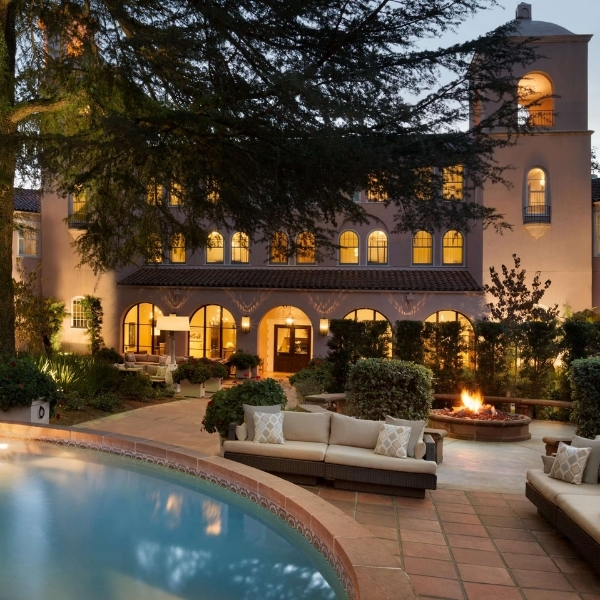
It is said that ghosts haunt where they were the happiest. Fairmont Sonoma Mission Inn & Spa welcomes guests past and present and tells the tales of guests who never wanted to leave. When the evenings are still and the fog rolls in from the Bay, a hauntingly beautiful woman has been seen strolling the hallways of the Inn in period dress. Victoria, as she is fondly referred to by many of the Inn’s tenured employees and whose family traces back to the founding fathers of Sonoma Valley, is said to have celebrated her wedding and many anniversaries at the resort.

Hassayampa Inn (1927) Prescott, Arizona
The year it opened, the Hassayampa Inn developed its most famous legend. A very young bride named Faith Summers checked into a balcony suite with her much older husband in 1927. According to the story, Faith’s husband went out to buy cigarettes and never returned. Faith waited for three days and then took her life in despair. Since then, countless hotel guests and employees have reported encounters with a young woman throughout the hotel crying at the end of a bed, dressed in a pink gown in the hallway, appearing and disappearing from rooms. One housekeeper saw a woman by a bed, holding flowers and crying. When asked if she needed help, the woman vanished. Kitchen staff have reported feeling Faith’s presence in the kitchen, right before the burners on the stove suddenly went out. Others have reported strange cold spots in Faith’s honeymoon suite. The heartbroken ghost appears unable to move on from her anguish. Many think that though Faith is heartbroken, she enjoys staying at the Hassayampa Inn.

The Don CeSar (1928) St. Pete Beach, Florida
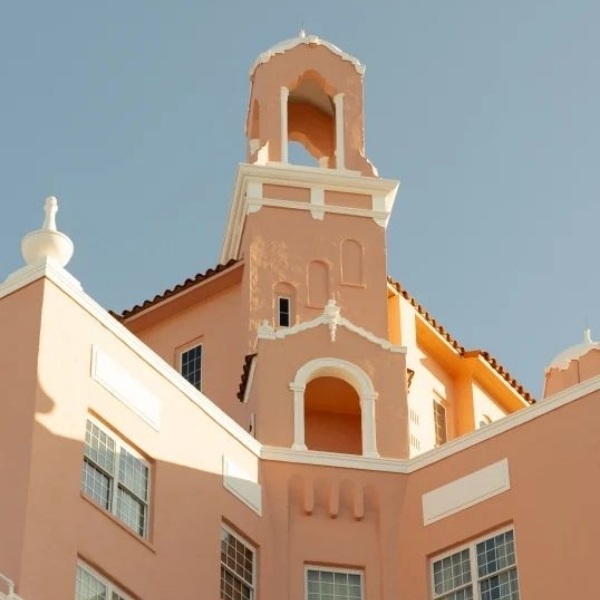
Over the years there have been a number of reported “sightings” and strange occurrences at this historic hotel. Although there are various stories, the most common presence felt through the building is that of  Mr. Thomas Rowe, the man who brought the Don CeSar to life and is the focal point of the love story surrounding the hotel. It is rumored that people have reported seeing Mr. Rowe throughout the hotel, on the beach, and even interacting with guests and staff. In the evening it has been reported that from time to time guests have looked up to the windows on the fifth floor and see the figure of a man watching from above. 

Lord Baltimore Hotel (1928) Baltimore, Maryland
Over the course of its more then 90-year history, the Lord Baltimore Hotel has had reports of paranormal activity. Built in 1928, the hotel was one of the tallest building in the city (the Great Fire of 1904 destroyed Downtown Baltimore) and around the time of the Great Depression, there were at least 20 documented reports of “jumpers” from the 19th floor rooftop deck. The most spoken about is that of a couple who attended an event at the hotel with their daughter – and then proceeded to jump off the building. Their daughter, “Molly,” is typically seen in the halls wearing a white dress and playing with a red ball. There has also been a lot of paranormal speculation around a handprint of a child on a wall in one of the hotel’s penthouses that won’t go away.

Omni Shoreham Hotel, Washington, DC (1930) Washington, DC
During the Shoreham’s early years, three people died unexpectedly in suite 870. At that time the apartment was occupied by one of the hotel’s owners, Henry Doherty. Juliette Brown, the family’s housekeeper dropped dead mysteriously one night at 4 am. Doherty’s daughter and wife also perished mysteriously in the same suite. During its vacancy there were claims of mysterious noises, doors slamming shut and furniture moving—many of which happened around 4 am, the time of Juliette’s death. 

Tubac Golf Resort and Spa (1959) Tubac, Arizona
There have been hauntings throughout the resort that have been reported by guests by at least four unique ghosts including a boy, a lady in gray, a very active gentleman spirit, and a cowboy. Some of these spirits are believed to date back to the early age of the resort when it was the Otero Ranch. The haunts have been investigated by the Phoenix, Arizona Paranormal Society and featured on the “Haunted Series, Arizona.”
“The spirits reported to reside within these Historic Hotels of America have been described as sad to happy, shy to friendly, slowly meandering to in a rush, in work clothes to elaborately dressed, and range from young to old,” said Lawrence Horwitz, Executive Director, Historic Hotels of America and Historic Hotels Worldwide. “Some pre-date the construction of the hotel and others figure prominently from the early years of the historic hotels.”

For a complete listing of haunted historic hotels, visit https://www.historichotels.org/MostHaunted.php.

Historic Hotels of America is the official program of the National Trust for Historic Preservation for recognizing and celebrating the finest Historic Hotels. Historic Hotels of America has more than 300 historic hotel members. These historic hotels have all faithfully maintained their authenticity, sense of place, and architectural integrity in the United States of America, including 44 states, the District of Columbia, the U.S. Virgin Islands, and Puerto Rico. Historic Hotels of America is comprised of mostly independently owned and operated historic hotels. More than 30 of the world’s finest hospitality brands, chains, and collections are represented in Historic Hotels of America. To be nominated and selected for membership into this prestigious program, a hotel must be at least 50 years old; have been designated by the U.S. Secretary of the Interior as a National Historic Landmark or listed in or eligible for listing in the National Register of Historic Places; and recognized as having historic significance. For more information, visit HistoricHotels.org

For more travel features, visit:

goingplacesfarandnear.com

goingplacesnearandfar.wordpress.com

moralcompasstravel.info

www.huffingtonpost.com/author/karen-rubin

travelwritersmagazine.com/TravelFeaturesSyndicate/

goingplacesfarandnear.tumblr.com/

instagram.com/going_places_far_and_near/

‘Like’ us on facebook.com/NewsPhotoFeatures

Twitter: @TravelFeatures

The Willard Hotel Celebrates Bicentennial at Center of Washington DC Political Society

The lobby of the historic Willard Hotel, which celebrates its 200th anniversary in 2018, was where people who wanted to meet influential politicians would hang out, providing the term “lobbyist”. © Karen Rubin/goingplacesfarandnear.com

Washington, DC– For 200 years, one Washington DC hotel has remained an anchor in a town that has undergone countless transformations and been called home by US Presidents. In 2018, the Willard InterContinental celebrates its bicentennial, bringing two centuries of colorful anecdotes, architectural evolution and historical preeminence. The long-standing venue is currently receiving a substantial room refurbishment, refreshing guest rooms while maintaining the essence and charm of a bygone era.

With its inception as a row house on the corner of 14th Street and Pennsylvania Avenue in 1818, The Willard spent the first 30 years under a series of different names, managed by a slew of different operators. It wasn’t until 1847 that Henry Willard was named manager, spearheading a complete makeover, tearing down the original façade and replacing it with a new brick exterior and larger interior. It was around this time that the property was named the Willard’s City Hotel and would remain this way until 1901 when it was torn down to make way for the magnificent, Beaux-Arts style structure that exists today, hosting a number of monumental events that have made the history books.

Given its close proximity to The White House and many other government buildings, The Willard has attracted a great number of U.S. presidents, foreign dignitaries and celebrities over the years, beginning with Martin van Buren in 1841. The Willard has since welcomed almost every U.S. president, giving rise to the hotel’s nickname, the “Residence of Presidents.”

It was also in the mid 1800s when Kentucky Statesman Henry Clay first introduced Mint Julep to Washington  in The Willard’s Round Robin Bar. The southern favorite beverage would later become the hotel’s signature drink, serving 20,000 of them each year.

The walls of The Willard have witnessed some of the nation’s most notable happenings, from the inauguration of Abraham Lincoln in 1861, where the President-elect took up residence in the days leading up to his Presidency, to welcoming Dr. Martin Luther King in the hotel’s lobby in 1963, as he sat with his closest advisers making final edits to his famous “I Have a Dream” speech. After closing its doors in 1968 for 18 years, The Willard was saved from demolition and reopened in 1986 with a complete renovation, paving the way for more historical moments, including a visit from the Dalai Lama in 2016.

After such an illustrious track record, The Willard is taking some time in 2018, as it commemorates its 200th anniversary, to give all 335 rooms and suites a well-deserved makeover. To be completed by April, the final design is still being kept under wraps but the property has disclosed that it involves 355 new Nespresso machines, 355 new Cubie alarm clocks, 5,000 slippers, 25,101 yards of carpet, 49,900 yards of wall covering, 300 pieces of reupholstered furniture and 1,350 pieces of refinished wood furniture. With the room revamp, also comes a reimagining of The Willard’s highly-praised authentic French brasserie, Café du Parc where hotel patrons and locals alike will be able to enjoy the addition of a new private dining room and reinvented menu. Of course, The Willard’s old standby’s and foodie favorites will still be available for guests to enjoy whether it be a traditional spot of afternoon tea in the hotel’s famous Peacock Alley, which serves the likes of 30,000 scones a year, or a perfectly brewed cup of coffee at Le Bar, one of 23,725 served yearly.

Throughout the years, The Willard has developed a number of unique programs including the Kids Concierge, which offers a selection of amenities and activities, including a children’s library and a treasure chest of board games and toys to ensure that even the youngest of guests have a luxury experience to remember. This popular offering gives out 1,500 “Millie” bucks per year, a coveted reward which earns little ones a sweet treat from Le Bar. In 2018, both newcomers and longtime patrons can enjoy the hotel’s newest program, History Happy Hour. Held monthly, the two-hour event distills American history through cocktails, while providing attendees a hands-on mixology class, perfect for both cocktail aficionados and history buffs. This educational yet entertaining event is led by the legendary bartender, Jim Hewes, who has been serving up cocktails for over 30 years at the iconic Round Robin Bar.

The Willard, which is a member of Historic Hotels of America (historichotels.org), has stood the test of time and the 200th year anniversary will reflect on its expansive and vivid history. A pioneer in hospitality, The Willard has created and maintained traditions that will be remembered for years to come, whether it be the labor of love involved in the 255 ornaments hung on the beloved Christmas tree that graces the lobby each year or the 600 hours spent each year building the acclaimed gingerbread display. Many have walked through The Willard’s halls, from renowned politicians and celebrities, to tourists visiting the Nation’s Capital for the first time, or blushing brides celebrating their special day inside the hotel’s exquisite Crystal Ballroom, aptly named for the crystals on display and welcoming an astounding 7,000 wedding guests each year.

Want to experience the historic luxurious Willard InterContinental? Celebrate its 200th birthday by bringing the family on the next trip to Washington, D.C. with the Family Package. This offer includes priority access to The Willard’s Kids Concierge, a $75 food and beverage credit, a sweet or savory amenity upon arrival, complimentary internet and complimentary parking daily for one vehicle. Starting at $349 a night.

For The Willard Intercontinental, 2018 is both a year to reminisce and reinvent. For more information, visit www.washington.intercontinental.com for details or call (202) 628-9100.


For more travel features, visit:

goingplacesfarandnear.com

www.huffingtonpost.com/author/karen-rubin

goingplacesnearandfar.wordpress.com

moralcompasstravel.info

travelwritersmagazine.com/TravelFeaturesSyndicate/

goingplacesfarandnear.tumblr.com/

instagram.com/krubin0830/

instagram.com/famtravltr/

‘Like’ us on facebook.com/NewsPhotoFeatures

Twitter: @TravelFeatures

The Broadmoor, Amway Grand Plaza Among 2017 Historic Hotels Awards of Excellence Winners

Mohonk Mountain House, the grand resort in New Paltz, New York, was honored with a 2017 Historic Hotels of America Award for Excellence for Legendary Family Historic Hoteliers of the Year, the Smiley Family © Karen Rubin/goingplacesfarandnear.com

The Broadmoor of Colorado Springs, The Dunhill Hotel of Charlotte, Mayflower Park Hotel of Seattle, West Baden Springs Hotel of Indiana, Amway Grand Plaza of Grand Rapids were among the winners of Historic Hotels Awards of Excellence for 2017 by Historic Hotels of America® and Historic Hotels Worldwide®. The winners were announced at a special ceremony and gala at The Omni Homestead Resort (1766) in Hot Springs, Virginia. Honors were given in multiple categories ranging from Hotelier of the Year and Hotel Historian of the Year to Best Historic Resort, Historic Hotelier of the Year, and Lifetime Achievement.

Each year, these Historic Hotels Awards of Excellence honor, encourage, and recognize the most exemplary historic hotels, hoteliers, and leadership practices. The Historic Hotels Awards of Excellence are presented to historic hotels and hoteliers demonstrating innovative leadership, stewardship, and contribution to furthering the recognition, preservation, and celebration of these preeminent historic hotels and their histories.

From more than 200 nominees, the following Historic Hotels of America and Historic Hotels Worldwide hotels and hoteliers were honored with these prestigious annual awards for 2017: 

Best Small Historic Inn/Hotel (Under 75 Guestrooms): The Dunhill Hotel (1929) Charlotte, North Carolina

Best Historic Hotel (76-200 Guestrooms): Mayflower Park Hotel (1927) Seattle, Washington

Best Historic Hotel (201-400 Guestrooms): West Baden Springs Hotel (1902) West Baden Springs, Indiana

Best Historic Hotel (Over 400 Guestrooms): Amway Grand Plaza (1913) Grand Rapids, Michigan

Best City Center Historic Hotel: Marriott Syracuse Downtown (1924) Syracuse, New York

Best Historic Resort: The Broadmoor (1918) Colorado Springs, Colorado

Best Historic Restaurant in Conjunction with a Historic Hotel: Penrose Room at The Broadmoor (1918) Colorado Springs, Colorado

Historic Hotels of America New Member of the Year: The Georges (1789) Lexington, Virginia

Best Social Media of a Historic Hotel: The Mission Inn Hotel & Spa (1876) Riverside, California

Sustainability Champion: Inn at the Presidio (1903) San Francisco, California

Hotel Historian of the Year: Jim Hewes at The Willard InterContinental, Washington DC (1847) Washington, DC

Ambassador of the Year (Quarter Century of Service): Woodrow “Woody” Pettus at The Omni Homestead Resort (1766) Hot Springs, Virginia

Best Historic Hotels Worldwide hotel in Europe: Hotel Waldhaus Sils (1908) Sils Maria, Switzerland

Best Historic Hotels Worldwide hotel in Asia/Pacific: Alsisar Haveli (1892) Jaipur, India

Best Historic Hotels Worldwide hotel in the Americas: Fairmont Le Château Frontenac (1893) Québec City, Canada

Historian of the Year: Chef Walter Staib, author, twelve time Emmy Award winning TV host of A Taste of History©,and chef and proprietor of City Tavern Restaurant in Philadelphia, Pennsylvania

Stewards of History and Historic Preservation Award: R.D. (Dan) Musser III at Grand Hotel (1887) Mackinac Island, Michigan

Legendary Family Historic Hoteliers of the Year: The Smiley Family at Mohonk Mountain House (1869) New Paltz, New York

Historic Hotelier of the Year: Philip Wood at The Jefferson, Washington, DC (1923) Washington, DC

Lifetime Achievement Award: Duane and Kelly Roberts at The Mission Inn Hotel & Spa (1876) Riverside, California

“The winners of the 2017 Historic Hotels Awards of Excellence represent more than 231 years of history and include the finest iconic and legendary historic hotels from across the United States of America and from around the world,” said Lawrence Horwitz, Executive Director of Historic Hotels of America and Historic Hotels Worldwide. “We applaud these magnificent historic hotels and their hoteliers for their dedication, passion, stewardship and success in preserving these treasures and their stories for future generations of travelers.”

Award recipients are selected from nominees received from historic hotels, historic preservation supporters, prior award recipients, and leadership from Historic Hotels of America and Historic Hotels Worldwide. As official programs of the National Trust for Historic Preservation, Historic Hotels of America and Historic Hotels Worldwide provide the recognition to travelers, civic leaders, and the global cultural, heritage, and historic travel market that member hotels are among the finest historic hotels across America and around the world. The Historic Hotels Annual Awards of Excellence program recognizes the pinnacle of this distinct group of nominees in a range of categories.

Historic Hotels of America® is the official program of the National Trust for Historic Preservation for recognizing and celebrating the finest Historic Hotels. Historic Hotels of America has more than 300 member historic hotels which have all faithfully maintained their authenticity, sense of place, and architectural integrity in the United States, including 46 states, the District of Columbia, the U.S. Virgin Islands, and Puerto Rico. Historic Hotels of America is comprised of mostly independently owned and operated historic hotels. More than 30 of the world’s finest hospitality brands, chains, and collections are represented in Historic Hotels of America. To be nominated and selected for membership into this prestigious program, a hotel must be at least 50 years old; has been designated by the U.S. Secretary of the Interior as a National Historic Landmark or listed in or eligible for listing in the National Register of Historic Places; and recognized as having historic significance. For more information, visit HistoricHotels.org.

Historic Hotels Worldwide® is a prestigious collection of historic treasures, including historic hotels, castles, chateaus, palaces, academies, haciendas, villas, monasteries, and other historic lodging spanning ten centuries. Historic Hotels Worldwide represents the finest global collection of more than 260 historic hotels in more than 36 countries. Historic Hotels Worldwide is dedicated to promoting heritage and cultural travel to prestigious historic treasures. Hotels inducted into Historic Hotels Worldwide are authentic historic treasures, demonstrate historic preservation, and celebrate historic significance. Embracing luxury hotel brands, chains, collections, and the finest independent historic hotels, participation is limited to those distinctive historic hotels that adhere to the following criteria: minimum age for the building is 75 years or older; historically relevant as a significant location with a historic district, historically significant landmark, place of a historic event, former home of a famous person, or historic city center; hotel celebrates its history by showcasing memorabilia, artwork, photography, and other examples of its historic significance; recognized by national preservation or heritage buildings organization or located within UNESCO World Heritage Site; presently used as historic hotel. To learn more visit www.HistoricHotelsWorldwide.com 


For more travel features, visit:

goingplacesfarandnear.com

www.huffingtonpost.com/author/karen-rubin

goingplacesnearandfar.wordpress.com

moralcompasstravel.info

travelwritersmagazine.com/TravelFeaturesSyndicate/

goingplacesfarandnear.tumblr.com/

instagram.com/krubin0830/

instagram.com/famtravltr/

‘Like’ us on facebook.com/NewsPhotoFeatures

Twitter: @TravelFeatures

Historic Hotels of America 2015 Awards of Excellence Winners Announced

The view of from the South Rim of the Grand Canyon National Park just steps away from the lodge operated by Xanterra Parks & Resorts. Xanterra which operates the lodges in several national parks, was named Historic Hotels of America's 2015 Historic Hotels of America Sustainability Champion © 2015 Karen Rubin/news-photos-features.com
The view of from the South Rim of the Grand Canyon National Park just steps away from the lodge operated by Xanterra Parks & Resorts. Xanterra which operates the lodges in several national parks, was named Historic Hotels of America’s 2015 Historic Hotels of America Sustainability Champion © 2015 Karen Rubin/news-photos-features.com

West Baden Springs, Indiana –Historic Hotels of America 2015 Awards of Excellence winners were announced at West Baden Springs Hotel (1902) at French Lick Resort in West Baden Springs, Indiana. Honors were given in multiple categories ranging from Hotelier of the Year and Hotel Historian of the Year to Best Historic Resort, Historic Hotelier of the Year, and others.

Each year, these awards honor, encourage, and recognize the most exemplary historic hotels, hoteliers, and leadership practices. The Awards of Excellence are presented to historic hotels demonstrating the highest contribution to furthering the celebration of history and demonstrating leadership and innovation.

From more than 200 nominees, the following Historic Hotels of America hotels and hoteliers were honored with these prestigious awards:

Historic Hotels of America New Member of the Year
• Hilton Chicago (1927) Chicago, Illinois

Best Small Historic Inn/Hotel (Under 75 Guestrooms)
• Green Park Inn (1891) Blowing Rock, North Carolina

Best Historic Hotel (75-200 Guestrooms)
• The Jefferson, Washington, DC (1923) Washington, DC
Best Historic Hotel (201-400 Guestrooms)
• Loews Don CeSar Hotel (1928) St. Pete Beach, Florida
Best City Center Historic Hotel
• Hawthorne Hotel (1925) Salem, Massachusetts
Best Historic Hotel (Over 400 Guestrooms)
• The Peabody Memphis (1869) Memphis, Tennessee
Best Historic Resort
• Grand Hotel (1887) Mackinac Island, Michigan

Hotel Historian of the Year
• Michaelene Lusk Norton, The Lancaster Hotel (1926) Houston, Texas

Legendary Family Historic Hoteliers of the Year
• The Lusk Family, The Lancaster Hotel (1926) Houston, Texas

Best Historic Restaurant in Conjunction with a Historic Hotel
• Plume, The Jefferson, Washington, DC (1923) Washington, DC

Best Social Media of a Historic Hotel
• French Lick Resort (1845) French Lick, Indiana

Historic Hotels of America Sustainability Champion
• Xanterra Parks & Resorts

Historic Hotels of America Ambassador of the Year (Quarter Century Service)
• Bill Ott, 1886 Crescent Hotel & Spa (1886) Eureka Springs, Arkansas

2015 Historic Hotelier of the Year
• Dean Lane, Palmer House®, A Hilton Hotel (1871) Chicago, Illinois

2015 Lifetime Achievement Award
• Gayle Cook

2015 Historic Hotels of America Historian of the Year Award
• Stanley Turkel, Author and Consultant

2016 Historic Hotels of America Journalist of the Year Award
• Peter Greenberg, Travel Editor for CBS News

“Historic Hotels of America is proud to congratulate the 2015 Awards of Excellence winners,” said Lawrence Horwitz, Executive Director of Historic Hotels of America and Historic Hotels Worldwide. “These historic hotels and hoteliers represent the pinnacle in historic hotels and their achievements from Portland, Oregon to St. Pete Beach, Florida.”
The hotels were nominated by fellow members, past award recipients, and honorees. A panel of experts judged and weighed the nominees in each category in order to determine a winner. As the official program of the National Trust for Historic Preservation, Historic Hotels of America provides the recognition to travelers, civic leaders, and the global cultural, heritage and historic travel market that the members’ hotels are among the finest historic hotels across America.

Historic Hotels of America, founded in 1989 by the National Trust for Historic Preservation to recognize and celebrate the finest Historic Hotels, has more than 275 members. These historic hotels have all faithfully maintained their authenticity, sense of place, and architectural integrity in the United States of America, including 44 states, the District of Columbia, the U.S. Virgin Islands, and Puerto Rico. Historic Hotels of America is comprised of mostly independently owned and operated properties. More than 30 of the world’s finest hospitality brands, chains, and collections are represented in Historic Hotels of America. To be nominated and selected for membership into this prestigious program, a hotel must be at least 50 years old; have been designated by the U.S. Secretary of the Interior as a National Historic Landmark or listed in or eligible for listing in the National Register of Historic Places; and recognized as having historic significance. For more information, visit HistoricHotels.org.

Click here to see the About Historic Hotels of America video. To view the Historic Hotels of America 2015 Annual Directory ebook or download the free app on iTunesAmazonGoogle Play, and the  Windows Store.


For more travel features, visit:

www.examiner.com/eclectic-travel-in-national/karen-rubin

www.examiner.com/international-travel-in-national/karen-rubin

goingplacesfarandnear.com

goingplacesnearandfar.wordpress.com

moralcompasstravel.info

travelwritersmagazine.com/TravelFeaturesSyndicate/

‘Like’ us on facebook.com/NewsPhotoFeatures

Twitter: @TravelFeatures

Find Inspiring Destinations with Historic Hotels of America’s New Online Vacation Planning Tool

Historic Hotels of America has published new sites that make it easy for families to find historic hotels that make living in history fun. Travel to Tennessee and hop on board at the Chattanooga Choo Choo, a train-themed hotel, where you can actually sleep in one of 48 authentic Victgorian train cars and enjoy the magic of the 106-year old terminal station © 2015 Karen Rubin/news-photos-features.com

Historic Hotels of America has launched a new Super Site that lets you follow your American Dreams and choose from a variety of different vacation ideas, including family getaways, road trips, national parks and lands, culinary destinations, urban adventures, and more (http://americandreams.historichotels.org/index) featuring more than 260 historic hotels across the United States from Puerto Rico to Hawaii.

“Exploration has always driven the American Dream. It’s this inquisitive spirit that has helped write our history books, shape America’s iconic landmarks and pave new roads to make way for memorable journeys,” said Lawrence Horwitz, Executive Director – Historic Hotels of America and Historic Hotels Worldwide.  “In honor of 350 years of travel, Historic Hotels of America has launched an all-new Super Site — American Dreams. This second Super Site follows on the heels of the Romance Super Site, which Historic Hotels of America launched in early February.”

Need a travel-inspired playlist? Check out these Road Trips Songs (http://americandreams.historichotels.org/road-trips/road-trip-songs)  Want to salute our freedom? Book a historic hotel then visit these five national monuments. Feeling hungry? Scope out the best BBQ joints, bourbon trails and wine country by perusing the site’s culinary adventures.

When visiting the American Dreams Super Site homepage, a number of navigational tools help travelers peruse the site’s many inspirations.   The main navigation: The site is divided into six content sections — Family Vacations, Road Trips, Heritage & Culture, Culinary Destinations and Urban Adventures — with each of these pages showcasing article thumbnails. When a consumer clicks on the image, they navigate to that feature story. These stories include hotel advertorials, which solely feature participating hotels, and topical editorials, which highlight select destinations based on editorial content.

Family Vacations

Focus your family vacations in and around historic hotels. Most historic hotels include family-fun recreation and kid-friendly attractions. Whether you’re looking for a weekend getaway or a family vacation, Historic Hotels of America offers up everything from family beach vacations to amusement park thrills.

Travel to Hershey, Pennsylvania, experience and Explore Hershey Park, an amusement park full of candy land thrills. After a day of fun, check into Hershey Park’s official resort, The Hotel Hershey®, built by chocolate magnate Milton S. Hershey in 1933. Or, travel to Tennessee and hop on board at the Chattanooga Choo Choo, a train-themed hotel. Once an operating train station in Chattanooga, Tennessee, the 106-year-old terminal station was converted into a beautiful hotel in 1973, where guests can opt to sleep in one of 48 authentic Victorian train cars.

Road Trips

Pack up the car for a road trip, or scenic drive and stay in a historic hotels (http://americandreams.historichotels.org/road-trips). For example and long before the “interstate” was born, road trippers looked to Route 66 to venture across America. This 2,448 mile stretch is among America’s most famous roads, connecting a number of states between Chicago to California, with historic hotels along the way.  Every road trip, whether spontaneous or planned, needs a few essential items — an adventurous route, road trip music and a reservation at Historic Hotels of America.

There are plenty of historic hotels located along Route 66, with comfortable lodging and fantastic amenities. In Oklahoma City, Skirvin Hilton provides respite for the weary road traveler. This 1911 beauty was named after its founder, oil tycoon William Balser “Bill” Skirvin. Meanwhile, Colcord Hotel, the city’s first skyscraper, is another overnight stop in Oklahoma City. For a one-of-a-kind Historic Hotel experience, stray an hour away from Route 66 to stay at La Fonda in Santa Fe. Well worth the extra miles, you’ll experience an authentic Pueblo-style inn.

National Parks & Lands

Discover and Explore parks, lands, and heritage sites in and around historic hotels across the nation (http://americandreams.historichotels.org/national-parks). America is filled with innumerable treasures. Here’s a nod to the many parks, forests, monuments and byways that have long captured the hearts of the American traveler.  For example, he Appalachian Mountains offer up the east’s breathtaking Blue Ridge Parkway and a myriad of national parks, protected forests many with nearby historic hotels. Scattered throughout the Blue Ridge Mountains, quant towns greet America’s road trippers, like Banner Elk, North Carolina, where the population barely peaks 1,000. In Banner Elk, The Mast Farm Inn provides a historic country retreat for travelers. The main inn features charming rooms with four-posters beds, claw-foot tubs and endless farmhouse charm.

At the other end of the Blue Ridge Parkway, the Great Smoky Mountains National Park straddles the boarder of North Carolina and Tennessee. Just outside the Great Smoky Mountains National Park, in Asheville, North Carolina, one of the country’s most celebrated resorts calls the Blue Ridge Mountains home — The Omni Grove Park Inn. This AAA Four Diamond Property is listed on Fodor’s “Top 10 Luxury Spa Resorts” and in Travel + Leisure’s rankings of “Top Spa Resorts” in the world.

Heritage & Cultural Getaways

Interested in ghost stories and the paranormal? Make your vacation truly memorable. Add a little heritage and a dash of culture by visiting one of many attractions near Historic Hotels of America (http://americandreams.historichotels.org/heritage-culture). Take in a nostalgic festival, visit a national monument or explore a historic battlefield. Your adventure awaits.  We have legendary stories to share at Historic Hotels of America.

Many historic hotels are rumored to have played host to more than just their paying customers. Whether or not you believe these ghosts stories, one thing is certain — these friendly hauntings leave guests talking about their hotel experience for years!  Known as “America’s most haunted hotel,” the ghost stories are plentiful at 1886 Crescent Hotel & Spa. It’s said that one of the Irish stonemasons, known as “Michael,” plunged to his death after falling from Room 218 during hotel construction. Guests report a number of strange activities from this room.

The inspiration for Stephen King’s “The Shining,” The Stanley has lots of haunting appeal, especially when guests tour the creepy underground tunnel that runs beneath the hotel. But that’s not the hotel’s most haunting aspect. The hotel’s original owner, F.O. Stanley is known to haunt the hotel. He and his wife have been seen dressed in formal attire on the main staircase and in other public areas, and Flora’s piano occasionally echoes in the ballroom.

Culinary Destinations

Experience culinary destinations, spirits, wine, food, festivals and trails throughout the country (http://americandreams.historichotels.org/culinary-destinations). There’s nothing like local flavor to add a little extra zing to your trip. From food festivals to fine dining, from Sonoma’s Wine Country to the Kentucky Bourbon Trail, Historic Hotels of America tips its glass to these culinary destinations.  Interested in the latest vintages in the heart of Napa Valley? Nestled into the heart of Napa Valley, the Napa River Inn stands out as an upscale boutique hotel. The inn adjoins the historic Napa Mill, which offers dining, shopping and 7,300 square feet of outdoor reception space in the Riverbend Performance Plaza for wine-induced celebrations.

For more then 200 years, generations of Bourbon brewers handed down secret-family recipes and time-honored processes that shaped today’s legendary Kentucky distilleries. Experience the Kentucky Bourbon Trail, and check into a Historic Hotel of America to enjoy more Kentucky history. Not far from the Bourbon Trail is The Seelbach Hilton, the height of Kentucky luxury. During the roaring 1920s, The Seelbach was the most glamorous spot for cards, attracting infamous gangsters, like Al Capone and the Beer Baron of the Bronx, during Prohibition.

Urban Adventures

Bustling city centers located throughout the United States from New York to San Francisco are a great way to experience famous cultural icons, museums, and history while staying at nearby historic hotels (http://americandreams.historichotels.org/urban-adventures). Choose from 11 hotels in Washington, DC. The Jefferson, DC is a luxury hotel that celebrates and embodies the spirit of one of our founding fathers, Thomas Jefferson. Just four blocks from The White House, this downtown hotel affords a treasured account of its significant history alongside thoughtfully appointed accommodations, opulent meeting rooms, and gracious hospitality and service.

Discounts from Historic Hotels Worldwide

National Trust for Historic Preservation members save up to 30% off best available rates at participating Historic Hotels Worldwide. HistoricHotelsWorldwide.com promotes heritage and cultural travel by featuring a prestigious collection of historic treasures, including historic hotels, castles, chateaux, palaces, monasteries, haciendas and other historical lodging properties spanning twelve centuries.

Historic Hotels of America is the official program of the National Trust for Historic Preservation® for recognizing and celebrating the finest Historic Hotels. Historic Hotels of America was founded in 1989 by the National Trust for Historic Preservation with 32 charter members. Today, Historic Hotels of America has more than 260 historic hotels. These historic hotels have all faithfully maintained their authenticity, sense of place, and architectural integrity in the United States of America, including 44 states, the District of Columbia, the U.S. Virgin Islands, and Puerto Rico. Historic Hotels of America is comprised of mostly independently owned and operated properties.  More than 30 of the world’s finest hospitality brands, chains, and collections are represented in Historic Hotels of America. To be nominated and selected for membership into this prestigious program, a hotel must be at least 50 years old; has been designated by the U.S. Secretary of the Interior as a National Historic Landmark or listed in or eligible for listing in the National Register of Historic Places; and recognized as having historic significance.

For more information, visit HistoricHotels.org. To receive the free Discover & Explore e-newsletter each month with advance notice about Insiders Savings, special discounts, epic package, and up and coming events in historic hotels in 30 countries, plus free or reduced rate admission to historic and cultural sites, click here.

To view the Historic Hotels of America 2015 Annual Directory eBook, click here or visit HistoricHotels.org/Directory to download the app.

For more travel features, visit:

www.examiner.com/eclectic-travel-in-national/karen-rubin

www.examiner.com/international-travel-in-national/karen-rubin

travelwritersmagazine.com/TravelFeaturesSyndicate/

goingplacesnearandfar.wordpress.com

‘Like’ us on facebook.com/NewsPhotoFeatures

Twitter: @TravelFeatures