Road Scholar, the not-for-profit leader in educational travel for adults 50+, is unveiling two new civil rights programs in New Orleans and Mississippi & Tennessee.
Road Scholar’s inaugural Civil Rights Movement program in Alabama and Georgia has consistently been one of their most popular and impactful programs since its release in 2017. Nearly 550 travelers attended the program last year, and it frequently elicits reviews that include the word “life-changing.”
“I cannot overstate the richness of this experience,” said 2024 participant Analee from South Deerfield, Mass. “The people we met, the experts who taught us, the museums and sites we visited— they all were life-changing (no hyperbole!). History became real, and I am dedicated to learning more and living my life anew with the lessons learned.”
The nonprofit organization hopes these new programs in New Orleans, Jackson, Memphis, and Nashville will help broaden their educational programming on the civil rights history in the U.S., leaving as much of a meaningful mark on participants as the program in Georgia and Alabama.
“This program was created to connect people with the living history of the Civil Rights Movement across Jackson, Memphis, and Nashville— places where ordinary individuals made extraordinary choices that helped shape our nation,” said Bobbie Duncan from the Center for Educational Adventure, which partners with Road Scholar to organize and operate the program. “By exploring these communities and hearing the stories rooted there, we hope participants leave with a deeper appreciation of the movement’s complexity, the courage it required, and a renewed sense of how its lessons about justice, dignity, and collective action still matter today.”
New Orleans is already one of Road Scholar’s most popular destinations, with participants visiting the Crescent City on any of 10 different programs. The new civil rights program takes an even deeper look at the city’s story beyond what most travelers see.
“A civil rights and jazz program in New Orleans offers a powerful new way to experience the city by connecting two of its most influential legacies,” said Lindsey Temple, Program Operations Director at Road Scolar. “From the fight for equality to the birth of America’s most iconic musical tradition, these stories bring New Orleans to life in a meaningful and immersive way. This focused program allows travelers to engage with the people, places, and history that shaped the city’s cultural identity, offering an experience that is both educational and unforgettable.”
Road Scholar’s first departures are scheduled in May 2027 in honor of the 10th anniversary of their inaugural Civil Rights Movement program “The Civil Rights Movement: Atlanta, Montgomery, Selma, Birmingham.” Both programs are currently open for enrollment, as well as future dates of the original program in Alabama and Georgia.
Road Scholar is the not-for-profit world leader in educational travel for older adults. Founded as Elderhostel in 1975, Road Scholar has served more than 6.5 million lifelong learners over the past 50 years. With educational adventures hosted by expert faculty in nearly 100 countries and throughout the United States, Road Scholar truly is a university of the world. Learn more at www.roadscholar.org.
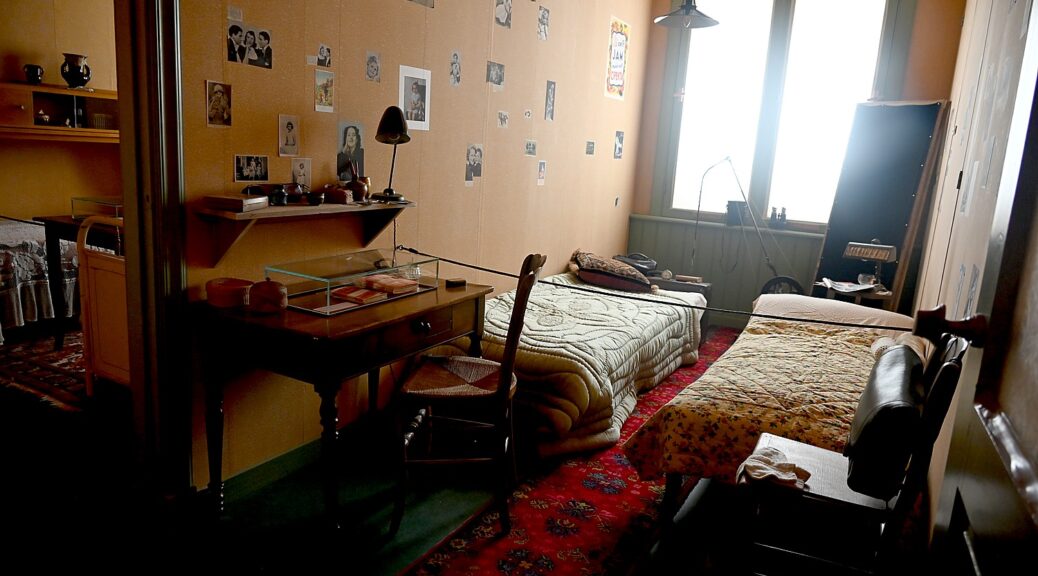
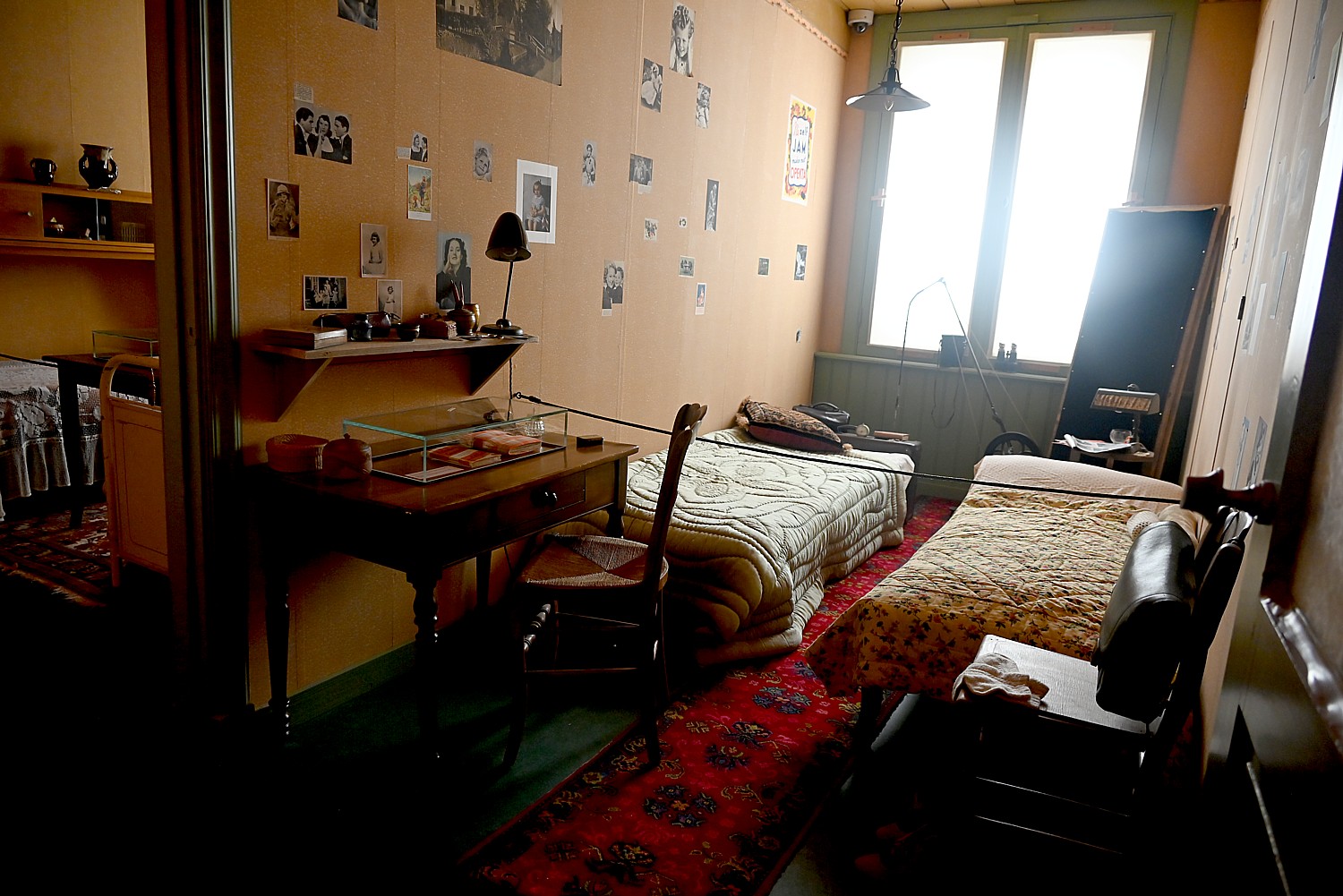
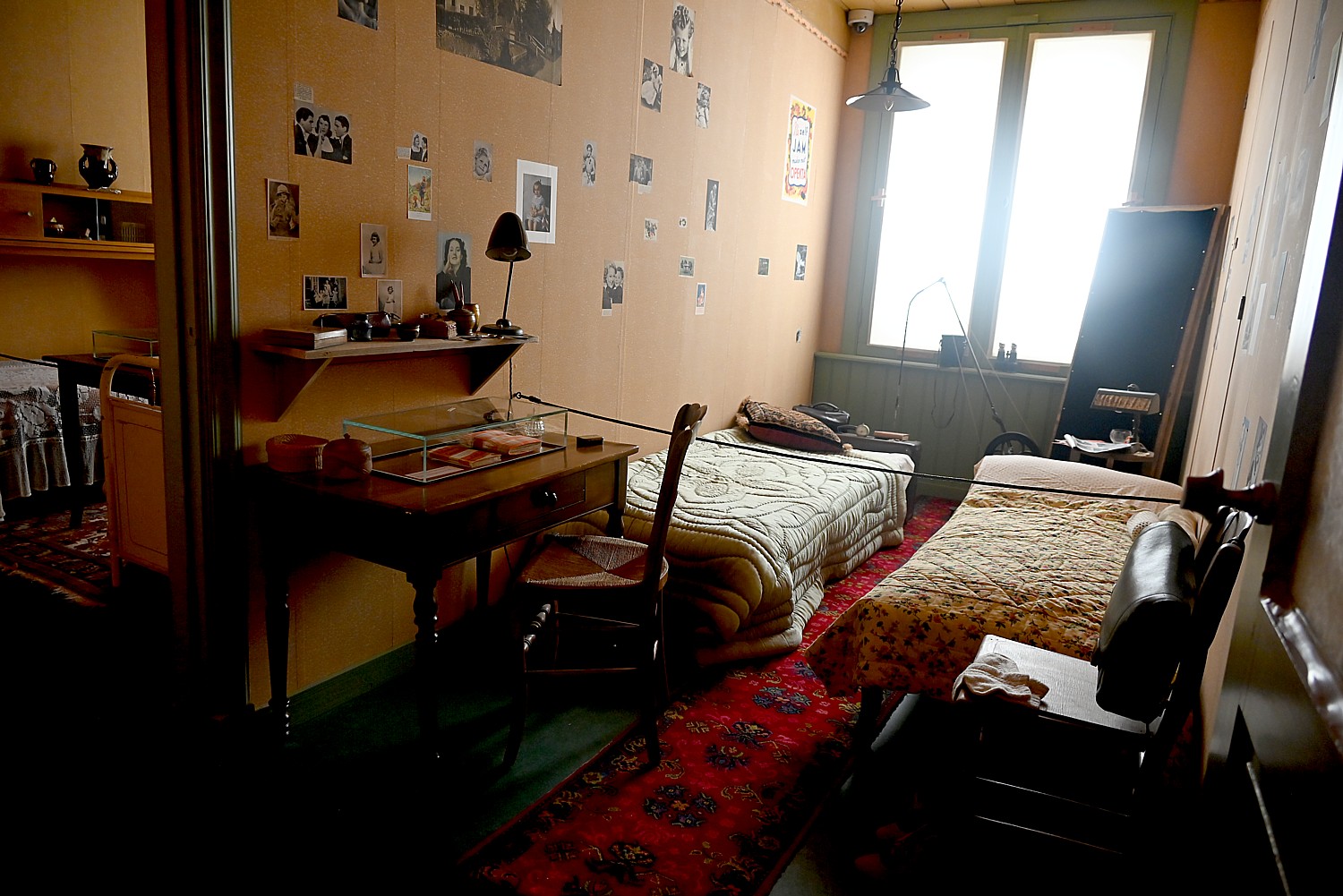
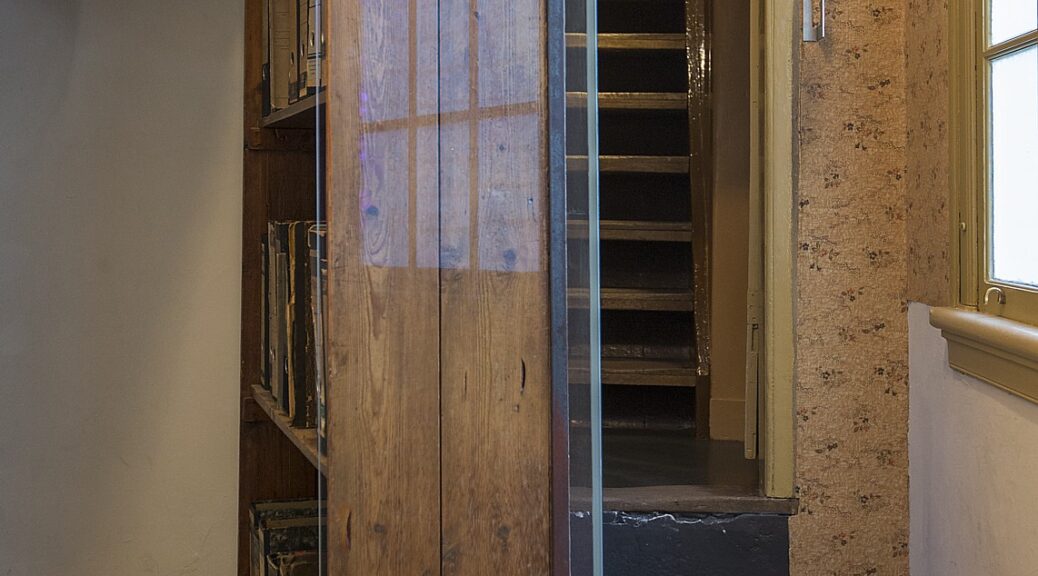
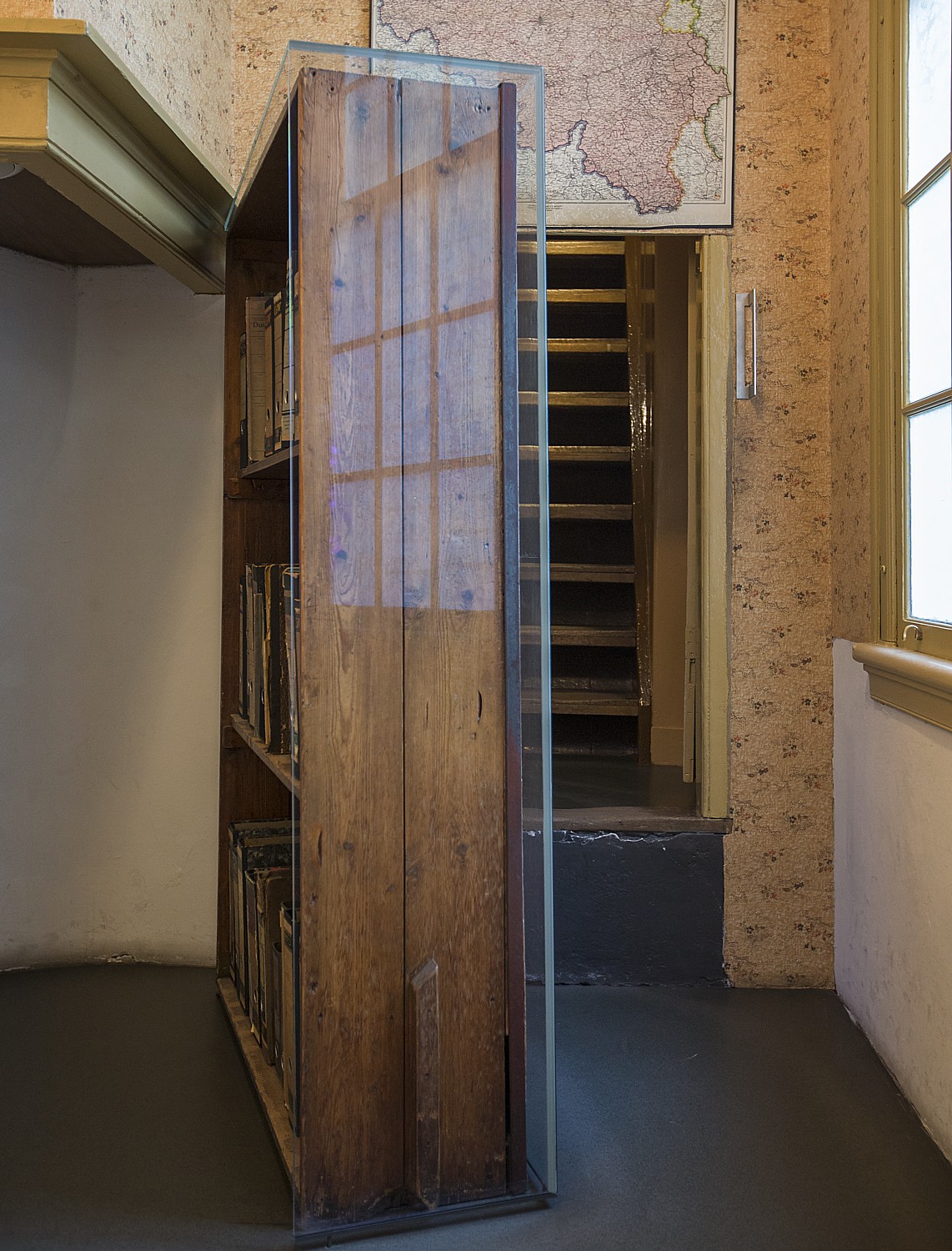
Chicago — Griffin Museum of Science and Industry will be the Midwest host of Anne Frank The Exhibition. A presentation of the Anne Frank House, the exhibition features a pioneering experience outside of Amsterdam to immerse visitors in a full-scale, fully furnished recreation of the Annex rooms where Anne Frank, her parents and sister and four other Jewish refugees spent two years hiding to evade Nazi capture. Anne Frank The Exhibition opens May 1, 2026.
“Anne Frank’s story is a powerful reminder of what happens when fear and hatred are allowed to take root,” said Dr. Chevy Humphrey, Griffin Museum of Science and Industry President and CEO. “At the same time, it reveals the quiet but enduring strength of curiosity, creativity and resilience, values that sit at the heart of our mission. We hope this exhibition offers meaningful moments of reflection for our guests, particularly young people, and encourages them to think critically about their role in the world they are inheriting.”
“Anne Frank The Exhibition is a call to conscience, said Ronald Leopold, Executive Director of the Anne Frank House. “By stepping into the world that confined Anne and her family, visitors are invited to confront the enduring realities of antisemitism, racism and hatred — and to recognize that remembrance is not passive, but a moral act that demands empathy, vigilance and courage. Griffin Museum of Science and Industry, founded through Julius Rosenwald’s conviction that knowledge must belong to everyone, embodies this same spirit of moral responsibility. Just as Rosenwald believed education is humanity’s greatest equalizer, this exhibition transforms history into living dialogue, ensuring that learning, understanding and compassion are never the privilege of a few, but the right of all.”
The exhibition follows an inaugural run in New York City at the Center for Jewish History, attended by 300,000, with several extensions due to popularity and dates that sold out.
Anne Frank The Exhibition immerses visitors in the context that shaped Anne’s life, from her early years in Frankfurt through the rise of the Nazi regime. It traces her family’s phased move to Amsterdam in the early 1930s, where Anne lived for ten years until her arrest in 1944. Visitors also follow her deportation to Westerbork, a large transit camp in the Netherlands, then to Auschwitz-Birkenau, a concentration camp and killing center in Nazi-occupied Poland, and eventually to Bergen-Belsen concentration camp in Germany, where she died at the age of 15.
In addition to the recreated Annex, Anne Frank The Exhibition provides an opportunity to learn about Anne Frank not as a victim but through the multifaceted lens of her life — as a girl, a writer and a symbol of resilience and strength. This is a story inspired by one of the most translated books in the world.
The Chicago exhibition includes more than 130 original artifacts from the Anne Frank House in Amsterdam — many have never been seen before in public. Some of those artifacts include letters from Anne Frank, Margot Frank, Otto Frank and Fritz Pfeffer; a “List of Returned Jews Arriving at Amsterdam Central Station” in 1945; Anne Frank’s first photo album (1929-1942); handwritten verses by Anne Frank and Margot Frank in their friends’ poetry albums; and a German fairytale book that belonged to Margot Frank and Anne Frank (1925).
Celebrated for its unprecedented intimacy and depth, Anne Frank The Exhibition originally premiered in New York City on the 80th anniversary of the liberation of the Auschwitz concentration camp.
Griffin MSI will offer this exhibition for free to all field trip groups, alongside the Museum’s ongoing policy of free General Admission to Illinois field trip groups, to make this important educational experience available to more people. All children in these groups also will receive a journal to write in to reflect on Anne’s words and consider the power of their own.
The exhibition is supported by age-appropriate educational resources and an antisemitism curriculum developed by the Anne Frank House and the Anne Frank Center at the University of South Carolina. These materials help students understand the history and ongoing reality of antisemitism and hatred while fostering critical thinking, empathy and civic responsibility through meaningful classroom conversations. Educators can access the curriculum — aligned with standards adopted by 39 states — through the exhibition website.
The exhibition is designed for children (ages 10 and older) and adults. All tickets include the exhibition audio guide in English and Spanish.
Leading the creative vision for the expanded exhibition in Chicago is Tom Brink, Head of Collections & Presentations at the Anne Frank House and curator of Anne Frank The Exhibition. Michael S. Glickman, CEO of jMUSE, advised the Anne Frank House, with exhibition design by Eric Goossens Ontwerpt. Dr. Doyle Stevick, Executive Director of The Anne Frank Center at the University of South Carolina — the Anne Frank House’s official U.S. partner — is the educational advisor.
The exhibition is presented at Griffin MSI with support from Lead Benefactor Tony and Laura Davis, Presenting Benefactor Crown Family Philanthropies, Premier Sponsors Zell Family, Patron Sponsors Cari and Michael J. Sacks and GCM Grosvenor, the Estate of Judith Marx Golub, Jewish United Fund, Michael and Tanya Polsky and John and Jacolyn Bucksbaum Family Foundation, with supporting gifts from Neil Book, Chicago Bulls Charities and Rich and Vanessa Copans.
The exhibition was originally developed — and will travel nationally — through the leadership and support of Leon Levy Foundation, David Berg Foundation, Bank of America, Rebecca and Jared Cohen, Gray Foundation, Stacey and Eric Mindich, The Fuhrman Family Foundation, The Koum Family Foundation, Merryl and James Tisch and UJA-Federation of New York. Major support for the exhibition was also provided by Debbie and Mark Attanasio, Tanya and Ryan Baker, Einstein Astrof Foundation, Jesselson Foundation, Pershing Square Philanthropies, Sara Naison-Tarajano, The Barbra Streisand Foundation, The Krupp Foundation and Anonymous. Pro bono legal services provided by Wachtell, Lipton, Rosen & Katz.
The Anne Frank House was established in 1957 in cooperation with Otto Frank, Anne Frank’s father, as an independent nonprofit organization entrusted with the preservation of the Annex where Anne Frank and her family went into hiding in 1942 during the Second World War. For nearly seven decades, the Anne Frank House has served as a place of memory and a place of learning. Committed to bringing Anne’s life story to world audiences, the Anne Frank House has emerged as a primary resource for teaching and learning about the Holocaust. Through Anne’s legacy the Anne Frank House empowers people of all ages — and especially young people — to reflect on the dangers of antisemitism, racism, and discrimination and the importance of freedom, equal rights, and democracy.
The Annex
In July 1942, Anne Frank (13), her parents, Otto and Edith Frank, and her sister, Margo Frank (16), went into hiding in the Annex at the back of her father’s company. The Van Pels family (Hermann, Auguste, and their 15-year-old son, Peter) followed the next week. Four months later, they were joined by Fritz Pfeffer. All of them were Jews daring to escape certain death at the hands of the Nazis amid the German occupation of the Netherlands during World War II. Unable to go to school, largely cut off from the rest of the world, and trapped in close quarters with others while a war raged outside, Anne poured herself into her diary. The people in hiding in the Annex were discovered and arrested in 1944, and subsequently sent to the Auschwitz-Birkenau concentration and extermination camp. Anne and her sister Margot were then sent to the Bergen-Belsen concentration camp, where they both died of typhus in February 1945. Anne was 15. Margot was 18 or 19. Otto Frank was the only person from the Annex to survive the Holocaust.
The Diary
Anne Frank: The Diary of a Young Girl, more commonly known as The Diary of Anne Frank, is one of the most translated books in the world. Transformed multiple times for stage and screen, the published book’s source is the personal diary that Anne Frank kept in multiple notebooks during the two-year period of hiding with her family in rooms located in the back house of her father’s company in Amsterdam. Soon after Anne and the others were arrested in 1944, Miep Gies, one of the people who risked their lives to help them in hiding, returned to the Annex and found their belongings ransacked. Miep was relieved to find Anne’s diary pages, knowing how important her writings were to her, and saved them for her return. Otto was the only person from the Annex to survive the Holocaust. When Miep first gave him his daughter’s diary, he could not bring himself to read it. Soon, he did and he could not stop, sharing it with relatives and friends who encouraged him to publish what they considered “an important human document.” Upon its publication, Otto Frank wrote: “How proud Anne would have been if she had lived to see this. After all, on 29 March 1944, she wrote: ‘Imagine how interesting it would be if I published a novel about the Secret Annex.'”
Kenneth C. Griffin Museum of Science and Industry (Griffin MSI) offers world-class and uniquely interactive experiences that support the Museum’s mission: to inspire the inventive genius in everyone. For more information, visit griffinmsi.org or call 773-684-1414.
In Perthshire, Scotland, The Earl and Countess of Mansfield welcome you to 19th-century Scone Palace, the crowning palace of 42 Scottish kings including Macbeth, Robert the Bruce, and Charles II. Scone Palace is home to an outstanding collection of antiques, paintings, and rare artifacts (photo provided by HeritageExplore)
(LONDON, United Kingdom)With Bridgerton-inspired travel having a major moment, HeritageXplore Luxe is launching three intimate, small-group journeys through England and Scotland that open the doors to privately owned castles and aristocratic estates. Hosted by the families who have owned these properties for generations, the small-group tours invite travelers to enjoy their own stately experience through rare access, elegant accommodation inside castle walls, and behind-the-scenes tours.
Arranged exclusively by HeritageXplore Luxe, the two England programs provide privileged access to five castles and six estates, their grounds, and the surrounding areas. The Scotland experience travels to six castles. Each program includes private chauffeured luxury transportation; meals hosted by resident Dukes, Duchesses, or Lords and Ladies; tours conducted by the estate owners; and overnight stays in the castles and estates. Meals are elegant affairs, with some designed as casual chic and others requiring cocktail or black-tie attire.
England’s Abbeys, Halls & Castles – April 27-May 1, 2026
Located across the East Midlands and North West England, and exclusive to HeritageXplore Luxe, England’s Abbeys, Halls & Castles program visits castles, halls, and the ducal seats of the region. Led by Viscountess Violet Garnock (née Lady Violet Manners), the eldest daughter of the Duke and Duchess of Rutland, and conducted by stewards or owners of the properties, the experience visits five of Britain’s grandest country estates. Accommodations in the castles and a nearby hotel, tours, and dining in castle state rooms are featured.
The visit begins at Hatfield House & Park in Hertfordshire, dating from 1607, whose artifacts include the signed death warrant of Mary Tudor, penned by Elizabeth I. A second stop at Belvoir Castle features a tour of the castle’s manicured gardens on a site that has roots back to the Norman Conquest, followed by a visit in Lincolnshire to the final masterpiece of Sir John Vanbrugh, 13th-century Grimsthorpe Castle, to view the castle’s art collection and one of the largest assortments of royal thrones and furnishings outside of the Royal Palace.
The next stop is medieval Haddon Hall in Derbyshire, one of England’s oldest historic houses and parklands. The final day leads to Combermere Abbey, originally a Cistercian monastery founded in 1133 and dissolved by Henry VIII in 1536, and now a private residence.
The five-day/four-night travel-through-history experience is priced beginning at £8,500 per person, based on double occupancy ($11,600 USD at the time of this writing). International flights are not included.
The Great Estates of Norfolk – May 26-29, 2026
Set in Norfolk and neighboring Suffolk in England’s eastern countryside, The Great Estates of Norfolk opens the doors to six esteemed, private estates across a region noted for its landscaped parklands and proximity to the North Sea coast.
Perfectly timed to allow an optional pre-tour to the RHS Chelsea Flower Show in London, the tour begins at Euston Hall, the ancestral seat of the Duke and Duchess of Grafton in Suffolk. In this setting dating from the 1660s, you’ll visit the home and parkland of the current Duke, a descendant of Charles II of England. Amidst the private collections of Royal Stuart portraitures, you’ll enjoy two dinners hosted by the Duke and Duchess of Grafton and two nights’ accommodation.
The second day takes you to Elveden Hall, an architectural wonder owned by the Guinness family. Through exclusive arrangement by HeritageXplore Luxe, guests have a privileged look at the estate’s distinctive fusion of English country house, Italian design, and Indian palace – it was once home to the exiled Maharajah Duleep Singh – and its exceptional Marble Hall.
Guests will also visit Houghton Hall, a magnificent Palladian structure built in the 1720s for Britain’s first Prime Minister, Sir Robert Walpole. A tour of the estate’s celebrated Walled Garden and State Rooms is followed by a cocktail reception on the West Front balcony overlooking the sculpture park. An additional stop includes an exclusive house and garden tour, an owner-hosted lunch, and evening accommodations at Sennowe Park, an Edwardian country estate and now a private residence.
The program finale is at refined Wolterton Hall, the former Palladian-style “Power House” residence of Sir Robert Walpole, concluding with a visit and private lunch at Holkham Hall, Thomas Coke’s Palladian-designed country house with its extensive art collection, William Kent-designed parklands, and sweeping coastal vistas.
The four-day/three-night travel-through-history experience is priced beginning at £9,500 per person ($13,000 USD at the time of this writing) based on double occupancy. International flights are not included.
HeritageXplore Luxe can arrange privileged access to the Chelsea Flower Show and accommodations at Claridge’s for an additional charge.
Castles of Scotland – July 31- August 4, 2026
Traveling through central Scotland and the eastern Highlands, the Castles of Scotland program meanders through the country’s heartland, an area dotted with ancient castles with sweeping Highland vistas and stately homes. The program is led by Viscountess Violet Garnock (née Lady Violet Manners), the eldest daughter of the Duke and Duchess of Rutland. Privileged guests will enjoy the hospitality of Scotland’s illustrious noble families at their historic homes.
In Perthshire, The Earl and Countess of Mansfield welcome you to 19th-century Scone Palace, the crowning palace of 42 Scottish kings including Macbeth, Robert the Bruce, and Charles II. Scone Palace is home to an outstanding collection of antiques, paintings, and rare artifacts. The Earl and Countess of Rosebery are your hosts at Barnbougle Castle, a heritage site dating to the 13th century on the shore of the Firth of Forth.
The Earls of Strathmore and Kinghorne show off the distinctive design details of Glamis Castle in Angus, an architectural masterpiece from 1372 and the childhood home of Queen Elizabeth the Queen Mother. Here, to further your immersion in Scottish country life, the option of clay pigeon shooting on the estate is offered.
Other visits include lunch at House of Bruar, the renowned country emporium, and an after-hours visit to Blair Castle, reflecting Medieval, Georgian and Victorian eras, where guests can view archival treasures before a private Champagne reception. A wine or whisky tasting of your choosing concludes the evening. The final day and celebration take place at Barnbougle Castle.
The four-day/three-night travel-through-history experience is priced beginning at £9,500 per person ($13,000 USD at the time of this writing) based on double occupancy. International flights are not included.
HeritageXplore Luxe can arrange privileged access to the Edinburgh International Festival for an additional charge.
HeritageXplore Luxe invites you inside the United Kingdom’s most remarkable private homes, not as a visitor, but as a personal guest of the families who have lived there for generations.
Three times a year, small groups of culturally curious travelers are welcomed for immersive heritage experiences. These are set departures for those drawn to history, interiors, gardens and the enduring charm of the UK’s country houses.
Days are spent exploring the house and estate alongside your hosts, the families who know every room, portrait and story intimately. Evenings unfold over candlelit dinners in state dining rooms — black-tie affairs where conversation flows as freely as the wine.
HeritageXplore is the UK’s dedicated platform for discovering and booking visits to the country’s most exceptional privately owned historic houses. Beyond traditional day trips, we connect you to Britain’s most imaginative heritage experiences — candlelit comedy evenings, contemporary art exhibitions, supper clubs, and behind-the-scenes access that bring these remarkable houses to life.
For those seeking deeper access, The HeritageX Club offers exclusive benefits: discounts on stays at unique estate properties, plus a monthly newsletter filled with insider stories and the best of what’s on across Britain’s heritage scene.
New York, NY—The New York Historical’s new exhibit, The Gay Harlem Renaissance, examines the Black LGBTQ+ artists, writers, and performers central to the Harlem Renaissance and everyday Black gay life in the early 20th century. Marking the centennial of The New Negro—the landmark 1925 anthology edited by Alain Locke—the exhibition traces the queer creativity, friendship circles, and mentorships that flourished in Harlem’s salons, social clubs, and thriving nightlife and that helped power the Harlem Renaissance.
This may well be the first exhibition to explore the Harlem Renaissance through a LGBTQ+ lens. “The Gay Harlem Renaissance” is on view through March 8, 2026.
As Harlem grew into the nation’s largest Black metropolis after the First World War, Black Southern and Caribbean migrants, activists, and creatives transformed the neighborhood into a nexus of political activism, creative expression, and community life. Many of Harlem’s most celebrated poets, novelists, and artists were gay or bisexual (some discreetly and others openly); and many of the preeminent blues singers performing in nightclubs and basement speakeasies were lesbian, bisexual, or transmasculine.
Gladys Bentley is featured in New York Historical’s “Gay Harlem Renaissance” (unidentified photographer, 1946-1949. Gelatin silver print. Collection of the Smithsonian National Museum of African American History and Culture)
Whether on Harlem’s biggest stages or in its nightclubs or hidden speakeasies, LGBTQ+ performers took center stage. Together they helped shape the cultural innovation that defined the era. Amid this cultural convergence, queer and straight artists formed close-knit circles—living together, mentoring one another, and exchanging ideas that shaped the future of Black art and culture. Their creative tensions—whether over how openly to depict same-sex desire or the so-called “unrespectable” venues of Harlem’s nightlife—helped shape the bold, expansive spirit of the Harlem Renaissance.
“The Gay Harlem Renaissance provides a sweeping portrait of Harlem after the First World War, when a remarkable generation of Black artists, thinkers, and performers—many of them members of the LGBTQ+ community—shaped a new cultural vanguard,” said Dr. Louise Mirrer, president and CEO of The New York Historical. “We hope that this show will invite visitors to consider how intimate friendships, chosen families, and radical ideas about identity helped define the Harlem Renaissance and continue to resonate today.”
“The Gay Harlem Renaissance shows that Black LGBTQ+ life was far more visible, accepted, and integrated into the daily life of 1920s Harlem than most people imagine,” said George Chauncey, the exhibition’s chief historian, a Columbia history professor who is the author of Gay New York, 1890-1940. “The exhibition takes visitors to the basement speakeasies, rent parties, and drag balls where ordinary queer and straight people built lives together, as well as to the salons of the cultural elite.”
Featuring more than 200 objects, The Gay Harlem Renaissance unites painting, sculpture, artifacts, documents, photographs, books, and music from collections across the country and celebrates the creativity, innovation, and resilience of Black LGBTQ+ Harlemites.
Highlights of the exhibition include:
Employment of the Negro in Agriculture, a 1934 painting by Earle Richardson, on loan from Howard University, honors the resilience of African American agricultural laborers within the oppression of the Jim Crow system.
Color, the 1925 first edition of Countee Cullen’s first book of poetry, published when he was 22. Countee Cullen found a champion and mentor in Alain Locke, who included his poetry in The New Negro and helped Cullen accept his sexuality.
Gelatin silver print of Gladys Bentley, circa 1927-45. Taunted as a child for her unfeminine demeanor, the transmasculine performer Gladys Bentley became a star in Harlem, singing and playing piano all night at rent parties and popular nightclubs. Her signature white tuxedo and top hat have become icons of queer self-expression on and off the stage.
Rent party tickets. Throwing apartment parties with a small cover charge in exchange for entertainment and lively company helped working-class residents pay the rent. The fact that LGBTQ+ Harlemites could dance and flirt with people of the same sex at such parties was a powerful sign of their acceptance among Harlem’s working-class residents.
Meditation and Music, a 1925 watercolor by Aaron Douglas. Influenced by the work of Alain Locke, Douglas moved to Harlem, where he illustrated some of the most famous books and magazines of the Harlem Renaissance. While Douglas was not gay, he was close to many Black queer artists and moved in their social circles.
Sculptures by Richmond Barthé, whose artworks chart his movement through interracial and transatlantic gay social circles. His subjects included the popular singer and nightclub owner Jimmie Daniels and the queer Senegalese dancer François “Féral” Benga, whom he met in Paris.
1939 issue of The Crisis magazine. Black publications experienced tremendous growth in readership, circulation, and influence during the interwar years. The Black press provided coverage of the vibrant political, cultural, and social life in Harlem and beyond.
Photographs by Morgan Smith and Marvin Smith created an extraordinary documentary record of the Harlem community from the 1930s to 1950s. Their work captured Black joy and struggle alike. They came to know most of the pioneering figures of the Harlem Renaissance as well as rising talent.
Recordings of blues songs with queer themes by singers such as Bessie Smith, Ma Rainey, and Ethel Waters, as well as specially created audio recordings of poetry by Langston Hughes and other poets, as well as a passage from Nella Larsen’s novel, Passing.
Recreation of the prize-winning gown worn by Bonnie Clark at the 1932 Hamilton Lodge Ball, the largest drag ball on the East Coast, which was held every February in Harlem’s Rockland Palace.
Harlem Diner, a 1938 painting by Jacob Lawrence, depicting five Black figures with downturned expressions gathered in a Harlem diner, facing the struggles of daily life. During the Great Depression, Harlemites faced mass unemployment, overcrowding, and persistent racial discrimination.
The exhibition is curated by lead curator Allison Robinson, associate curator of history exhibitions; with Anne Lessy, assistant curator of history exhibitions and academic engagement; with Rebecca Klassen, curator of material culture and decorative arts, contributing; and with George Chauncey, author of Gay New York and DeWitt Clinton Professor of American History at Columbia University, as chief historian.
Programming: A family guide for young visitors to the exhibition will be available. Living History programs focused on Gladys Bentley will also take place at a future date. Visit the family calendar for details. Private group tours can also be arranged throughout the exhibition.
Lead support for The Gay Harlem Renaissance is provided by the Mellon Foundation. Important support is provided by Pamela and David Hornik. Exhibitions at The New York Historical are made possible by Dr. Agnes Hsu-Tang and Oscar Tang, the Saunders Trust for American History, the Evelyn & Seymour Neuman Fund, the New York City Department of Cultural Affairs in partnership with the City Council, and the New York State Council on the Arts with the support of the Office of the Governor and the New York State Legislature. WNET is the media sponsor.
New York’s first museum, The New York Historical is a leading cultural institution covering over 400 years of American history. Offerings span groundbreaking exhibitions; peerless collections of art, documents, and artifacts; acclaimed educational programs for teachers and students nationwide; and thought-provoking conversations among leading scholars, journalists, and thinkers about the past, present, and future of the American experiment. The New York Historical is a museum of museums and a collection of collections and home to the Patricia D. Klingenstein Library, the Center for Women’s History, the DiMenna Children’s History Museum, and the future American LGBTQ+ Museum. “We elevate the perspectives and scholarship that define the United States’ democratic heritage and challenge us all to shape our ongoing history for the better.”
The New York Historical, 170 Central Park West (77th Street), New York, NY 10024, 212-873-3400, nyhistory.org.
Ahead of Indigenous Peoples’ Day and Native American Heritage Month, here are destinations in South Dakota, New Mexico and Wyoming celebrating annual traditions:
HONOR & CELEBRATE in South Dakota
South Dakota was the first state to officially replace Columbus Day with Native Americans’ Day as a holiday, in 1990
Lakota Music Project Performances (October 13-18): A collaboration between the state’s Symphony Orchestra and Lakota and Dakota musicians, the group goes on tour in mid-October.
Blending symphonic tradition with Lakota songs, the week-long tour begins on Indigenous Peoples’ Day at what’s to become the world’s largest mountain carving, Crazy Horse Memorial, which also hosted the first Native Americans’ Day celebration 35 years ago
Itinerary Inspiration — Travel South Dakota’s Great 8 for Native American Culture: Serves to highlight culturally significant landmarks, like Dignity of Earth & Sky, a 50-foot-tall sculpture, a nod to the courage, perseverance and wisdom of the Lakota and Dakota cultures in the state, according to sculptor Dale Lamphere.
37th Annual Black Hills Powwow (October 10–12): Outside of Rapid City, catch one of the premier cultural events in the country, attracting thousands of dancers, singers, and artisans. Beyond the arena, highlights include:
The Crowning of Miss He Sapa Win: Awarded annually to a young Lakota, Dakota, or Nakota woman for her cultural knowledge, dancing, and public speaking skill
Fine Arts Show: Showcasing the work of indigenous creatives, from beadwork and star quilts to contemporary painting and photography
BE PART OF THE COMMUNITY in Santa Fe
Santa Fe, the oldest capital city in the United States, is deeply rooted in Native history and culture, with 23 Tribes, Nations, and Pueblos across New Mexico contributing to its vibrant identity
The Santa Fe Indigenous Center’s 3rd Annual Honoring Native Nations Powwow brings together dancers, singers, and drum groups from across the Southwest, adding a vibrant, community-centered gathering to the celebration.
20th Annual Winter Indian Market (November 29–30): Santa Fe’s signature holiday art event, presented by the Southwestern Association for Indian Arts (SWAIA), marks its 20th year as the premier opportunity to #buyNative during the holiday season. The market features 170 Native artists across jewelry, pottery, textiles, painting, and sculpture. It’s a chance to connect directly with artists, discover new voices, and find meaningful gifts that carry both beauty and story.
Itinerary Inspiration — Museums, Feast Days & Historic Sites: Discover the Museum of Indian Arts & Culture, the Wheelwright Museum of the American Indian, and the IAIA Museum of Contemporary Native Arts (MoCNA). Time your trip with a traditional Pueblo Feast Day (Upcoming: October 4, November 12), when pueblos open their communities for dances, music, and shared meals. Explore the historic sites and ruins filled with petroglyphs at places like Kasha-Katuwe Tent Rocks National Monument and Bandelier National Monument.
You can read a guide to visiting Santa Fe’s tribal communities HERE
Highlight on Native Artists: Santa Fe’s galleries and boutiques showcase works from celebrated Pueblo, Navajo, Apache, and other Native creatives year-round. Collectors and casual visitors alike can meet artisans, watch demonstrations, and take home one-of-a-kind pieces.
NEW FOR 2026: Cheyenne Frontier Days’ Indian Village Expansion
Wyoming’s capital city will unveil a new Indian Village during Cheyenne Frontier Days (July 17–26, 2026)
Background: For more than 60 years, The Morning Star American Indian Village has been a fixture at the world’s largest outdoor rodeo, offering dancing and drum circles, native storytelling, hoop dance workshops, and more. Cheyenne sits within the historic ranges of the Lakota and Arapaho tribes, and the Village has long provided rodeo-goers with opportunities to engage with Plains Tribal cultures.
What’s changing:
Tripling in Size: The Village will expand from 1.2 to 3.8 acres
More Spectator Space: Capacity will jump from 600 spectators to 1,000
Year-Round Engagement: The new village will be open beyond Frontier Days, opening doors for engagement year-round
Performer Amenities: Performers will now have a community building to utilize, with a kitchen, storage space and bathrooms, as well as improved air conditioning and sound systems
New York —Encouraged by unprecedented demand, the Anne Frank House announced the second and final extension of its world premiere presentation of Anne Frank The Exhibition in New York City at the Center for Jewish History. The exhibition will remain open through February 1, 2026, before moving to the next U.S. city.
During this final extension of Anne Frank The Exhibition in New York, organizers are providing complimentary admission on several select dates, opening the doors to even more visitors to remember and reflect on Anne’s legacy. Special access days provide complimentary admission for two adults and up to four children, as noted below.
“It has become powerfully evident since the opening of this exhibition that people from every walk of life feel a deep, urgent need to connect with Anne’s story and confront the realities of the Holocaust firsthand. The reflections and courageous conversations sparked by every visitor have shown how this exhibition has a role in challenging hate,” said Ronald Leopold, Executive Director of the Anne Frank House. “Our responsibility to honor Anne’s legacy grows stronger each day. Extending the exhibition is a necessary response to the troubling state of antisemitism and hatred around the world. And soon, we will introduce an innovative resource designed to help educators and students build a deeper, more informed understanding of antisemitism—at a moment when consensus is most at risk. We are unwavering in our resolve to fight all forms of hate, fueling understanding and resilience through education.”
Since its opening, Anne Frank The Exhibition has drawn hundreds of thousands of visitors, including students, teachers, and librarians from almost every state across the nation and more than a dozen countries, providing an immersive experience in the heart of Manhattan and offering deep historical context through never-before-seen artifacts, multimedia, and Anne’s powerful personal narrative.
Anne Frank The Exhibition is the first time ever that the Anne Frank House presents a pioneering experience outside of Amsterdam to immerse visitors in a full-scale recreation of the Annex rooms, fully furnished, where Anne Frank, her parents and sister, and four other Jews spent two years hiding to evade Nazi capture.
Moving through the exhibition, visitors can immerse themselves in the context that shaped Anne’s life—from her early years in Frankfurt through the rise of the Nazi regime and the family’s phased move to Amsterdam across 1933 and 1934, where Anne lived for ten years until her 1944 arrest and deportation to Westerbork, a large transit camp in the Netherlands, then to Auschwitz-Birkenau, a concentration camp and killing center in Nazi-occupied Poland, and eventually to her death at Bergen-Belsen concentration camp in Germany when she was 15 years old.
Four exhibition galleries immerse visitors in place and history through video, sound, photography, animation, and more than 100 original collection items from the Anne Frank House in Amsterdam. Anne Frank The Exhibition provides an opportunity to learn about Anne Frank not as a victim but through the multifaceted lens of her life—as a girl, a writer, and a symbol of resilience and strength. This is a story inspired by one of the most translated books in the world.
The New York City exhibition occupies over 7,500 square feet of gallery space in the heart of Union Square. This marks the first time dozens of artifacts can be seen in the United States—many have never been seen in public.
Artifacts in the exhibition include:
Anne Frank’s first photo album (1929-1942);
Anne Frank’s typed and handwritten invitation to her friend for a film screening in her home (by 1942, anti-Jewish measures prohibited Jews from attending the cinema); and
Handwritten verses by Anne Frank in her friends’ poetry albums.
Special Access Days with complimentary admission:
General admission tickets are available every day the exhibition is open, and complimentary admission will be offered to select visitors on the following dates:
Thursday, September 11th: All day access for Hometown Heroes (police officers, firefighters, first responders, medical professionals, and military personnel)
Thursday October 9th and Friday, October 10th: All day access for librarians, in recognition of Banned Books Week
Thursday, October 9th: Access for Queens Public Library Card Holders from 3:30 p.m. to 6:30 p.m.
Monday, October 13th (Columbus Day/Indigenous People’s Day): All day access for families, Hometown Heroes, and educators (exhibition closes at 2:00 p.m.)
November 4 (Election Day): All day access for families, Hometown Heroes, and educators
November 11 (Veterans Day): All day access for families, Hometown Heroes, and educators
Official ID and email are required for police officers, firefighters, first responders, medical professionals, military personnel, educators, and librarians for free admission on special access days. Tickets for special access days are available with day-of on-site registration.
Merryl Tisch, Chairman of the Board of Trustees of the State University of New York, and former Chancellor of the New York State Board of Regents, said, “Anne Frank’s story is a timeless beacon for education that goes beyond history, teaching us the essential values of resilience, empathy, and standing against antisemitism and hatred. It is our responsibility as leaders and educators to ensure that students of all ages learn these lessons deeply, so that Anne’s legacy inspires a more inclusive and compassionate future.”
New York State Education Commissioner Betty A. Rosa said, “Anne Frank The Exhibition provides a profound educational experience that connects the lessons of history to the challenges and responsibilities of today. It provides students with a meaningful opportunity to explore the realities of antisemitism and intolerance while equipping educators with resources to thoughtfully integrate these lessons into their instruction. This exhibition not only honors the memory of Anne Frank and her family but also strengthens our shared responsibility to ensure that future generations learn the importance of empathy, tolerance, and standing against hate in all its forms.”
“It has been deeply meaningful to host this exhibition and share its vital history with the public. With this final extension, we look forward to welcoming even more visitors to engage with Anne Frank’s story and the lessons it continues to impart,” said Dr. Gavriel Rosenfeld, President of the Center for Jewish History.
With this final extension through February 1, 2026, the Anne Frank House reaffirms its mission to ensure Anne’s voice continues to inspire unity and peace across generations.
General Information
Tickets are available at AnneFrankExhibit.org. The exhibition is designed for children (ages 10 and older) and adults. All general admission tickets include the exhibition audio guide. Visitors should plan to spend approximately one hour at the exhibition. The last entry is one hour before closing.
Individual tickets
Timed entry tickets, Monday through Friday: $24 (17 and under, $18)
Timed entry tickets, Sunday: $31 (17 and under, $24)
Flex tickets, Monday through Friday: $38
Flex tickets, Sunday: $54
Family tickets (2 adults + 2 children under 17 years):
Timed entry tickets, Monday through Friday: $74 (additional 17 and under ticket, $18)
Timed entry tickets, Sunday: $98 (additional 17 and under ticket, $24)
Group sales (adults)
$300 per group of 10, timed entry, Monday through Friday
$400 per group of 10, timed entry, Sunday
Hours: Sunday through Thursday: 9:30 a.m. to 7:30 p.m.; Friday: 9:30 a.m. to 3:30 p.m. Saturday: Closed.
Center for Jewish History 15 West 16th Street, New York, 212.294.8301,cjh.org, info@cjh.org.
“Summer of Reflection: The Legacy of Anne Frank” citywide initiative expands with “Summer of Service” to thank those who educate, protect, and inspire New Yorkers
New York, N.Y. — This summer,Anne Frank The Exhibition is expanding its efforts to introduce as many New Yorkers as possible to Anne Frank’s legacy of hope and courage, offering enhanced access and free admission to thousands of public service champions, including teachers, first responders, active military, and librarians. The immersive and historically significant exhibition, presented by the Anne Frank House in Union Square at the Center for Jewish History, will launch the new initiative beginning Friday, July 11th through Friday, August 29th.
“We are honored to welcome public servants through enhanced access to the exhibition, inviting them to draw strength from Anne Frank’s enduring legacy of humanity and courage,” said Ronald Leopold, Executive Director of the Anne Frank House in Amsterdam, which organized the New York City exhibition. “Summer of Service not only recognizes the profound impact public servants have in safeguarding our freedoms, but also affirms their power to shape a more just world. By experiencing Anne Frank The Exhibition firsthand, they harness their collective empathy and resolve, becoming even stronger champions of human dignity and leading the way in the fight against hatred and intolerance.”
The new summer initiatives include:
Teacher Tuesdays:
From 9:30-11:30am, teachers will be granted free access for up to 2 adults and 4 children.
Valid school ID and email address is required for free entry.
First Responder and Active-Duty Wednesdays:
From 12:30-3:30pm, all first responders (including NYPD, FDNY, EMS, and PAPD) as well as active-duty service members, will be granted free access for up to 2 adults and up to 4 children.
Valid government-issued ID is required for free entry.
Public Librarian Weekday Evenings:
On Monday through Thursday, from 5:00-6:30pm, all NYC public librarians will be granted free access for up to 2 adults and up to 2 children.
Valid ID and NYC public library email address is required.
From 2:45-5:00pm, the exhibit is offering free entry to all visitors (last entry at 4:00pm).
The first 100 NYC library cardholders to arrive will receive expedited access on these Free Fridays. Free Friday afternoon access is offered on a first-come, first-served basis, and is limited to 250 visitors each Friday. Last entry is 4:00 pm, one hour before closing (5:00pm on Fridays). Teacher Tuesdays, First Responder and Active-Duty Wednesdays, and Public Librarian Weekday Evenings begin on July 11th and will last through August 29, 2025. Originally planned to close earlier this year, Anne Frank The Exhibition is now extended through October 31, 2025 to offer even more New Yorkers the opportunity to learn about Anne’s life and writings.
A tribute to public servants, Summer of Service extends Summer of Reflection: The Legacy of Anne Frank with a powerful message of gratitude to those who educate and protect New Yorkers. Summer of Service expandsexhibition access for New York City’s everyday heroes, such as teachers, first responders, and librarians.
Summer of Reflection: The Legacy of Anne Frank includes the distribution of 10,000 copies of Anne Frank: The Diary of a Young Girl across New York City and is made possible thanks to the generosity of Bank of America and UJA-Federation of New York, in collaboration with the New York City Public Schools Office of Library Services, New York City Public Schools Department of Social Studies & Civics, New York City Public Schools Summer Rising enrichment program, and the New York Public Library, Queens Public Library, and Brooklyn Public Library.
About Anne Frank The Exhibition:
Anne Frank The Exhibition is the first time in history that the Anne Frank House presents a pioneering experience outside of Amsterdam to immerse visitors in a full-scale recreation of the Annex rooms, fully furnished, where Anne Frank, her parents and sister, and four other Jews spent two years hiding to evade Nazi capture.
Moving through the exhibition, visitors can immerse themselves in the context that shaped Anne’s life—from her early years in Frankfurt through the rise of the Nazi regime and the family’s phased move to Amsterdam across 1933 and 1934, where Anne lived for ten years until her 1944 arrest and deportation to Westerbork, a large transit camp in the Netherlands, then to Auschwitz-Birkenau, a concentration camp and killing center in Nazi-occupied Poland, and eventually to her death at Bergen-Belsen concentration camp in Germany when she was 15 years old.
Four exhibition galleries immerse visitors in place and history through video, sound, photography, and animation; and more than 100 original collection items from the Anne Frank House in Amsterdam. Anne Frank The Exhibition provides an opportunity to learn about Anne Frank not as a victim but through the multifaceted lens of her life—as a girl, a writer, and a symbol of resilience and strength. This is a story inspired by one of the most translated books in the world.
The New York City exhibition occupies over 7,500 square feet of gallery space in the heart of Union Square. This marks the first time dozens of artifacts can be seen in the United States—many have never been seen in public.
Artifacts in the exhibition include:
Anne Frank’s first photo album (1929-1942);
Anne Frank’s typed and handwritten invitation to her friend for a film screening in her home (by 1942, anti-Jewish measures prohibited Jews from attending the cinema); and
Handwritten verses by Anne Frank in her friends’ poetry albums.
Advising the Anne Frank House on the New York City exhibition is Michael S. Glickman, CEO of jMUSE. Dr. Doyle Stevick, Executive Director of The Anne Frank Center at the University of South Carolina, the Anne Frank House’s official U.S. partner, is the educational advisor.
Anne Frank The Exhibition is a limited engagement, now extended through October 31, 2025.
The exhibition is made possible by Leon Levy Foundation, with leadership support by David Berg Foundation, Rebecca and Jared Cohen, Stacey and Eric Mindich, The Koum Family Foundation, Merryl and James Tisch, UJA-Federation of New York, and corporate partner Bank of America. Educational patrons to the exhibition include Gray Foundation and The Fuhrman Family Foundation, with additional support by The Barbra Streisand Foundation.
Major support has been provided by Debbie and Mark Attanasio, Tanya and Ryan Baker, Einstein Astrof Foundation, Elyssa and William Friedland, Jesselson Foundation, Allison and Warren Kanders, Pershing Square Philanthropies, Sara Naison-Tarajano, The Krupp Foundation, Katharine M. and Leo S. Ullman, and Anonymous, with sponsorship support by GRoW @ Annenberg, Rita J. & Stanley H. Kaplan Family Foundation, Karyn Kornfeld & Steven Kobre, The Claire Friedlander Family Foundation, and Zegar Family Foundation. Pro bono legal services provided by Wachtell, Lipton, Rosen & Katz.
General Information
Following months of being sold out, additional tickets have been added for the months of June, July, and August to ensure visitors have easy access to the exhibition. Tickets available at AnneFrankExhibit.org. The exhibition is designed for children (ages 10 and older) and adults. All general admission tickets include the exhibition audio guide. Visitors should plan to spend approximately one hour at the exhibition. Last entry is one hour before closing.
Individual tickets
Timed entry tickets, Monday through Friday: $24 (17 and under, $18)
Timed entry tickets, Sunday: $31 (17 and under, $24)
Flex tickets, Monday through Friday: $38
Flex tickets, Sunday: $54
Family tickets (2 adults + 2 children under 17 years):
Timed entry tickets, Monday through Friday: $74 (additional 17 and under ticket, $18)
Timed entry tickets, Sunday: $98 (additional 17 and under ticket, $24)
Group sales (adults)
$300 per group of 10, timed entry, Monday through Friday
$400 per group of 10, timed entry, Sunday
Hours: Sunday through Thursday: 9:30 a.m. to 7:30 p.m.; Friday: 9:30 a.m. to 3:30 p.m.; Saturday: Closed
Center for Jewish History, 15 West 16th Street, New York, N.Y. between 5th and 6th Avenues
In July 1942, Anne Frank (13), her parents, Otto and Edith Frank, and her sister, Margot Frank (16), went into hiding in the annex at the back of her father’s company. The Van Pels family (Hermann, Auguste, and their 15-year-old son, Peter) followed the next week. Four months later, they were joined by Fritz Pfeffer. All of them were Jews daring to escape certain death at the hands of the Nazis amid the German occupation of the Netherlands during World War II. Unable to go to school, largely cut off from the rest of the world, and trapped in close quarters with others while a war raged outside, Anne poured herself into her diary. The people in hiding in the Annex were discovered in 1944, and Anne and the others were arrested and sent to the Auschwitz-Birkenau concentration and extermination camp. Anne and her sister Margot were then sent to the Bergen-Belsen concentration camp, where they both died of typhus in February 1945. Anne was 15. Margot was 18 or 19. Otto Frank was the only person from the Annex to survive the Holocaust.
Anne Frank: The Diary of a Young Girl, more commonly known as The Diary of Anne Frank, is one of the most translated books in the world. Transformed multiple times for stage and screen, the published book’s source is the personal diary that Anne Frank kept in multiple notebooks during the two-year period of hiding with her family in rooms located in the back house of her father’s company in Amsterdam. Soon after Anne and the others were arrested in 1944, Miep Gies, one of the people who risked their lives to help them in hiding, returned to the Annex and found their belongings ransacked. Miep was relieved to find Anne’s diary pages, knowing how important her writings were to her, and saved them for her return. Otto was the only person from the Annex to survive the Holocaust. When Miep first gave him his daughter’s diary, he could not bring himself to read it. Soon, he did and he could not stop, sharing it with relatives and friends who encouraged him to publish what they considered “an important human document.” Upon its publication, Otto Frank wrote: “How proud Anne would have been if she had lived to see this. After all, on 29 March 1944, she wrote: ‘Imagine how interesting it would be if I published a novel about Secret Annex.'”
The Anne Frank House was established in 1957 in cooperation with Otto Frank, Anne Frank’s father, as an independent nonprofit organization entrusted with the preservation of the Annex where Anne Frank and her family went into hiding in 1942 during the Second World War. The Annex is where Anne wrote her diary, and where she and her family hid from the Nazis during the occupation of the Netherlands until being discovered and arrested by police officers in 1944. Following her transport to the Auschwitz-Birkenau concentration and extermination camp, Anne and her sister Margot were sent to the Bergen-Belsen concentration camp, where they died in 1945. For nearly seven decades, the Anne Frank House has served as a place of memory and a place of learning. Committed to bringing Anne’s life story to world audiences, the Anne Frank House has emerged as a primary resource for teaching and learning about the Holocaust. Through Anne’s legacy the Anne Frank House empowers people of all ages—and especially young people—to reflect on the dangers of antisemitism, racism, and discrimination and the importance of freedom, equal rights, and democracy.
The Center for Jewish History illuminates the Jewish past for audiences today and preserves it for the future. Home to the world’s largest Jewish archive outside Israel, it is a dynamic space for learning and public engagement. Opened in 2000, the Center is the collaborative home of five partner organizations (the American Jewish Historical Society, American Sephardi Federation, Leo Baeck Institute, Yeshiva University Museum, and YIVO Institute for Jewish Research) whose collections comprise over 7 miles of archival documents, 500,000 volumes of books, 12 million digital items, and thousands of artworks, objects, textiles, and recordings. The Center opens these vast archives to the public and activates the stories that they hold through exhibits, fellowships, genealogy programs, and an active calendar of events – making it a hub for Jewish culture and heritage. To learn more about the Center and its public programs, visit: cjh.org.
(New York and Amsterdam)—No surprise that in response to overwhelming demand, the Anne Frank House is extending its world premiere presentation of Anne Frank The Exhibition at the Center for Jewish History in New York City through October 31, 2025. Originally scheduled for just three months, tickets sold out within one week of opening on January 27, 2025, demonstrating the demand for this extraordinary experience.
“We are deeply moved by the overwhelming interest in this exhibition,” Ronald Leopold, Executive Director of the Anne Frank House, said. “As we carry forward Anne’s legacy, we are profoundly grateful for the opportunity to extend this new presentation in New York. The initial response affirms our belief that we must meet the present moment with education. History is our greatest teacher, and Anne’s words continue to resonate across generations. In bringing this exhibition to New York and extending its stay, the Anne Frank House, with the support of the Center for Jewish History, is making it possible for more people to reflect on the life and loss of Anne, and the 1.5 million Jewish children lost in the Holocaust. Together, we remain committed to stand against antisemitism and group hatred and we thank New York for joining us in this important effort.”
Dr. Gavriel Rosenfeld, President of the Center for Jewish History, said: “It has been our honor to partner with the Anne Frank House as host to this landmark exhibition, and we are excited to continue welcoming audiences from around the world for its extended run.”
As a nonprofit organization helping to shape global understanding of the Holocaust and its contemporary relevance, including lessons on modern-day antisemitism, racism, and discrimination, the Anne Frank House is entrusted with the preservation of the Annex where Anne Frank and her family hid during World War II. This new exhibition is presented in New York City in partnership with the Center for Jewish History in Manhattan and is designed for audiences who may not have the opportunity to visit the Netherlands.
Step inside Anne Frank’s world—an unprecedented experience
Anne Frank The Exhibition is the first time in history that the Anne Frank House presents a pioneering experience outside of Amsterdam to immerse visitors in a full-scale recreation of the Annex rooms, fully furnished, where Anne Frank, her parents and sister, and four other Jews spent two years hiding to evade Nazi capture.
Moving through the exhibition, visitors can immerse themselves in the context that shaped Anne’s life—from her early years in Frankfurt through the rise of the Nazi regime and the family’s phased move to Amsterdam across 1933 and 1934, where Anne lived for ten years until her 1944 arrest and deportation to Westerbork, a large transit camp in the Netherlands, then to Auschwitz-Birkenau, a concentration camp and killing center in Nazi-occupied Poland, and eventually to her death at Bergen-Belsen concentration camp in Germany when she was 15 years old.
Four exhibition galleries immerse visitors in place and history through video, sound, photography, and animation; and more than 100 original collection items from the Anne Frank House in Amsterdam. Anne Frank The Exhibition provides an opportunity to learn about Anne Frank not as a victim but through the multifaceted lens of her life—as a girl, a writer, and a symbol of resilience and strength. This is a story inspired by one of the most translated books in the world.
The New York City exhibition occupies over 7,500 square feet of gallery space in the heart of Union Square. This marks the first time dozens of artifacts can be seen in the United States—many have never been seen in public.
Artifacts in the exhibition include:
Anne Frank’s first photo album (1929-1942);
Anne Frank’s typed and handwritten invitation to her friend for a film screening in her home (by 1942, anti-Jewish measures prohibited Jews from attending the cinema); and
Handwritten verses by Anne Frank in her friends’ poetry albums.
Advising the Anne Frank House on the New York City exhibition is Michael S. Glickman, CEO of jMUSE. Dr. Doyle Stevick, Executive Director of The Anne Frank Center at the University of South Carolina, the Anne Frank House’s official U.S. partner, is the educational advisor.
The exhibition is made possible through the generosity of many philanthropic foundations and individuals, whose partnership has ensured the exhibition is available to students and educators throughout the United States, as well as throughout the local New York City metro region.
With this new exhibition, the Anne Frank House seeks to expand its reach and educational impact at a time of rising antisemitism in the United States. It is presented in New York City, where Jews continue to be the most targeted group and where hate crimes against others are on the rise.
In supporting students through field trips, the exhibition serves as a primary source for students and educators and, since its opening was first announced, has been booking hundreds of visits for school groups from New York to California and states in between. With a goal of reaching 250,000 students, philanthropic support has made it possible for the Anne Frank House to ensure tickets are free for NYC public schools and Title I public school groups throughout the United States.
To enhance resources for teachers, the exhibition includes an accompanying curriculum developed with The Anne Frank Center at the University of South Carolina. The curriculum materials place antisemitism in its historic context. Questions lead students to consider the roots and evolution of antisemitism, including how it led to the Holocaust.
“Anne Frank’s story provides a compelling window into the past, one that helps students understand the dangers of bigotry and the importance of never being a bystander,” Doyle Stevick, Executive Director of the Anne Frank Center at the University of South Carolina and educational advisor to the exhibition, said. “The curriculum developed to accompany this exhibition ensures teachers and students will have the highest-quality educational resources they need to learn about the Holocaust and its relevance today. We are thrilled to see that hundreds of school groups from around the country have already booked field trips.”
Educational visits to the exhibition, as well as Individual and Family ticket purchases, can be scheduled by visiting AnneFrankExhibit.org.
Anne Frank The Exhibition is a limited engagement, now extended through October 31, 2025.
Anne Frank House gratefully acknowledges the following benefactors who have contributed to the exhibition:
The exhibition is made possible by Leon Levy Foundation, with leadership support by David Berg Foundation, Rebecca and Jared Cohen, Stacey and Eric Mindich, UJA-Federation of New York, and corporate partner Bank of America.
Educational patrons to the exhibition include Gray Foundation and The Fuhrman Family Foundation, with additional support by The Barbra Streisand Foundation.
Major support has been provided by Debbie and Mark Attanasio, Tanya and Ryan Baker, Einstein Astrof Foundation, Elyssa and William Friedland, Jesselson Foundation, Allison and Warren Kanders, Pershing Square Philanthropies, Sara Naison-Tarajano, Katharine M. and Leo S. Ullman, Waksal Foundation, and Anonymous, with sponsorship support by GRoW @ Annenberg, Rita J. & Stanley H. Kaplan Family Foundation, Merryl and James Tisch, The Claire Friedlander Family Foundation, and Zegar Family Foundation.
Pro bono legal services provided by Wachtell, Lipton, Rosen & Katz.
General Information
Tickets available at AnneFrankExhibit.org. The exhibition is designed for children (ages 10 and older) and adults. All general admission tickets include the exhibition audio guide. Visitors should plan to spend approximately one hour at the exhibition. Last entry is one hour before closing.
Individual tickets: Timed entry tickets, Monday through Friday: $24 (17 and under, $18); Timed entry tickets, Sunday: $31 (17 and under, $24); Flex tickets, Monday through Friday: $38; Flex tickets, Sunday: $54
Family tickets (2 adults + 2 children under 17 years): Timed entry tickets, Monday through Friday: $74 (additional 17 and under ticket, $18); Timed entry tickets, Sunday: $98 (additional 17 and under ticket, $24)
Group sales (adults): $300 per group of 10, timed entry, Monday through Friday; $400 per group of 10, timed entry, Sunday
Hours: Sunday through Thursday: 9:30 a.m. to 7:30 p.m. Friday: 9:30 a.m. to 3:30 p.m. Saturday: Closed
Center for Jewish History, 15 West 16th Street, New York, N.Y. between 5th and 6th Avenues
New York and Amsterdam—The Anne Frank House, one of the most visited historical sites in Europe, just announced the upcoming opening of Anne Frank The Exhibition in New York City. For the first time in history, the Anne Frank House will present a pioneering experience outside of Amsterdam to immerse visitors in a full-scale re-creation of the rooms where Anne Frank, her parents and sister, and four other Jews spent two years hiding to evade Nazi capture.
As a nonprofit organization helping to shape global understanding of the Holocaust and its contemporary relevance, including lessons on modern day antisemitism, racism, and discrimination, the Anne Frank House is entrusted with the preservation of the Annex where Anne Frank and her family hid during World War II. This exhibition, presented in New York City in partnership with the Center for Jewish History in Manhattan, opens on International Holocaust Remembrance Day, January 27, 2025, to mark the 80th commemoration of the liberation of Auschwitz.
Anne Frank The Exhibition is a first-of-its-kind, full-scale recreation of the complete Annex, furnished as it would have been when Anne and her family were forced into hiding. Moving through the exhibition, visitors will be able to immerse themselves in the context that shaped Anne’s life—from her early years in Frankfurt, Germany through the rise of the Nazi regime and the family’s 1934 move to Amsterdam, the Netherlands, where Anne lived for ten years until her 1944 arrest and deportation to Westerbork, a large transit camp in the Netherlands, then to Auschwitz-Birkenau, a concentration camp and killing center in Nazi-occupied Poland, and eventually to her death at Bergen-Belsen concentration camp in Germany when she was 15 years old.
Designed for audiences who may not have the opportunity to visit the Netherlands, the new exhibition in New York City is anticipated to draw extraordinary attendance for what will be among the most important presentations of Jewish historical content on view in the United States. Through the recreated Annex; exhibition galleries immersing visitors in place and history through video, sound, photography, and animation; and more than 100 original collection items from the Anne Frank House in Amsterdam, Anne Frank The Exhibition will provide an opportunity to learn about Anne Frank not as a victim but through the multifaceted lens of her life—as a girl, a writer, and a symbol of resilience and strength. This is a story inspired by one of the most translated books in the world.
The New York City exhibition will occupy over 7,500 square feet of gallery space in the heart of Union Square. This marks the first time dozens of artifacts will be seen in the United States—many have never been seen in public.
Artifacts in the exhibition include:
Anne Frank’s first photo album (1929-1942);
Anne Frank’s typed and handwritten invitation to her friend for a film screening in her home (by 1942, anti-Jewish measures prohibited Jews from attending the cinema); and
Handwritten verses by Anne Frank in her friends’ poetry albums.
“Anne Frank’s words resonate and inspire today, a voice we carry to all corners of the world, nearly eight decades later,” said Ronald Leopold, Executive Director of the Anne Frank House. “As a custodian of Anne’s legacy, we have an obligation to help world audiences understand the historical roots and evolution of antisemitism, including how it fueled Nazi ideology that led to the Holocaust. Anne’s legacy is remarkable, as represented in the diary she left us, and as one of the 1.5 million Jewish children who were murdered at the hands of Nazi officials and their collaborators. Through this exhibition, the Anne Frank House offers insights into how this could have happened and what it means for us today. The exhibition provides perspectives, geared toward younger generations, that are certain to deepen our collective understanding of Anne Frank and hopefully provide a better understanding of ourselves. By bringing this exhibition to New York—a place with many ties to Anne’s story— the Anne Frank House is expanding the reach of our work to encourage more people to remember Anne Frank, reflect on her life story, and respond by standing against antisemitism and hatred in their own communities.”
Dr. Gavriel Rosenfeld, President of the Center for Jewish History, said: “We are absolutely thrilled to partner with the Anne Frank House on this landmark exhibition. As we approach the 80th anniversary of the liberation of Auschwitz in January, Anne Frank’s story becomes more urgent than ever. In a time of rising antisemitism, her diary serves as both a warning and a call to action, reminding us of the devastating impact of hatred. This exhibition challenges us to confront these dangers head-on and honor the memory of those lost in the Holocaust.”
The Anne Frank House in Amsterdam was established in 1957 in cooperation with Otto Frank, Anne Frank’s father, as an independent nonprofit organization entrusted with the preservation of the Annex where Anne Frank and her family went into hiding in 1942 during the Second World War. The Annex is where Anne wrote her diary, and where she and her family hid from the Nazis during the occupation of the Netherlands until being discovered and arrested by police officers in 1944. Following her transport to the Auschwitz-Birkenau concentration and extermination camp, Anne and her sister Margot were sent to the Bergen-Belsen concentration camp, where they died in 1945. For nearly seven decades, the Anne Frank House has served as a place of memory and a place of learning. Committed to bringing Anne’s life story to world audiences, the Anne Frank House has emerged as a primary resource for teaching and learning about the Holocaust. Through Anne’s legacy the Anne Frank House empowers people of all ages—and especially young people—to reflect on the dangers of antisemitism, racism, and discrimination and the importance of freedom, equal rights, and democracy.
Anne Frank The Exhibition is a limited engagement, scheduled to close on April 30, 2025. Public programming and educational initiatives tied to the exhibition will be announced when the exhibition opens to the public.
Timed entry tickets are available at AnneFrankExhibit.org. The exhibition is designed for children (ages 10 and older) and adults. All general admission tickets include the exhibition audio guide. Visitors should plan to spend approximately one hour at the exhibition. Last entry is one hour before closing.
Center for Jewish History, 15 West 16th Street, New York, N.Y. between 5th and 6th Avenues
Halifax, Nova Scotia – This August 10-18, Nova Scotia will host the Congrés mondial acadien (CMA), a worldwide celebration that takes place every five years and brings together the Acadian diaspora from around the world. With events stretched across the southwestern tip of the province, travelers can explore the history, culture, language, genealogy, music, food, crafts, and more, that are the essence of Nova Scotia’s Acadian roots.
From the brightly painted houses of Yarmouth and picturesque views of seaside villages like Belliveau Cove and Pointe-de-l’Eglise, visitors will find vivid reminders of the French settlers who first claimed Nova Scotia as their home in the early 1600s. The CMA reunites and welcomes communities, families, and visitors to the province to honor Acadian history and to commemorate the thousands displaced in 1755 when the Acadian people were expelled from the province by the British for not taking a vow of loyalty to King George III.
Congrès mondial acadien 2024 Festivities
The nine-day CMA celebration will bring together the worldwide Acadian diaspora to enjoy musical events, culinary and cultural attractions, and family gatherings. Several major outdoor concerts featuring noted Acadian artists are scheduled for several days, including Canada’s National Acadian Day on August 15.
Family reunions have been an integral part of the CMA since its founding in 1994 and are organized by related associations with support from the CMA to provide Acadian families the chance to meet cousins from across the world and celebrate family contributions past and present. Acadian families from the Amiraults, Gallants, LeBlancs, Thibodeaus and many more are planning activities, meals, dances, and presentations. For the most up-to-date list of family reunions taking place this year, those interested can visit https://cma2024.ca/en/family-reunions/information-for-participants.
Various culinary experiences will also be available to guests of the CMA 2024 including demonstrations, kitchen parties (an Atlantic Canadian tradition of casual gathering with songs, local food, and newfound friends), and opportunities to try famous Nova Scotian cuisine like rappie pie (a savory dish of potatoes, onion and chicken, beef or clams) along with the province’s famed fresh seafood.
The CMA is also an opportunity to tackle topics that are important to the Acadian community, including an economic conference, a women’s summit, thematic presentations, and major discussions on the future of Acadie. Young francophones aged 18 to 35 will have the opportunity to take part in workshops to help them hone skills in leadership, learn how to become engaged citizens, develop awareness of challenges in the Francophonie, and gather to exchange ideas and foster long-lasting connections. For more information about the Congrès Mondial acadien festivities, visit https://cma2024.ca/en/.
Throughout the summer, there are important Acadian historic sites to visit in Nova Scotia:
Grand Pré National Historic Site
Open from May 17 to October 14, the Grand Pré National Historic Site is a powerful way to discover the history of l’Acadie (a historical Acadian village in Nova Scotia settled from 1682 to 1755), its people and its culture. The location is a monument that unites the Acadian people, and for many, it is the heart of their ancestral homeland. Guided tours lead visitors through the center of this Acadian settlement and where they can learn about the history of the mass deportation of the Acadians, “Le Grand Derangement,” that began in 1755. This tragic event continues to shape the vibrant culture of modern-day Acadians across the globe. Tours are available in July and August.
Le Village Historique Acadien de la Nouvelle-Écosse
Visitors wishing to immerse themselves further in the vibrant Acadian culture of Nova Scotia can explore the oldest Acadian region still inhabited by descendants of its founder in Le Village Historique Acadien de la Nouvelle-Écosse. Founded in 1653 by Sieur Philippe Mius-d’Entremont, the village is a breathtaking, 17-acre space overlooking Pubnico Harbour. Attractions include historical buildings and original nineteenth century wooden homes like Duon House and Maximin d’Entremont House, a lighthouse and local cemetery, nature trails with natural fauna and flora indigenous to the area, and opportunities to learn about the historic Acadian fishing and farming traditions.
Rendez-vous de la Baie Visitor Centre
Open year-round and located on the campus of Université Sainte-Anne in Clare is Rendez-vous de la Baie Visitor Centre, an Acadian cultural and interpretive center. Attractions include an artist-run gallery, a souvenir boutique, a 263-seat performance theatre, an outdoor performance area, and more. Travelers can experience the interpretive center and museum which delve into the Acadian peoples’ history through multimedia displays of music and language with free guided tours available. The venue is also a trailhead for a three-mile network of walking trails leading to the breathtaking Nova Scotian coast, and guided walking tours are available.
For more information on the four provinces, visit these websites or follow on social media: