Tag Archives: heritage travel

Anne Frank The Exhibition Makes Midwest Debut at Griffin Museum of Science and Industry, Chicago, May 1

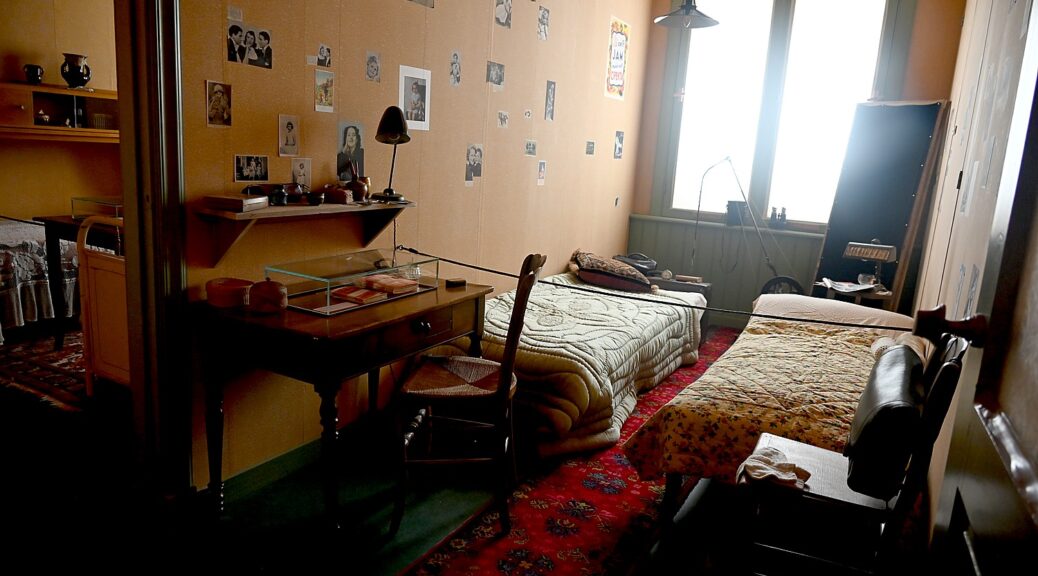
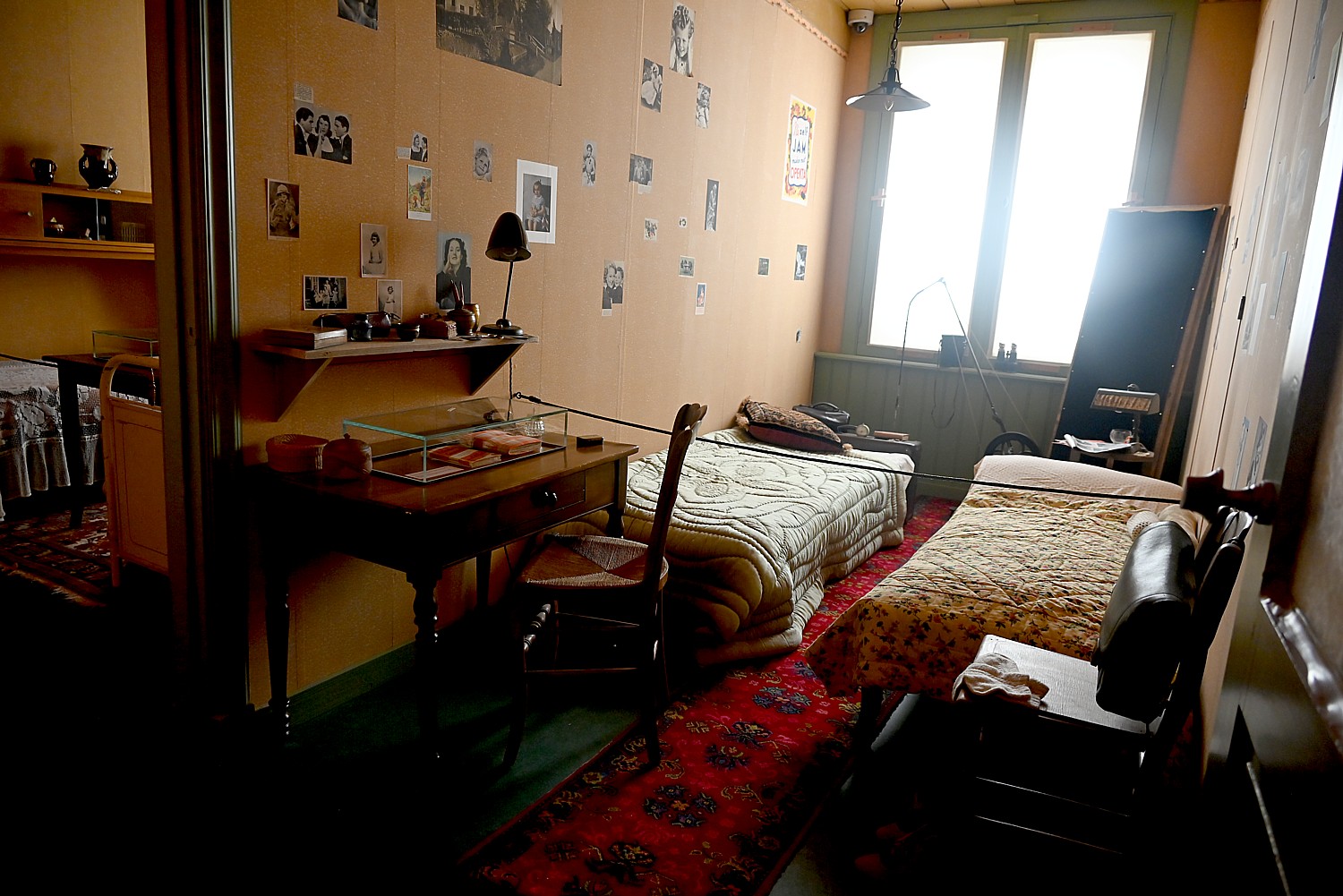
Standing in Anne Frank’s tiny room in The Annex where she and her family hid from the Nazis for two years, personalizes the Holocaust. This immersion into a full-scale re-creation of the Anne Frank House in Amsterdam is part of a landmark “Anne Frank The Exhibition,” opening at the Griffin Museum of Science and Industry, Chicago, on May 1, 2026 © Karen Rubin/goingplacesfarandnear.com.

Chicago — Griffin Museum of Science and Industry will be the Midwest host of Anne Frank The Exhibition. A presentation of the Anne Frank House, the exhibition features a pioneering experience outside of Amsterdam to immerse visitors in a full-scale, fully furnished recreation of the Annex rooms where Anne Frank, her parents and sister and four other Jewish refugees spent two years hiding to evade Nazi capture. Anne Frank The Exhibition opens May 1, 2026. 

“Anne Frank’s story is a powerful reminder of what happens when fear and hatred are allowed to take root,” said Dr. Chevy Humphrey, Griffin Museum of Science and Industry President and CEO. “At the same time, it reveals the quiet but enduring strength of curiosity, creativity and resilience, values that sit at the heart of our mission. We hope this exhibition offers meaningful moments of reflection for our guests, particularly young people, and encourages them to think critically about their role in the world they are inheriting.” 

Anne Frank The Exhibition is a call to conscience, said Ronald Leopold, Executive Director of the Anne Frank House. “By stepping into the world that confined Anne and her family, visitors are invited to confront the enduring realities of antisemitism, racism and hatred — and to recognize that remembrance is not passive, but a moral act that demands empathy, vigilance and courage. Griffin Museum of Science and Industry, founded through Julius Rosenwald’s conviction that knowledge must belong to everyone, embodies this same spirit of moral responsibility. Just as Rosenwald believed education is humanity’s greatest equalizer, this exhibition transforms history into living dialogue, ensuring that learning, understanding and compassion are never the privilege of a few, but the right of all.”

The exhibition follows an inaugural run in New York City at the Center for Jewish History, attended by 300,000, with several extensions due to popularity and dates that sold out.

Anne Frank The Exhibition immerses visitors in the context that shaped Anne’s life, from her early years in Frankfurt through the rise of the Nazi regime. It traces her family’s phased move to Amsterdam in the early 1930s, where Anne lived for ten years until her arrest in 1944. Visitors also follow her deportation to Westerbork, a large transit camp in the Netherlands, then to Auschwitz-Birkenau, a concentration camp and killing center in Nazi-occupied Poland, and eventually to Bergen-Belsen concentration camp in Germany, where she died at the age of 15.

In addition to the recreated Annex, Anne Frank The Exhibition provides an opportunity to learn about Anne Frank not as a victim but through the multifaceted lens of her life — as a girl, a writer and a symbol of resilience and strength. This is a story inspired by one of the most translated books in the world. 

The Chicago exhibition includes more than 130 original artifacts from the Anne Frank House in Amsterdam — many have never been seen before in public. Some of those artifacts include letters from Anne Frank, Margot Frank, Otto Frank and Fritz Pfeffer; a “List of Returned Jews Arriving at Amsterdam Central Station” in 1945; Anne Frank’s first photo album (1929-1942); handwritten verses by Anne Frank and Margot Frank in their friends’ poetry albums; and a German fairytale book that belonged to Margot Frank and Anne Frank (1925). 

Celebrated for its unprecedented intimacy and depth, Anne Frank The Exhibition originally premiered in New York City on the 80th anniversary of the liberation of the Auschwitz concentration camp.

Griffin MSI will offer this exhibition for free to all field trip groups, alongside the Museum’s ongoing policy of free General Admission to Illinois field trip groups, to make this important educational experience available to more people. All children in these groups also will receive a journal to write in to reflect on Anne’s words and consider the power of their own.

The exhibition is supported by age-appropriate educational resources and an antisemitism curriculum developed by the Anne Frank House and the Anne Frank Center at the University of South Carolina. These materials help students understand the history and ongoing reality of antisemitism and hatred while fostering critical thinking, empathy and civic responsibility through meaningful classroom conversations. Educators can access the curriculum — aligned with standards adopted by 39 states — through the exhibition website.

The exhibition is designed for children (ages 10 and older) and adults. All tickets include the exhibition audio guide in English and Spanish. 

Leading the creative vision for the expanded exhibition in Chicago is Tom Brink, Head of Collections & Presentations at the Anne Frank House and curator of Anne Frank The Exhibition. Michael S. Glickman, CEO of jMUSE, advised the Anne Frank House, with exhibition design by Eric Goossens Ontwerpt. Dr. Doyle Stevick, Executive Director of The Anne Frank Center at the University of South Carolina — the Anne Frank House’s official U.S. partner — is the educational advisor.

The exhibition is presented at Griffin MSI with support from Lead Benefactor Tony and Laura Davis, Presenting Benefactor Crown Family Philanthropies, Premier Sponsors Zell Family, Patron Sponsors Cari and Michael J. Sacks and GCM Grosvenor, the Estate of Judith Marx Golub, Jewish United Fund, Michael and Tanya Polsky and John and Jacolyn Bucksbaum Family Foundation, with supporting gifts from Neil Book, Chicago Bulls Charities and Rich and Vanessa Copans.

The exhibition was originally developed — and will travel nationally — through the leadership and support of Leon Levy Foundation, David Berg Foundation, Bank of America, Rebecca and Jared Cohen, Gray Foundation, Stacey and Eric Mindich, The Fuhrman Family Foundation, The Koum Family Foundation, Merryl and James Tisch and UJA-Federation of New York. Major support for the exhibition was also provided by Debbie and Mark Attanasio, Tanya and Ryan Baker, Einstein Astrof Foundation, Jesselson Foundation, Pershing Square Philanthropies, Sara Naison-Tarajano, The Barbra Streisand Foundation, The Krupp Foundation and Anonymous. Pro bono legal services provided by Wachtell, Lipton, Rosen & Katz.

The Anne Frank House

The Anne Frank House was established in 1957 in cooperation with Otto Frank, Anne Frank’s father, as an independent nonprofit organization entrusted with the preservation of the Annex where Anne Frank and her family went into hiding in 1942 during the Second World War. For nearly seven decades, the Anne Frank House has served as a place of memory and a place of learning. Committed to bringing Anne’s life story to world audiences, the Anne Frank House has emerged as a primary resource for teaching and learning about the Holocaust. Through Anne’s legacy the Anne Frank House empowers people of all ages — and especially young people — to reflect on the dangers of antisemitism, racism, and discrimination and the importance of freedom, equal rights, and democracy.

The Annex

In July 1942, Anne Frank (13), her parents, Otto and Edith Frank, and her sister, Margo Frank (16), went into hiding in the Annex at the back of her father’s company. The Van Pels family (Hermann, Auguste, and their 15-year-old son, Peter) followed the next week. Four months later, they were joined by Fritz Pfeffer. All of them were Jews daring to escape certain death at the hands of the Nazis amid the German occupation of the Netherlands during World War II. Unable to go to school, largely cut off from the rest of the world, and trapped in close quarters with others while a war raged outside, Anne poured herself into her diary. The people in hiding in the Annex were discovered and arrested in 1944, and subsequently sent to the Auschwitz-Birkenau concentration and extermination camp. Anne and her sister Margot were then sent to the Bergen-Belsen concentration camp, where they both died of typhus in February 1945. Anne was 15. Margot was 18 or 19. Otto Frank was the only person from the Annex to survive the Holocaust.

The Diary

Anne Frank: The Diary of a Young Girl, more commonly known as The Diary of Anne Frank, is one of the most translated books in the world. Transformed multiple times for stage and screen, the published book’s source is the personal diary that Anne Frank kept in multiple notebooks during the two-year period of hiding with her family in rooms located in the back house of her father’s company in Amsterdam. Soon after Anne and the others were arrested in 1944, Miep Gies, one of the people who risked their lives to help them in hiding, returned to the Annex and found their belongings ransacked. Miep was relieved to find Anne’s diary pages, knowing how important her writings were to her, and saved them for her return. Otto was the only person from the Annex to survive the Holocaust. When Miep first gave him his daughter’s diary, he could not bring himself to read it. Soon, he did and he could not stop, sharing it with relatives and friends who encouraged him to publish what they considered “an important human document.” Upon its publication, Otto Frank wrote: “How proud Anne would have been if she had lived to see this. After all, on 29 March 1944, she wrote: ‘Imagine how interesting it would be if I published a novel about the Secret Annex.'”

Kenneth C. Griffin Museum of Science and Industry (Griffin MSI) offers world-class and uniquely interactive experiences that support the Museum’s mission: to inspire the inventive genius in everyone. For more information, visit griffinmsi.org or call 773-684-1414.

See also:

Landmark Anne Frank The Exhibition in NYC Personalizes Holocaust As Never Before

For more travel features visit:

goingplacesfarandnear.com

Going Places @ longislandpress.com

www.longislandpress.com/category/vacation-travel/ 

goingplacesnearandfar.wordpress.com

moralcompasstravel.info

travelwritersmagazine.com/TravelFeaturesSyndicate/

goingplacesfarandnear.tumblr.com/

instagram.com/going_places_far_and_near/

instagram.com/bigbackpacktraveler/

‘Like’ us on facebook.com/NewsPhotoFeatures

X: @TravelFeatures

Threads: @news_and_photo_features

Bluesky: @newsphotosfeatures.bsky.social

Road Scholar Launches Groundbreaking Civil Rights Movement Program for Grandparents and Grandkids

Road Scholar has launched a new intergenerational program for grandparents and their families focusing on the pivotal Civil Rights Movement. The program, titled “The Heart of the Civil Rights Movement With Your Family,” is a continuation of Road Scholar’s commitment to providing immersive and educational travel experiences.

BOSTON, Mass.— Road Scholar, a leader in educational travel for older adults, has launched a new intergenerational program for grandparents and their families focusing on the pivotal Civil Rights Movement. The program, titled “The Heart of the Civil Rights Movement With Your Family,” is a continuation of Road Scholar’s commitment to providing immersive and educational travel experiences.

Drawing inspiration from its highly acclaimed and impactful program, “The Civil Rights Movement: Atlanta, Montgomery, Selma, Birmingham,” Road Scholar’s new offering is designed to provide an enriching journey through the history of the Civil Rights Movement, with a special emphasis on fostering intergenerational dialogue and understanding.

“We are excited to introduce this innovative program that allows our participants to explore and learn together about civil rights history with their children and grandchildren,” said Maeve Hartney, Chief Programs Officer at Road Scholar. “Our aim is to create meaningful experiences that not only educate but also strengthen family bonds and inspire future generations to champion equality and justice.”

Participants in the “Heart of the Civil Rights” program will have the opportunity to visit iconic landmarks and pivotal sites in Atlanta, Montgomery, Selma, and Birmingham, where key events of the Civil Rights Movement took place. Led by expert instructors, including historians and local activists, participants will engage in interactive discussions, hear personal accounts, and gain a deeper understanding of the challenges and triumphs of the movement.

“The civil rights family program was developed to ensure that the story of the Civil Rights Movement is not forgotten,” said Bobbie Duncan from the Center for Educational Adventure, which is partnering with Road Scholar for this program. “Through educational content and thought-provoking conversations, we hope to bridge the generation gap between Road Scholar grandparents and their grandkids and keep the legacy of the Civil Rights Movement alive in them.”

The program is now open for enrollments to grandparents and their children and grandchildren, ages 13-18. (Grandparent and grandchildren may also attend without the parents, as a “skip-gen” experience). The first departure date is scheduled for June 22-28, 2025. Road Scholar encourages interested individuals to visit their website or contact their customer service team for more information and to reserve their spots for this transformative journey.

For more information about Road Scholar and the “The Heart of the Civil Rights Movement With Your Family” program, visit roadscholar.org/23423 or contact 800-454-5768.

Road Scholar is the not-for-profit world leader in educational travel for older adults, offering learning adventures on seven continents and across the U.S. Founded in 1975 as “Elderhostel,” Road Scholar’s mission is to inspire adults to learn, discover, and travel. Learn more at www.roadscholar.org

For more travel features, visit:

goingplacesfarandnear.com

Going Places @ theisland360.com/travel

goingplacesnearandfar.wordpress.com

moralcompasstravel.info

travelwritersmagazine.com/TravelFeaturesSyndicate/

goingplacesfarandnear.tumblr.com/

instagram.com/going_places_far_and_near/

instagram.com/bigbackpacktraveler/

‘Like’ us on facebook.com/NewsPhotoFeatures

Twitter: @TravelFeatures 

Germany Extends Commemoration of 1,700 Years of Jewish Life Through July 2022

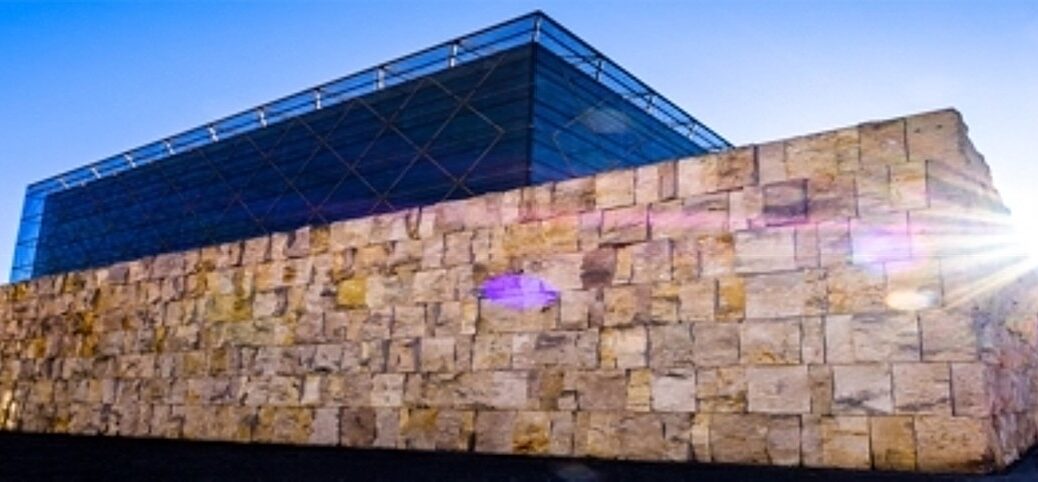
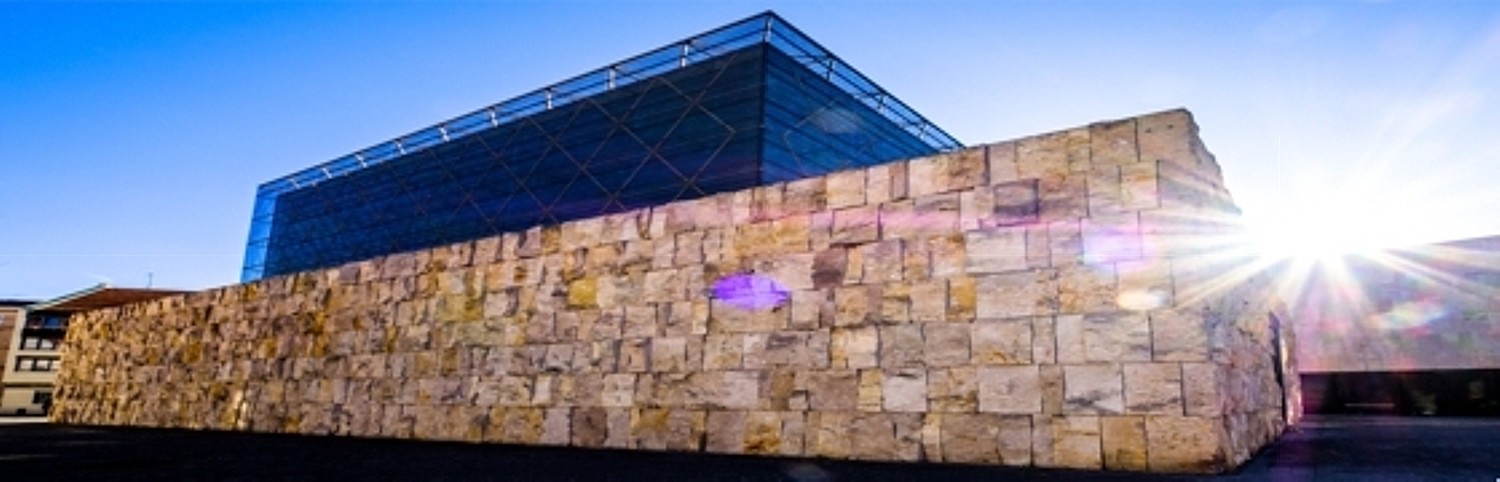
Munich: The new main synagogue in the Jewish center © Getty Images / FooTToo

In December 2021, 1,700 flags were raised to commemorate 1,700 years of Jewish life in Germany. “Auf das Leben!” German for: “To life!” (l’chaim). This Jewish toast can be read on these flags, flying high in state parliaments, synagogues, churches, universities, museums, the Central Council of Jews in Germany, and many more public places.

A series of celebrations, exhibitions, events and commemorations throughout Germany, the festival year #2021JLID is being extended until July 31, 2022.

The campaign is an initiative of the association “321-2021: 1,700 years of Jewish life in Germany,” taking a stance against anti-Semitism in Germany.

The history of Jews in Germany dates back to the year 321 when the Roman Emperor Constantine issued an edict that marked the earliest evidence of Jewish life in Germany. The story of the edict is quite fascinating since it was born out of a profane need: the city council of Cologne had to repair a damaged bridge but lacked the financial means. A Jew named Isaac offered monetary assistance but required a professional position in the city council to do so. Emperor Constantine granted the ensuing request for permission, resulting in the first firmly written evidence of Jewish life in Europe, North of the Alps.

Despite a varied history and the unspeakable crimes against humanity of the Nazi regime during the Shoa, Jews resettled in Germany following World War II. Today, more than 200,000 people have made their home in about 100 Jewish Communities across the country. They contributed greatly to the development of Germany in the arts, philosophy, science, medicine and economic landscape, and became an inseparable part of our society.

Places of Jewish heritage can be found throughout the country: the Rykestrasse Synagogue in Berlin, the Synagogues in CologneErfurtFrankfurt, LeipzigUlmBayreuthAugsburg, the Jewish Cemetery ‘Heiliger Sand’ in Worms, the ShUM Sites on the Rhine, the “document” at the Neupfarrplatz in Regensburg, the timber-framed synagogue in Celle, the New Synagogue in Dresden and the Ohel Jakob Synagogue in Munich are just some examples.

The anniversary year conveys aspects about Jewish culture, traditions and customs and sends a clear message against anti- Semitism. Events are organized nationwide under the name #2021JLID – Jewish Life in Germany, including concerts, virtual exhibitions, music, podcasts, video projects, theater, and films.

The Shared History Project was initiated by the Leo Baeck Institute – New York | Berlin (LBI) and supported by #2021JLID – Jüdisches Leben in Deutschland e.V. with funding from the Federal Ministry of the Interior, Building and Community (BMI).

A joint initiative between the Central Council of Jews in Germany, Catholic, Protestant churches and other groups provides cultural and historical exhibitions about Jewish life and faith in the country as well as commemorations, postage stamps, and the production of a Jewish food guide.The wide-ranging activities – almost 1,500 overall – both in analog and digital form, have one goal in common: to strike a balance between past, present, and future.

The events throughout the year 2021 brought a sense of new confidence to light, allowing many Jews to show their culture and customs in the streets of Germany, resulting in an experience of togetherness between Jews and non-Jews.

The federal government has followed requests and decided that the festival year #2021JLID will be extended until July 31, 2022. For the project partners whose events could not take place in the planned form due to the Covid-19 pandemic (e.g. with an audience or with guests from abroad), this provides the opportunity to carry out the events after all. The “Jewish Traveler” e-brochure highlights 65 cities and towns with special travel tips and contact details of Jewish organizations and institutions.

A collection of resources on Jewish Life in Germany today provides current and upcoming radio programs, links to activities of government and public institutions, as well as state, city, and local authorities.

Dresden: synagogue (C) Adobe Stock / tagstiles.com

The following calendar provides insight into a variety of celebrations honoring Jewish culture in Germany.

Augsburg, Bavaria: The Jewish Museum in Augsburg shows two exhibitions reflecting on Jewish life in the city. The exhibition “Jews through the Eyes of Others” (until September 4, 2022) questions clichés, prejudices, exaggerations, generalizations, and categorizations and asks the question: what role do Jewish museums play in perpetuating such projections?

The exhibition “The End of the Testimony” (until June 5, 2022) focuses on memories of contemporary witnesses, and the question of how to maintain statements of oral history for the next generations. It shows written testimonies and video interviews of contemporary witnesses and focuses on the question of how we want to deal with this legacy in the future.

Bayreuth, Bavaria: “Jewish Life in Bayreuth” program includes lectures within the established series “Bayreuth City Talks”, workshops, a weekly series in the local newspaper in cooperation with the Nordbayerischer Kurier, an app, and more.

Bamberg, Bavaria: Exhibition, “Medieval mikvah in Bamberg.” In the area of​​ the new “Quartier an der Stadtmauer” in the middle of Bamberg is a medieval mikvah (mikveh) – a Jewish ritual bath – from the first third of the 15th century as well as a baroque house from the 18th century, for which Jewish residents are proven. In order to convey Jewish life in historical times, a small documentation center was developed at the authentic site of the mikvah. It is the oldest still visible monument of the Jewish community in Bamberg.

Berlin: SHARED HISTORY Conference on 1,700 Years of Jewish Life in German-speaking Lands” (video recordings available). The Leo Baeck Institute – New York | Berlin (LBI) is marking the occasion of 1,700 years of Jewish life in Germany by launching its “Shared History Project.” As the name suggests, the lives of Jews have always been tightly interwoven with the history of the regions and countries where they lived. But to what extent can we truly speak of shared experiences during the past 17 centuries in Central Europe? What forms have the social, economic, and scientific exchange between the Jewish minority and Christian majority taken? These questions will be highlighted from several perspectives.

The New Synagogue which opened in 1866 is today the home of the Centrum Judaicum, which sees itself as a link between the past and the future. It serves as a site of research and documentation and brings Berlin’s vibrant Jewish history to life. The exhibitions “Under the wedding sky – weddings in Jewish Berlin” and “Telling Jewish Berlin. Mine, yours, ours?” (until June 12, 2022) unfold a mosaic of stories, experiences, and emotions, revolving around individual perspectives and personal relationships.

The 28th Jewish Film Festival Berlin | Brandenburg (JFBB), the largest Jewish film festival in Germany, will take place this year from June 14 to June 19, 2022, in numerous venues in Berlin and Potsdam. The JFBB program aims to enliven political and historical debates, counter anti-Semitism, narrate Jewish themes beyond stereotypes, and offer points of contact for the audience. On the program are feature films, documentaries, retrospectives, international films of all genres, high-end TV series, (contemporary witness) talks, and panel discussions.

Büren-Wewelsburg, North Rhine-Westphalia: Guided tour, “An insight into the history of Jewish life in the Paderborn region.” The former Hochstift Paderborn has a fascinating Jewish history. During a tour of the historical museum of the Paderborn monastery as well as the Wewelsburg memorial and memorial site 1933–1945, the varied history can be rediscovered.

Cologne, North Rhine-Westphalia: Exhibition, “SHALOM COLOGNE – discover Jewish life in Cologne, participate and set an example.” SHALOM COLOGNE is an innovative educational program that encourages to deal creatively and digitally with Jewish culture. The SHALOM-BOX contains more than 50 suggestions in the form of worksheets, videos, teaching ideas, links and hands-on tools. For the XXL poster, everyone is invited to send in selfies and pictures to create a strong motif for tolerance and respect. The big SHALOM CHALLENGE calls for artistic contributions dealing with Jewish culture.

Project: “Jewish Cologne – on the right bank of the Rhine.” Two centuries of Jewish history are closely connected to the Jewish cemetery in Cologne-Deutz. It forms the bridge between the Middle Ages and the modern age, and is also the link to Cologne on the right bank of the Rhine, the “Schäl Sick”. The project “Jewish Cologne-rechtsrheinisch” uses digital media to make history visible behind weathered inscriptions.

Dresden, Saxony: The exhibit “Rethinking City History: Perspectives on Jewish Stories and Present Lifes” (until March 31, 2022) retraces the complex Jewish life in the capital of Saxony. Until today, objects of the Jewish past can be found in living rooms, basements, or garages, finding a new place within the exhibition. Guided tours, a blog series and a YouTube video provide a deeper insight into the project.

Franconia: The anniversary is especially significant in Franconia since Jewish culture thrived in the region for almost 1,000 years. Jewish scholars, Franconian-Jewish dialects, foundations, synagogues, and more than 100 Jewish cemeteries had a significant impact on all aspects of life. This ended abruptly with the almost complete annihilation of the Jewish population during the Third Reich. Today, there are again Jewish communities in Franconia, as well as important institutions, including the Jewish Museum Franconia in Fürth, the “Museum Shalom Europa” in Würzburg, and the “Fränkische Schweiz Museum” in Tüchersfeld. Guided tours offered in many towns also invite visitors to explore the history and present state of Jewish culture.

Frankfurt, Hesse: The Jewish Museum Frankfurt is showing “Our Courage – Jews in Europe 1945-48” (until January 18, 2022). The exhibition is the first project of its kind to present the diversity of Jewish experience in the early post-war period from a pan-European, transnational perspective. The program is available for download here.

Hamburg: Movie: “Talmud Torah School Hamburg 2005-2015.” A video project with students connects the past and the future in the former Hamburg Talmud Torah school.

Koblenz, Rhineland-Palatinate: Dialogue, City Tour, App: “Digital stumbling block memorial routes.” In the Koblenz app, three commemorative routes can be explored which remind of former Jewish citizens, leading to stumbling blocks laid for them throughout the city.

Munich, Bavaria: Exhibition, “The Joys of Yiddish.” A roof frieze by the conceptual artist Mel Bochner at the Haus der Kunst in Munich reflects the Jewish language and the past. His work is shaped by reflections on the relationship between language and image. Born in Pittsburgh in 1940, Bochner grew up in a traditional Jewish family. The word-chain on the roof frieze of the Haus der Kunst in Munich consists of colloquial terms from Yiddish.

Nuremberg, Bavaria: Concerts, “World music and Klezmer in the Villa Leon.” Villa Leon is known for its world music and klezmer concerts. The series “World Music and Klezmer in the Villa Leon” presents the once only instrumental wedding music for Jews from Eastern Europe. The Villa Leon offers the oldest existing series of klezmer music in Germany. In addition, numerous associations or individuals organize their own concerts in respective areas.

Trier, Rhineland-Palatinate: Publication, Audio: “Jewish life in Trier.” Alongside Cologne and Mainz, the city of Trier was the earliest place on German territory where Jews settled. The long history of the Jewish community in Trier is reflected in the collections of the city. The library, for example, has the largest collection of Hebrew and Aramaic binding fragments in all of Germany. In the festival year # 2021JLID – 1,700 years of Jewish life in Germany, a series of tours, exhibitions, readings and lectures will take place in Trier dedicated to the diversity of Jewish life. Topics include civil courage, and the story of the photographer Hilde Hubbuch. The Scientific Library of the City of Trier is dedicating episodes of the podcast series “Veni, vidi, audivi” to the city’s Jewish history.

More information at German National Tourist Office, New York, NY 10018, 212-661-7175, www.germany.travel.


For more travel features, visit:

goingplacesfarandnear.com

goingplacesnearandfar.wordpress.com

moralcompasstravel.info

www.huffingtonpost.com/author/karen-rubin

travelwritersmagazine.com/TravelFeaturesSyndicate/

goingplacesfarandnear.tumblr.com/

instagram.com/going_places_far_and_near/

‘Like’ us on facebook.com/NewsPhotoFeatures

Twitter: @TravelFeatures

Insight Vacations Discounts Travel to Ireland for Bookings by Dec. 18

Ireland is rich in culture with its wild landscapes and hearty culinary delights. From enjoying a pot of Irish stew, to exploring Ireland’s lush lands and regal castles, connect with your Gaelic Roots on Insight Vacations’ immersive experiences.

Ireland may be a small country but it is rich in culture with its wild landscapes and hearty culinary delights. From enjoying a pot of Irish stew, to exploring Ireland’s lush lands and regal castles, you’ll connect with your Gaelic Roots on Insight Vacations’ immersive experiences.

Lonely Planet named Galway as one of the top places to visit in the world in 2020—a cultural destination highlighted on Insight Vacations’ Ireland itineraries. The accolade has been given in Lonely Planet’s Best in Travel 2020, describing the city as “arguably Ireland’s most engaging city”.

According to the European Capital of Culture, visitors to Galway can expect to experience the city and county’s best year yet, with a year-long program of extraordinary street spectacle, live and digital art as well as world-class music, theatre and dance.

 As the award-winning leader in premium escorted travel, Insight Vacations wants travelers to observe Galway with experiences that go beyond the ordinary. On Insight’s journeys to Ireland, guests are invited to meet and interact with locals and explore various establishments that offer authenticity as well as good old-fashioned fun.

Here are several Insight trips that immerse guests into the unique aspects of Galway:

 Country Roads of Ireland (12 Days):Travelers will get the chance to enjoy breathtaking views of the Clare Coast before a delightful drive through the strange, rocky landscape of the Burren to Galway Bay. They will spend a day at their leisure to relax and enjoy the city– perhaps joining an Optional Experience to the Aran Islands – a genuine highlight of the Wild Atlantic Way. With their cliffs and spectacular coastal views, the islands are a true Irish experience.

 Focus on Ireland (7 Days):Lead by Insights’ dedicated and knowledgeable Travel Director, guests will explore the infamous Lynch Memorial and the Church of St. Nicholas, where Christopher Columbus reputedly prayed before his discovery of America. They will also see the aged Spanish Arch and Eyre Square, dedicated to the late US President, John F. Kennedy.

Irish Elegance (8 Days): Guests will journey the City of the Tribes and visit Galway’s stunning cathedral. They can take in the beautiful scenery during their two-night stay at the Connemara Coast Hotel, which is spectacularly set on the shores of Galway Bay.

For a limited time on Insight Vacations journeys, guests can visit Galway with Insight Vacations’ amazing air offer: From now until Dec. 18, travelers can save up to $300 per couple on economy air on departures from Oct. 1, 2019 to May 31, 2020, and Sept. 1, 2020 to Nov. 15, 2020.

By choosing flights with American Airlines, British Airways, Finnair and Iberia, travelers can save $150 off per person on Economy, $200 off per person on Premium Economy or $300 off per person on Business Class.

In addition to the these air offers, Insight Vacations is also offering a 10% savings to Europe with their popular Early Payment Discount for those who book and pay in full by December 18, 2019. This discount is combinable with Insights’ air offers.

For reservations, call Insight Vacations at 1-888-680-1241, or visit www.insightvacations.com

Join the conversation on social media using the hashtags
#INSIGHTVACATIONS and #INSIGHTMOMENTS

For more travel features, visit:

goingplacesfarandnear.com

goingplacesnearandfar.wordpress.com

moralcompasstravel.info

www.huffingtonpost.com/author/karen-rubin

travelwritersmagazine.com/TravelFeaturesSyndicate/

goingplacesfarandnear.tumblr.com/

instagram.com/going_places_far_and_near/

‘Like’ us on facebook.com/NewsPhotoFeatures

Twitter: @TravelFeatures

Sacred Places: Spiritual Sites That Can Be Visited Via Cruise Ship

Praying at the Western Wall in Jerusalem, one of more than 100 holy sites that can be visited on a cruise.

There are more than a hundred cruise itineraries that provide access to sacred places – worldwide sites of healing, guidance, and divine inspiration. The significance of these hallowed sites cannot be expressed in words or pictures – to understand their impact, the faithful must visit them in person, to experience healing, guidance or divine inspiration.

While many of the world’s most sacred sites have historically been inaccessible to all but the hardiest of travelers – those who were able to make arduous overland journeys – the travel experts at CruiseCompete say travelers will find that today’s cruise itineraries make many of these locations surprisingly easy to visit.

Here is a partial list:

Asia/Far East
Beijing, China, Hanging Monastery
Beppu, Japan, Beppu Onsen
Delhi, India, Taj Mahal
Delhi, India, Rishikesh
Hiroshima, Japan, Peace Memorial Park
Kochi, Kanyakumari, India, 3 oceans unite, Ghandi Memorial
Mumbai, India, Ajanta and Ellora caves
Qingdao, Tai Shan, China, Tai Shan Dai Mai Complex
Shanghai, South Korea, Lotus Lantern Festival
Shimizu, Japan, Mt Fuji
Taipai, China/Taiwan, Wenwu Temple
Yangon, Myanman, Bagan

Caribbean
Bridgetown, Trinidad and Tobago, Diwali

Europe
Bordeax, France, Lourdes
Bucharest, Romania, Hurezi Monastery
Cologne, Germany, Aachen Cathedral
Cologne, Germany, Shrine of the Three Kings
Dublin, Ireland, Newgrange
Holyhead, Holywell, Wales, St Winefride’s Well
Lisbon, Portugal, Our Lady of Fatima
Madrid, Spain, Mezquita
Beaches of Normandy, France, Normandy American Cemetery and Memorial
Paris, France, Chartres Cathedral
Paris, France, Mont-St.-Michael

Mediterranean
Cairo, Sinai peninsula, Mt Sinai/St. Catherine’s Monastery
Haifa, Nazareth / Galilee (Haifa), Israel, Sea of Galilee (Lake Tiberias)
Istanbul, Turkey, Blue Mosque
Jerusalem, Bethlehem, Cave of the Nativity
Jerusalem, Israel, Western Wall
Jerusalem, Israel, Holy Sepulchre Church
Jerusalem, Israel, Yad Veshem
Tripoli, Lebanon, Cedars of God Lebanon
Livorno, Italy, Chapel of the Stigmata
Luxor, Egypt, Valley of the Kings
Rhodes, Greece, The Cave of the Apocalypse
Rome, Italy, Abbazia Di San Galgano
Rome, Italy, St. Peter’s Basilica

Middle East
Aqaba, Jordan, Petra

North America
Baltimore, Virginia, Arlington National Cemetery
Huatulpo, Mexico, Day of the Dead
New York, New York, Ground Zero
Baltimore, Washington DC, Vietnam Veteran’s Memorial

South America
Copacabana, South America, Islands of the Sun and Moon
Easter Island, South Pacific, Easter Island
Lima, Peru, Mcchu Picchu/ Sacred Valley of the Inca

For more information, visit CruiseCompete’s full listing of sacred places that are accessible via cruise ship.

For more information or assistance planning a future cruise or a cruisetour, visit CruiseCompete and try the Virtual Cruise Advisor.

Find CruiseCompete’s “Sea Tales 2019 Family Cruise Travel Planner” at www.cruisecompete.com/resources.php. To see consumer feedback click here.

CruiseCompete has been the premier online cruise marketplace since 2003 (see media praises).

Consumers come to CruiseCompete to research and book cruise vacations. More than 1.5 million users have generated close to 4 million requests from consumers, and agents have delivered almost 17 million quotes since 2003. They can compare offers from trusted travel agents, see consumer reviews of agents and agencies responding, then contact travel agents directly for more information and to book cruises. CruiseCompete is a member of the Family Travel Association, a leading authority and resource for family travel information and is home to the Sea Tales 2018 Family Cruise Travel Planner at Travel Resources.

CruiseCompete CruiseTrends™ offers monthly stats for an inside look at consumer trends and what consumers want in cruise vacations.

CruiseCompete takes top honors in Travel + Leisure’s “Top 60 Best Apps and Websites for Travelers” with an honorable mention. The Wall Street Journal praised CruiseCompete as “Best Cruise Travel Site,” The New York Times says, “… independent travel agents compete to offer you the best deal,” and follows similar praise from Travel + Leisure, Kiplinger and The Washington Post. The Street says, “Score luxury cruises at bargain prices.”

For more information, visit https://www.cruisecompete.com/ or https://www.cruisecompete.com/group_cruises/

CruiseCompete is an Iowa limited liability company, is not a travel agency or owned by a travel agency.


For more travel features, visit:

goingplacesfarandnear.com

goingplacesnearandfar.wordpress.com

moralcompasstravel.info

www.huffingtonpost.com/author/karen-rubin

travelwritersmagazine.com/TravelFeaturesSyndicate/

goingplacesfarandnear.tumblr.com/

instagram.com/krubin0830/

instagram.com/famtravltr/

‘Like’ us on facebook.com/NewsPhotoFeatures

Twitter: @TravelFeatures

Day of the Dead in Lithuania: Where Pagan and Christian Traditions Meet in Enchanting Cemetery Settings

During Vėlinės in Lithuania, ancient cemeteries are afloat with flowers and sinking in the sea of candles. People come to remember dead heroes and prominent poets of the nation, but they also don’t forget the unknown graves of dead people whose relatives might not be around anymore to light a candle.

Looking for a unique experience this Halloween? Head to Lithuania, where Day of the Dead is celebrated by the whole nation, and the country offers unique glimpses into the world of crypts, crosses and ancient cemeteries.

Take one of the special tours – visit old cemeteries of Vilnius, adrift in flowers and candles; take a tour of the underground crypts of Vilnius Cathedral; head to the old pagan Lithuanian capital, Kernave, and see pilkapiai – ancient cemeteries with no crosses; take excursions to the seaside and southern Lithuania, visit national parks and local cemeteries with UNESCO-recognized cross-making traditions; head to the extraordinary Hill of Crosses  – a site of pilgrimage in northern Lithuania with over 200,000 of crosses of all shapes and sizes. The first crosses were put on the hill by the relatives of the dead rebels of 1831 revolt against the Russian tsar.

On the first day of November, Lithuanian offices, shops and schools close, roads become packed with cars, families reunite, and everyone heads to one special place – the cemetery.

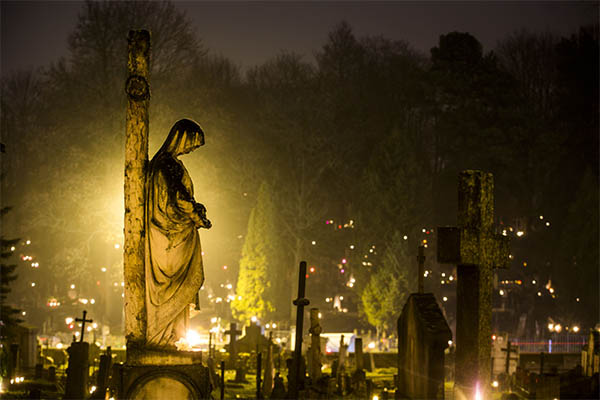
Lithuanian cemeteries are already different from what you’d find in other countries – they rather resemble a botanical park, sinking in the sea of trees, adorned with flowers and beautiful tombstones. On November 1st, Lithuanians celebrate Vėlinės (vėlė means “soul” and ilgėtis means “to long”) – the Day of the Dead, which is not as joyful an occasion as El Dia de Los Muertos in Mexico, but rather the day of remembrance and reunion that bears deep traditions. Cemeteries become the place of family gatherings, where young and old arrange flowers and light candles. When the sun sets, the cemeteries become enchanting, alive and mysterious from the sea of flickering candlelights and the aroma of thousands of fresh flowers.

When golden trees and low-hanging sun create special autumn atmosphere, it’s a perfect time to visit Lithuania and to get enchanted by the scenery and traditions, to explore some off-the-beaten track activities, and to see some old Lithuanian customs put into action.

According to the old Lithuanian tradition, this is the time to remember the ancestors and to re-think one’s place in the world. When Lithuania finally accepted Christianity (last country to be “baptized” in Europe), pagan and Christian traditions blended into one over time, giving special significance and depth to the Lithuanian Day of the Dead.

The Old Cemeteries of Vilnius 

The Old Vilnius Cemeteries belong in the list of European historical cemetery heritage.

There are three main cemeteries in Vilnius city center: the first one, Rasų Cemetery, was founded in 1796, and is the eternal home to famous Lithuanian poets, artists and politicians, such as the activist and folklorist Jonas Basanavicius, and composer and painter M.K. Ciurlionis. This was the first cemetery that was founded outside of the city, on a hill surrounded by old oak trees. The name of the place – Rasos – suggests this used to be an ancient pagan ceremony site.

The Bernardine Cemetery was established in 1810 by the Bernardine monks of the the Church of St. Francis of Assisi. As most cemeteries in the city center, it was closed by the Soviets and remained mostly unchanged from that time, with burials allowed only in existing family graves.

Antakalnis Cemetery is commonly referred to as the Military Cemetery. 12 of the 14 Soviet Union protest victims from 1991 TV tower attack are buried here, as well as the victims of Soviet Medininkai Massacre. Among other perished soldiers there are graves of Polish soldiers from 1919-20, Lithuanian, German and Russian soldiers who have fallen in World War I and thousands of French soldiers of Napoleon’s Army, whose remains were found in Vilnius and reburied in Antakalnis in 2001.

During Vėlinės, these old cemeteries are afloat with flowers and sinking in the sea of candles – people come to remember the dead heroes or prominent poets of the nation, but they also don’t forget the unknown graves of dead people whose relatives might not be around anymore to light a candle.

Lithuanian Cross-Making and the Hill of Crosses 

If you feel like venturing outside of Vilnius, Southern Lithuanian region of Dzukija and Lithuanian seaside will offer a special glimpse into the culture of Lithuanian cemeteries, with their  distinctive crosses and breathtaking nature that surrounds them.

The Lithuanian art of cross-making was recognized to be unique and added to the UNESCO World Heritage list. Since Lithuania was the last country of Europe to abandon paganism and convert to Catholicism in the 14th century, pagan and Catholic elements intertwine in Lithuanian crosses – which were forbidden by Tsarist Russia and the Soviet Union.

Lithuania’s Hill of Crosses, located in the northern Lithuania, is a unique and enchanting place, with over 200,000 of crosses of every shape and size, and attracting thousands of Catholic pilgrims as well as curious tourists. People started leaving crosses on the hill after the 1831 uprising against the Russian tsar – relatives put crosses to commemorate dead rebels, since they had no bodies to bury. During Soviet occupation, the KGB bulldozed the hill twice – but today, the Hill of Crosses stands tall again as the symbol of resistance and faith.

Pre-Christian Cemeteries

You can also find cemeteries in Lithuania that have no crosses – these are pre-Christian pilkapiai dating from 12-13th century – abandoned in the 14th century – but still reminding everyone of pagan Lithuania. The most prominent site of pilkapiai is in Kernave, whose first residents arrived in the 9th century BC, and which later became an important pagan city.

Similarly, you wouldn’t find any crosses in the ethnic Jewish cemeteries, or the cemeteries of Lithuanian Turkic minorities – Tatars and Karaites.

Lithuanian Cemetery Excursions by Vilnius in Love:

  • Royal Mausoleum. A visit to the crypts of Vilnius Cathedral
  • Uzupis neighborhood. The Bernardine Cemetery
  • The old Military Cemetery of Antakalnis
  • Rasu Cemetery
  • The pagan capital Kernaveand pilkapiai
  • The Hill of Crossesin Northern Lithuania
  • National Park of Dzukija
  • National Park of Curonian Spit
  • Jewish Vilnius
  • Trakai Castleand old Karaites cemetery

Vilnius in Love is a tour guide company that offers customizable and personalized tours across all regions of Lithuania.  Hiring guides who are very well versed in local history, they are able to offer trips to unique destinations and rare attractions. Contact VilniusinLove.com to learn more.


For more travel features, visit:

goingplacesfarandnear.com

www.huffingtonpost.com/author/karen-rubin

goingplacesnearandfar.wordpress.com

moralcompasstravel.info

travelwritersmagazine.com/TravelFeaturesSyndicate/

goingplacesfarandnear.tumblr.com/

instagram.com/krubin0830/

instagram.com/famtravltr/

‘Like’ us on facebook.com/NewsPhotoFeatures

Twitter: @TravelFeatures

American Indian Intertribal PowWow at Jamestown Settlement, Williamsburg, Oct 1-2

Kevin Locke performs Hoop Dance. Jamestown Settlement is hosting an American Indian Intertribal PowWow Oct. 1-2, 2016

WILLIAMSBURG, Va.– Jamestown Settlement, a museum of 17th-century Virginia history and culture, will present an American Indian Intertribal Powwow on Saturday and Sunday, October 1 and 2, featuring song and dance by members of American Indian tribes, storytelling and a film presentation.

An Evening Concert & Flute Workshops With Kevin Locke

A highlight of the weekend event will be a Saturday evening performance by folk artist Kevin Locke, a world-renowned Hoop Dancer, an indigenous Northern Plains flute player and storyteller. Locke, Native American Music Award winner for 2009 Record of the Year and National Endowment for the Arts Heritage Fellow, will perform traditional songs and original music from his 12 albums, most recently The First Flute, Open CircleKeepers of the Dream and Dream Catcher, combining songs on flute with American Indian stories touching on the Lakota culture and sign language. At the conclusion of the evening, accompanied by Powwow singers, Locke will perform a hoop dance, an athletic healing dance in which he uses 28 hoops to form various animals and shapes. Audience members will be selected to learn and take part in this traditional hoop dance. The evening concert begins at 6:30 p.m., and admission is $10 for adults and $5 for ages 6-12.

As a Lakota and Anishinabe, Locke works with young people on American Indian reservations to ensure the survival and growth of the indigenous culture and shares the culture’s legacies with others during his world travels.  Locke will offer flute workshops at 10 a.m. and 2 p.m. on Saturday and Sunday in which he will show children how to build and paint their own flute and teach them a song. Participants during the Saturday workshops will be invited to perform with Locke during the Saturday evening performance, and those participating in the Sunday workshops can take part in the Sunday daytime Powwow dancing event. Flute workshops require advance reservations and cost $40 per person on Saturday (includes museum admission to daytime event and evening concert) and $35 on Sunday (includes museum admission to daytime event). Each workshop, designed for ages 8 and older, is limited to 15 participants. 

American Indian Intertribal Powwow activities from 9 a.m. to 5 p.m. include: 

Powwow Singing & Dancing

A Grand Entry with a parade of dancers will take place at 12:30 p.m. each day in a dance circle on the museum mall, followed by an afternoon of singing and dancing until 4:30 p.m.  Master of Ceremonies will be David White Buffalo, a member of the Sincagu band of the Lakota Nation, and Arena Director will be Clark Stewart of the Chickahominy Tribe. Among the featured singers will be Thunder Voices of the Lumbee, from Lumberton, N.C.; Zotigh Singers of the Kiowa, from Oklahoma; and The White Buffalo Singers of the Lakota, from Rosebud, S.D.

Film Presentation

Visitors can view the one-hour documentary film “Rising Voices” 10 a.m. and 12:30 and 3 p.m. each day to learn about the endangered indigenous language of the Lakota people at. The film is part of The Language Conservancy’s ongoing effort to preserve and revitalize languages in North America. Following the film, elders and first-language speakers from the Lakota in South Dakota and Crow in Montana will be on hand to discuss the film and facilitate children’s activities.  

Storytelling

Grace Ostrum of the Accohannock will present American Indian stories at 9:30 and 11:30 a.m. and 2:30 p.m. each day.

Birds of Prey

A “Birds of Prey” program, featuring falcons and other raptors, will be presented on the museum mall by Eagle Pines Falconry at 11:45 a.m. each day of the event.

‘Bartering for a Continent’ Special Exhibition

Jamestown Settlement visitors also can enjoy the “Bartering for a Continent: How Anglo-Indian Trade Shaped America” special exhibition through December 10, exploring the importance of trade between American Indians and English colonists, from the founding of Jamestown through the American Revolution, and the role of Virginia in the development of a new world of exchange in goods and commodities across the North American continent.

Basket Workshops

Powhatan Indians in the 17th century made baskets of bark, grasses and vines to carry items harvested on land and from waterways. Visitors can pre-register for a two-hour workshop at 10 a.m. and 2 p.m. October 1 and 2 to discover the process of making twined baskets and take it home. Workshops are $20 per person and limited to 15 participants.

Jamestown Settlement features an introductory film, expansive exhibition galleries that chronicle the nation’s 17th-century beginnings in Virginia in the context of its Powhatan Indian, English and west central African cultures, and historical interpretation at outdoor re-creations of a Powhatan village, the three ships that brought America’s first permanent English colonists to Virginia in 1607, and a colonial fort.

The Jamestown Settlement Special Exhibition, Bartering for a Continent: How Anglo-Indian Trade Shaped America, is on view June 4 – December 10, 2016.

The American Indian Intertribal Powwow daytime event is included with admission: $17.00 for adults, $8.00 for ages 6 through 12, and children under 6 are free. Separate admission is required for the Saturday evening concert with Kevin Locke and advance reservations required for flute and basket workshops. Tickets are available at https://jyfemail.jyf.virginia.gov/eStore/.

Jamestown Settlement, located at State Route 31 and the Colonial Parkway (2110 Jamestown Road), is open 9 a.m. to 5 p.m. daily. For more information about the American Indian Intertribal Powwow, call (888) 593-4682 toll-free or (757) 253-4838 or visit http://www.historyisfun.org/jamestown-settlement/powwow/

For more travel features, visit:

goingplacesfarandnear.com

goingplacesnearandfar.wordpress.com

moralcompasstravel.info

travelwritersmagazine.com/TravelFeaturesSyndicate/

goingplacesfarandnear.tumblr.com/

instagram.com/krubin0830/

‘Like’ us on facebook.com/NewsPhotoFeatures

Twitter: @TravelFeatures

New York State Partners with ResponsibleTravel on Sustainable Travel Online Guide, Itineraries

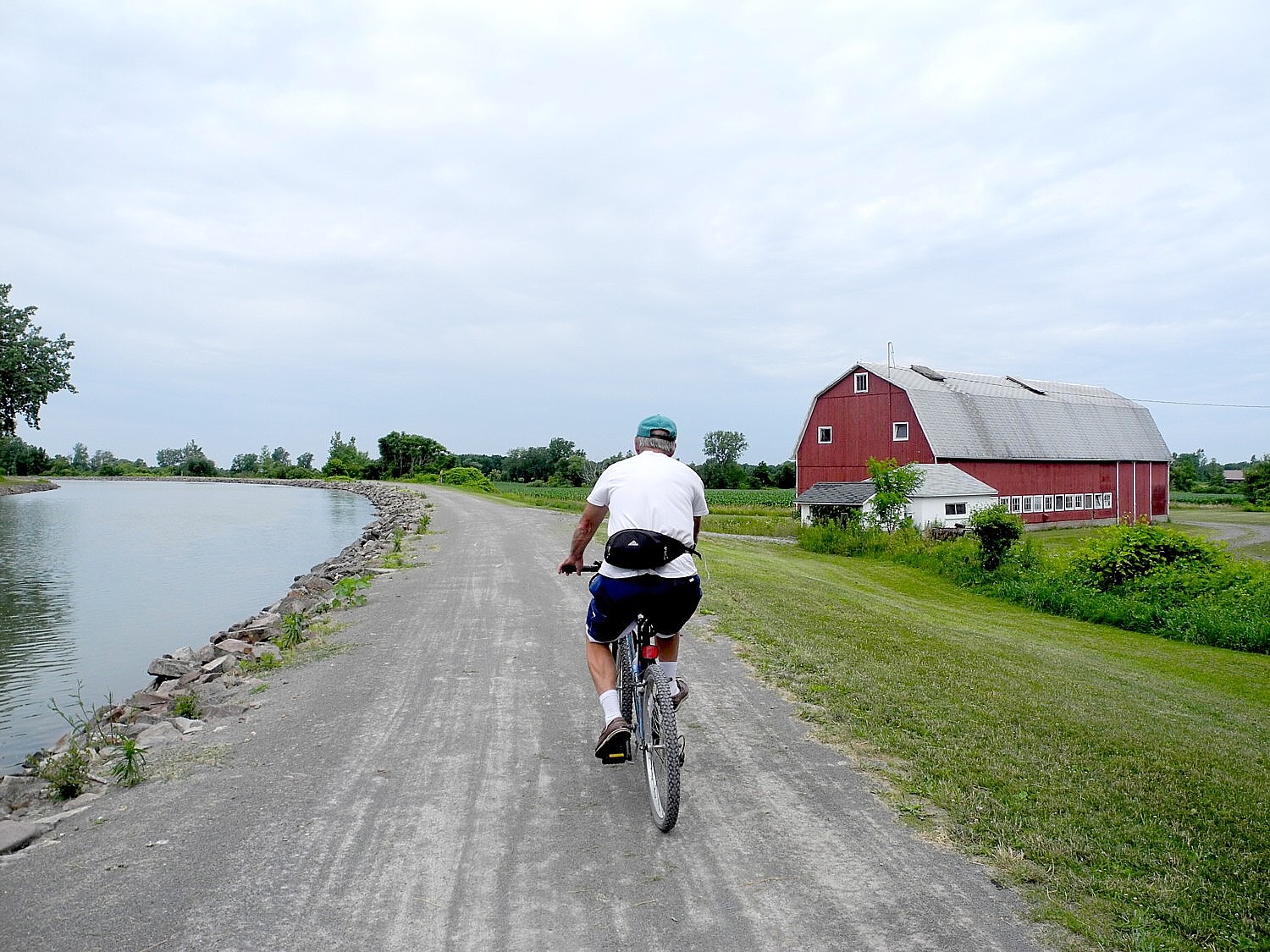
You can find out about bicycling along the Erie Canal tow paths at an online New York State Responsible Travel Guide which also offers itineraries © 2014 Karen Rubin/news-photos-features.com.

Have you ever thought to explore New York State’s Amish culture, or bike along the hundreds-of-miles long Erie Canal towpath? Eco-oriented travelers can discover such lesser known and authentic aspects of New York State at an extensive online guide to sustainable travel, along with bookable itineraries, at www.responsibletravel.com/holidays/new-york-state/travel-guide.

The initiative, in conjunction with responsibletravel.com, makes New York one of the only U.S. destinations to promote sustainable tourism on such a large scale.

The Responsible Travel Guide to New York State provides an overview of the culture, history and ecology of each of New York’s regions as well as practical information on public transportation, eco-friendly activities and accommodations. An easy-to-navigate format invites eco-oriented travelers to discover many lesser known and authentic aspects of New York State. Equally valuable as a planning tool, the guide links to other useful sites as well as a tour section that is constantly growing with a multitude of click-to-book New York itineraries.

The New York State guide and itineraries were produced in partnership with United-Kingdom-based responsibletravel.com, a leading international travel organization and pioneer in sustainable and responsible tourism.

A separate section of the tour operator’s website features a growing catalog of easy-to-book eco-tourism activities in every region of the state.

The partnership and program reflect Governor Andrew Cuomo’s commitment to increasing tourism throughout New York, conserving the state’s unrivaled natural wonders and supporting local communities.

“This initiative will continue to New York State’s history of pioneering environmentally responsible tourism,” Governor Cuomo said. “From our millions of acres of protected wilderness where New Yorkers can hike or kayak, to our vast network of parklands, New York is truly unmatched when it comes to opportunities for sustainable tourism. On top of all that, these assets support eco-friendly jobs and growth in local communities, and ultimately reinforce the value of preservation.”

Justin Francis, co-founder of responsibletravel.com, said, “We are delighted to be working with New York State to find and celebrate the best examples of responsible tourism. I was staggered by the diversity of experiences we found within the state, and by the contribution these make to conservation and communities. I think our clients will be too. We are thrilled that New York State has decided to turn perhaps the most powerful tourism branding in the world, I Love NY, green to help us launch this guide.”

The guide has been penned by Catherine Mack, an ecotourism expert and writer who has contributed to several ecotourism guidebooks as well as responsible-travel oriented articles for the National Geographic Traveller UK, The Irish Times, and other publications.

New York’s strong commitment to conservation dates back more than a century to the ratification of the “Forever Wild” amendment to the State Constitution in 1894. The amendment mandates that state-owned and acquired forest preserve lands be “forever kept as wild forest lands.” New York’s Adirondack Park, the nation’s largest park outside of Alaska, is bigger than Yellowstone, Yosemite, Grand Canyon, Glacier and Great Smoky Mountains National Parks combined and is just one of the state’s many natural treasures. The original two preserves – the Catskill and Adirondack parks – have since expanded to more than 175 New York State Parks with activities such as fishing, hiking, mountain biking, swimming, kayaking, horseback riding, cultural presentations and historic re-enactments.

For more New York State travel ideas, visit http://iloveny.com/.

See also:

Journey by boat and bike along the Erie Canal: Macedon-Fairport-Pittsford and slideshow

Erie Canal journey by boat, bike: Exploring canaltowns from Pittsford to Albion and slideshow

Erie Canal journey: Albion-Medina bikeride is most scenic, illuminating and slideshow

Erie Canal journey by boat and bike: Palmyra, ‘Queen of Canal Towns’ and slideshow

A gal getaway hiking New York’s Hudson River School Art Trail and slideshow

Getaway on the Hudson River School Art Trail: Thomas Cole National Historic Site and slideshow

Getaway on The Hudson River School Art Trail: Frederick Edwin Church’s Olana and slideshow

For more travel features, visit:

www.examiner.com/eclectic-travel-in-national/karen-rubin

www.examiner.com/international-travel-in-national/karen-rubin

travelwritersmagazine.com/TravelFeaturesSyndicate

goingplacesnearandfar.wordpress.com

moralcompasstravel.info

‘Like’ us on facebook.com/NewsPhotoFeatures

Twitter: @TravelFeatures