Join the Center for Responsible Travel (CREST) for a 2020 World Tourism Day Webinar entitled Lessons from COVID-19 for Tourism in a Changing Climate, Tuesday, September 29, 11:00 am–12:30 pm EST
CREST’s annual meta-analysis, The Case for Responsible Travel: Trends & Statistics, will share key studies on COVID-19 and climate change and the lessons that may be applied from the former to meet the challenges of the latter. CREST’s World Tourism Day Webinar will share the report’s key findings and will bring together experts to discuss consumer, business, and destination trends in the context of recovery.
Distinguished speakers will explore the unprecedented opportunity to mitigate two existential threats, climate change and COVID-19, with one coordinated approach, truly making the world a safer, more equitable, and more resilient place for all.
Panelists will include:
Dr. Daniel Scott, Executive Director, Interdisciplinary Centre on Climate Change (IC3), University of Waterloo
Moderator: Denaye Hinds, Owner and Managing Director, JustaTAAD, LLC
The latest report, The Case for Responsible Travel: Trends & Statistics 2020, a special edition on lessons from COVID-19 for tourism in a changing climate, comes at an unprecedented time due to the COVID-19 pandemic. COVID-19 has highlighted the immense need and value of tourism, while fundamentally changing the way destinations, businesses, and travelers will plan, manage, and experience tourism. At the same time, climate change remains an existential threat that has real consequences for destinations and communities everywhere.
The report includes a special focus on the two major crises facing our world today: climate change and COVID-19. Sharing cutting-edge research and examples, the report describes how travelers, tourism businesses, and destinations are implementing workable, sustainable solutions to support our planet and its people. The report also provides an overview of what consumers, businesses, and destinations are experiencing during COVID-19 and offers sustainable solutions that can help the tourism industry on a road to responsible recovery.
“Crisis often breeds innovation, and destination communities and businesses must now take the time to reconsider the path forward,” said Gregory Miller, Executive Director of CREST. “As we look to the future of tourism, the same rigor and dedication that is needed to adapt to the pandemic must also be applied to neutralize the threat of climate change.”
Trends & Statistics 2020 updates CREST’s previous industry studies, released every year since 2013. This year’s report was prepared in collaboration with more than 30 leading organizations, researchers, and institutions, including the United Nations Environmental Programme (UNEP), the Global Sustainable Tourism Council (GSTC), and the World Wildlife Fund (WWF).
Williston, VT –By 2030, 1.8 billion people – about 20 percent of the global population – are predicted to be tourists traveling the world. As the demand for global travel increases, consumers are faced with numerous decisions on how to make their trips more sustainable, including where to go, what to pack and how to get there. Country Walkers, a leading provider of walking adventures and a leader in responsible tourism for decades, offers travelers the opportunity to contribute to a more sustainable world through preserving indigenous cultures, supporting local economies, conserving wildlife and protecting the environment.
“At Country Walkers, we are committed to a healthier planet
and to giving back to the destinations we explore,” said Timo Shaw, President of Country Walkers. “Sustainability is one of our core values, from staying in locally
owned and operated hotels whenever possible and seeking out environmentally and
socially responsible accommodations, to our ardent support of the Slow Food
movement in order to preserve culinary traditions and support biodiversity. As
a result, those who travel with us contribute to a more sustainable world as
well.”
To further support special conservation and charitable
projects in communities and habitats worldwide, Country Walkers created The
Travelers Fund, which makes a donation on behalf of every traveler who
books a specific tour. More than half of Country Walkers’ tours are associated
with an initiative, including:
Mountain Rescue at Club Alpino Italiano (Country Walkers tour: Italy: The Amalfi Coast & Capri). Safety comes first
on the Amalfi Coast with a donation to the local mountain rescue team, which
primarily relies on volunteers and donations to obtain and maintain equipment
for rapid emergency response for visitors and locals.
Wildlife Conservation in the Rocky
Mountains (Country Walkers tours: Montana: Glacier National Park and Wyoming: Grand Teton & Yellowstone[KG1] ). The Yellowstone to Yukon
Conservation Initiative seeks to re-connect segments of land that have been
separated by development, allowing animals to safely move from region to region
on wildlife-friendly highway overpasses. Contributions are used towards
constructing one of these wildlife structures.
Therapeutic Travel for Cancer Survivors
in Quebec (Country Walkers tour: Quebec: Quebec City & the Saguenay Fjord). Country Walkers supports the Fondation Sur La Pointe des Pieds
(“On the Tip of the Toes”), which provides young people ages 14 to 29 living
with cancer with an opportunity to regain their sense of well-being through
therapeutic adventure expeditions.
Assisting Pilgrims on Camino de
Santiago (Country Walkers tour: Spain: Classic Camino de Santiago). The
Federación Española de Asociaciones de Amigos del Camino de Santiago
coordinates a vast national network of hostels, volunteers, parishes, churches
and shelters in an effort to keep more than 200,000 pilgrims safe, healthy and
informed as they walk the Camino de Santiago.
Clean Water in Zambia (Country Walkers tour: Zambia Safari: Exclusive Camps & Bush Walks). In Africa, currently 345 million people live without access to
clean drinking water. Together with local partners in Zambia at Charity Begins
Home, Country Walkers supports the “Commit to Clean Water” Fund, an initiative
that seeks to transform rural communities by drilling wells into deep aquifers
and pumping potable water to the surface.
Maintaining the Long Trail in
Vermont (Country Walkers tour: Vermont: Fall Foliage). A highlight of the tour is walking
along one of the most spectacular portions of the legendary 270-mile Long
Trail, the nation’s first long-distance hiking trail. Country Walkers supports
the Green Mountain Club, the stewards of this “footpath through the
wilderness,” who also promote conservation of and education about Vermont’s
mountains and rural land.
Advocacy for Small Businesses in
Palermo (Country Walkers tour: Italy: Sicily). Country Walkers supports the nonprofit
Addiopizzo movement, a grassroots coalition of over 850 shopkeepers aimed at
squashing corruption in Sicily and educating locals about ethical business
practices.
Conserving a Historic Chapel in
Monterosso (Country Walkers tour: Italy: Portofino & Cinque Terre[KG2] ). In 2013, severe landslides destroyed the grounds of the
historic Convento dei Cappuccini chapel and monastery. “Let’s Rebuild
Monterosso’s Paradise” raises funds for the restoration, a cost far beyond the
modest means of the town or diocese.
Cornwall Coastal Preservation (Country Walkers tour: England: The Cornwall Coast). The South West
Coast Path Association advocates for improvements to more than 630 miles of
this historic coastal trail system. As maintenance is costly, donations from
Country Walkers on behalf of guests help maintain these paths that are
heavily utilized on the tour.
Farming for the Future (Country Walkers tours: Portugal: Sintra, Óbidos & the Coast and Portugal: Porto to Lisbon). The Herdade do
Freio do Meio farm applies principles of sustainability within the context
of the Portuguese montado, a traditional pastoral agricultural system in which
reducing reliance on fossil fuels and marketing regionally to provide fresh
foods and minimize transport costs are key policies. The farm processes and
sells many products on site, providing training and employment for locals.
Campobello Whale Rescue Team (Country Walkers tour: New Brunswick: Bay of Fundy & Campobello Island). Created by Mackie Green, the same captain who offers a whale
watching excursion and boat transfers on the Country Walkers tour, the team is
trained to dive and rescue whales trapped in fish netting. Donations support
equipment and training.
Area of Outstanding Natural
Beauty (Country Walkers tour: England: The Cotswolds). Stretching over
790 square miles, the Cotswolds is the largest recognized Area of Outstanding
Natural Beauty in England due to its breathtaking scenery and rolling hills.
Country Walkers supports efforts to keep the area well-preserved on behalf of
every Cotswolds guest.
For more than 40 years, Country Walkers has provided active, experiential, and stunning travel experiences on five continents. Based in Williston, Vt., the company’s specialized adventures and insider access bring the beating heart of a destination to life with well-crafted itineraries for Guided Walking and Self-Guided Walking. All walking trips highlight local cuisine, authentic accommodations, and immersive cultural experiences. Country Walkers is recognized as one of the leading providers of Walking Adventures worldwide, having garnered countless awards including National Geographic Traveler’s “50 Tours of a Lifetime” and Travel + Leisure’s “World’s Best” Awards.
There has been much discussion of late of the negative
impacts of over-tourism on communities and the environment. But the travel
industry, which offers a lifeline to communities trying to preserve their
heritage and environment by providing an economic foundation, is working
aggressively to reduce these adverse effects. In addition to introducing
sustainable practices in lodging and touring (getting rid of single-use
plastic, promoting farm-to-table dining and local services, reducing impacts on
water and energy supplies) and transportation (introducing technology to reduce
carbon emissions, increase efficiencies), there are other things that travelers
can do to travel responsibly:
Investigate your destinations before
you travel to see if there is a problem with overtourism.
Consider not visiting a destination
suffering from overtourism during the height of its tourism season. Instead,
try to travel in shoulder or off seasons when there are fewer visitors.
Or, travel to less popular destinations
in Europe that offer many similar experiences and attractions to a bucket list
destination. Resist the temptation to go only to the places you see on
Instagram – destinations plagued by selfie-takers, who only remain for a few
moments to get a photo, are suffering from the negative impacts of congestion
but none of the positive impacts of stayover tourism.
Consider traveling with a responsible
tour operator. Tour operators like Intrepid Travel and G Adventures have
instituted measures to avoid contributing to overtourism, like organizing early
entry when visiting popular attractions, taking travelers to less-visited sites
within historic cities, and offering alternative hikes and treks that avoid
crowded pathways and lead to less-visited sections of ancient sites.
Be responsible about the photos you
take. Get permission to take photos of individuals and respect the physical
environment when taking photos – do not go off trail/into restricted areas to
take photos. Showing restraint in taking photos will allow you to really
experience the destination and be respectful of those around you.
If available, use apps or other devices that can track and help to disperse crowds.
Travel on small cruises that are less overwhelming to a destination.
If using Airbnb or another home sharing site, check beforehand to see if they are legal and what the regulations are in that particular destination. Same for Uber, Lyft and other sharing economy car services – are they legal, and if so, are there rules that you should follow?
Try to use accommodations, transport and restaurants that are certified as socially and environmentally responsible and/or are locally owned. Go on the company’s website to check for this and look for certifications or messaging about sustainability.
Use your dollars toward good. Tourists
need to be mindful of creating a positive footprint on destinations, rather
than a neutral one. Spend on locally owned restaurants, locally made
handicrafts, locally owned hotels and donate to social and environmental
projects.
Based in Washington, DC, the Center for Responsible Travel (CREST) is dedicated to increasing the positive global impact of tourism. A unique nonprofit organization recognized for its unbiased, academically rigorous, practical research, CREST is also known for its “on the ground” fieldwork applying these findings and analyses. Originally, CREST’s work focused on the role of ecotourism projects in empowering communities and conserving fragile ecosystems through responsible tourism. Over time, it has evolved to examine how all tourism can be more responsibility planned, developed, and managed. CREST has become a leading expert on the full range of tourism models, from small-scale community-based and indigenous tourism to large coastal resort and cruise tourism. Furthermore, its work has also expanded to encompass country-wide responsible tourism master planning and public sector collaboration. In this era of climate change, responsible travel is no longer an option, it is an imperative. Given this reality, CREST remains committed to its original vision of transforming the way the world travels.
A new bill in Congress will, if passed, enable communities
across America to connect their trails, sidewalks and bikeways to the places
that people want to go – by bike or walking – within and between communities.
But our U.S. Representatives need to hear from us to make it happen.
The Connecting America’s Active Transportation System Act,
co-sponsored by Reps. Jared Huffman (Calif.-2), Daniel Lipinski (Ill.-3) and
Chris Pappas (N.H.-1), will provide $500 million in direct funding annually to
help communities and regions across the country build connected
active-transportation systems to ensure people can get where they want to go
safely by foot, bike or wheelchair.
This proposal, coupled with increases in funding for
Transportation Alternatives and the Recreational Trails Program, would
provide critical resources for communities to build safe, convenient and
accessible places for people to walk, bike and roll.
Rails-to-Trails Conservancy’s top policy priority is to
create this game-changing opportunity to build a trail and active
transportation system to serve the nation.
“Our research has found that wise investments in connecting
trails, sidewalks, bikeways and other active transportation systems are
creating returns of more than $34 billion in health,
environmental and economic benefits around the country,” said Kevin Mills,
Rails-to-Trails Vice President of Policy. “And that return could even be quadrupled as
more communities have the opportunity to connect their active transportation
systems.
“People across the country want to be able to safely walk
and bike where they need to go. The Connecting America’s Active Transportation
System Act is a major leap forward because it would reshape federal
transportation law to recognize that communities nationwide need safe,
connected trail and active-transportation networks.
“Urge your representative to sign on to the Connecting
America’s Active Transportation System Act.”
Moab Adventure Center, a major tour company, addresses the ying and the yang of the popularity of Moab, Utah for travelers.
SALT LAKE CITY, UT– Taking ownership – and
responsibility – for a pet, a cause or even a place comes after people feel
vested in the pet, cause or place. Take a place called Moab, Utah, for example.
Every year this region known as the red rock playground is a joyful discovery
for thousands of first-time visitors. But as the word continues to spread about
this breathtaking destination, a new set of challenges arises.
On one hand, it’s a blessing to local businesses and economy that this remote
region of Utah along the Colorado River is so popular. On the other hand, with
every sound of an ATV and even with the quieter pace of a mountain bike or step
of a hiking boot comes the potential to erode the playground’s fragile
infrastructure.
“When our guests depart the river after a rafting adventure, or hike out of a canyon
after canyoneering or
step off a horse after horseback riding, or float over all of this
beauty in a hot air balloon, they’re
forever changed. And they ‘get’ why we ask them to become stewards of this landscape,”
says Brian Merrill, CEO of Western River Expeditions that
guides guests through the rapids of the Colorado River. A sister company, Moab Adventure Center, arranges activities for
people staying for a day or a week in or around Moab.
“I don’t think we have a problem of too many people, but we do have challenges
on how to disperse them at certain times of day and in busy months,” says
Merrill. “Our challenge is to showcase the region in the spring, fall and
winter. The beauty doesn’t go away – but the crowds do.”
The region is expanding infrastructure to keep up with visitor demand. In 2020
an additional 500 lodging rooms are scheduled to come on line. However, since
this infrastructure was approved, both city and county have created moratoriums
on new nightly rentals, including turning a spare bedroom into an Airbnb. To
help disperse visitors, regional and state marketing efforts are trying to
divert people to a myriad of iconic sites beyond the bucket list Arches
National Park and Canyonlands National Park.
“Some long-time locals want the town to go to sleep again. Others value the
fact that things are going well here. Fairly recent transplants bring along a
not-in-my-backyard attitude and want to shut the door behind them. I understand
all these sentiments,” Merrill says. He notes that Western River Expeditions
does have approval for occupancy in a building that will house up to 64
employees, helping the company retain valuable seasonal employees and reducing
the demand on local housing.
Jason Taylor is operations manager for the company’s Utah and Moab-specific
programs. His messaging to Western River Expeditions and Moab Adventure Center
guests echoes that of the Moab Area Travel Council. Additional sustainable
practices include giving guests who are on multi-day outings steel vacuum water
bottles they can take home with them, thus eliminating plastic. Recycling and
using energy-efficient tools are imbedded into the protocol, as is the
importance of hiring locally.
In addition, a major part of what Western River Expeditions and Moab Adventure
Center are doing, according to Brandon Lake, VP and Co-Founder of Moab
Adventure Center, is to help guests understand how to create a low impact
during their guided exploration of the area. “Guides who can teach guests how
and where to hike, ride and drive in our fragile landscapes can make a major
difference in reducing impact over those who explore these same areas on their
own without understanding the damage they may be doing.” This is one of the
many benefits to choosing a local tour company to help you experience Moab.
For a copy of Western River Expeditions’ 2020 catalog, questions, availability
and reservations call toll-free: 866.904.1160 (Local: 801.942.6669) or visit
the website at: http://www.westernriver.com/.
Western River Expeditions is an adventure travel company headquartered in Salt
Lake City, with operations and offices in Moab, Utah and Fredonia, Arizona.
Annually from March through October it escorts more people down rivers on
professionally guided rafting trips in Utah, Idaho and Arizona than any other
company. It is the largest licensed outfitter in the Grand Canyon.
Moab Adventure Center (http://www.moabadventurecenter.com/) is
a division of Western River Expeditions and the largest single tour provider in
Moab, UT. Located at 225 South Main St., Moab, UT the center is a one-stop
resource for a myriad of outdoor adventures. It also boasts a 2,000-square-foot
retail space selling adventure related gear, clothing and souvenirs. For
information and tour reservations call (435) 259-7019 or (866) 904-1163.
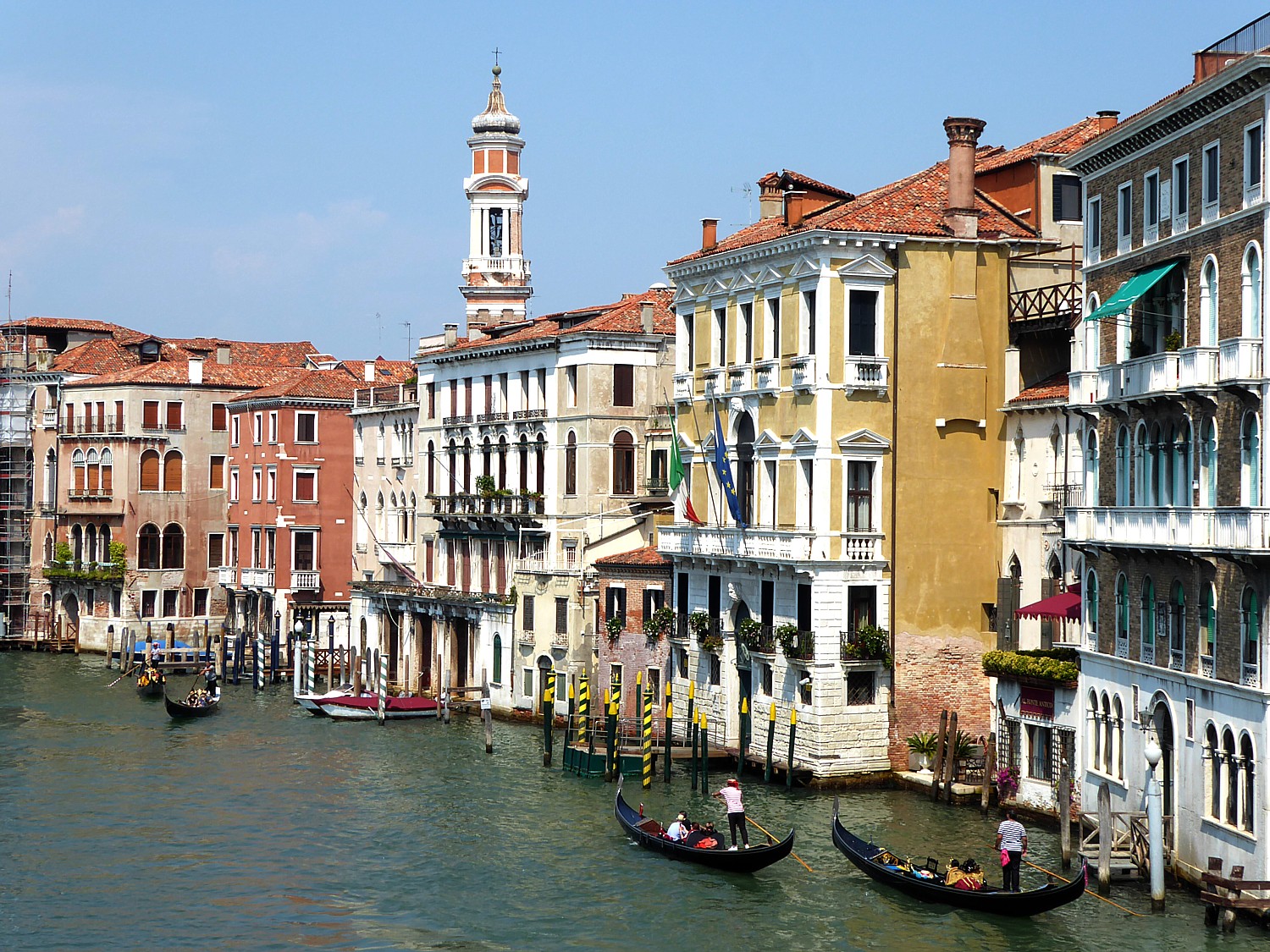
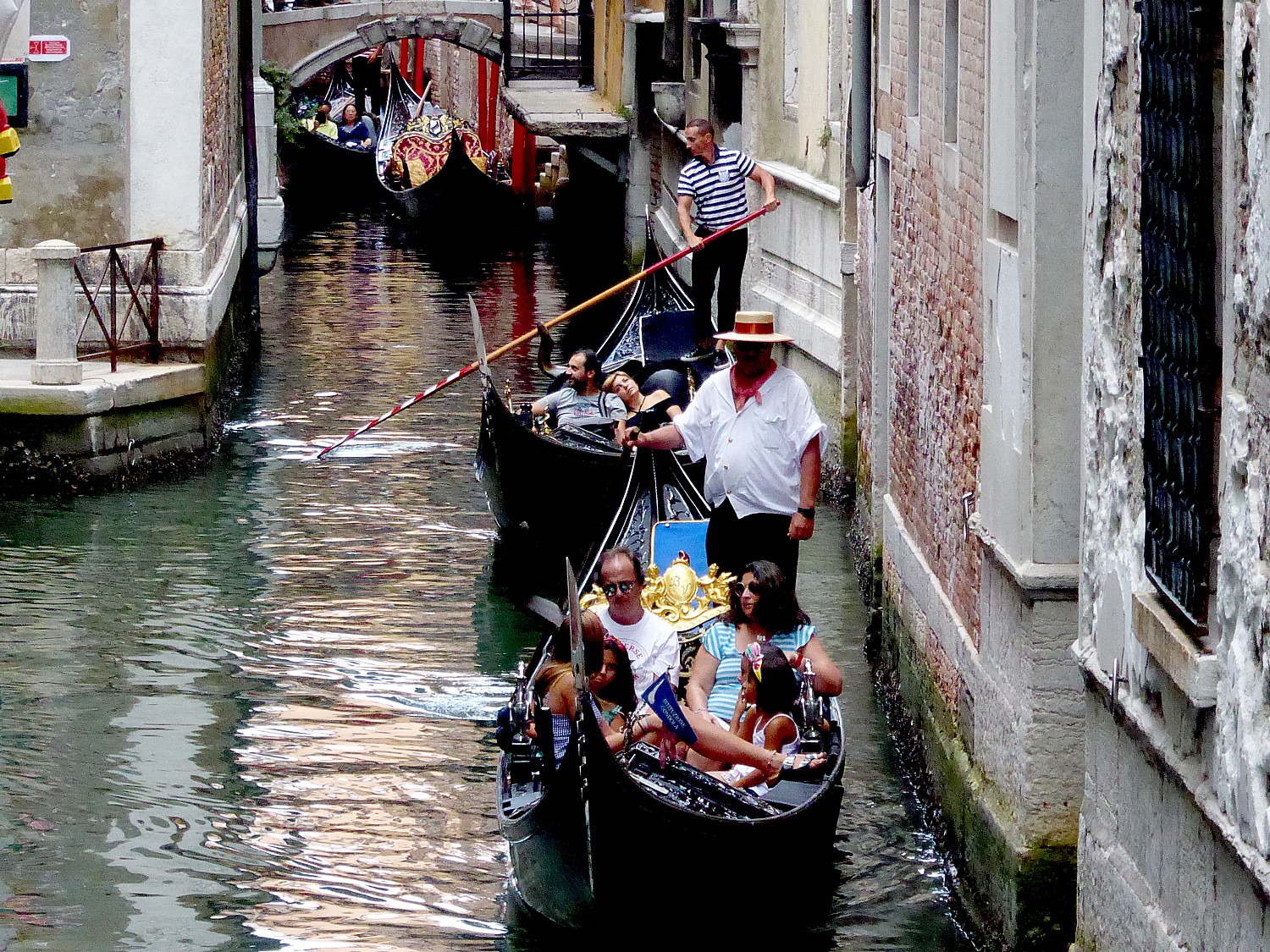
Venice is one of the world’s cherished places being loved to death by tourists. Rather than being part of the problem of overcrowding in Venice, Wildland Adventures recommends, take the ferry to the small fishing town of Rovinj, where you are welcomed by locals who take you around in a traditional Batana fishing boat. (c) Karen Rubin/goingplacesfarandnear.com
SEATTLE, WA – Certain places on our planet are getting loved to death. Why and what should responsible travelers do about it?
Not long ago, international travel was the purview of the rich and worldly. Today, however, the middle class enthusiastically travels the globe with bucket lists that concentrate attention on the most popular places in the world (and rightly so). Unfortunately, the byproduct of this increase in travel means that If the original character of these places is not in jeopardy now, it soon will be.
Kurt Kutay is founder and president of Wildland Adventures, a travel company that for over 30 years has created opportunities for guests to experience destinations from the inside out. Utilizing the Wild Style of travel, Wildland trips build lasting intercultural, interpersonal and environmental bonds. By impressing sincerity, compassion and understanding at each step of the journey, the aim is to enhance rather than exploit the place and people we’ve come to visit. To this end, Kurt offers 6 Ways to Travel Responsibly in an Age of Over-Tourism.
1. Manage Your Expectations and Emotions As with much of life, aligning expectations with reality is half of the road to happiness. Planning travel is no different in this regard, as you anticipate what you will experience. If we allow preconceived notions of the Taj Mahal or Machu Picchu – without crowds — drive our desire to travel halfway around the world to experience these iconic destinations first hand, we may indeed leave disappointed.
The proper research will help you to align expectations with reality. Ask many questions, but ask the right questions and don’t be afraid of the answers. Most importantly, stay open to the experience before you. It is unknown what lies ahead and that is the magic of travel. Be diligent in letting go of preconceived expectations, they are persistent. Refuse to let them as well as annoyances like crowds distract you from what drew you there in the first place. That’s when the true joy of discovery flows — no matter what it looks like.
2. Find a Local Connection Hire a passionate, local guide help to deepen the travel experience while avoiding the ‘group think’ impact of large tour groups. A good local guide can help skirt the crowds at popular sites and even introduce less-known sites for a unique perspective.
For example, a good guide will take you to the Taj Mahal twice, once to get in line before it opens and later in the afternoon before it closes to experience variable lighting. Kutay remembers his last visit, “Instead of passing through the main gates twice, our local guide took us to the Mehatab Bagh (Moonlight Garden) across the Yamuna River, far from the tourist hordes, where we stood arm-in-arm, standing alone and moved to tears by the beautiful silhouette.”
3. Rethink Your Bucket List Discover wonders of the world beyond UNESCO’s at-risk sites or the favorite ports of call of the cruise industry. Instead of the crowded hilltop towns of Tuscany, try the hills of the Istrian peninsula of Slovenia and Croatia. Rather than being part of the problem of overcrowding in Venice, take the ferry to the small fishing town of Rovinj, where you are welcomed by locals who take you around in a traditional Batana fishing boat.
4. Timing Is Everything — Spend Time at the Right Place Plan your day at famous sites carefully and be sure to get the latest information as local conditions and regulations change constantly. The best plan is familiar the world over. In Croatia, plan to tour Dubrovnik before cruise ship passengers disembark, in Cambodia visit Siem Reap before tour buses disgorge, and in Peru arrive at Machu Picchu before the daily trains do. When you finally are where you’ve dreamt of being, follow slow travel principles and linger longer, but in fewer places.
5. Pay to Play A great many worthwhile experiences cost more. Whether a part of a private and exclusive event or of a carefully managed ecotour that limits the number of visitors, the extra dollars spent help to protect fragile habitats and visitor experiences.
In Africa, this may look like tracking mountain gorillas in Rwanda and Uganda for which there are limited permits. To protect the experience in some locales for years to come, some safaris are very exclusive and conducted in a private nature reserve like Timbavati in Greater Kruger N.P. In Tanzania, the remote camps of Katavi and Mahale require bush flights to access some of the wildest places on the planet.
In South America, the fragile cultural patrimony of the Inca Trail in Peru and delicate balance of nature in the Galapagos Islands are carefully managed by limited permits and fees that control access and provide a source of revenue for critical conservation programs. Advance planning is required to enjoy the privilege of being among the few where limited numbers of permits are allotted.
6. Consider Where You Stay Your choice of accommodations is one of the most important considerations in minimizing impact on the local environs while maximizing the benefits you bring to the local community. Many hotels, camps, ecolodges, yachts and expedition ships are rated for their level of sustainability. They are rated on energy sources, recycling, waste management, water conservation, food sourcing, and other sustainability-focused initiatives. In addition, many are actively involved in nature and wildlife conservation and in educating guests about ecosystems and biodiversity. These accommodations are deeply connected and committed to indigenous culture and the well-being of local communities. The highest rated ecolodges and camps are safeguarding the world’s cultural and natural heritage while delivering the most meaningful guest experiences.
Traveling Responsibly Isn’t About Staying Home
The Center for
Responsible Tourism asserts that traveling responsibly “…is about managing
travel and destinations in an environmentally and culturally responsible way
and designing tourism programs and individual trips carefully to provide
travelers with the experience they seek, while leaving a positive footprint on
their destination.” Destinations are always changing and we have many
choices to make when we travel, “but the important thing is to be mindful of
our impact on the people and places that give us so much and help others to do
the same…and to keep traveling,” says Kutay.
For more information on Wildland Adventures’ worldwide offerings, availability
and reservations, call 1-800-345-4453 or email info@wildland.com. Visit http://www.wildland.com/.
On World Tourism Day 2019, Patricia Affonso-Dass, president of the Caribbean Hotel and Tourism Association offered this message:
The theme of this year’s World Tourism Day, “Tourism and Jobs: A better future for all”, is particularly relevant for the Caribbean because no other sector creates more jobs or more opportunities in a wider variety of professions and skills.
In addition to the 2.5 million people employed directly, many more
benefit indirectly from the industry’s contributions to Caribbean health,
wealth, education and the environment. Our infrastructure, schools, hospitals,
public services, and parks and recreation facilities are all helped by this
dynamic and growing industry – already the world’s largest sector but also its
fastest growing.
The 2017 hurricanes and Hurricane Dorian that devastated some of
our destinations reinforced the indispensable role of tourism in our lives.
They remind us that for each tourism employee unable to work because of the
storms, many members of their families were also affected.
Initiatives such as “Tourism Jobs for Bahamians”,
just launched by the Caribbean Hotel and Tourism Association (CHTA) together
with the Bahamas Hotel and Tourism Association (BHTA), are finding interim jobs
for displaced industry professionals.
There will be more jobs as tourism recovers from the hurricanes
and the industry resumes its healthy growth trend, and our task is to spread
the benefits more equitably to a wider cross section of our people. We want to
ensure women, youth, minorities, and the differently abled have open gateways
to employment, ownership and leadership within the industry. There are over
1,000 different job and career paths in the industry, a fifth of which are at
supervisory and management levels. Increasing diversity always strengthens
companies and organizations, especially in tourism. Our visitors come from a
wide range of backgrounds, so our people who welcome visitors to our shores
should also reflect the full spectrum of our rich human diversity.
The Caribbean Hotel and Tourism Association, with the support of
many of the region’s local associations and our members, is earnest about its
mandate to develop our industry’s human resources. Well over 500 Caribbean
nationals have received higher education scholarships through the CHTA
Education Foundation. More than 1,000 chefs and several hundred bartenders have
honed their skills through professional development opportunities that CHTA and
the industry have provided through our Taste of the Caribbean initiative.
Thousands of employees have benefited from industry-sponsored
professional development training, including over 500 who attended
“diversity in the workplace” courses over the past year. Earlier
this year, CHTA launched its Young Leaders Initiative, in which dozens of
young people are developing their leadership skills and their understanding of
the industry and the opportunities it offers.
This does not include the additional investments that independent
hotels, resort brands, airlines, tour operators, attractions, taxi and
transportation providers, vendors and other industry stakeholders, with their
human resource professionals and employees, are making every day to deliver
exceptional hospitality.
Building upon a rich foundation, we have the responsibility to
make more opportunities to develop our people and our industry, anticipating
technological and consumer demand-driven changes which are now a constant. The
recent collapse of the world’s oldest travel agency offers more lessons. While
never losing sight of the fundamentals of hospitality, the dynamics of our
industry demands our adaptability and responsiveness to change if we are not to
face a similar fate.
Tourism can benefit every corner of our region and so on
this World Tourism Day, we celebrate the importance of the industry
and the employment and entrepreneurial opportunities it represents. We resolve
individually and collectively, as businesses, governments and education and
training institutions, to continue to invest in our people.
In the Caribbean, “Tourism is Everyone’s Business”.
The Caribbean Hotel and Tourism Association (CHTA) is the
Caribbean’s leading association representing the interests of national hotel
and tourism associations. For more than 50 years, CHTA has been the backbone of
the Caribbean hospitality industry. Working with some 1,000 hotel and allied
members, and 33 National Hotel Associations, CHTA is shaping the Caribbean’s
future and helping members to grow their businesses. Whether helping to
navigate critical issues in sales and marketing, sustainability, legislative
issues, emerging technologies, climate change, data and intelligence or,
looking for avenues and ideas to better market and manage businesses, CHTA is
helping members on issues which matter most.
SEATTLE, WA – Over-touristed sites are now the new norm throughout the world.
For example, this year in record numbers, tourists are queuing up at the Blue Mosque, a UNESCO World Heritage Site in Istanbul.
“Travel is an investment in time and money. Istanbul has cultural and historical treasures that extend beyond the Blue Mosque. So why waste hours just to get inside a building you have been told you must see?” asks Kurt Kutay, CEO and President of Wildland Adventures.
Instead, Wildland Adventures guides with deep knowledge of Istanbul and Turkey will share the Blue Mosque story with fine-tuned timing that skirts crowds and by introducing historical/cultural takeaways at less selfie-prone places.
“This resurgence of interest to visit Turkey is keeping us on our toes,” Kutay says. “We have to be aware, well in advance, where the maddening crowds will gather next. Then we plan contingencies that will connect the same cultural dots that the hot spots do – but perhaps even more effectively without the distractions that come with crowds.” Turkey has 100,000 registered historic spots. If a must-see UNESCO World Heritage Site is over-run by crowds, Kutay’s team will choose the best hours to visit or designate a comparable place to fulfill a similar interest and expectation.
Wildland Adventures to Turkey embrace the culture people flock here to experience. “We bring our guests as close as possible to real worlds, freed of artifice, must-sees and must-dos,” Kutay explains. Among the takeaways that Wildland Adventures guests enjoy are:
Extant Greek and Roman ruins, more numerous here than in Greece and Italy combined.
One of the world’s prized cuisines. “We make sure to feature a different dish every day. Dining in Turkey is simultaneously a history lesson served up on a plate,” Kutay exudes, paraphrasing Poet Abdulhak Sinasi who wrote: “Do not dismiss the dish saying that it is just, simply food. The blessed thing is an entire civilization in itself.”
Visits to less-known alternative sites that are comparable to the crowded hotspots to imbibe history, culture and traditions. “Instead of waiting in lines, our guests talk with local people including merchants, artists and religious leaders.” Most tours focus exclusively on historic sites around Sultanahmet Square, which is less than half a mile in diameter and a stone’s throw from the cruise ship dock. But Constantinople (so named until 1930) is surrounded by 14 miles of walls; the heart of the ancient city is four miles east to west. Wildland Adventures extends tours into old, traditional neighborhoods and to Bosphorus villages for a full understanding of old and contemporary Istanbul.
Experiences that move beyond monuments and historic buildings. Guests visit markets, eat street food, visit artist workshops, neighborhood coffee shops, wine bars and panoramic rooftop bars to take it all in on a grand scale.
Cruising the Turquoise Coast of the Mediterranean in traditional hand-built Gulets (classic Phoenician-style, wooden yachts). Guests explore along footpaths only accessible from the sea, paths that lead to pastoral grazing lands chalk full of Crusader, Byzantine Greek and Roman archaeological sites. “It’s all about timing as well by avoiding busy coastal towns and beaches where tourists flock by day,” underscores Kutay. “We anchor in quiet coves and wait until tourists disappear for the day. We then serve wine and appetizers in ancient ruins where, sitting in the sunset, we take turns reciting poetry or singing a song in the Odeon (a stone structure specific to the ancient arts).”
The tours Wildland
Adventures offers in Turkey are:
Turquoise Coast Odyssey – a 13-day itinerary from $4,965 per person double. Accommodations include a restored Ottoman home in the heart of a mountain village, a boutique cave hotel and Istanbul inns with rooftop restaurants. Highlights are Istanbul, Cappadocia, Kas, an Anatolian village, Ephesus and a voyage along the Turquoise Coast in a traditional gulet yacht.
Highlights of Turkey – a 9-day exploration from $3,695 per person double. This itinerary embraces Turkey’s three most important cultural and political centers: Istanbul, Cappadocia and Ephesus on foot along ancient pathways and by boat. Guests enjoy well-appointed friendly hotels, a boutique cave accommodation and a renovated historic hotel in the Aegean highlands.
Departure dates are
available upon request. Kutay notes that even though there’s more pressure on
prices because of renewed demand by tourists, the Turkish Lira has fallen
against the stronger dollar.
“Our trip prices remain the same as they were three years ago,” he notes.
Kurt Kutay, Founding CEO/President, and Anne Kutay, Vice-President, established
Wildland Adventures in 1987. As active managing directors, they are
continuously refining and evolving their Wild Style of travel. The ‘Wild Style’
is based on an ethic of sincerity, compassion and understanding that breaks
down barriers of separation to build lasting intercultural, interpersonal, and
environmental bonds designed to enhance rather than exploit the people and
places where they travel.
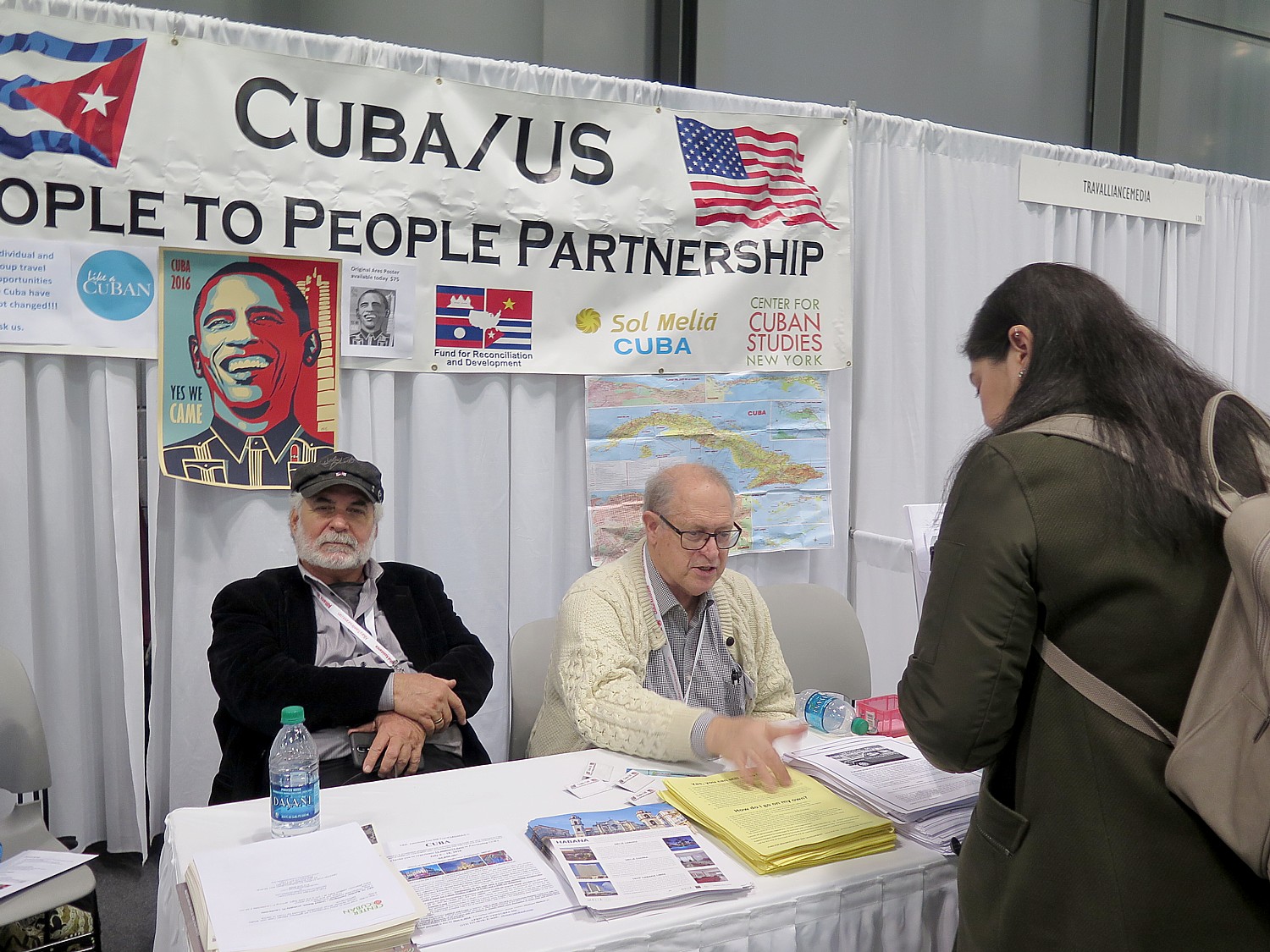
WASHINGTON, D.C., MARCH 1, 2018 — A group of 28 leading U.S. tour operators and organizations specializing in educational travel and exchanges with Cuba is calling on the U.S. State Department to re-staff its Embassy in Havana and change Cuba’s travel advisory from a Level 3 (“reconsider travel”) to at least a less intimidating Level 2 (“exercise increased caution”). The request comes on the eve of the State Department’s decision about whether or not to return the U.S. diplomats to the Embassy, expected to be announced on March 4.
(The US State Department said it would not restore the diplomats.)
Beginning in late September 2017, after reports that 24 U.S. Embassy employees in Havana had suffered unexplained health ailments, the Trump Administration withdrew 60 percent of its Embassy staff from Havana, issued a Travel Warning urging Americans not travel to Cuba, and expelled 15 diplomats from Cuba’s Embassy in Washington, D.C. In January 2018, the State Department issued a new global travel advisory system, which ranks Cuba as Level 3.
“A Level 3 rating is not justified for Cuba since there are no confirmed causes of private citizens or travelers contracting symptoms similar to the diplomats,” says Andrea Holbrook, President and CEO of Holbrook Travel, one of the companies that signed the petition. (The list of signatories is provided below). “This inappropriate travel warning has caused fear and confusion and has sharply reduced the number of U.S. citizens traveling to Cuba,” Holbrook adds. “It has also affected travel businesses in the States and in Cuba, including those small businesses, like B&Bs and home restaurants, which depend so heavily on American tourists.”
A survey of 42 tour operators and educational travel organizations conducted in late January 2018 by the Center for Responsible Travel (CREST) found that not one of their travelers reported suffering from health issuessimilar to those of the Embassy employees. Collectively, those surveyed sent more than 42,000 U.S. travelers to Cuba in 2016 and 2017. In addition, there have been no confirmed cases of similar illness among the estimated 700,000 private U.S. citizens who visited the island nation in 2017.
A lengthy ProPublica article, published February 14, 2018, provides the first detailed chronology of the diplomats’ afflictions and the subsequent official — but, to date, inconclusive — investigations by the United States, Cuba, and Canada, and makes clear that the general public is not threatened. In fact, in January 2018, Cuba was voted the safest place to travel at the International Travel Fair in Madrid.
During a meeting on January 12 with State Department officials, a group of American tour operators, travel associations, and Cuba experts were told that a Level 3 rating is automatically triggered by a “drawdown” of U.S. Embassy personnel as a result of the “No Double Standard” policy articulated in the Foreign Affairs Manual.
According to the State Department, this policy originated after the terrorist bombing of a passenger airliner over Lockerbie, Scotland, in 1988, in the interest of sharing information publicly about potential threats against U.S. citizens. That policy, however, also states it is “not intended to prevent the limited distribution of information about threats to specific U.S. citizens/nationals or U.S. organizations.”
“The ‘No Double Standard’ policy leaves the option for the State Department to report threats only to those parties that might be affected by similar incidents,” says Kate Simpson, President of Academic Travel Abroad, Inc, a Washington, D.C.-based educational travel company. “So why was this more limited approach not employed in the case of Cuba, given that the affected group consists only of diplomats, many of whom are known to be intelligence officers and their families?”
Simpson adds, “The fallout from the State Department’s actions has negatively impacted not only U.S. companies and institutions sending travelers to Cuba for educational purposes, but the lack of Embassy staff in Havana has also made it extremely difficult for Cuban citizens to attain visas for visits to the United States.”
On March 4, the State Department faces a mandatory deadline requiring that, six months after an Embassy drawdown, staff must either be reassigned or sent back to their original post. The draw down in Havana began in early September 2017 as Hurricane Irma hit the island and was increased to 60 percent of staff later in the month, in the wake of media revelations about afflictions to the two dozen U.S. diplomats and a handful of staff in the Canadian Embassy. Canada has launched an investigation but has not downsized its Embassy or issued any travel warning to its citizens.
The 28 tour operators and organizations specializing in educational travel to Cuba are calling for the State Department to return more consular officers to the U.S. Embassy in Havana. Ambassador Barbara Stephenson, President of the American Foreign Service Association, the union that represents U.S. foreign-service officers, and some diplomats who were interviewed for the ProPublica article indicated that this is also their wish — to return U.S. diplomats to Cuba. This would, the group hopes, eliminate the trigger that has categorized the country as a Level 3.
The group further questions how Cuba can be rated as a Level 3 while countries with known security risks — such as Israel, Egypt, Algeria, Mexico, and Ethiopia — are rated as Level 2. In addition, the State Department advisories for some countries include alerts pertaining to particularly dangerous parts of their countries. Mexico, for instance, while rated Level 2 overall, is given ratings of Levels 3 and 4 (“do not travel”) for certain states.
“While the new travel advisory system is a welcome improvement, in terms of clarity and organization,” says Ms. Simpson, “it is disappointing to have the Cuba rating starkly reveal political bias, undermining the credibility of the State Department’s consular services.”
A more acceptable alternative, Simpson and the other signers suggest, would be to rate Cuba at least Level 2 overall and designate the parts of Havana where the health incidents took place as Level 3. “Until it’s discovered what caused these ailments, a Level 2 rating, at least, would more accurately reflect the situation in Cuba,” explains Ms. Holbrook. “And it would help encourage those considering traveling to Cuba to do so.”
To read the full petition, click here. The list of tour operators and educational travel organizations who have signed the petition are:
Johann Besserer, Executive Director, Intercultural Outreach Initiative
Reid Callanan, Director, Santa Fe Photographic Workshops
Karin Eckhard, CEO & Co-founder, Espíritu Travel, LLC
Michael Eizenberg, President, Educational Travel Alliance
Malia Everette, CEO, AltruVistas
Michele Gran. Co-founder and Senior Vice President, Global Volunteers
Bob Guild, Co-coordinator, Responsible and Ethical Cuba Travel (RESPECT)
Kendra Guild, Director, Marazul Charters, Inc.
John Haffner, President, Cuba Trade and Travel
Marcel Hatch, President,Cuba Explorer Tours
Richard Hobbs, Esq., Executive Director, Human Agenda
Andrea Holbrook, President and CEO, Holbrook Travel, Inc.
Martha Honey, Ph.D., Cofounder & Executive Director, Center for Responsible Travel (CREST)
Tor D. Jensen, President, Jensen World Travel, Ltd.
Gabrielle Jorgensen, Director of Public Policy, Engage Cuba
Collin Laverty, President, Cuba Educational Travel
Lee Marona & Aja C. Napolis, President & Administrative Coordinator, Vaya Sojourns, Inc.
John McAuliff, Executive Director & Founder, The Fund for Reconciliation and Development
Janet Moore, President, Distant Horizons
Tom Popper, President, insightCuba
Bill Robison, Director of Expedition Development, Lindblad Expeditions
Melisa Riviere, Ph.D., President, Son Dos Alas: Cultural and Educational Travel
Peter Sanchez, CEO, Cuba Tours and Travel
Kate Simpson, President, Academic Travel Abroad, Inc.
Mark J. Spalding, President, The Ocean Foundation
Ned Sublette, Founder & President, Postmambo Studies
Kristen Tripp, Program Director – Cuba, Yellow Dog Flyfishing Adventures
The Center for Responsible Travel (CREST) is a policy-oriented research organization dedicated to increasing the positive global impact of responsible tourism. CREST assists governments, policy makers, tourism businesses, nonprofit organizations, and international agencies with finding solutions to critical issues confronting tourism, the world’s largest service industry.
SEATTLE, WA, Nov. 18, 2015 – Experiential travel leader Wildland Adventures — along with one of the country’s best-known outdoor retailers, REI – is closing its doors on Black Friday this Thanksgiving holiday and encouraging its staff, friends and family to enjoy the great outdoors for the day while also thinking of others less fortunate.
This year Wildland Adventures is also giving thanks to an alumni traveler and an incredible cause that she has embraced. The company is advocating a Thanksgiving “pay it forward” to assist the fundraising effort of a young Wildland client, Jamie Eisner, age 12, who is half-way toward a $6,500 goal that will help build a well for a school she recently visited on a family safari in Tanzania.
From now until the end of Black Friday (Nov. 28), for every adventure photo posted and tagged, Wildland Adventures will donate $10 – up to $500 — to building the fresh water well for the Mikocheni Primary School. Submissions should be tagged on Instagram, Facebook or Twitter with #OptOutside and #Wildland.
“Before I visited Tanzania, I took for granted that I have easy access to water whenever I want, air conditioning, plenty of food, medicine, a great education, and so much more. The children at Mikocheni have none of this, but we can give them something that would change their lives,” explains Jamie. “With the well, the kids will do better in school because they’ll be less tired and less dehydrated. If they are doing better in school, then they will be more successful when they grow up, and live a better life.”
Approaching its 30th anniversary year, Wildland Adventures has a lot to give thanks for, and when better than at Thanksgiving, said Kurt Kutay, CEO/President, who founded the company with Anne Kutay, Vice President, in 1986. As active managing directors they are continuously refining and evolving their Wild Style of travel.
“The ‘Wild Style’ is based on an ethic of sincerity, compassion and understanding that breaks down barriers of separation to build lasting intercultural, interpersonal, and environmental bonds designed to enhance rather than exploit the people and places where they travel. By fostering genuine connections to create personalized experiences their travelers, Wildland fosters a growing and vibrant community of enlightened and compassionate travelers.”