On World Tourism Day 2019, Patricia Affonso-Dass, president of the Caribbean Hotel and Tourism Association offered this message:
The theme of this year’s World Tourism Day, “Tourism and Jobs: A better future for all”, is particularly relevant for the Caribbean because no other sector creates more jobs or more opportunities in a wider variety of professions and skills.
In addition to the 2.5 million people employed directly, many more
benefit indirectly from the industry’s contributions to Caribbean health,
wealth, education and the environment. Our infrastructure, schools, hospitals,
public services, and parks and recreation facilities are all helped by this
dynamic and growing industry – already the world’s largest sector but also its
fastest growing.
The 2017 hurricanes and Hurricane Dorian that devastated some of
our destinations reinforced the indispensable role of tourism in our lives.
They remind us that for each tourism employee unable to work because of the
storms, many members of their families were also affected.
Initiatives such as “Tourism Jobs for Bahamians”,
just launched by the Caribbean Hotel and Tourism Association (CHTA) together
with the Bahamas Hotel and Tourism Association (BHTA), are finding interim jobs
for displaced industry professionals.
There will be more jobs as tourism recovers from the hurricanes
and the industry resumes its healthy growth trend, and our task is to spread
the benefits more equitably to a wider cross section of our people. We want to
ensure women, youth, minorities, and the differently abled have open gateways
to employment, ownership and leadership within the industry. There are over
1,000 different job and career paths in the industry, a fifth of which are at
supervisory and management levels. Increasing diversity always strengthens
companies and organizations, especially in tourism. Our visitors come from a
wide range of backgrounds, so our people who welcome visitors to our shores
should also reflect the full spectrum of our rich human diversity.
The Caribbean Hotel and Tourism Association, with the support of
many of the region’s local associations and our members, is earnest about its
mandate to develop our industry’s human resources. Well over 500 Caribbean
nationals have received higher education scholarships through the CHTA
Education Foundation. More than 1,000 chefs and several hundred bartenders have
honed their skills through professional development opportunities that CHTA and
the industry have provided through our Taste of the Caribbean initiative.
Thousands of employees have benefited from industry-sponsored
professional development training, including over 500 who attended
“diversity in the workplace” courses over the past year. Earlier
this year, CHTA launched its Young Leaders Initiative, in which dozens of
young people are developing their leadership skills and their understanding of
the industry and the opportunities it offers.
This does not include the additional investments that independent
hotels, resort brands, airlines, tour operators, attractions, taxi and
transportation providers, vendors and other industry stakeholders, with their
human resource professionals and employees, are making every day to deliver
exceptional hospitality.
Building upon a rich foundation, we have the responsibility to
make more opportunities to develop our people and our industry, anticipating
technological and consumer demand-driven changes which are now a constant. The
recent collapse of the world’s oldest travel agency offers more lessons. While
never losing sight of the fundamentals of hospitality, the dynamics of our
industry demands our adaptability and responsiveness to change if we are not to
face a similar fate.
Tourism can benefit every corner of our region and so on
this World Tourism Day, we celebrate the importance of the industry
and the employment and entrepreneurial opportunities it represents. We resolve
individually and collectively, as businesses, governments and education and
training institutions, to continue to invest in our people.
In the Caribbean, “Tourism is Everyone’s Business”.
The Caribbean Hotel and Tourism Association (CHTA) is the
Caribbean’s leading association representing the interests of national hotel
and tourism associations. For more than 50 years, CHTA has been the backbone of
the Caribbean hospitality industry. Working with some 1,000 hotel and allied
members, and 33 National Hotel Associations, CHTA is shaping the Caribbean’s
future and helping members to grow their businesses. Whether helping to
navigate critical issues in sales and marketing, sustainability, legislative
issues, emerging technologies, climate change, data and intelligence or,
looking for avenues and ideas to better market and manage businesses, CHTA is
helping members on issues which matter most.
As the 74th United Nations General Assembly gets underway, it is appropriate to be reminded of one of the missions, though the United National World Tourism Organization, to promote international travel. Each year, on September 27, UNWTO commemorates World Tourism Day with celebrations led by UNWTO. Its purpose is to foster awareness among the global community of tourism’s social, cultural, political and economic value and the contribution the sector can make in reaching the Sustainable Development Goals. In 2019, in line with UNWTO’s overarching focus on skills, education and jobs throughout the year, World Tourism Day will be a celebration on the topic ‘Tourism and Jobs: a better future for all’.
Tourism’s role in job creation is often undervalued. This is
despite the fact that tourism generates 10% of world jobs and is included in
Sustainable Development Goal 8 for its potential to create decent work.
New policies are needed to maximize tourism’s potential to
create more and better jobs, especially for women and youth. New policies are
also needed to reflect and incorporate ongoing advances in technology.
Policies and actions should be geared towards addressing the
current mismatch between tourism skills that are taught and those that tourism
employers need.
This requires a holistic approach to the future of work in
tourism, with heightened cooperation between all actors, including the public
and private sectors.
The Future of Work
Creating and ensuring equitable employment is essential to
increasing social inclusion, peace and security. The potential of every
economic sector to provide decent jobs should be utilized to its fullest.
The emergence of new technologies has led to the development
of new forms of work that are rapidly changing production processes worldwide.
This both provides opportunities for, and puts pressure, on existing
employment, welfare and education agendas.
According to the International Labour Organisation (ILO),
global unemployment remains high, reaching more than 190 million in 2018. All
sectors and countries, therefore, need to create the conditions for more and
better jobs. Embracing new technology can play a key role in achieving this
goal.
Making the new wave of technological breakthroughs as inclusive
as possible will require considerable investment in training and skills for
life and work. Everyone should have a chance to develop their full potential so
as to benefit from the new technological era.
To do this we need to examine the impact of technological
change on socioeconomic growth, jobs and inequality. We also need to provide
tools and skills to those who are looking for a job and as well as to those
whose jobs are at risk of automation.
On the occasion of its centenary in 2019, the ILO released
‘Work for a Brighter Future: Report of the Global Commission on the future of
Work’. This landmark report takes note of the forces transforming the world –
technology, climate change, demography, globalization – to call for a
human-centered agenda for the future of work.
By placing people and the work they do at the centre of
economic and social policy and business practice, the path towards growth,
equity and sustainability consists of three pillars of action:
Increase investment in people’s capabilities
Increase investment in the institutions of work
Increase investment in decent and sustainable work
Tourism is a leading people-to-people sector, with growth
rates outpacing world economic growth and international trade. It is one of the
main global export categories and with such a high impact on human workforce,
it serves as a natural ally of ILO’s human-centered agenda for the future of
work.
Tourism and Jobs
Tourism is a major source of employment because
of its labour-intensive nature and the significant multiplier effect on
employment in related sectors. It is estimated that one job in
the core tourism sector creates about one-and-a-half additional
or indirect jobs in the tourism-related economy. Overall tourism accounts
for one in ten jobs worldwide.
The ILO estimates that ‘accommodation and restaurants’,
together with ‘private sector services’, will create jobs at the
fastest rate among all sectors in the economy over the next five
years.
Tourism has proven to be a resilient economic
activity. In each of the seven years following the global economic
crisis of 2010, the number of worldwide international tourist arrivals
grew at 4% or above.
Tourism is a contributor to the Sustainable
Development Goals (SDGs) as a target in Goals 8, 12 and 14. The
sector’s contribution to job creation is specifically recognized in Goal
8, target 8.9. This states: “By 2030, devise and implement policies to
promote sustainable tourism that creates jobs and promotes local culture and
products”.
Tourism’s voice at the UN level is mirrored in other global
development and policy fora. The 26th Ibero-American Summit of Heads of State
and Government concluded in November 2018 with a high-level political
declaration on sustainable development in which tourism plays a key supporting
role. The commitment includes UNWTO as the designated global partner and marks
the first time the tourism sector has been featured in a top-level multilateral
cooperation agenda.
More recently, the G20 Osaka Leaders’ Declaration from June
2019 singles out tourism’s contribution to global economic growth and inclusive
and sustainable development: “Tourism accounts for a significant share of the
world’s GDP and is expected to continue to be an important driver of global
economic growth. We will work to maximize the sector’s contribution to the
creation of quality jobs and entrepreneurship, especially for women and youth
and in the creative industry; economic resilience and recovery; the
preservation of natural resources through sustainable tourism planning and
management; and the achievement of inclusive and sustainable development.”
However, despite representing 10% of the world’s jobs,
tourism’s role in employment generation and entrepreneurship is often underestimated and undervalued in
policy formulation and implementation.
A mismatch between available qualifications
and workplace reality is one of the major factors impacting tourism employment
and talent development. The gap between education and skills/knowledge needs,
and the resulting shortages of labour with ‘future-proof’ skills, continues to
dent economies and harm job creation prospects. Moreover, tourism suffers from
important challenges related to attracting and retaining talent and the
improvement of working conditions.
Tourism Jobs and the Digital Revolution
Globalization, technological progress and demographic change
are trends that, together, have redefined the tourism sector and how it
functions. At the heart of our now hyper-connected, hyper-informed world is a
digital-led revolution in markets, as well as in the demand for skills and the
characteristics of tourism jobs. Recent years have seen the emergence of
digital breakthroughs, including new platform tourism services (the so-called
sharing or collaborative economy), big data and geo-localization.
Some of the main issues the tourism sector faces in adapting
its workforce to the technological revolution are:
The need to review and update outdated legislation and
regulation that supports employment, innovation, entrepreneurship and new
business models
The low level of awareness and expertise of new technologies
and technological trends
A lack of funding to invest in new technologies and training
for the jobs needed for the present and future
The lack of cooperation and communication among relevant
stakeholders
MSMEs Are Key to Decent Work in Tourism
Micro, Small and Medium Enterprises (MSMEs) are now
the major job creators in tourism. OECD/ILO research shows that around
half of tourism employees work in enterprises of fewer than 10 people,
while around three-quarters work in enterprises of fewer than
50 people.
Tourism MSMEs are also an important source of innovation and
economic diversification, helping to shape socioeconomic development in
destination countries worldwide.
However, access to finance, prohibiting business regulations
and inadequate skills are major constraints faced by all MSMEs including those
operating in the tourism sector.
The main challenge related to MSMEs, then, is to create an
enabling environment that at once improves their economic prospects, overcomes
barriers to decent jobs, and ensures that MSMEs’ economic activities are
environmentally sustainable.
Promoting Jobs For All in Tourism – Youth, Women and Rural Communities
The tourism sector employs more women and young
people than most other sectors.
Just under half (47%) of people working
in tourism in European OECD countries are between 15 and 34 years
of age, compared to a third (32%) of workers in the economyas
a whole.
In OECD countries, women account for 60% of
employment in the tourism sector. This is higher than
the share of women employed in the services sector (47%) and
in the economy as a whole(43%).
Women play a leading role in tourism entrepreneurship.
UNWTO/UNWomen research shows that the global rate of women
entrepreneurs in ‘hotels and restaurants’ (36%) is comparatively
higher than in all sectors combined (22%).
Furthermore, tourism creates jobs in rural and remote areas,
not only directly but also indirectly through the preservation and restoration
of traditional activities. Often it is one of the few viable economic sectors in
these areas.
The explicit mention of tourism in Goal 8, target 8.9 of the
SDGs recognizes its transformational potential on livelihoods and prosperity in
rural communities, both through providing access to decent employment and
through reviving traditional local industries.
By providing opportunities for women, youth and rural
communities in a variety of roles, tourism contributes to several SDG
target areas surrounding empowerment of vulnerable
groups and more equal and inclusive societies. More inclusion
strengthens tourism’s power to unite people across cultures in a celebration of
diversity, increasing overall social resilience.
Despite these benefits tourism provides, it must also
address serious challenges surrounding employment for all of these groups.
One is a large gender pay gap. In tourism,
women are on average paid 20-25% less than male workers for
comparable skills. Women are often over-represented in non-standard forms of
employment. Women also suffer segregation in terms of access to education and
training.
Low-skilled women often find themselves in the most
vulnerable jobs, at risk of poor working conditions, inequality of
opportunity and treatment, violence, exploitation, stress and sexual
harassment.
Temporary and part-time jobs are particularly
common among women, young people, and the less-skilled who are employed in
tourism. They can often lead to decent work deficits, including
inadequate social security coverage, low wages and income inequality, and poor
working conditions.
The tourism sector’s variable demand cycle, with irregular
working hours and unpredictable shifts, poses additional challenges for those
(of any gender) trying to reconcile work and family responsibilities. At the
same time, however, this flexibilitymay also provide
opportunities to individuals wanting to combine a job in tourism with
another occupation.
A Policy Framework for Decent Tourism Jobs
New policies are needed to maximize the
potential of the tourism sector to create more and better jobs,
while reducing the risk associated with an increasing skills mismatch.
There is a longstanding tradition of the tourism sector
working in isolation from other key economic sectors. The way forward is for a
more holistic approach to the future of work in tourism,
with clear links to other sectors that are important for
economic development.
The major ongoing changes and challenges around tourism
employment require a new approach to skills development and education, policies
for innovation and job creation.
Policies should:
Encourage the progress of innovation in
tourism that fosters job creation and entrepreneurship, particularly among
women, youth and rural communities, through;
Establishing tourism innovation centres, incentives and
programmes to connect start-ups, leading companies, investors and governments;
Developing research on the changing demand for skills due to
the digital revolution;
Creating initiatives that promote innovation and
technological skills development in tourism;
Bring together educational institutions, the private sector,
governments and technology partners to review educational programmes and help
create the skill sets needed for future work opportunities, including soft
skills;
Further bridge the gap between available qualifications and
workplace skills needed, by supporting opportunities for appropriate
industry experience, such as internships or scholarships, along with
specialized education and training;
Include technology stakeholders in national tourism policy
coordination structures and mechanisms, in order to ensure an holistic
approach that accounts for innovation and job creation;
Include tourism as a key sector in both national and
multilateral agenda for employment, education and skills creation, and
overall economic development, highlighting tourism’s capacity to deliver on the
objectives of creating more and better jobs.
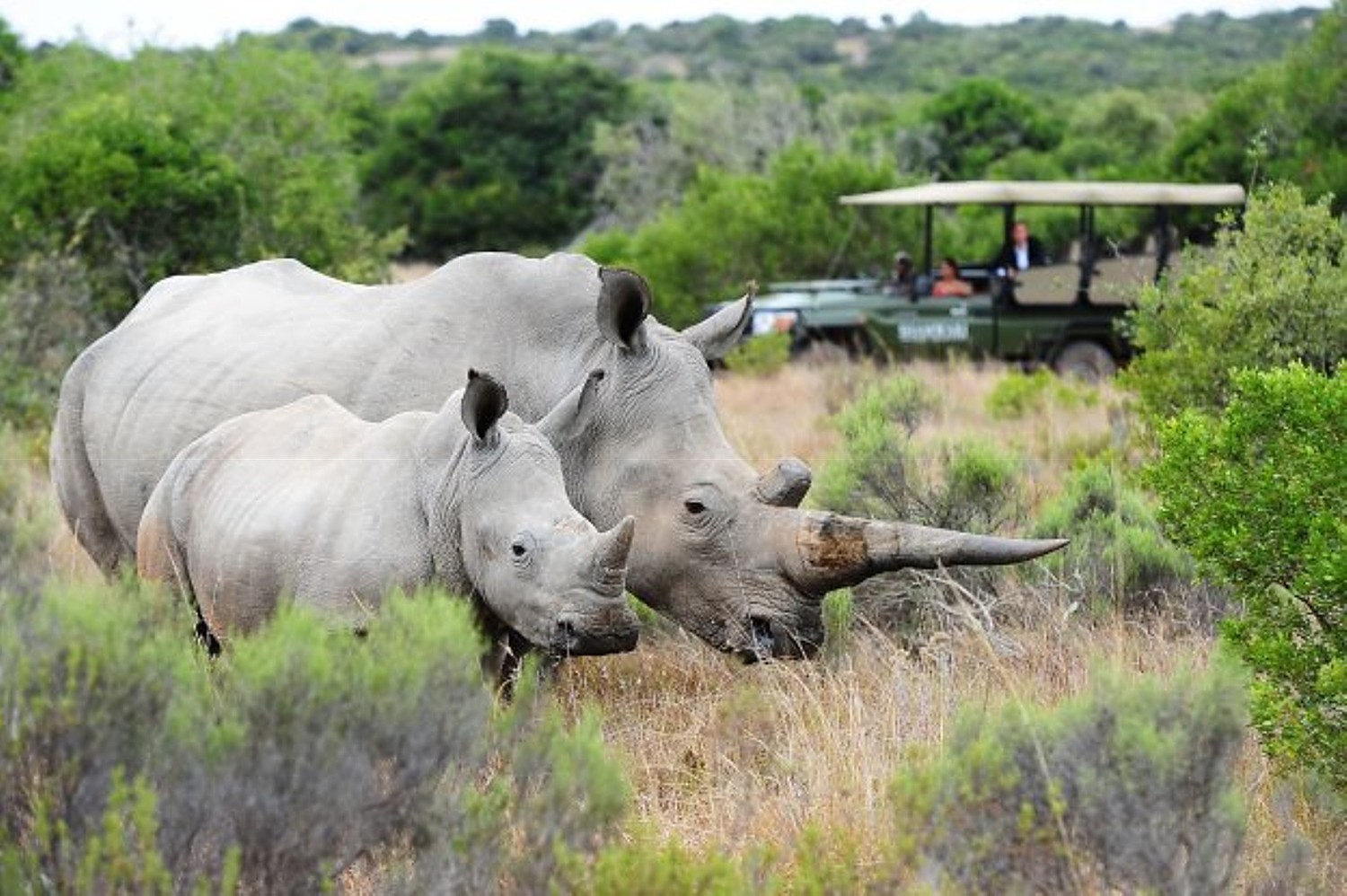
Celebrating 26 years of “conserving a vanishing way of life,” Shamwari Game Reserve has worked to rehabilitate and consolidate their 25,000 hectares of land so that the flora and fauna may flourish. African Travel’s $100 per couple donation in their name will go towards the building of the rhino boma at Shamwari. a haven to rehabilitate injured or orphaned rhino until they are strong enough to be released back into the wild.
BOCA RATON,
Fla.– As World Rhino Day approaches, African Travel, Inc. encourages travelers to celebrate the
species and support the future of these critically endangered animals.
In honor of The
Travel Corporation’s (TTC) 100-year anniversary, African Travel, Inc., will donate
$100 per couple traveling on the Majestic South Africa itinerary in support of rhino
conservation.
This incredible
10-day journey begins in Cape Town, the stunning port city crowned by the
natural beauty of Table Mountain. Over four nights, guests will
enjoy 5-stary luxury at the Table Bay Hotel on the vibrant Victoria &
Alfred Waterfront and feast on African, Afrikaans and European flavors at the
hotel’s Camissa Brasserie. From its culinary scene, to its natural
beauty, the best of South Africa’s Mother City is revealed as guests explore
the majestic coastline of the Cape Peninsula, the crowd-pleasing penguins of
Boulders Beach, or the rich and charming winelands of Franschhoek, the gourmet
capital of the Cape.
A different kind of
beauty unfolds as guests fly to Port Elizabeth and transfer by road to Shamwari
Private Game Reserve. This premier safari lodge encompasses 61,000 acres
of vast, ever-changing vegetation and multitudes of different animal and bird
species.
Celebrating 26
years of “conserving a vanishing way of life,” Shamwari Game Reserve has worked
to rehabilitate and consolidate their 25,000 hectares of land so that the flora
and fauna may flourish. The $100 per couple donation in their name will
go towards the building of the rhino boma at Shamwari. a haven to rehabilitate injured or
orphaned rhino until they are strong enough to be released back into the
wild. Guest
can also visit the Shamwari Wildlife Rehabilitation Centre which helps to
rehabilitate and care for sick, injured, abandoned or orphaned animals under
the care of their professional veterinary team. Once these animals have been nursed back
to health, they are released back into their natural habitat.
“We exist because
our goal in life is to make travel matter. It’s our responsibility to
protect some of the species most at risk from extinction in the places we
visit, and we are extremely passionate about rhino conservation” said Sherwin Banda, president,
African Travel, Inc. “At
Shamwari, this is something our guests will experience first-hand and we’re
proud that we’re able to support sustainable tourism through this effort.”
At Shamwari, guests
will enjoy twice-daily game drives and nature walks and stay three nights at
the cliffside Eagles Crag Lodge, which offers the ultimate in luxury, privacy
and spectacular scenery. Priced from $6,195 per person.
For a bird’s eye view of Shamwari and
African Travel, Inc.’s partnership and support of them, enjoy this video.
Follow African Travel, Inc. on Facebook, Twitter and
Instagram, and join the conversation using the hashtag #WeKnowAfrica
Created as a joint initiative
between The Travel Corporation’s
(TTC) family of brands, the TreadRight Foundation is a not-for-profit that
works to help ensure the environment and communities we visit remain for
generations to come. To date, TreadRight has supported some 40 sustainable
tourism projects worldwide. To learn more about our past and current work
at TreadRight, visit us at TreadRight.org.
How can
the travel industry better support the communities we love around the world? On
World Tourism Day, leaders in tourism and community development will come
together in Washington, DC on Friday, September 27, to discuss best practices
for travel giving, voluntourism, and corporate social impact.
The 2019
World Tourism Day Forum, Impact Tourism: Giving Time, Talent, &
Treasure, is a day-long event focused on how tourism business, travelers,
and organizations are successfully making strategic contributions of time,
talent, and treasure to social and environmental projects in destinations.
Recognizing that “doing good” does not always mean “doing right,” the forum
will also examine the downsides of poorly implemented travel giving programs.
Hosted by
the Center for Responsible Travel (CREST) and the Organization of American
States, this event will trace the evolution of what was originally referred to
as “travelers’ philanthropy” into “impact tourism,” which is recognized today
as a core component of responsible travel. Designed to generate insights and
highlight innovation, the forum will also discuss the future of this growing
source of development assistance.
Select speakers include:
James Thornton, Chief Executive Officer, Intrepid Travel
Chris Blackwell, Founder, Island Outpost
Meenu Vadera, Founder & Executive Director, Women on Wheels/Azad Foundation
Katherine Redington, Vice President of Social Impact Journeys and Business Development, Elevate Destinations
The event
is taking place on Friday, September 27, 2019, 8:30 a.m. – 6 p.m at United States Institute
of Peace, 2301 Constitution Avenue NW, Washington, DC (reached by the Foggy
Bottom-GWU Metro, Blue, Orange, and Silver lines).
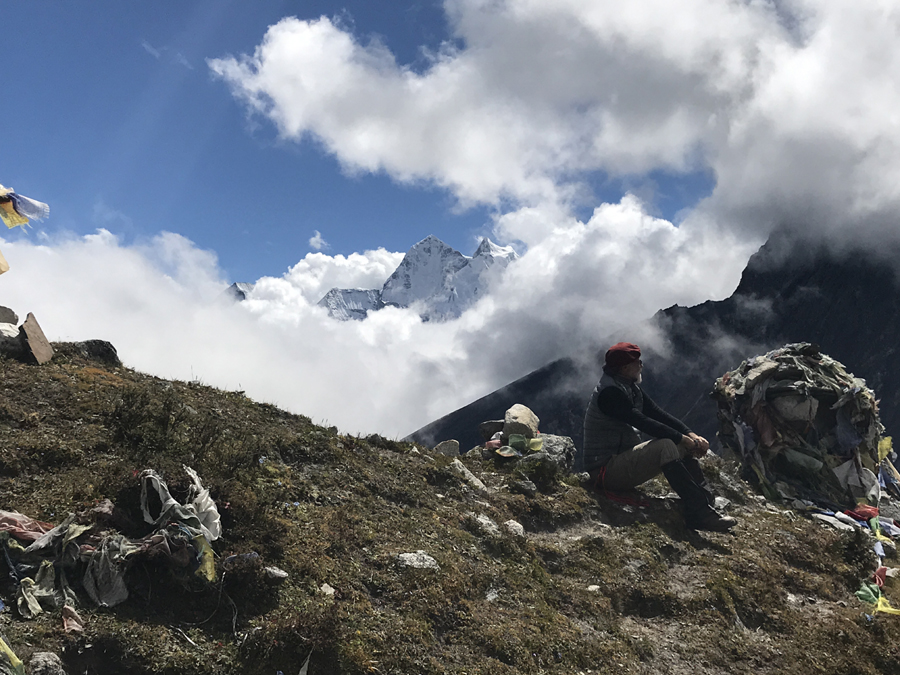
A trek to Everest Base Camp is the adventure of a lifetime. Follow in the footsteps of some of the greatest and most famous trekkers and climbers. Embark on a mind-blowing trek to base camp of the world’s highest mountain.
When you land in Lukla, the gateway to Mount Everest, you’ll be greeted by fresh mountain air, smiling Sherpa faces, and the wonderful absence of sound. For the next 14+ days, you will not encounter even one motorized vehicle! There are no roads to Everest, just gorgeous trails. And this is just the beginning.
You will see countless carved Mani stones and prayer wheels, stunning Buddhist mountain monasteries, breath-taking views of the Himalayas at every turn, and will immerse yourself in the Sherpa culture as you walk through village settlements and over suspension bridges. Each night you will stay in a rustic and charming tea house. Gather around the stove in the main dining room, meet travelers from around the world as you enjoy an authentic and delicious Nepali dinner. Every day of the EBC trek is new discovery for your senses. Hike through Rhododendron forests, over raging rivers, inside gorgeous valleys, and along stunning mountain ridges. You will never regret taking this life-changing adventure!
“At Hope Treks, we believe in doing the right thing and passing on the good karma to you, our client. In addition to funding medical research for the world’s most devastating and terminal childhood disease, we also practice responsible and green tourism through treading very lightly in the mountains and the countryside of Nepal. We make every effort to minimize negative social, economic and environmental impacts on the places we travel. We are committed to paying a living wage to our Nepalese guides and porters who, in the past, have often worked for as little as $10 a day. We ensure that they have proper, safe clothing and gear, as well as insurance.
“Isn’t it time for your ultimate, altruistic adventure?”
Tour Name: Everest Base Camp Trek Tour Dates: Flexible Tour Rate: $2200 USD per person Rate Includes:
Accommodation with breakfast at deluxe hotel in Kathmandu.
Breakfast, lunch and dinner each day while trekking
Tea House accommodation during the trek.
Experienced, English-speaking guide and porters (1 porter between 2 people). Also included is their food, accommodation, salary, and insurance.
Trekkers Information Management System (TIMS Card).
Company Profile: Hope Treks offers Treks in Nepal, including
Everest Base Camp, and profits go to the Hope for Gus Foundation, which funds
medical research for Duchenne muscular dystrophy.
Four Seasons Resort Nevis sponsors GPS satellite transmitters to support the Sea Turtle Conservancy track the migration patterns of sea turtles that return to Nevis to lay their eggs, and this year, even with the Resort’s ongoing renovation, the research needed to continue.
NEVIS, WEST INDIES – From June to October, the beaches of Nevis come alive with the scurrying of one of nature’s most beloved animals, the sea turtle. Each year, the partnership between Four Seasons Resort Nevis and the Sea Turtle Conservancy aims to educate and create awareness about the protection of these beautiful sea creatures through a joint program that helps researchers study the migration patterns of the endangered species that nest on Nevis’ beaches.
Four Seasons Resort
Nevis sponsors GPS satellite transmitters to support the Sea Turtle Conservancy
in tracking the migration patterns of sea turtles that return to Nevis to lay
their eggs, and this year, even with the Resort’s ongoing renovation, the
research needed to continue.
“This is our 13th
year coming to Nevis and conducting research on these beautiful hawksbill sea
turtles,” says David Godfrey, Executive Director of the Sea Turtle Conservancy.
”For us, this partnership is more than just the research; it’s an opportunity
to be a part of the Nevisian community year after year and see how much they
truly value our efforts and being a part of this very important
initiative.”
Along with the help of
the Nevis Turtle Group and Ignacio Ottley, one of longest
standing sea turtle participants from the Resort, the team was able to
successfully locate and track two new nesting hawksbill sea turtles on the
beaches of Cades Bay, located just 15 minutes from Four Seasons.
As they headed out to
the beach in the late evening, no sooner had they spotted the first turtle
nesting along the beach. The conservation team began taking notes,
measurements, and nesting patterns when another turtle began to make its way up
the banks, just a few steps away. And, just like that “Spongie” and “Patches”
were cleaned up, tagged and sent back to the ocean.
Just one week before the
team came to Nevis, the Nevis Turtle Group was already out looking for turtles
when they found “Sundrop” nesting on Jones Bay Beach. Initially tagged in 2016,
her return to Nevis shows the thriving population on the island and that the
turtles do come back to nest on the same beaches.
Three species of sea turtles nest on the shores of Nevis: the hawksbill, the leatherback, and the green turtle. These majestic creatures journey hundreds of miles each nesting season to return to the same place where they were hatched and, under the glow of the moonlight, lay the next generation of sea turtles that will one day make the same journey. With only 1 in 1,000 to 10,000 baby sea turtles surviving to adulthood, the sea turtle conservation program needs to continue tracking and protecting these animals for future generations. To follow the tagged sea turtles, visit ConserveTurtles.org.
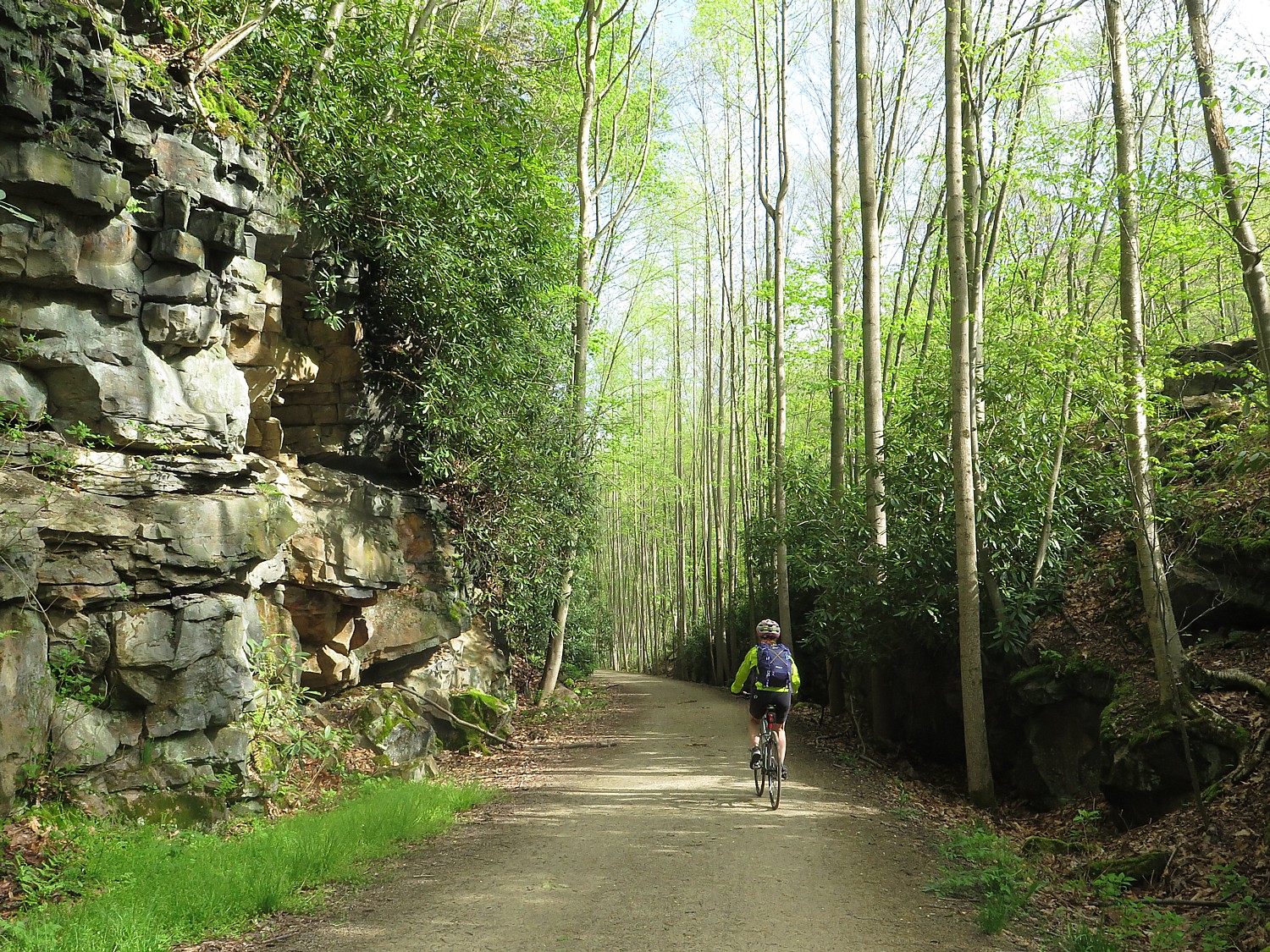
How fitting that during May, National Biking Month, Rails-to-Trails
Conservancy (RTC) has just unveiled its preferred route for its visionary Great
American Rail-Trail™—or the “Great American”— a 3,700-mile biking trail that
would link Washington DC with Washington State.
The proposal underscores the organization’s long-time
commitment to creating an iconic piece of American infrastructure that connects
more than 125 existing trails and fills 90 trail gaps to create the
cross-continental recreational trail.
“Since the 1980s, RTC has understood the potential of a
trail like the Great American Rail-Trail that could connect the nation. That
vision has been a guidepost for the organization for 30 years. Now, we have the
chance to create from that vision a national treasure that unites millions of
people over thousands of miles of trail,” said Ryan Chao, president of RTC.
“This trail is a once-in-a-lifetime opportunity to provide—together—an enduring
gift to the nation that will bring joy for generations to come.”
The preferred route of the nation’s first cross-country
multiuse trail is detailed in a comprehensive report released by RTC today. The
Great American Rail-Trail Route Assessment Report outlines RTC’s recommendation
for the route, developed in close partnership with states and local trail
planners and managers.
“When defining the preferred route of the Great American Rail-Trail, we sought a cross-country route that would provide the highest-quality experience while delivering significant economic and social benefits to the communities it connects,” said Liz Thorstensen, vice president of trail development at RTC. “This route achieves those things and more, in large part thanks to the input, support and leadership of state agencies and local partners who have built the existing trails that will make the Great American Rail-Trail possible, and whose ongoing collaboration is vital to its completion.”
The route assessment was developed over 12 months with input
from RTC’s GIS analysis of more than 34,000 miles of multiuse trails; review of
state and local trail plans; and discussions with hundreds of local trail
partners and state agencies representing the trails along the route. The
preferred route aligns with RTC’s and its partners’ criteria that specify the
Great American be one contiguous route that is initially more than 80 percent,
and ultimately entirely, off street and separated from vehicle traffic;
comprises existing trails to the extent possible; is the most direct route
possible between Washington, D.C., and Washington State; is amenable to the state
and local jurisdictions that will host it; and will serve as a catalyst for
local economic development, including providing services for long-distance
trail travelers.
Traveling through 12 states and the District of Columbia,
RTC and its partners have defined the Great American Rail-Trail as more than
3,700 miles, comprising more than 1,900 miles of existing trails—those trails
already developed that will help carry the route across the country—and more
than 1,700 miles of “trail gaps,”—sections of trail in need of development to
fully connect the Great American into one contiguous route.
As the nation’s first cross-country multiuse trail, the
Great American will connect people of all ages and abilities with America’s
diverse landscapes and communities. Nearly 50 million people living within 50
miles of its route will be able to call this iconic American infrastructure
their own as the trail delivers new access to the outdoors and new
opportunities for physical activity and recreation. Hundreds of communities
along the route will experience new opportunities for business development and
tourism thanks to the Great American Rail-Trail, all while contributing to the
growth of the country’s burgeoning outdoor economy—one of the largest sectors
in the United States.
“We believe the Great American Rail-Trail will be a
transformative project for the nation, as it magnifies on a grand scale the
benefits that trails have delivered to communities for decades,” said Chao.
“Whether bridging gaps within and between communities, creating safe walking
and biking access to jobs, transit, shopping and green space; or serving as
recreation for cyclists, runners and casual daily explorers, this will be
America’s trail.”
While completion of the Great American Rail-Trail is a
significant undertaking and several decades away, 52% of the path is already
complete and available for public use, with plans for RTC to work in
partnership with states and local jurisdictions and organizations to bring new
segments online year after year.
RTC and its partners view the route assessment as a
blueprint for the trail’s development that is based in the reality of existing
plans and priorities. To spur trail completion, RTC has identified initial
catalyst initiatives—projects or challenges that would most benefit from RTC’s
national breadth of resources. Through these initiatives, RTC will directly
support local and state partners, investing time, expertise and organizational
resources in specific projects that are critical to catalyzing the completion
of the Great American Rail-Trail. RTC is also enlisting the support of trail
lovers across the country to demonstrate national enthusiasm for the Great
American’s development.
Setting a goal to reach 1 million pledges in support of the cross-country trail, RTC is asking the public to pledge at greatamericanrailtrail.org.
“We know that it will take a significant investment of time,
resources and energy to complete the Great American Rail-Trail—but it will be
worth it. It will take the help of trail lovers and leaders to bring this
vision to life,” said Kevin Mills, RTC’s vice president of policy. “Federal,
state, local and private investment will all be needed to complete this
project. To support the ongoing advocacy necessary to secure critical public
resources, we hope everyone will be inspired to proudly pledge to show the
widespread desire that exists for this trail.”
The Great American Rail-Trail is a signature project of RTC
and the most ambitious in its portfolio of TrailNation™ projects—the
organization’s initiative to encourage the rapid replication of regional trail
networks across the country. The Great American was first envisioned at RTC in
the late 1980s, and for decades has been an underpinning of the organization’s
strategy to create a nationwide network of public trails.
Separately, New York State, which already offers a 353-mile
long Erie Canalway from Buffalo to Albany, is in the process of filling the
gaps for a bikeway that will extend the entire north-south expanse, from New
York City to the Canadian border.
To learn more about the Great American Rail-Trail and RTC and to view the preferred route, visit greatamericanrailtrail.org and follow @greatamericanrailtrail on Facebook and Instagram.
It will take public and private support to complete the
Great American Rail-Trail. To learn more about how you can support the project
and RTC’s national leadership to plan, organize and advocate for the trail,
contact Alisa Borland, vice president of development at RTC, at
alisa@railstotrails.org or 202.974.5126.
Rails-to-Trails Conservancy is the nation’s largest trails organization—with a grassroots community more than 1 million strong— dedicated to connecting people and communities by creating a nationwide network of public trails, many from former rail lines. Connect with RTC at railstotrails.org and @railstotrails on Facebook, Twitter and Instagram.
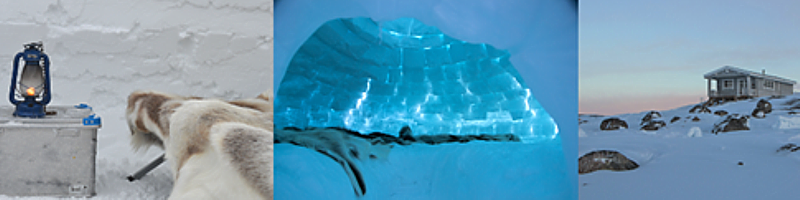
Igloo Lodge, Greenland (photo: Off the Map Travel)
(Ilulissat, Greenland) – Experience the Arctic like the Inuit people with a stay in a traditional hand-built igloo. Comprising a village known as the Igloo Lodge, five spacious igloos are available for adventurous travelers, each with room to sleep two people.
Launched by Arctic travel specialists Off the Map Travel, the new Igloo Lodge is a first for this winter and an exciting choice for couples and small groups alike.
Travelers don’t have to worry about being cold as each igloo is kitted out with reindeer skins, warm sleeping bags and a petroleum lamp on a night table. On-site is a cozy wooden cabin with bathrooms and a communal meal area. Although outside temperatures can drop well below freezing, the igloos remain around 32ºF, with specialized outdoor bedding and gear providing coziness and comfort.
“The best Arctic adventures are about experiencing authentic moments and creating lifelong memories,” notes Jonny Cooper, founder of Off the Map Travel. “As soon as you enter the igloo, you see the craftsmanship that goes into its creation, a skill that’s been passed down through generations. It’s quite special to lie back and sleep there just as the Inuits have done for thousands of years,” he continued.
As an example, a 5-day 4-night Ilulissat Igloo Experience itinerary, offered from the end of January 2019 to the beginning of April, is priced from £999 ($1304) per person including three nights on a B&B basis at Hotel Arctic in a double room, one night in an ice-hewn igloo at Igloo Village, snowshoeing, snowmobiling, two Northern Lights safaris, and transfers. Flights are additional.
This project is supported by Interreg Nord and the Visit Arctic Europe project, developing travel to the Arctic Europe region.
Off the Map Travel is a team of travel experts who work with experiences and destinations that allow people to explore hidden wonders of the world. Specializing in soft adventure and viewing of the Northern Lights, Off the Map Travel creates tailor-made itineraries that offer a distinctive vacation based on first-hand experience. Off the Map Travel vacations anticipate travelers’ needs with pre-planning and customization. Each bespoke itinerary is tailored to the ages of participants, creating experiences for families, groups, couples and singles that are comfortable and luxurious, with activity levels appropriate for all participants. www.offthemap.travel
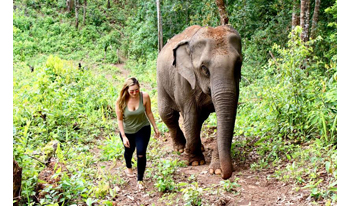
During Wild Women Expeditions’ Elephants, Treks and Temples tour of Northern Thailand participants get to help bathe, feed and walk elephants at both an elephant rescue center and in a Karen tribal village in the jungle.
CORNER BROOK, NL, CANADA– Elephants are the stars in a new-for-2018 multi-sport Thailand adventure for women-only hosted by Wild Women Expeditions.
Fall 2018 departures of Elephants, Treks and Temples tour of Northern Thailand (http://wildwomenexpeditions.com/trips/thailand-elephants/) will immerse guests for 11 days in the culture and landscape of northern Thailand’s Chiang Mai region on bicycles, and while trekking and coursing down rivers on bamboo rafts. Stops enroute include helping to bathe, feed and walk elephants at both and an elephant rescue center and in a Karen tribal village in the jungle.
“Ethical, sustainable tourism is the Asian elephant’s best hope to survive. In the spirit of the #BeKindToElephants movement, we want to respect and protect these majestic animals and so won’t be riding elephants on any Wild Women tours,” says Jennifer Haddow, Owner/Director of Wild Women Expeditions. “This practice often relies on wild elephants being brutally tamed before they can be ridden and we are creating tourism opportunities with elephants that do not cause harm.”
The focus on elephants is part of a Wild Women Expeditions’ commitment to change the perception of elephants as beasts of burden for tourists. The company is supporting Chai Lai Sisters, a community-based tourism project to convert an abusive elephant riding camp into a sanctuary or rescue center for elephants that is run by the Karen tribal community near Chiang Mai. This company also benefits a second organization, Friends of the Asian Elephant Foundation, supporting the work of the work of the first elephant hospital in Thailand to rehabilitate elephants injured by overwork and neglect in tourist camps.
Wild Women Expeditions’ Elephants, Treks and Temples Tour of Chiang Mai, Thailand, provides opportunity to help care for elephants.
Wild Women Expeditions has also thrown its financial support behind Chai Lai Orchid and a Go Fund Me Campaign to empower local women and rescue elephants. Donations are needed to save 13 Asian elephants from abusive conditions and to support a human-trafficking prevention program. For more details and to contribute see: https://www.gofundme.com/ChaiLai.
Elephants in this region are big business. The animals are enslaved to the tourist trade 365 days a year as cheap transportation carrying the weight of a heavy metal chair plus the weight of humans. Elephants are also in chains to logging interests, day after day dragging felled trees from the jungle. In the rescue center caretakers from a Karen hill tribe assure that the animals are well treated and have access to water for bathing. See: https://www.chailaiorchid.com/elephant-sanctuary/.
In Chiang Mai is the world’s first elephant hospital that is supported by a non-profit organization called Friends of the Asian Elephant. Here treatments cover the spectrum of what distressed elephants may require, from illnesses requiring antibiotics to injuries mandating surgeries and future prosthesis, to maternal and infant care. See: http://www.friendsoftheasianelephant.org/en/.
Thailand’s Chiang Mai is the gateway to access the country’s north. The Wild Women Adventure Tour will visit several tribal communities to get a view of the rural landscape through activities including cycling, rafting and trekking.
Rice paddies, orchards, bamboo and fern groves surround women on bicycles in Sri Lanna National Park. To cross a reservoir they board a longtail boat bound for lunch at a floating bamboo raft house. Atop Thailand’s second highest mountain they gaze across a landscape to neighboring Myanmar; they hike along a jungle trail and immerse themselves in the culture of a hill tribe whose business is maintaining tea plantations. The group will stay for two nights at Phu Chaisai, at an award-winning eco-resort crafted by bamboo in the jungle near Chiang Rai. One 3.5-hour trek leads to a Karen village hill tribe where elephants await new hands to feed and bathe them. Another day is spent at an elephant sanctuary near Chiang Mai. Omnipresent throughout this journey are temples – or wats – and the role that rivers continue to play in shaping Thailand’s trade and agriculture.
The per person double rate is $2,295 USD inclusive of 10 nights accommodation (including a home stay), most meals, services of an English-speaking certified female guide and assistant guides, drinking water and snacks, activity-related equipment, travel, including airport transfers, in private air-conditioned vans, sightseeing tickets and zone entrance fees, flight confirmations and luggage transfers.
A quarter century ago Wild Women Expeditions pioneered today’s steam-charged movement encouraging women to travel in small women-only groups. “Wild Women Expeditions gives women the opportunity to empower themselves amongst other women, connect with the natural world and make a positive impact in the communities we explore,” says Haddow.
For details, availability and reservations for these and all Wild Women Expeditions’ programs call 1 (888) 993-1222, email info@wildwomenexpeditions.com or visit online at https://wildwomenexpeditions.com/.
Costa Rica: Chiquita Glamping & Pacuare River Raft vacation is the latest of over 30 “online-only” trips featured on Austin Adventures’ award-winning website.
BILLINGS, MT –The best of all worlds, including creature comforts while glamping in the wilderness, come seamlessly together on Austin Adventures’ new 8 day/7 night Costa Rica: Chiquita Glamping & Pacuare River Raft vacation. This is the latest of over 30 “online-only” trips featured on its award-winning website: https://www.austinadventures.com/.
With its newest Costa Rica program, year-round departures are flexible and may be arranged when it best fits participant’s own schedule, on a space-available basis. The per person double rate (based on a party of four or more) is from $3,998 for the core experience. Options exist to customize the itinerary to the guests’ wishes.
This luxury trip, without a lofty price tag, brings curious travelers to a country on the forefront of land and wildlife conservation. Over 25 percent of the country has been protected by the establishment of preserves, sanctuaries, refuges, and national parks. Costa Rica also offers one of the most biodiverse places in the world, Carara National Park located in the transition zone between Costa Rica’s wet southeast and hotter, drier northwest. The adventure begins here as guests explore the river basin of the River Tárcoles, which hosts one of the largest remaining populations of wild scarlet macaws in the country.
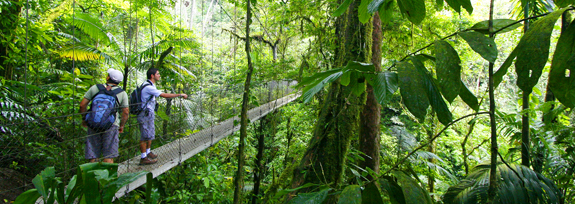
Guests then journey by boat to Isla Chiquita Glamping Resort, far off the usual tourist track. Home for three pampered nights, each large platform tent accommodation is equipped with a king bed, day bed lounger, private shower and bathroom with double sinks, and spacious lounging deck with stunning ocean views. From this isolated island, guests visit Curú National Wildlife Refuge with pristine beaches and abundant wildlife while gliding through the still waters of a protected bay in a kayak or on a stand-up paddleboard, watching tropical birds soar overhead. One morning guests transfer to Tortuga Island where white sands contrast with brilliant Caribbean blue waters. Snorkeling is popular here, as guests marvel at surprisingly colorful crabs and lobsters as well as vibrant tropical fish.
A local flight back to mainland beckons guests to engage in the premier whitewater rafting adventure in Costa Rica – on the Pacuare River (rated by National Geographic as one of the Top 10 river trips in the world). Here they visit the Cabecar Indian village and meet with the largest indigenous tribe in Costa Rica. A family of the community shares traditions they have used for centuries. After zip lining comes more rafting, leading to the deluxe, eco-sensitive Pacuare Lodge, accessible only by whitewater raft. Located at the center of a series of over 1.2 million acres of wildlife reserves, the lodge is both secluded and beautiful. Guests may opt to dine 60 feet above the forest floor in a platform built on the branches of a century-old Kapok tree. This lodge enjoys National Geographic Unique Lodges of the World status.
After two nights at the lodge and a final morning on the river, guests are transferred back to San José for a last overnight at Hotel Grano de Oro, a “Tropical Victorian” house which features a world-class restaurant. Airport transfers are offered the next morning.
For more information please see https://www.austinadventures.com/packages/costa-rica-isla-chiquita-pacuare-lodge/.
This is one of multiple programs Austin Adventures offers in Costa Rica where it has enjoyed relationships with top tourism purveyors for over 15 years.
“Costa Rica has always been our top selling international destination,” says Dan Austin, Founder and President of Austin Adventures. “We’re always on the lookout and open to what our well-established in-country contacts have to share when it comes to new, unusual and cutting-edge adventure opportunities. Together, we look for experiences away from the usual tourist track and crowds. The key is developing tour itineraries that appeal and captivate our brand of intrepid travelers.”
In the print version of its catalog, Austin Adventures features 65 separate destinations representing over 100 published tour options with over 40 also offered as a Family-Focused version. The website also showcases over 30 additional trips and destinations (not included in the catalog) outlining core itineraries that can be customized upon customer request. These online-only programs include, in addition to the Costa Rica vacation:
https://www.austinadventures.com/packages/arizona-havasupai/
https://www.austinadventures.com/packages/ireland-kerry-county/
https://www.austinadventures.com/packages/ireland-family-kerry-county/
https://www.austinadventures.com/packages/scotland-family-scottish-highlands/
https://www.austinadventures.com/packages/scotland-scottish-highlands/
To help plan, Austin Adventures’ 2018 catalog is available upon request. Order ONLINE or call 800-575-1540 or email info@austinadventures.com. For a full roster of 2018 trips that is frequently updated visit http://www.austinadventures.com.