Tag Archives: Jewish History

Anne Frank The Exhibition Makes Midwest Debut at Griffin Museum of Science and Industry, Chicago, May 1

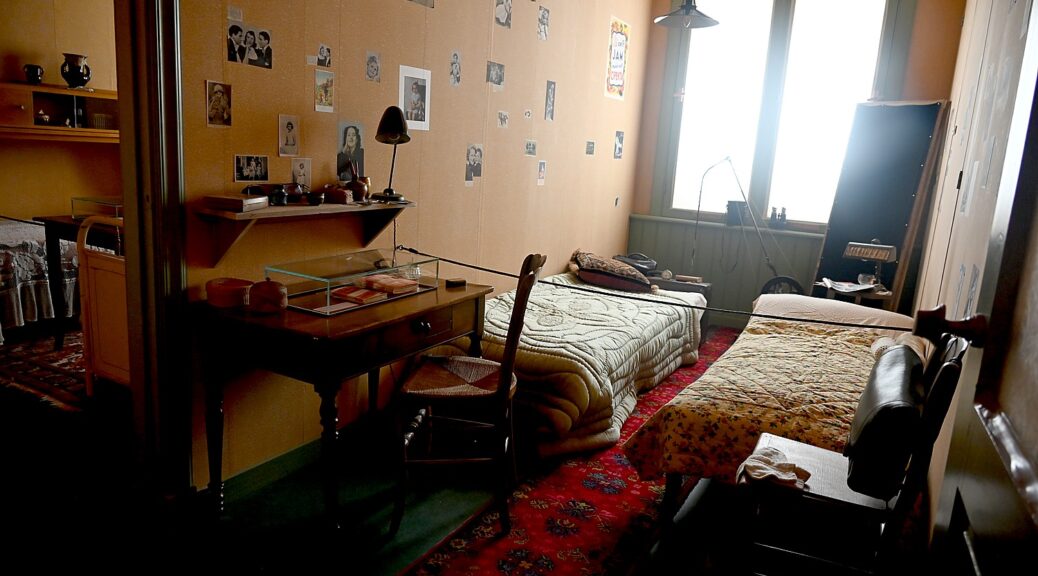
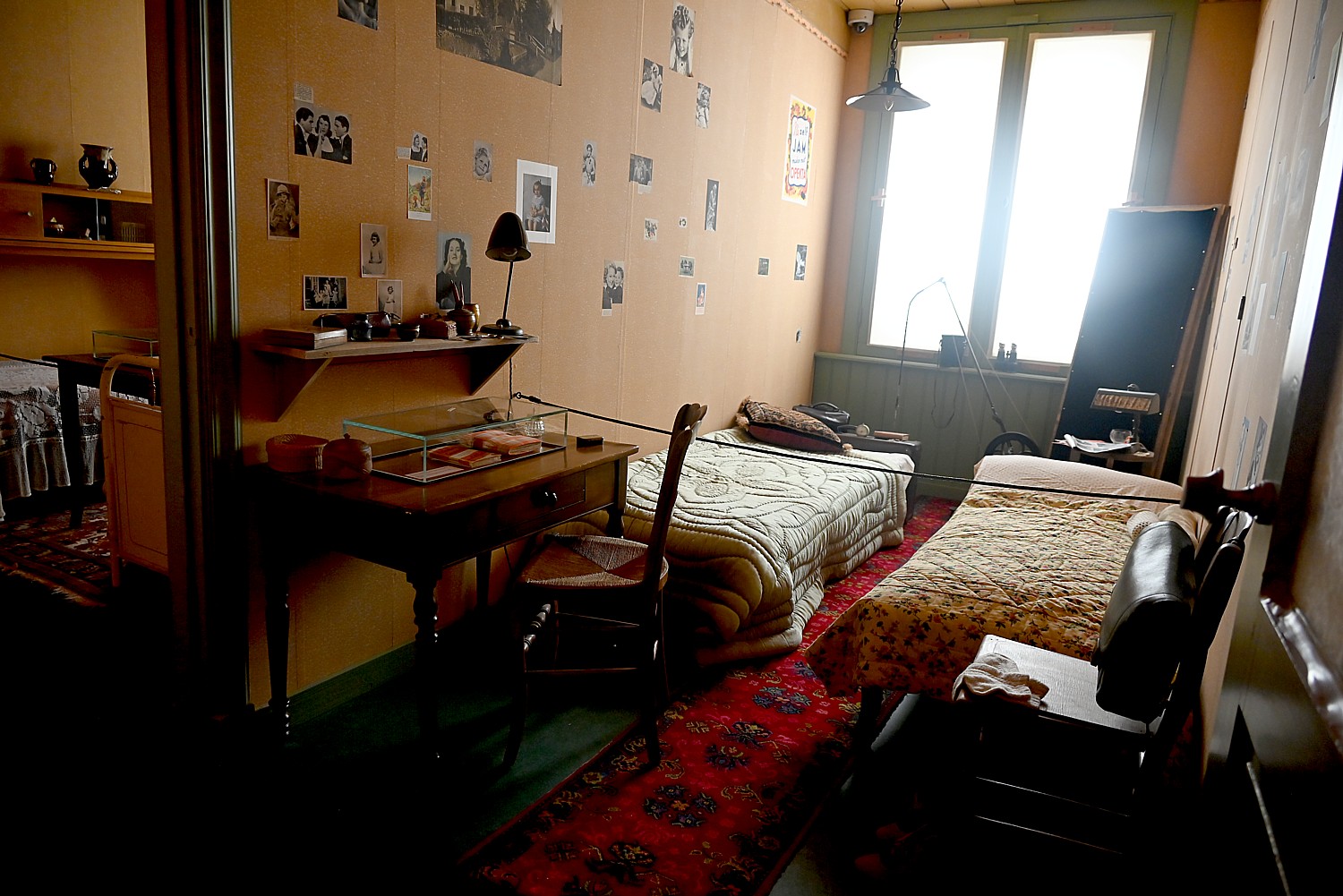
Standing in Anne Frank’s tiny room in The Annex where she and her family hid from the Nazis for two years, personalizes the Holocaust. This immersion into a full-scale re-creation of the Anne Frank House in Amsterdam is part of a landmark “Anne Frank The Exhibition,” opening at the Griffin Museum of Science and Industry, Chicago, on May 1, 2026 © Karen Rubin/goingplacesfarandnear.com.

Chicago — Griffin Museum of Science and Industry will be the Midwest host of Anne Frank The Exhibition. A presentation of the Anne Frank House, the exhibition features a pioneering experience outside of Amsterdam to immerse visitors in a full-scale, fully furnished recreation of the Annex rooms where Anne Frank, her parents and sister and four other Jewish refugees spent two years hiding to evade Nazi capture. Anne Frank The Exhibition opens May 1, 2026. 

“Anne Frank’s story is a powerful reminder of what happens when fear and hatred are allowed to take root,” said Dr. Chevy Humphrey, Griffin Museum of Science and Industry President and CEO. “At the same time, it reveals the quiet but enduring strength of curiosity, creativity and resilience, values that sit at the heart of our mission. We hope this exhibition offers meaningful moments of reflection for our guests, particularly young people, and encourages them to think critically about their role in the world they are inheriting.” 

Anne Frank The Exhibition is a call to conscience, said Ronald Leopold, Executive Director of the Anne Frank House. “By stepping into the world that confined Anne and her family, visitors are invited to confront the enduring realities of antisemitism, racism and hatred — and to recognize that remembrance is not passive, but a moral act that demands empathy, vigilance and courage. Griffin Museum of Science and Industry, founded through Julius Rosenwald’s conviction that knowledge must belong to everyone, embodies this same spirit of moral responsibility. Just as Rosenwald believed education is humanity’s greatest equalizer, this exhibition transforms history into living dialogue, ensuring that learning, understanding and compassion are never the privilege of a few, but the right of all.”

The exhibition follows an inaugural run in New York City at the Center for Jewish History, attended by 300,000, with several extensions due to popularity and dates that sold out.

Anne Frank The Exhibition immerses visitors in the context that shaped Anne’s life, from her early years in Frankfurt through the rise of the Nazi regime. It traces her family’s phased move to Amsterdam in the early 1930s, where Anne lived for ten years until her arrest in 1944. Visitors also follow her deportation to Westerbork, a large transit camp in the Netherlands, then to Auschwitz-Birkenau, a concentration camp and killing center in Nazi-occupied Poland, and eventually to Bergen-Belsen concentration camp in Germany, where she died at the age of 15.

In addition to the recreated Annex, Anne Frank The Exhibition provides an opportunity to learn about Anne Frank not as a victim but through the multifaceted lens of her life — as a girl, a writer and a symbol of resilience and strength. This is a story inspired by one of the most translated books in the world. 

The Chicago exhibition includes more than 130 original artifacts from the Anne Frank House in Amsterdam — many have never been seen before in public. Some of those artifacts include letters from Anne Frank, Margot Frank, Otto Frank and Fritz Pfeffer; a “List of Returned Jews Arriving at Amsterdam Central Station” in 1945; Anne Frank’s first photo album (1929-1942); handwritten verses by Anne Frank and Margot Frank in their friends’ poetry albums; and a German fairytale book that belonged to Margot Frank and Anne Frank (1925). 

Celebrated for its unprecedented intimacy and depth, Anne Frank The Exhibition originally premiered in New York City on the 80th anniversary of the liberation of the Auschwitz concentration camp.

Griffin MSI will offer this exhibition for free to all field trip groups, alongside the Museum’s ongoing policy of free General Admission to Illinois field trip groups, to make this important educational experience available to more people. All children in these groups also will receive a journal to write in to reflect on Anne’s words and consider the power of their own.

The exhibition is supported by age-appropriate educational resources and an antisemitism curriculum developed by the Anne Frank House and the Anne Frank Center at the University of South Carolina. These materials help students understand the history and ongoing reality of antisemitism and hatred while fostering critical thinking, empathy and civic responsibility through meaningful classroom conversations. Educators can access the curriculum — aligned with standards adopted by 39 states — through the exhibition website.

The exhibition is designed for children (ages 10 and older) and adults. All tickets include the exhibition audio guide in English and Spanish. 

Leading the creative vision for the expanded exhibition in Chicago is Tom Brink, Head of Collections & Presentations at the Anne Frank House and curator of Anne Frank The Exhibition. Michael S. Glickman, CEO of jMUSE, advised the Anne Frank House, with exhibition design by Eric Goossens Ontwerpt. Dr. Doyle Stevick, Executive Director of The Anne Frank Center at the University of South Carolina — the Anne Frank House’s official U.S. partner — is the educational advisor.

The exhibition is presented at Griffin MSI with support from Lead Benefactor Tony and Laura Davis, Presenting Benefactor Crown Family Philanthropies, Premier Sponsors Zell Family, Patron Sponsors Cari and Michael J. Sacks and GCM Grosvenor, the Estate of Judith Marx Golub, Jewish United Fund, Michael and Tanya Polsky and John and Jacolyn Bucksbaum Family Foundation, with supporting gifts from Neil Book, Chicago Bulls Charities and Rich and Vanessa Copans.

The exhibition was originally developed — and will travel nationally — through the leadership and support of Leon Levy Foundation, David Berg Foundation, Bank of America, Rebecca and Jared Cohen, Gray Foundation, Stacey and Eric Mindich, The Fuhrman Family Foundation, The Koum Family Foundation, Merryl and James Tisch and UJA-Federation of New York. Major support for the exhibition was also provided by Debbie and Mark Attanasio, Tanya and Ryan Baker, Einstein Astrof Foundation, Jesselson Foundation, Pershing Square Philanthropies, Sara Naison-Tarajano, The Barbra Streisand Foundation, The Krupp Foundation and Anonymous. Pro bono legal services provided by Wachtell, Lipton, Rosen & Katz.

The Anne Frank House

The Anne Frank House was established in 1957 in cooperation with Otto Frank, Anne Frank’s father, as an independent nonprofit organization entrusted with the preservation of the Annex where Anne Frank and her family went into hiding in 1942 during the Second World War. For nearly seven decades, the Anne Frank House has served as a place of memory and a place of learning. Committed to bringing Anne’s life story to world audiences, the Anne Frank House has emerged as a primary resource for teaching and learning about the Holocaust. Through Anne’s legacy the Anne Frank House empowers people of all ages — and especially young people — to reflect on the dangers of antisemitism, racism, and discrimination and the importance of freedom, equal rights, and democracy.

The Annex

In July 1942, Anne Frank (13), her parents, Otto and Edith Frank, and her sister, Margo Frank (16), went into hiding in the Annex at the back of her father’s company. The Van Pels family (Hermann, Auguste, and their 15-year-old son, Peter) followed the next week. Four months later, they were joined by Fritz Pfeffer. All of them were Jews daring to escape certain death at the hands of the Nazis amid the German occupation of the Netherlands during World War II. Unable to go to school, largely cut off from the rest of the world, and trapped in close quarters with others while a war raged outside, Anne poured herself into her diary. The people in hiding in the Annex were discovered and arrested in 1944, and subsequently sent to the Auschwitz-Birkenau concentration and extermination camp. Anne and her sister Margot were then sent to the Bergen-Belsen concentration camp, where they both died of typhus in February 1945. Anne was 15. Margot was 18 or 19. Otto Frank was the only person from the Annex to survive the Holocaust.

The Diary

Anne Frank: The Diary of a Young Girl, more commonly known as The Diary of Anne Frank, is one of the most translated books in the world. Transformed multiple times for stage and screen, the published book’s source is the personal diary that Anne Frank kept in multiple notebooks during the two-year period of hiding with her family in rooms located in the back house of her father’s company in Amsterdam. Soon after Anne and the others were arrested in 1944, Miep Gies, one of the people who risked their lives to help them in hiding, returned to the Annex and found their belongings ransacked. Miep was relieved to find Anne’s diary pages, knowing how important her writings were to her, and saved them for her return. Otto was the only person from the Annex to survive the Holocaust. When Miep first gave him his daughter’s diary, he could not bring himself to read it. Soon, he did and he could not stop, sharing it with relatives and friends who encouraged him to publish what they considered “an important human document.” Upon its publication, Otto Frank wrote: “How proud Anne would have been if she had lived to see this. After all, on 29 March 1944, she wrote: ‘Imagine how interesting it would be if I published a novel about the Secret Annex.'”

Kenneth C. Griffin Museum of Science and Industry (Griffin MSI) offers world-class and uniquely interactive experiences that support the Museum’s mission: to inspire the inventive genius in everyone. For more information, visit griffinmsi.org or call 773-684-1414.

See also:

Landmark Anne Frank The Exhibition in NYC Personalizes Holocaust As Never Before

For more travel features visit:

goingplacesfarandnear.com

Going Places @ longislandpress.com

www.longislandpress.com/category/vacation-travel/ 

goingplacesnearandfar.wordpress.com

moralcompasstravel.info

travelwritersmagazine.com/TravelFeaturesSyndicate/

goingplacesfarandnear.tumblr.com/

instagram.com/going_places_far_and_near/

instagram.com/bigbackpacktraveler/

‘Like’ us on facebook.com/NewsPhotoFeatures

X: @TravelFeatures

Threads: @news_and_photo_features

Bluesky: @newsphotosfeatures.bsky.social

Anne Frank the Exhibition to Offer Expanded Free Admission to Public Service Champions This Summer

“Summer of Reflection: The Legacy of Anne Frank” citywide initiative expands with “Summer of Service” to thank those who educate, protect, and inspire New Yorkers

This summer, Anne Frank The Exhibition is expanding its efforts to introduce as many New Yorkers as possible to Anne Frank’s legacy of hope and courage, offering enhanced access and free admission to thousands of public service champions, including teachers, first responders, active military, and librarians. The immersive and historically significant exhibition, presented by the Anne Frank House in Union Square at the Center for Jewish History, will launch the new initiative beginning Friday, July 11th through Friday, August 29th. © Karen Rubin/goingplacesfarandnear.com

New York, N.Y. — This summer, Anne Frank The Exhibition is expanding its efforts to introduce as many New Yorkers as possible to Anne Frank’s legacy of hope and courage, offering enhanced access and free admission to thousands of public service champions, including teachers, first responders, active military, and librarians. The immersive and historically significant exhibition, presented by the Anne Frank House in Union Square at the Center for Jewish History, will launch the new initiative beginning Friday, July 11th through Friday, August 29th.

“We are honored to welcome public servants through enhanced access to the exhibition, inviting them to draw strength from Anne Frank’s enduring legacy of humanity and courage,” said Ronald Leopold, Executive Director of the Anne Frank House in Amsterdam, which organized the New York City exhibition. “Summer of Service not only recognizes the profound impact public servants have in safeguarding our freedoms, but also affirms their power to shape a more just world. By experiencing Anne Frank The Exhibition firsthand, they harness their collective empathy and resolve, becoming even stronger champions of human dignity and leading the way in the fight against hatred and intolerance.”

The new summer initiatives include:

  • Teacher Tuesdays:
    • From 9:30-11:30am, teachers will be granted free access for up to 2 adults and 4 children.
    • Valid school ID and email address is required for free entry. 
  • First Responder and Active-Duty Wednesdays:
    • From 12:30-3:30pm, all first responders (including NYPD, FDNY, EMS, and PAPD) as well as active-duty service members, will be granted free access for up to 2 adults and up to 4 children.
    • Valid government-issued ID is required for free entry.
  • Public Librarian Weekday Evenings:
    • On Monday through Thursday, from 5:00-6:30pm, all NYC public librarians will be granted free access for up to 2 adults and up to 2 children.
    • Valid ID and NYC public library email address is required.
  • Free Friday Extended Hours + NYC Library Card Priority Access:
    • From 2:45-5:00pm, the exhibit is offering free entry to all visitors (last entry at 4:00pm).
    • The first 100 NYC library cardholders to arrive will receive expedited access on these Free Fridays. 
      Free Friday afternoon access is offered on a first-come, first-served basis, and is limited to 250 visitors each Friday. Last entry is 4:00 pm, one hour before closing (5:00pm on Fridays). Teacher Tuesdays, First Responder and Active-Duty Wednesdays, and Public Librarian Weekday Evenings begin on July 11th and will last through August 29, 2025. Originally planned to close earlier this year, Anne Frank The Exhibition is now extended through October 31, 2025 to offer even more New Yorkers the opportunity to learn about Anne’s life and writings. 

A tribute to public servants, Summer of Service extends Summer of Reflection: The Legacy of Anne Frank with a powerful message of gratitude to those who educate and protect New Yorkers. Summer of Service expands exhibition access for New York City’s everyday heroes, such as teachers, first responders, and librarians. 

Summer of Reflection: The Legacy of Anne Frank includes the distribution of 10,000 copies of Anne Frank: The Diary of a Young Girl across New York City and is made possible thanks to the generosity of Bank of America and UJA-Federation of New York, in collaboration with the New York City Public Schools Office of Library Services, New York City Public Schools Department of Social Studies & Civics, New York City Public Schools Summer Rising enrichment program, and the New York Public Library, Queens Public Library, and Brooklyn Public Library.

About Anne Frank The Exhibition:

Anne Frank The Exhibition is the first time in history that the Anne Frank House presents a pioneering experience outside of Amsterdam to immerse visitors in a full-scale recreation of the Annex rooms, fully furnished, where Anne Frank, her parents and sister, and four other Jews spent two years hiding to evade Nazi capture. 

Moving through the exhibition, visitors can immerse themselves in the context that shaped Anne’s life—from her early years in Frankfurt through the rise of the Nazi regime and the family’s phased move to Amsterdam across 1933 and 1934, where Anne lived for ten years until her 1944 arrest and deportation to Westerbork, a large transit camp in the Netherlands, then to Auschwitz-Birkenau, a concentration camp and killing center in Nazi-occupied Poland, and eventually to her death at Bergen-Belsen concentration camp in Germany when she was 15 years old. 

Four exhibition galleries immerse visitors in place and history through video, sound, photography, and animation; and more than 100 original collection items from the Anne Frank House in Amsterdam.  Anne Frank The Exhibition provides an opportunity to learn about Anne Frank not as a victim but through the multifaceted lens of her life—as a girl, a writer, and a symbol of resilience and strength. This is a story inspired by one of the most translated books in the world.

The New York City exhibition occupies over 7,500 square feet of gallery space in the heart of Union Square. This marks the first time dozens of artifacts can be seen in the United States—many have never been seen in public. 

Artifacts in the exhibition include: 

  • Anne Frank’s first photo album (1929-1942); 
  • Anne Frank’s typed and handwritten invitation to her friend for a film screening in her home (by 1942, anti-Jewish measures prohibited Jews from attending the cinema); and
  • Handwritten verses by Anne Frank in her friends’ poetry albums

Advising the Anne Frank House on the New York City exhibition is Michael S. Glickman, CEO of jMUSE. Dr. Doyle Stevick, Executive Director of The Anne Frank Center at the University of South Carolina, the Anne Frank House’s official U.S. partner, is the educational advisor.

Anne Frank The Exhibition is a limited engagement, now extended through October 31, 2025. 

The exhibition is made possible by Leon Levy Foundation, with leadership support by David Berg Foundation, Rebecca and Jared Cohen, Stacey and Eric Mindich, The Koum Family Foundation, Merryl and James Tisch, UJA-Federation of New York, and corporate partner Bank of America. Educational patrons to the exhibition include Gray Foundation and The Fuhrman Family Foundation, with additional support by The Barbra Streisand Foundation. 

Major support has been provided by Debbie and Mark Attanasio, Tanya and Ryan Baker, Einstein Astrof Foundation, Elyssa and William Friedland, Jesselson Foundation, Allison and Warren Kanders, Pershing Square Philanthropies, Sara Naison-Tarajano, The Krupp Foundation, Katharine M. and Leo S. Ullman, and Anonymous, with sponsorship support by GRoW @ Annenberg, Rita J. & Stanley H. Kaplan Family Foundation, Karyn Kornfeld & Steven Kobre, The Claire Friedlander Family Foundation, and Zegar Family Foundation. Pro bono legal services provided by Wachtell, Lipton, Rosen & Katz.

General Information

Following months of being sold out, additional tickets have been added for the months of June, July, and August to ensure visitors have easy access to the exhibition. Tickets available at AnneFrankExhibit.org. The exhibition is designed for children (ages 10 and older) and adults. All general admission tickets include the exhibition audio guide. Visitors should plan to spend approximately one hour at the exhibition. Last entry is one hour before closing. 

Individual tickets

Timed entry tickets, Monday through Friday: $24 (17 and under, $18)

Timed entry tickets, Sunday: $31 (17 and under, $24)

Flex tickets, Monday through Friday: $38

Flex tickets, Sunday: $54

Family tickets (2 adults + 2 children under 17 years): 

Timed entry tickets, Monday through Friday: $74 (additional 17 and under ticket, $18)

Timed entry tickets, Sunday: $98 (additional 17 and under ticket, $24)

Group sales (adults) 

$300 per group of 10, timed entry, Monday through Friday

$400 per group of 10, timed entry, Sunday

Hours:  Sunday through Thursday: 9:30 a.m. to 7:30 p.m.; Friday: 9:30 a.m. to 3:30 p.m.; Saturday: Closed

Center for Jewish History, 15 West 16th Street, New York, N.Y. between 5th and 6th Avenues

Follow Anne Frank The Exhibition on InstagramTik Tok, and Facebook.

About the Annex

In July 1942, Anne Frank (13), her parents, Otto and Edith Frank, and her sister, Margot Frank (16), went into hiding in the annex at the back of her father’s company. The Van Pels family (Hermann, Auguste, and their 15-year-old son, Peter) followed the next week. Four months later, they were joined by Fritz Pfeffer. All of them were Jews daring to escape certain death at the hands of the Nazis amid the German occupation of the Netherlands during World War II. Unable to go to school, largely cut off from the rest of the world, and trapped in close quarters with others while a war raged outside, Anne poured herself into her diary. The people in hiding in the Annex were discovered in 1944, and Anne and the others were arrested and sent to the Auschwitz-Birkenau concentration and extermination camp. Anne and her sister Margot were then sent to the Bergen-Belsen concentration camp, where they both died of typhus in February 1945. Anne was 15. Margot was 18 or 19. Otto Frank was the only person from the Annex to survive the Holocaust.

About the Diary

Anne Frank: The Diary of a Young Girl, more commonly known as The Diary of Anne Frank, is one of the most translated books in the world. Transformed multiple times for stage and screen, the published book’s source is the personal diary that Anne Frank kept in multiple notebooks during the two-year period of hiding with her family in rooms located in the back house of her father’s company in Amsterdam. Soon after Anne and the others were arrested in 1944, Miep Gies, one of the people who risked their lives to help them in hiding, returned to the Annex and found their belongings ransacked. Miep was relieved to find Anne’s diary pages, knowing how important her writings were to her, and saved them for her return. Otto was the only person from the Annex to survive the Holocaust. When Miep first gave him his daughter’s diary, he could not bring himself to read it. Soon, he did and he could not stop, sharing it with relatives and friends who encouraged him to publish what they considered “an important human document.” Upon its publication, Otto Frank wrote: “How proud Anne would have been if she had lived to see this. After all, on 29 March 1944, she wrote: ‘Imagine how interesting it would be if I published a novel about Secret Annex.'”

About the Anne Frank House

The Anne Frank House was established in 1957 in cooperation with Otto Frank, Anne Frank’s father, as an independent nonprofit organization entrusted with the preservation of the Annex where Anne Frank and her family went into hiding in 1942 during the Second World War. The Annex is where Anne wrote her diary, and where she and her family hid from the Nazis during the occupation of the Netherlands until being discovered and arrested by police officers in 1944. Following her transport to the Auschwitz-Birkenau concentration and extermination camp, Anne and her sister Margot were sent to the Bergen-Belsen concentration camp, where they died in 1945. For nearly seven decades, the Anne Frank House has served as a place of memory and a place of learning. Committed to bringing Anne’s life story to world audiences, the Anne Frank House has emerged as a primary resource for teaching and learning about the Holocaust. Through Anne’s legacy the Anne Frank House empowers people of all ages—and especially young people—to reflect on the dangers of antisemitism, racism, and discrimination and the importance of freedom, equal rights, and democracy. 

About the Center for Jewish History

The Center for Jewish History illuminates the Jewish past for audiences today and preserves it for the future. Home to the world’s largest Jewish archive outside Israel, it is a dynamic space for learning and public engagement. Opened in 2000, the Center is the collaborative home of five partner organizations (the American Jewish Historical Society, American Sephardi Federation, Leo Baeck Institute, Yeshiva University Museum, and YIVO Institute for Jewish Research) whose collections comprise over 7 miles of archival documents, 500,000 volumes of books, 12 million digital items, and thousands of artworks, objects, textiles, and recordings. The Center opens these vast archives to the public and activates the stories that they hold through exhibits, fellowships, genealogy programs, and an active calendar of events – making it a hub for Jewish culture and heritage. To learn more about the Center and its public programs, visit: cjh.org

See also:

LANDMARK ANNE FRANK THE EXHIBITION IN NYC PERSONALIZES HOLOCAUST AS NEVER BEFORE

For more travel features, visit:

goingplacesfarandnear.com

Going Places @ longislandpress.com

www.longislandpress.com                                   

goingplacesnearandfar.wordpress.com

moralcompasstravel.info

travelwritersmagazine.com/TravelFeaturesSyndicate/

goingplacesfarandnear.tumblr.com/

instagram.com/going_places_far_and_near/

instagram.com/bigbackpacktraveler/

‘Like’ us on facebook.com/NewsPhotoFeatures

X: @TravelFeatures

Threads: @news_and_photo_features

Bluesky: @newsphotosfeatures.bsky.social

Groundbreaking NYC Exhibition Set to Premier a Full-Scale Recreation of Anne Frank’s Annex for the First Time

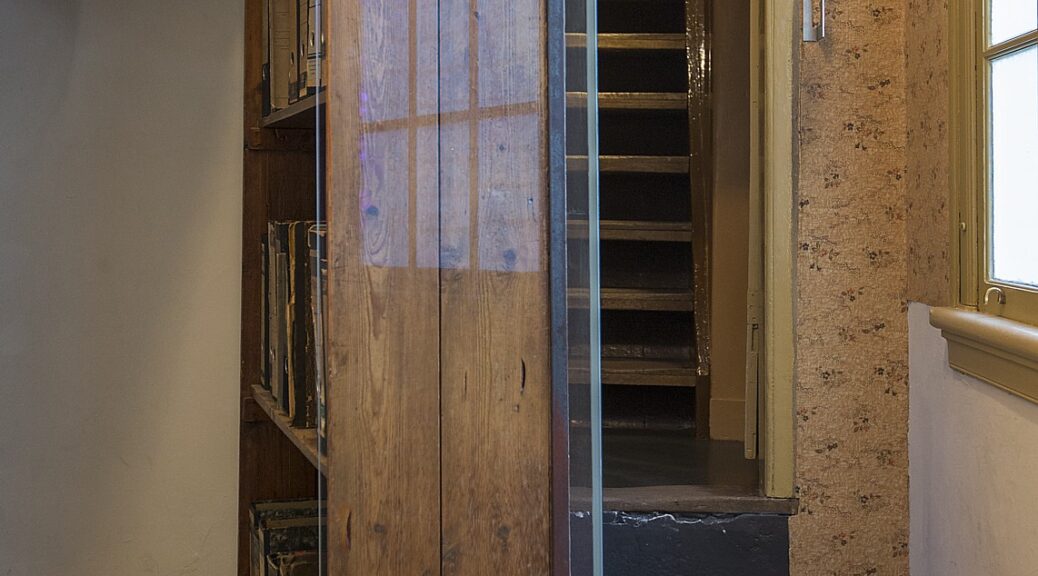
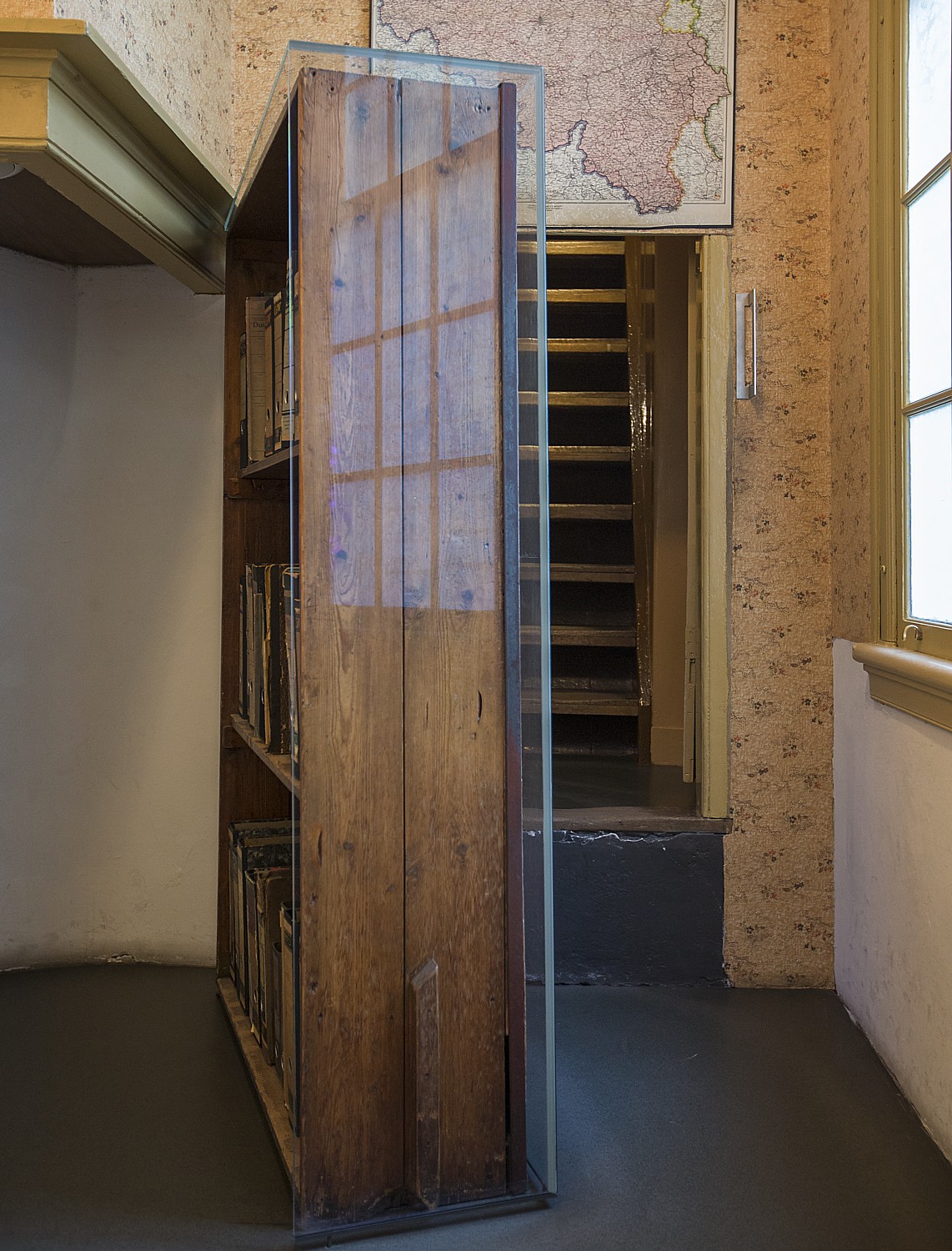
De Boekenkast. Bookcase in front of Secret Annex (© Anne Frank House, photographer Cris Toala Olivares)

New York and Amsterdam—The Anne Frank House, one of the most visited historical sites in Europe, just announced the upcoming opening of Anne Frank The Exhibition in New York City. For the first time in history, the Anne Frank House will present a pioneering experience outside of Amsterdam to immerse visitors in a full-scale re-creation of the rooms where Anne Frank, her parents and sister, and four other Jews spent two years hiding to evade Nazi capture.

As a nonprofit organization helping to shape global understanding of the Holocaust and its contemporary relevance, including lessons on modern day antisemitism, racism, and discrimination, the Anne Frank House is entrusted with the preservation of the Annex where Anne Frank and her family hid during World War II. This exhibition, presented in New York City in partnership with the Center for Jewish History in Manhattan, opens on International Holocaust Remembrance Day, January 27, 2025, to mark the 80th commemoration of the liberation of Auschwitz. 

Anne Frank The Exhibition is a first-of-its-kind, full-scale recreation of the complete Annex, furnished as it would have been when Anne and her family were forced into hiding. Moving through the exhibition, visitors will be able to immerse themselves in the context that shaped Anne’s life—from her early years in Frankfurt, Germany through the rise of the Nazi regime and the family’s 1934 move to Amsterdam, the Netherlands, where Anne lived for ten years until her 1944 arrest and deportation to Westerbork, a large transit camp in the Netherlands, then to Auschwitz-Birkenau, a concentration camp and killing center in Nazi-occupied Poland, and eventually to her death at Bergen-Belsen concentration camp in Germany when she was 15 years old. 

Designed for audiences who may not have the opportunity to visit the Netherlands, the new exhibition in New York City is anticipated to draw extraordinary attendance for what will be among the most important presentations of Jewish historical content on view in the United States. Through the recreated Annex; exhibition galleries immersing visitors in place and history through video, sound, photography, and animation; and more than 100 original collection items from the Anne Frank House in Amsterdam, Anne Frank The Exhibition will provide an opportunity to learn about Anne Frank not as a victim but through the multifaceted lens of her life—as a girl, a writer, and a symbol of resilience and strength. This is a story inspired by one of the most translated books in the world.

The New York City exhibition will occupy over 7,500 square feet of gallery space in the heart of Union Square. This marks the first time dozens of artifacts will be seen in the United States—many have never been seen in public. 

Artifacts in the exhibition include: 

  • Anne Frank’s first photo album (1929-1942); 
  • Anne Frank’s typed and handwritten invitation to her friend for a film screening in her home (by 1942, anti-Jewish measures prohibited Jews from attending the cinema); and
  • Handwritten verses by Anne Frank in her friends’ poetry albums

“Anne Frank’s words resonate and inspire today, a voice we carry to all corners of the world, nearly eight decades later,” said Ronald Leopold, Executive Director of the Anne Frank House. “As a custodian of Anne’s legacy, we have an obligation to help world audiences understand the historical roots and evolution of antisemitism, including how it fueled Nazi ideology that led to the Holocaust. Anne’s legacy is remarkable, as represented in the diary she left us, and as one of the 1.5 million Jewish children who were murdered at the hands of Nazi officials and their collaborators. Through this exhibition, the Anne Frank House offers insights into how this could have happened and what it means for us today. The exhibition provides perspectives, geared toward younger generations, that are certain to deepen our collective understanding of Anne Frank and hopefully provide a better understanding of ourselves. By bringing this exhibition to New York—a place with many ties to Anne’s story— the Anne Frank House is expanding the reach of our work to encourage more people to remember Anne Frank, reflect on her life story, and respond by standing against antisemitism and hatred in their own communities.”

Dr. Gavriel Rosenfeld, President of the Center for Jewish History, said: “We are absolutely thrilled to partner with the Anne Frank House on this landmark exhibition. As we approach the 80th anniversary of the liberation of Auschwitz in January, Anne Frank’s story becomes more urgent than ever. In a time of rising antisemitism, her diary serves as both a warning and a call to action, reminding us of the devastating impact of hatred. This exhibition challenges us to confront these dangers head-on and honor the memory of those lost in the Holocaust.” 

The Anne Frank House in Amsterdam was established in 1957 in cooperation with Otto Frank, Anne Frank’s father, as an independent nonprofit organization entrusted with the preservation of the Annex where Anne Frank and her family went into hiding in 1942 during the Second World War. The Annex is where Anne wrote her diary, and where she and her family hid from the Nazis during the occupation of the Netherlands until being discovered and arrested by police officers in 1944. Following her transport to the Auschwitz-Birkenau concentration and extermination camp, Anne and her sister Margot were sent to the Bergen-Belsen concentration camp, where they died in 1945. For nearly seven decades, the Anne Frank House has served as a place of memory and a place of learning. Committed to bringing Anne’s life story to world audiences, the Anne Frank House has emerged as a primary resource for teaching and learning about the Holocaust. Through Anne’s legacy the Anne Frank House empowers people of all ages—and especially young people—to reflect on the dangers of antisemitism, racism, and discrimination and the importance of freedom, equal rights, and democracy. 

Anne Frank The Exhibition is a limited engagement, scheduled to close on April 30, 2025. Public programming and educational initiatives tied to the exhibition will be announced when the exhibition opens to the public. 


Timed entry tickets are available at AnneFrankExhibit.org. The exhibition is designed for children (ages 10 and older) and adults. All general admission tickets include the exhibition audio guide. Visitors should plan to spend approximately one hour at the exhibition. Last entry is one hour before closing. 

Center for Jewish History, 15 West 16th Street, New York, N.Y. between 5th and 6th Avenues

For more travel features, visit:

goingplacesfarandnear.com

Going Places @ theisland360.com/travel

goingplacesnearandfar.wordpress.com

moralcompasstravel.info

travelwritersmagazine.com/TravelFeaturesSyndicate/

goingplacesfarandnear.tumblr.com/

instagram.com/going_places_far_and_near/

instagram.com/bigbackpacktraveler/

‘Like’ us on facebook.com/NewsPhotoFeatures

Twitter: @TravelFeatures

Threads: @news_and_photo_features