Tag Archives: museums and exhibitions

Anne Frank The Exhibition Makes Midwest Debut at Griffin Museum of Science and Industry, Chicago, May 1

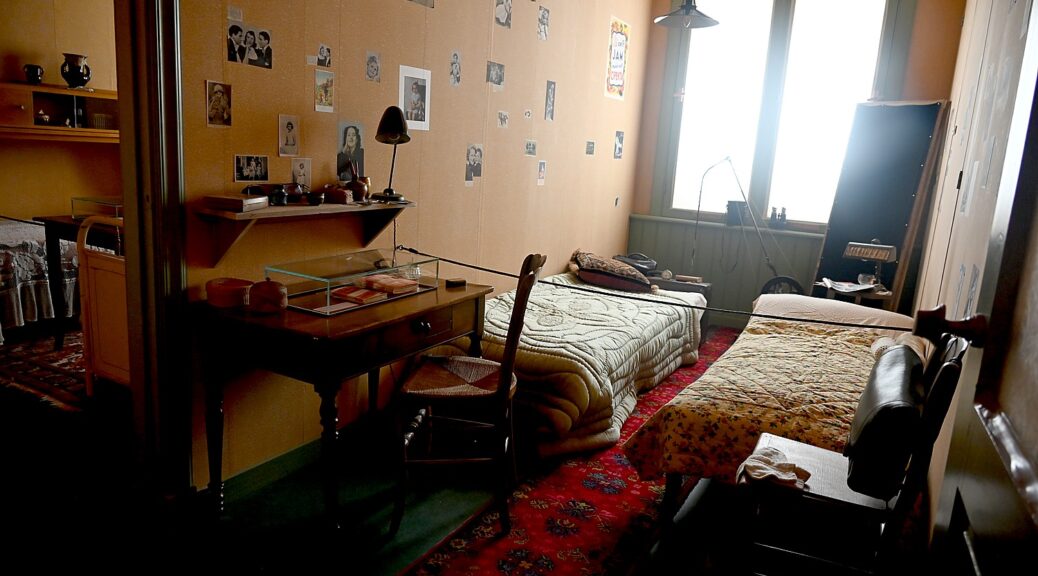
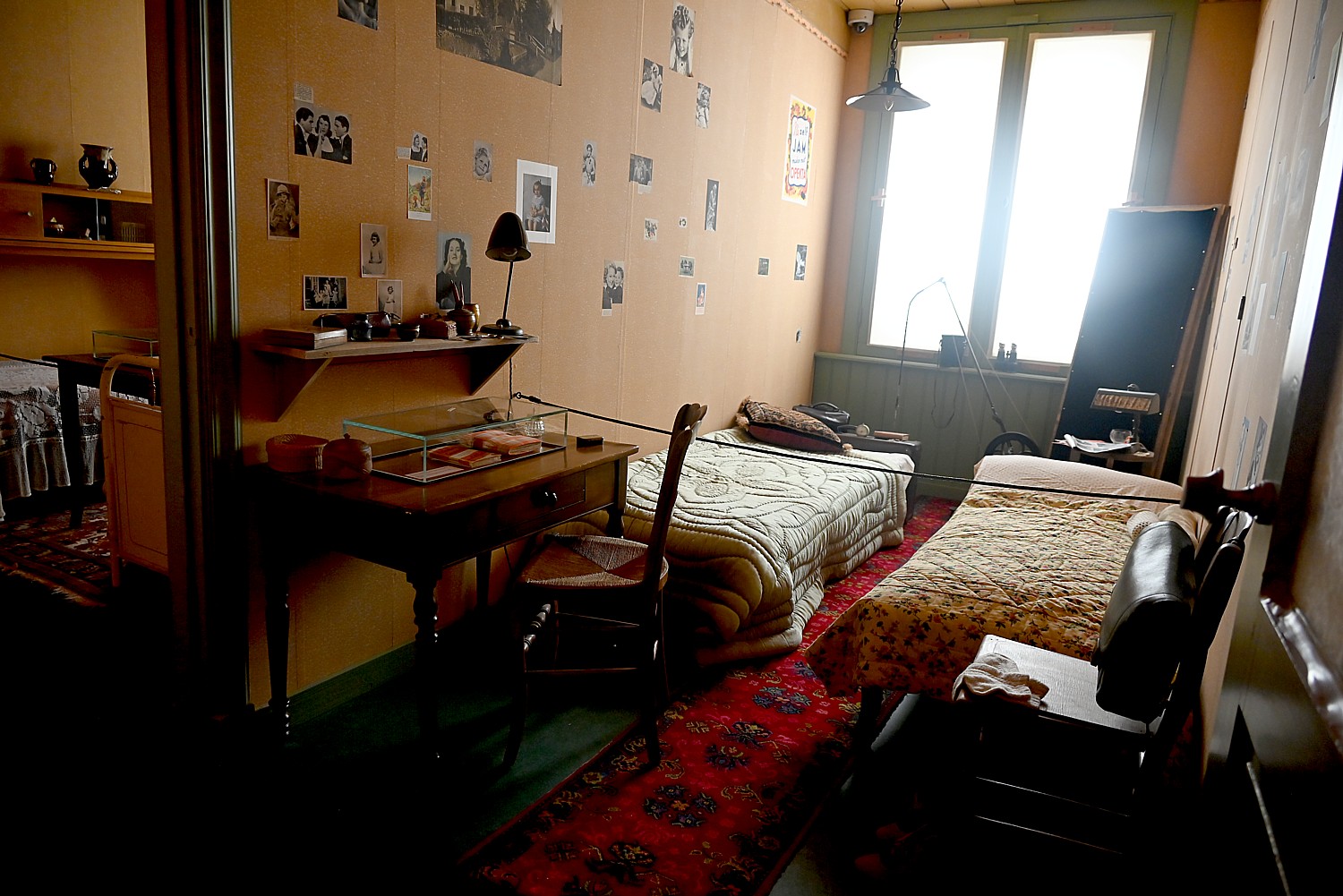
Standing in Anne Frank’s tiny room in The Annex where she and her family hid from the Nazis for two years, personalizes the Holocaust. This immersion into a full-scale re-creation of the Anne Frank House in Amsterdam is part of a landmark “Anne Frank The Exhibition,” opening at the Griffin Museum of Science and Industry, Chicago, on May 1, 2026 © Karen Rubin/goingplacesfarandnear.com.

Chicago — Griffin Museum of Science and Industry will be the Midwest host of Anne Frank The Exhibition. A presentation of the Anne Frank House, the exhibition features a pioneering experience outside of Amsterdam to immerse visitors in a full-scale, fully furnished recreation of the Annex rooms where Anne Frank, her parents and sister and four other Jewish refugees spent two years hiding to evade Nazi capture. Anne Frank The Exhibition opens May 1, 2026. 

“Anne Frank’s story is a powerful reminder of what happens when fear and hatred are allowed to take root,” said Dr. Chevy Humphrey, Griffin Museum of Science and Industry President and CEO. “At the same time, it reveals the quiet but enduring strength of curiosity, creativity and resilience, values that sit at the heart of our mission. We hope this exhibition offers meaningful moments of reflection for our guests, particularly young people, and encourages them to think critically about their role in the world they are inheriting.” 

Anne Frank The Exhibition is a call to conscience, said Ronald Leopold, Executive Director of the Anne Frank House. “By stepping into the world that confined Anne and her family, visitors are invited to confront the enduring realities of antisemitism, racism and hatred — and to recognize that remembrance is not passive, but a moral act that demands empathy, vigilance and courage. Griffin Museum of Science and Industry, founded through Julius Rosenwald’s conviction that knowledge must belong to everyone, embodies this same spirit of moral responsibility. Just as Rosenwald believed education is humanity’s greatest equalizer, this exhibition transforms history into living dialogue, ensuring that learning, understanding and compassion are never the privilege of a few, but the right of all.”

The exhibition follows an inaugural run in New York City at the Center for Jewish History, attended by 300,000, with several extensions due to popularity and dates that sold out.

Anne Frank The Exhibition immerses visitors in the context that shaped Anne’s life, from her early years in Frankfurt through the rise of the Nazi regime. It traces her family’s phased move to Amsterdam in the early 1930s, where Anne lived for ten years until her arrest in 1944. Visitors also follow her deportation to Westerbork, a large transit camp in the Netherlands, then to Auschwitz-Birkenau, a concentration camp and killing center in Nazi-occupied Poland, and eventually to Bergen-Belsen concentration camp in Germany, where she died at the age of 15.

In addition to the recreated Annex, Anne Frank The Exhibition provides an opportunity to learn about Anne Frank not as a victim but through the multifaceted lens of her life — as a girl, a writer and a symbol of resilience and strength. This is a story inspired by one of the most translated books in the world. 

The Chicago exhibition includes more than 130 original artifacts from the Anne Frank House in Amsterdam — many have never been seen before in public. Some of those artifacts include letters from Anne Frank, Margot Frank, Otto Frank and Fritz Pfeffer; a “List of Returned Jews Arriving at Amsterdam Central Station” in 1945; Anne Frank’s first photo album (1929-1942); handwritten verses by Anne Frank and Margot Frank in their friends’ poetry albums; and a German fairytale book that belonged to Margot Frank and Anne Frank (1925). 

Celebrated for its unprecedented intimacy and depth, Anne Frank The Exhibition originally premiered in New York City on the 80th anniversary of the liberation of the Auschwitz concentration camp.

Griffin MSI will offer this exhibition for free to all field trip groups, alongside the Museum’s ongoing policy of free General Admission to Illinois field trip groups, to make this important educational experience available to more people. All children in these groups also will receive a journal to write in to reflect on Anne’s words and consider the power of their own.

The exhibition is supported by age-appropriate educational resources and an antisemitism curriculum developed by the Anne Frank House and the Anne Frank Center at the University of South Carolina. These materials help students understand the history and ongoing reality of antisemitism and hatred while fostering critical thinking, empathy and civic responsibility through meaningful classroom conversations. Educators can access the curriculum — aligned with standards adopted by 39 states — through the exhibition website.

The exhibition is designed for children (ages 10 and older) and adults. All tickets include the exhibition audio guide in English and Spanish. 

Leading the creative vision for the expanded exhibition in Chicago is Tom Brink, Head of Collections & Presentations at the Anne Frank House and curator of Anne Frank The Exhibition. Michael S. Glickman, CEO of jMUSE, advised the Anne Frank House, with exhibition design by Eric Goossens Ontwerpt. Dr. Doyle Stevick, Executive Director of The Anne Frank Center at the University of South Carolina — the Anne Frank House’s official U.S. partner — is the educational advisor.

The exhibition is presented at Griffin MSI with support from Lead Benefactor Tony and Laura Davis, Presenting Benefactor Crown Family Philanthropies, Premier Sponsors Zell Family, Patron Sponsors Cari and Michael J. Sacks and GCM Grosvenor, the Estate of Judith Marx Golub, Jewish United Fund, Michael and Tanya Polsky and John and Jacolyn Bucksbaum Family Foundation, with supporting gifts from Neil Book, Chicago Bulls Charities and Rich and Vanessa Copans.

The exhibition was originally developed — and will travel nationally — through the leadership and support of Leon Levy Foundation, David Berg Foundation, Bank of America, Rebecca and Jared Cohen, Gray Foundation, Stacey and Eric Mindich, The Fuhrman Family Foundation, The Koum Family Foundation, Merryl and James Tisch and UJA-Federation of New York. Major support for the exhibition was also provided by Debbie and Mark Attanasio, Tanya and Ryan Baker, Einstein Astrof Foundation, Jesselson Foundation, Pershing Square Philanthropies, Sara Naison-Tarajano, The Barbra Streisand Foundation, The Krupp Foundation and Anonymous. Pro bono legal services provided by Wachtell, Lipton, Rosen & Katz.

The Anne Frank House

The Anne Frank House was established in 1957 in cooperation with Otto Frank, Anne Frank’s father, as an independent nonprofit organization entrusted with the preservation of the Annex where Anne Frank and her family went into hiding in 1942 during the Second World War. For nearly seven decades, the Anne Frank House has served as a place of memory and a place of learning. Committed to bringing Anne’s life story to world audiences, the Anne Frank House has emerged as a primary resource for teaching and learning about the Holocaust. Through Anne’s legacy the Anne Frank House empowers people of all ages — and especially young people — to reflect on the dangers of antisemitism, racism, and discrimination and the importance of freedom, equal rights, and democracy.

The Annex

In July 1942, Anne Frank (13), her parents, Otto and Edith Frank, and her sister, Margo Frank (16), went into hiding in the Annex at the back of her father’s company. The Van Pels family (Hermann, Auguste, and their 15-year-old son, Peter) followed the next week. Four months later, they were joined by Fritz Pfeffer. All of them were Jews daring to escape certain death at the hands of the Nazis amid the German occupation of the Netherlands during World War II. Unable to go to school, largely cut off from the rest of the world, and trapped in close quarters with others while a war raged outside, Anne poured herself into her diary. The people in hiding in the Annex were discovered and arrested in 1944, and subsequently sent to the Auschwitz-Birkenau concentration and extermination camp. Anne and her sister Margot were then sent to the Bergen-Belsen concentration camp, where they both died of typhus in February 1945. Anne was 15. Margot was 18 or 19. Otto Frank was the only person from the Annex to survive the Holocaust.

The Diary

Anne Frank: The Diary of a Young Girl, more commonly known as The Diary of Anne Frank, is one of the most translated books in the world. Transformed multiple times for stage and screen, the published book’s source is the personal diary that Anne Frank kept in multiple notebooks during the two-year period of hiding with her family in rooms located in the back house of her father’s company in Amsterdam. Soon after Anne and the others were arrested in 1944, Miep Gies, one of the people who risked their lives to help them in hiding, returned to the Annex and found their belongings ransacked. Miep was relieved to find Anne’s diary pages, knowing how important her writings were to her, and saved them for her return. Otto was the only person from the Annex to survive the Holocaust. When Miep first gave him his daughter’s diary, he could not bring himself to read it. Soon, he did and he could not stop, sharing it with relatives and friends who encouraged him to publish what they considered “an important human document.” Upon its publication, Otto Frank wrote: “How proud Anne would have been if she had lived to see this. After all, on 29 March 1944, she wrote: ‘Imagine how interesting it would be if I published a novel about the Secret Annex.'”

Kenneth C. Griffin Museum of Science and Industry (Griffin MSI) offers world-class and uniquely interactive experiences that support the Museum’s mission: to inspire the inventive genius in everyone. For more information, visit griffinmsi.org or call 773-684-1414.

See also:

Landmark Anne Frank The Exhibition in NYC Personalizes Holocaust As Never Before

For more travel features visit:

goingplacesfarandnear.com

Going Places @ longislandpress.com

www.longislandpress.com/category/vacation-travel/ 

goingplacesnearandfar.wordpress.com

moralcompasstravel.info

travelwritersmagazine.com/TravelFeaturesSyndicate/

goingplacesfarandnear.tumblr.com/

instagram.com/going_places_far_and_near/

instagram.com/bigbackpacktraveler/

‘Like’ us on facebook.com/NewsPhotoFeatures

X: @TravelFeatures

Threads: @news_and_photo_features

Bluesky: @newsphotosfeatures.bsky.social
‘Revolutionary Summer’ Brings American Revolution to Life at New-York Historical Society

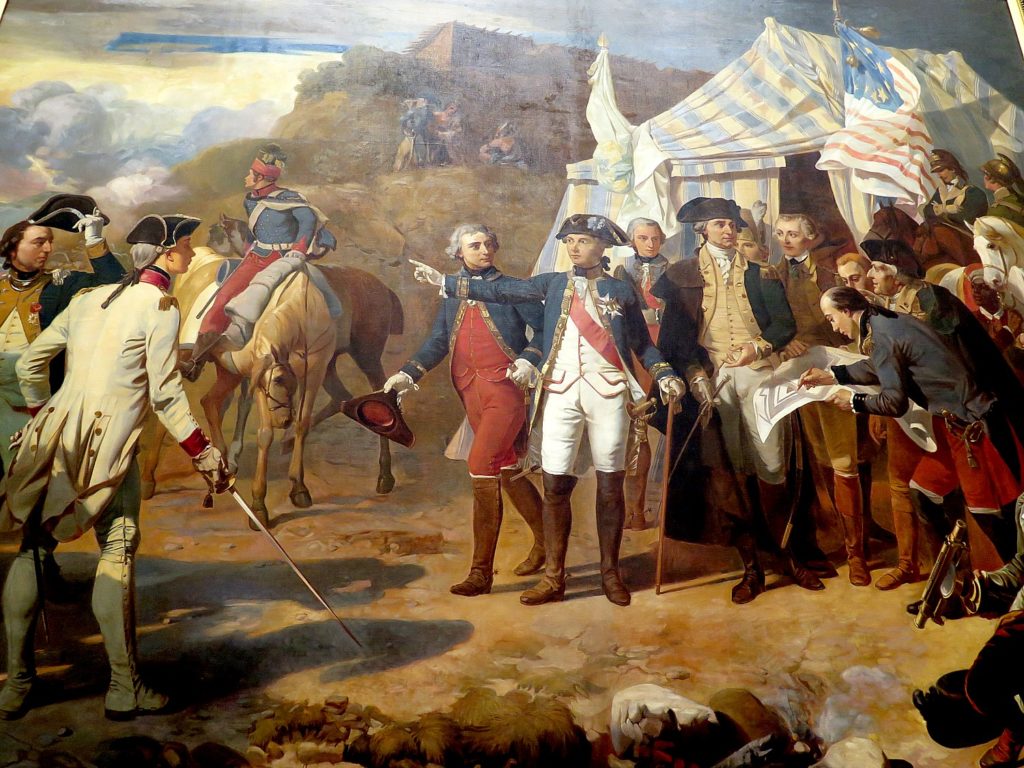
Mural of General George Washington in front of his headquarters tent is on view at the Museum of the American Revolution, Philadelphia where the only original tent can be seen. The museum is lending a replica to the New-York Historical Society for its “Revolutionary Summer.” © Karen Rubin/goingplacesfarandnear.com

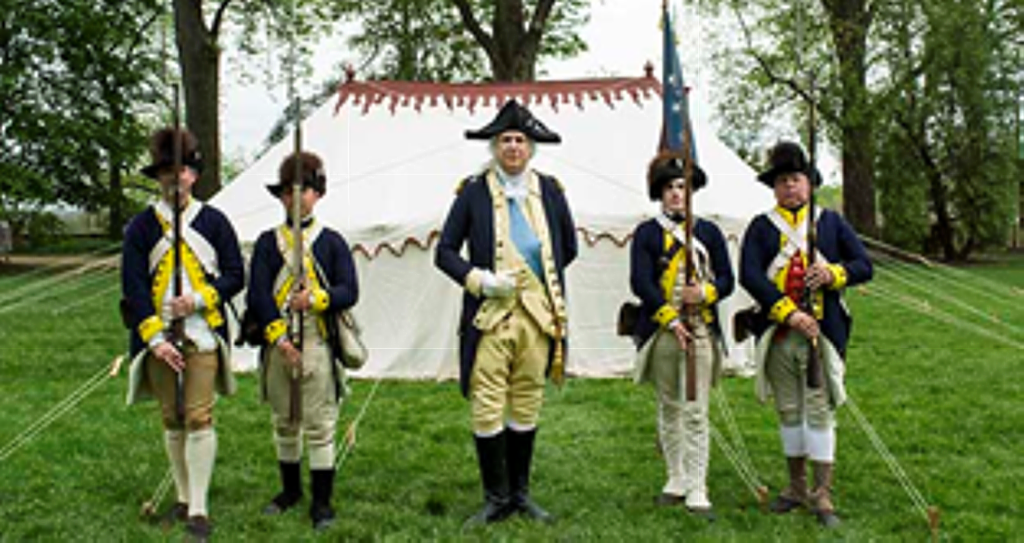
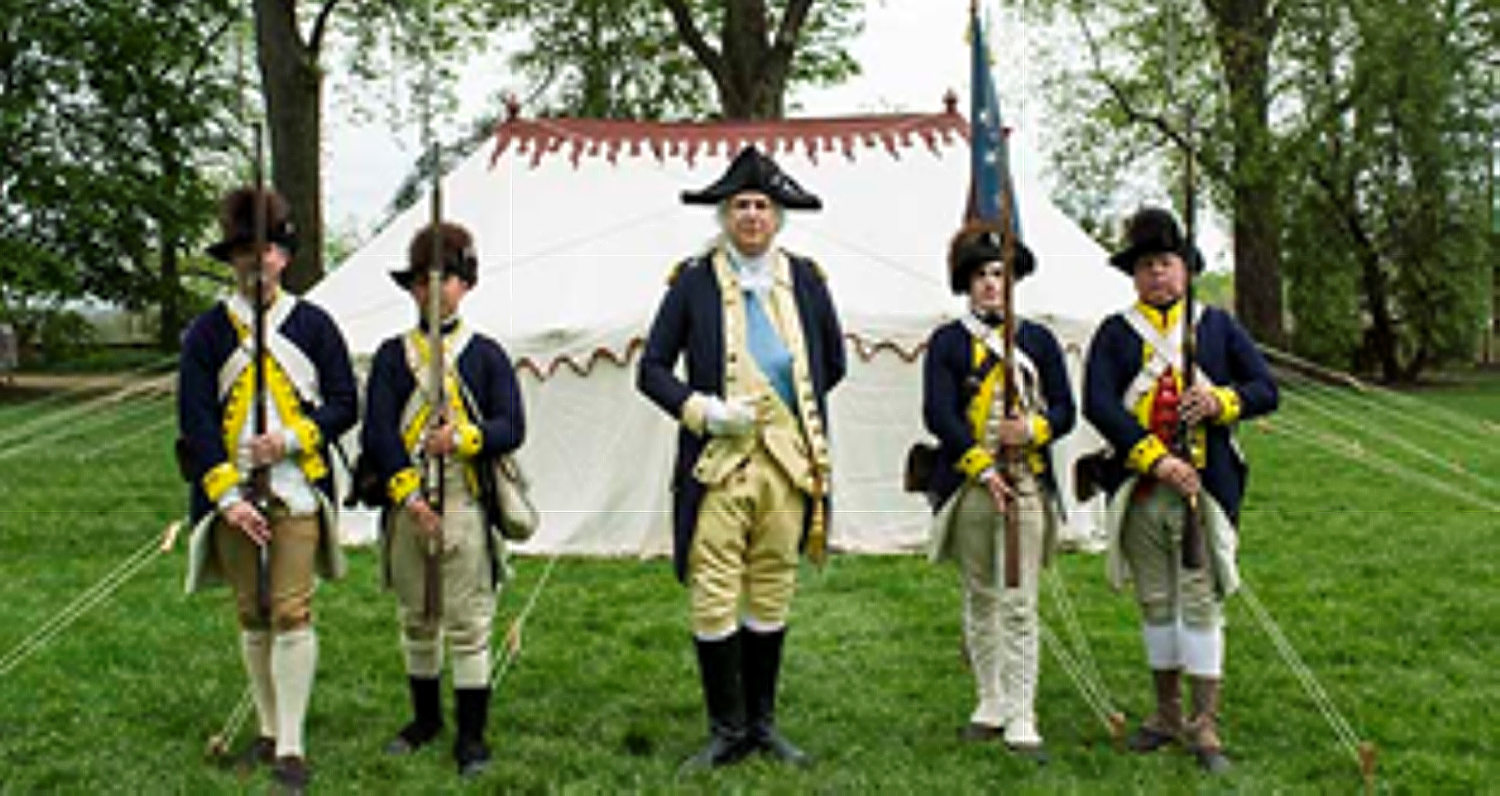
New York, NY – The New-York Historical Society, the oldest museum in New York, celebrates Revolutionary Summer. The festivities kick off on July 4, with Free Admission for kids 17 and under. A Museum-wide exploration of Revolutionary War times, Revolutionary Summer presents outdoor events every weekend featuring characters from the era; 18th-century art and artifacts; a diorama of the Continental Army; and a host of programs for all ages, including trivia nights, a DJ evening, and a Revolutionary Drag Tea Party. On select weekends, visitors can explore a replica of George Washington’s Headquarters Tent at an outdoor Continental Army encampment, meet Living Historians portraying soldiers and spies, and learn about the many facets of camp life during the War for Independence.

“We’re so excited to welcome visitors to New-York Historical this summer with a full line-up of fun ways to experience the Revolutionary era,” said Dr. Louise Mirrer, president and CEO of the New-York Historical Society. “Revolutionary Summer celebrates the outstanding, revolutionary times that ignited the birth of our country with everything from a scavenger hunt to the chance to meet George Washington.”

The centerpiece of Revolutionary Summer is a replica of George Washington’s Headquarters Tent, on display in New-York Historical’s outdoor courtyard on select weekends.

George Washington’s Headquarters Tent
July 4–7 | July 26–28 | August 16–18 | August 23–25 | September 13–15
The centerpiece of Revolutionary Summer is a replica of George Washington’s Headquarters Tent, on display in New-York Historical’s outdoor courtyard on select weekends. The original Tent is on display at the Museum of the American Revolution (MoAR) in Philadelphia. Often called the “first Oval Office,” the Headquarters Tent was where Washington and his most trusted staff plotted the strategy that ultimately won the Revolutionary War. On loan from MoAR, this painstakingly detailed, hand-sewn replica—made of custom woven linen and wool fabrics—was created as part of a collaboration between MoAR and Colonial Williamsburg. The Tent is staffed by MoAR educators, who lead visitors on an immersive tour through history.

On View
A host of special installations and artifacts are on view at New-York Historical as part of Revolutionary Summer. One of the highlights is a recently discovered watercolor painting of the 1782 Continental Army encampment at Verplanck’s Point, New York—the only known eyewitness image of Washington’s Headquarters Tent during the Revolutionary War—on loan from MoAR. Other highlights include a camp cot used by Washington at Valley Forge during the winter of 1777; John Trumbull’s iconic painting of Washington that he gave to Martha Washington in 1790; and a pipe tomahawk gifted by Washington to Seneca Chief Sagoyewatha. Also on display is a diorama depicting the Verplanck’s Point encampment and the Hudson River shoreline, providing visitors with a 360-degree view of the scope and scale of Washington’s forces.

Revolutionary Summer also showcases historic documents from the Gilder Lehrman Institute of American History, including an original 1823 William J. Stone facsimile of the Declaration of Independence; a broadside from King George III announcing the armistice and officially ending the war; and a letter by Martha Washington detailing domestic life in the aftermath of the Revolution.

Independence Day Celebration: Celebrate the Fourth of July exploring George Washington’s encampment! Enter his Headquarters Tent, meet the man himself, and experience where the future first president strategized, dined, and slept while MoAR staff describe his daily life. Also on tap: singalongs with the Hudson River Ramblers; fife and drum corps music; a one-woman play about Deborah Sampson, the woman who disguised her gender to enlist in the Continental Army; family-friendly food for purchase; and Living Historians portraying soldiers from the Continental Army, as well as John Adams, who’ll read the Declaration of Independence. Free Admission for kids age 17 and under.

Living History Weekends: Outdoor Continental Army Encampment: Every weekend, visitors of all ages can explore a recreation of the Continental Army’s encampment in New-York Historical’s courtyard, located on 76th Street, around the corner from Central Park West. Free with Museum Admission.

George Washington’s Spies, Bodyguards, and Agents | July 6 & 7
Your top-secret mission: Enter George Washington’s encampment, meet with him and his spies, and decode your own message.

Join the Continental Army | July 13 & 14 | August 31 & September 1 | September 7 & 8
The Continental Army wants you! Explore their encampment tents and displays of 18th-century weaponry, participate in drills, and interact with all of the tools and equipment of a common soldier.

Everyday Life in Camp | July 20 & 21
Join the 3rd New Jersey Regiment to experience how soldiers and their families spent time in camp when they weren’t marching to war. Meet the women who helped prepare for military campaigns, play with 18th-century toys and games, and witness how soldiers passed the time.

Field Music on the March | July 27 & 28             
March along to Revolutionary War field music performed by the drum and fife musicians of Hearts of Oak and the New Jersey Field Music Group. 

Deborah Sampson, Fighting Woman | August 3 & 4
Meet Deborah Sampson—the woman who disguised her gender to enlist in the Continental Army—and members of her regiment, the 7th Massachusetts. Join Deborah for military drills and explore the inner workings of her regiment, from muskets to tents and knapsacks to ground cloths. 

Fighting on Horseback | August 10 & 11
Saddle up! Get an up close look at the special equipment, weapons, and techniques used by cavalry in the Continental Army and meet the 2nd Continental Light Dragoons and the 4th Legion.

George Washington’s Encampment | August 17 & 18 | August 24 & 25
Enter George Washington’s Headquarters Tent and experience what life was like during the war—from meals to down time to battle preparations. 

Metalsmithing in George Washington’s Encampment | September 14 & 15
Learn all about the crucial craft of metalsmithing as you tour George Washington’s encampment. Examine the smith’s tools and take a turn at shaping a bowl or a button.

What the History?

This millennial-focused series of fun events and programs explores fascinating Revolutionary topics while drinking and mingling!

Revolutionary Trivia Night! |Friday, July 12, 8 pm | Friday, August 23, 8 pm | $20 ($18 Members)
Do you know what George Washington’s favorite breakfast beverage was? If you do (or even if you don’t), bring your friends for a fun night of trivia courtesy of the fact fanatics at Trivia, AD! Ages 21 and up. Wine included with ticket.

Revolutionary Drag Tea Party | Sunday, July 14, 3 pm | $25, includes Museum Admission
Dress to impress in your best period-inspired drag and play Revolutionary War-era games, enjoy snacks and cocktails, and compete in categories like Most Revolutionary Outfit. Ages 21 and up. Drinks and snacks included with ticket.

Trans Identity and the Incredible Story of Deborah Sampson, Female Revolutionary War Hero | Wednesday, July 24, 6:30 pm | $20 ($18 Members)
Explore the extraordinary, true story of Revolutionary War hero Deborah Sampson with Alex Myers, as he discusses his novel RevolutionaryAges 21 and up. Wine included with ticket.

Nerdy Thursdays: Revolution Night | Thursday, August 8, 6:30 pm | Free with RSVP
Swing by the Museum for this signature event from the Black Gotham Experience that brings together a DJ, gallery talks, cocktails, and a brilliant group of nerdy people. RSVP at blackgotham.com

Watson Adventures: Revolutionary Trail Scavenger Hunt | Friday, August 16, 6 pm Free with Pay-as-you-wish Admission
Explore the Museum’s Revolutionary Trail and solve a series of puzzles involving objects on display, led by Watson Adventures. Game lasts 45 minutes. Smartphone is needed to play.

For additional information about Revolutionary Summer and its related programs, visit nyhistory.org/revsummer

Lead support for Revolutionary Summer provided by the Achelis and Bodman Foundation. Additional support provided by Richard Brown and Mary Jo Otsea. Support for the MoAR’s participation in Revolutionary Summer is generously provided by William and Candace Raveis. Exhibitions at New-York Historical are made possible by Dr. Agnes Hsu-Tang and Oscar Tang, the Saunders Trust for American History, the Seymour Neuman Endowed Fund, the New York City Department of Cultural Affairs in partnership with the City Council, and the New York State Council on the Arts, with the support of Governor Andrew Cuomo and the New York State Legislature. WNET is the media sponsor.The New-York Historical Society, one of America’s preeminent culturalinstitutions, is dedicated to fostering research and presenting history and art exhibitions and public programs that reveal the dynamism of history and its influence on the world of today. Founded in 1804, New-York Historical has a mission to explore the richly layered history of New York City and State and the country, and to serve as a national forum for the discussion of issues surrounding the making and meaning of history.

The Museum of the American Revolution explores the dramatic, surprising story of the American Revolution through its unmatched collection of Revolutionary-era weapons, personal items, documents, and works of art. Immersive galleries, powerful theater experiences, and interactive digital elements bring to life the diverse array of people that created a new nation against incredible odds. Visitors gain a deeper appreciation for how this nation came to be and feel inspired to consider their role in the ongoing promise of the American Revolution. Located just steps away from Independence Hall, the Museum serves as a portal to the region’s many Revolutionary sites, sparking interest, providing context, and encouraging exploration. The Museum is a private, non-profit, and non-partisan organization. For more information, visit www.AmRevMuseum.org or call 877.740.1776.

See also: Philadelphia’s New Museum Immerses You into Drama of America’s Revolutionary War

For more travel features, visit:

goingplacesfarandnear.com

goingplacesnearandfar.wordpress.com

moralcompasstravel.info

www.huffingtonpost.com/author/karen-rubin

travelwritersmagazine.com/TravelFeaturesSyndicate/

goingplacesfarandnear.tumblr.com/

instagram.com/going_places_far_and_near/

‘Like’ us on facebook.com/NewsPhotoFeatures

Twitter: @TravelFeatures