National Museums of Denmark and Greenland have formed a coalition to save archaeological treasures – bones, metal and wood captured and preserved in ice in Greenland – endangered by melting ice due to global warming.
The coalition is mapping out which areas are most threatened by climate change and an interactive map that pinpoints which areas are especially at risk and so should be given first priority by archaeologists.
Kitchen middens are getting particular focus because they contain valuable evidence of how Greenlanders have lived for thousands of years. If the ice encapsulating the kitchen middens melts, the potential finds will be exposed to air and will eventually rot. The artifacts are also at risk of being swept away by meltwater or covered by new tree and plant growth.
To pinpoint which finds and areas are most affected by climate change, researchers have filled several freezers in the Danish National Museum with samples from kitchen middens found all over Greenland. The researchers’ next job is to measure the oxygen consumption of each piece of wood, bone and metal, which has been collected, at different temperatures, in order to determine which materials are most affected by increasing temperatures. The results will provide the foundation for the interactive map and the mission to rescue as much of Greenland’s buried treasures as possible.
For more information, Visit Greenland, Greenland.com, info@greenland.com.
Washington, DC – The U.S. House of Representatives today passed the National Defense Authorization Act, a bill that includes provisions that could mean the most significant National Park System expansion in decades. If passed by the U.S. Senate and signed into law, the legislation will carry with it the establishment of seven new National Park units, the expansion of nine national park sites, and the extension of 15 National Heritage Areas, effectively shaking loose a five-year stalemate on public lands measures in Congress.
National Parks Conservation Association (NPCA), numerous local communities, local businesses, and scientists have spent years advocating for many of the new and expanded parks included in this legislation.
“If signed into law, this legislation will protect places taken right out of the pages of our history and science books,” said Clark Bunting, President and CEO of National Parks Conservation Association. “From the sites associated with the Manhattan Project to the legacy of Harriet Tubman in New York and Maryland to the North Fork Watershed in Montana and Ice Age fossils in Nevada, these are stories that deserve to be told in the name of strengthening our country’s best idea. And these are places that deserve to be preserved for all Americans to experience.”
Many of the proposed new and expanded national park sites would further diversify the National Park System, including the Tule Springs site which is less than 30 minutes from the Las Vegas Strip and would offer a significant opportunity for an urban community to visit a fossil-rich national park. Many will permanently protect places that played key roles in our nation’s history, including the historic Gettysburg train station where President Abraham Lincoln arrived to deliver his seminal Gettysburg Address. And many of these sites would provide visitors with a richer adventure, including the Oregon Caves National Monument and Preserve where the watershed and marble caves will be protected.
This public lands package is monumental in terms of expanding our national park system, however NPCA remains mindful that it is not perfect.
“While this legislation includes two dozen bills that will enhance our national heritage and highlight our collective history, from innovation to science and nature, it also includes provisions that could harm our natural resources. It is those provisions that are of concern to us, both as park advocates and as conservationists. However, the gains we make for our parks, their communities and their visitors will have lasting effects for our nation,” said Theresa Pierno, Chief Operating Officer, National Parks Conservation Association.
National Parks Package of the National Defense Authorization Act for Fiscal Year 2015
New National Park Units
1. Blackstone (RI)
2. Coltsville (CT)
3. Harriet Tubman (NY)
4. Manhattan Project (WA, TN, NM)
5. Valles Caldera (NM)
6. Tule Springs (NV)
7. World War I Memorial in Pershing Park (DC)
Park Expansions
1. Apostle Islands (WI)
2. First State (DE)
3. Gettysburg (PA)
4. Harriet Tubman (MD)
5. Hinchliffe Stadium in Paterson Great Falls (NJ)
6. Oregon Caves National Monument and Preserve (OR)
7. San Antonio Mission (TX )
8. Vicksburg (MS)
9. Lower East Side Tenement (NY)
Special Resource Studies
1. Lower Mississippi (LA)
2. Buffalo Soldiers
3. Rota, Commonwealth of Lower Mariana Islands
4. Prison Ship Martyrs (Brooklyn, NY)
5. Flushing Remonstrance (NY)
6. West Hunter Street Baptist Church (Atlanta, GA)
7. Mill Springs Battlefield (KY)
8. New Philadelphia (IL)
National Heritage Area Reauthorization
The authority to continue funding 15 National Heritage Areas that had a sunset will now be extended
through September 30, 2021.
1. Delaware & Lehigh National Heritage Corridor (PA)
2. National Coal Heritage Area (WV)
3. Rivers of Steel National Heritage Area (PA)
4. Essex National Heritage Area (MA)
5. Silos and Smokestacks National Heritage Area (IA)
6. Ohio & Erie Canalway National Heritage Area (OH)
7. Hudson River Valley National Heritage Area (NY)
8. Motor Cities National Heritage Area Partnership (MI)
9. Lackawanna Heritage Valley & State Heritage Area (PA)
10. Wheeling National Heritage Area (WV)
11. Yuma Crossing National Heritage Area (AZ)
12. Erie Canalway National Heritage Corridor (NY)
13. Schuykill River Valley National Heritage Area (PA)
14. Quinebaug & Shetucket Rivers Valley National Heritage Corridor (CT & MA)
15. John H. Chafee Blackstone River Valley National Heritage Corridor (MA & RI)
The Palm Beach Zoo, West Palm Beach, Florida, is hailing a rare victory in the battle against global climate change: thanks to America’s accredited zoos and aquariums, more than 30 endangered species have been brought back from the brink of extinction. With climate change, population growth and deforestation, and poaching threatening species around the world, we are facing what scientists call the “Sixth Extinction.”
But the 229 accredited members of the Association of Zoos and Aquariums (AZA) have built a unique infrastructure to save endangered species – breeding programs that coordinate across many institutions to ensure genetic diversity, systems so that animals can be safely moved between institutions, and partnerships with local, national, and international conservation organizations working on re-introducing these animals to their native ranges.
Because of that infrastructure, there is good news in the face of the extinction crisis: from the Florida manatee to the California condor, the Hawaiian crow to the Puerto Rican crested toad, the Chinese alligator to the American bison, zoos and aquariums have saved more than 30 species, and are working today on dozens more.
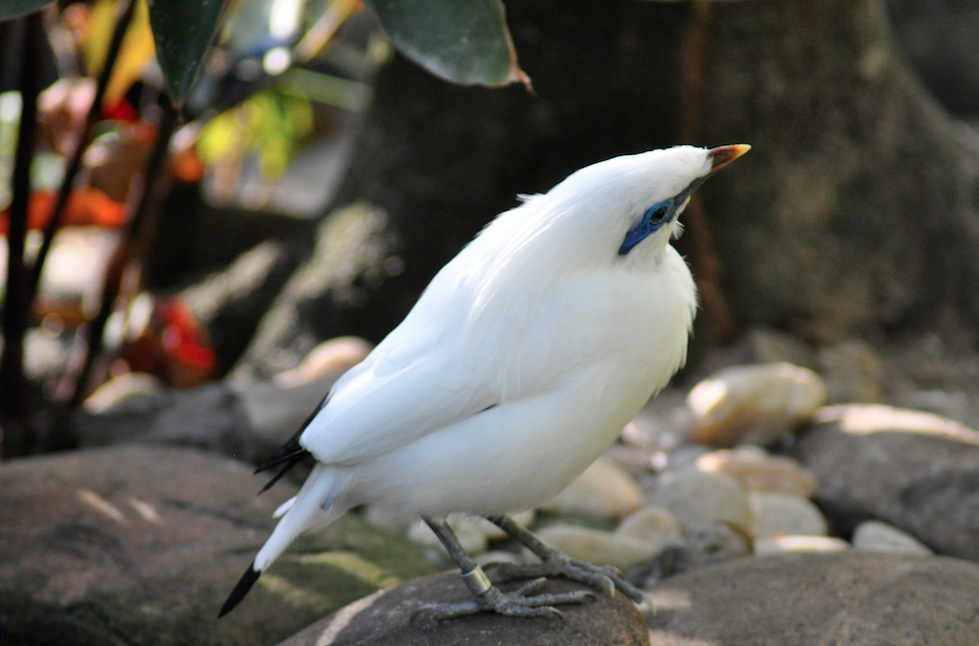
At the Palm Beach Zoo & Conservation Society, staff members are working on conservation programs for fifty endangered species, including for the Bali mynah bird as part of the of AZA’s Species Survival Plan(R) (SSP). Bali mynah are one of the rarest birds in the world, and two males, named R2 and D2, can be seen on exhibit in the Zoo’s Beuttenmuller Asian Aviary. As a part of the SSP, D2 will be moving to the Denver Zoo soon to form a new breeding pair. The Palm Beach Zoo has recently received another male from Tampa’s Lowry Park Zoo to join R2 once the new bird completes his quarantine.
“Every zoo in the SSP serves a vital purpose in sustaining the population of this critically endangered Bali mynah,” said Jan Steele, general curator for the Zoo. “And for us at the Palm Beach Zoo & Conservation Society, it’s to provide a rocking bachelor pad for young males until they’re old enough to settle down and raise a family.”
Over the next several months, AZA-accredited zoos and aquariums will celebrate these successes, and invite the public to support efforts to save even more species. In November, in honor of Thanksgiving, AZA is spotlighting endangered birds, including:
Bali mynah have striking white plumage with black wing tips and bright blue coloration around the eyes. The species can approach 10 inches in height. Bali mynahs are nearly extinct in the wild because poachers collect them for the illegal pet trade, where they are valued for their striking plumage and beautiful songs. Because of this poaching, Bali mynahs are found almost exclusively in zoos. But much has been done to help the Bali mynah’s wild population recover, including protection of their native breeding grounds. In 1987, 40 Bali mynahs from US zoos were sent to the Surbaja Zoo in Indonesia to form a breeding group, with resulting offspring released into the wild. In 2009, Bali mynahs raised in managed care were introduced to a neighboring island, Nusa Penida, and seem to be doing well so far.
The largest bird in North America, the California condor once dominated the western skies, able to soar to 15,000 feet and travel up to 150 miles a day in pursuit of food. With its keen vision, the condor hunts for carcasses of dead animals, and then swoops in to feast, serving as nature’s clean-up crew. But destruction of habitat and poaching decimated the species, and by 1982, only 22 birds remained in the wild. The San Diego Zoo Global, the Los Angeles Zoo and 16 other AZA institutions took the lead at captive propagation, working with a network of government and non-profit partners. Beginning in the early 1990s, zoo-bred condors began being reintroduced into the wild. From a low of 22, there are now more than 435 condors in the world, with almost 250 free-flying in the West.
Prior to the 1960s, there were probably around 10,000 Guam rails living on Guam, a South Pacific island. Sometime between 1944 and 1952, brown tree snakes arrived on Guam, most likely on cargo ships. The snakes’ population rapidly increased, because there was plentiful prey (such as the Guam rails) and no natural predators. The tree snakes wiped out the native animal populations, and by the 1970s, 9 of the 11 native bird species, including the Guam rail, had disappeared. Trying to save the species, the last few birds were removed from the island in the 1980s. In 1989, reintroduction of these birds began on the island of Rota, near Guam, as part of the Association of Zoos and Aquarium’s Species Survival Plan(R) (SSP) for the species.
The palila Hawaiian songbird is one of the endangered Hawaiian honeycreeper species and efforts to expand the palila population back to its historic range at Pu`u Mali have included experimental releases of captive-bred birds, as well as relocation of wild birds to protected areas. The palila was the first animal to have a federal circuit court case named after it, in a precedent setting case that increased protection for endangered species. While several zoos are working to preserve the palila, they are not currently on exhibit to the public.
Known in Hawaii as Alala, the Hawaiian crow is the most endangered corvid in the world and is the only crow species found in Hawaii. The birds are extinct in the wild, and the remaining population is managed at zoos, where the chicks are fed and cared for by animal care staff they never see to ensure they do not imprint on humans. The last `alal? were recorded in their natural habitat in 2002. Planning is underway to restore the `alal? to the Big Island of Hawaii beginning this year.
The Waldrapp ibis, also known as the hermit ibis or the northern bald ibis, may not be viewed by some as the most attractive bird, but their strong character and bizarre appearance give them unique appeal. They look almost comical with their bald heads, long red beaks and crazy crest feathers going every which way. Their black feathers take on brilliant sheens of purple, green and orange when viewed in bright sunlight. With only about 420 wild Waldrapp ibis remaining, this is one of the world’s most critically endangered avian species. But thanks to a very successful breeding and release program, there are over 1,100 Waldrapp ibis in captivity, and offspring from zoos are being released back to the wild.
For a list of AZA-accredited zoos and aquariums where you can see some of these incredible birds in person, visit the AZA website: http://www.aza.org/SpeciesBeingSaved.
About the Palm Beach Zoo & Conservation Society: The Zoological Society of the Palm Beaches exists to inspire people to act on behalf of wildlife and the natural world. We advance our conservation mission through endangered species propagation, education and support of conservation initiatives in the field. Our commitment to sustainable business practices elevates our capacity to inspire others.
The Palm Beach Zoo & Conservation Society is located at 1301 Summit Boulevard in West Palm Beach, Florida. The Zoo is open from 9 a.m. to 5 p.m. every day, except Thanksgiving and Christmas. For more information, visit www.palmbeachzoo.org.
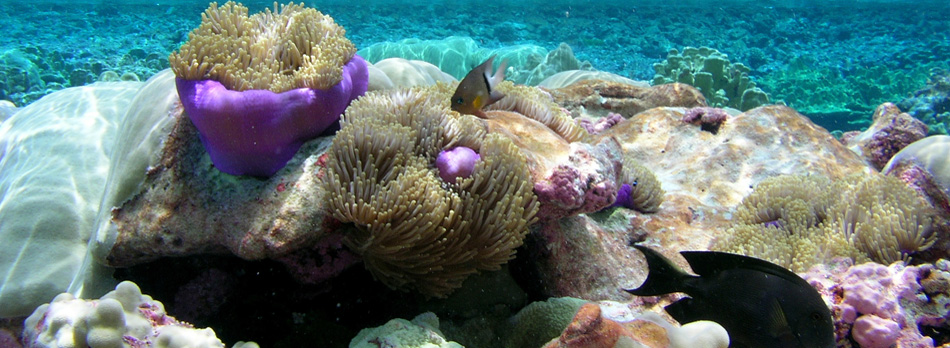
Heteractis Magnifica Isla Maxima tidepools at Pacific Remote Islands Marine National Monument. Obama signed a proclamation expanding the protected area to six times its size, becoming the largest marine reserve in the world (photo from FWS).
With the stroke of a pen, President Obama expanded the existing Pacific Remote Islands Marine National Monument, one of the most pristine tropical marine environments in the world, to six times its current size, resulting in 370,000 square nautical miles (490,000 square miles) of protected area around these tropical islands and atolls in the south-central Pacific Ocean, making it the largest marine reserve in the world that is completely off limits to commercial resource extraction including commercial fishing.
Expanding the Monument, which was first designated by George W. Bush on January 6, 2009, will more fully protect the deep coral reefs, seamounts, and marine ecosystems unique to this part of the world, which are also among the most vulnerable areas to the impacts of climate change and ocean acidification.
Commercial fishing and other resource extraction activities, such as deep sea mining, are banned in the Monument. But in recognition of the importance of encouraging and supporting access to federally managed areas, recreational and traditional fishing consistent with the conservation goals of the Monument will continue to be allowed in the expanded Monument.
“An ocean paradise teeming with rare marine life and birds surrounding atolls and reefs about 1,000 miles southwest of Hawaii, the newly-expanded Pacific Remote Islands Marine National Monument further protects those ecosystems and their creatures—some of which are found nowhere else on earth,” the Wilderness Society wrote.
“Safeguarding these islands and their underwater ecosystems will help ensure the survival and recovery of several threatened and endangered species such as leatherback turtles, blue and humpback whales, whitetip sharks, and yellowfin tuna. The islands attract millions of migratory seabirds and the coral reefs in this area are full of colorful fish and anemones.
“The Pacific Remote Islands Marine National Monument is like the Galapagos Islands in terms of the significance of this habitat for wildlife and its value for scientific research. The expansion of the monument garnered overwhelming support from scientists, businesses and conservation groups.”
The recently released National Climate Assessment confirms that climate change is causing sea levels and ocean temperatures to rise. Changing temperatures can harm coral reefs and force certain species to migrate. In addition, carbon pollution is being absorbed by the oceans, causing them to acidify, which can damage coastal shellfish beds and reefs, altering entire marine ecosystems. To date, the acidity of our ocean is changing 50 times faster than any known change in millions of years.
In response to this growing threat, the President announced in June his commitment to use his authority to protect some of our most precious marine landscape just like he has for our mountains, rivers, and forests. The Administration identified expanding the Pacific Remote Islands Marine National Monument as an area of particular interest because science has shown that large marine protected areas can help rebuild biodiversity, support fish populations, and improve overall ecosystem resilience.
To meet the President’s commitment, the Administration examined how to expand protections near the Monument and considered the input of fishermen, scientists, conservation experts, elected officials, and other stakeholders, including through a town hall meeting and over 170,000 comments submitted electronically.
The expanded Monument will include over 130 newly protected sea mounts, which are hotspots of biodiversity that harbor uncounted numbers of new and unique marine species. The expansion will better protect the habitat of animals with large migration and foraging ranges that stretch throughout the area, including sea turtles, marine mammals, and manta rays. The Monument is also home to millions of seabirds that forage over hundreds of miles and bring food back to their rookeries on the islands and atolls. These birds serve as a conveyor belt of energy bringing nutrients caught at sea back into the near shore environment where they help sustain the ecosystems.
This proclamation builds on the Administration’s efforts to protect both our lands and our oceans. Early in his first term, President Obama launched the National Ocean Policy to harmonize the implementation of more than 100 laws that govern our oceans and create a coordinated, science-based approach to managing the many resources and uses of our coasts and oceans.
In June, President Obama launched a series of executive actions to increase protections for the ocean, including combating black market fishing, establishing a pathway to new marine sanctuaries, and understanding the impacts of ocean acidification. The President has also designated 11 other national monuments across the United States to permanently protect sites that are significant to our nation’s rich history and natural heritage.
The expanded monument will continue to be managed by the Departments of the Interior and Commerce through the U.S. Fish and Wildlife Service and National Oceanic and Atmospheric Administration respectively. The Agencies will develop management plans pursuant to their respective authorities under the Antiquities Act, the Magnuson-Stevens Fishery and Conservation Management Act, and other relevant authorities to ensure proper care and management of the Monument.
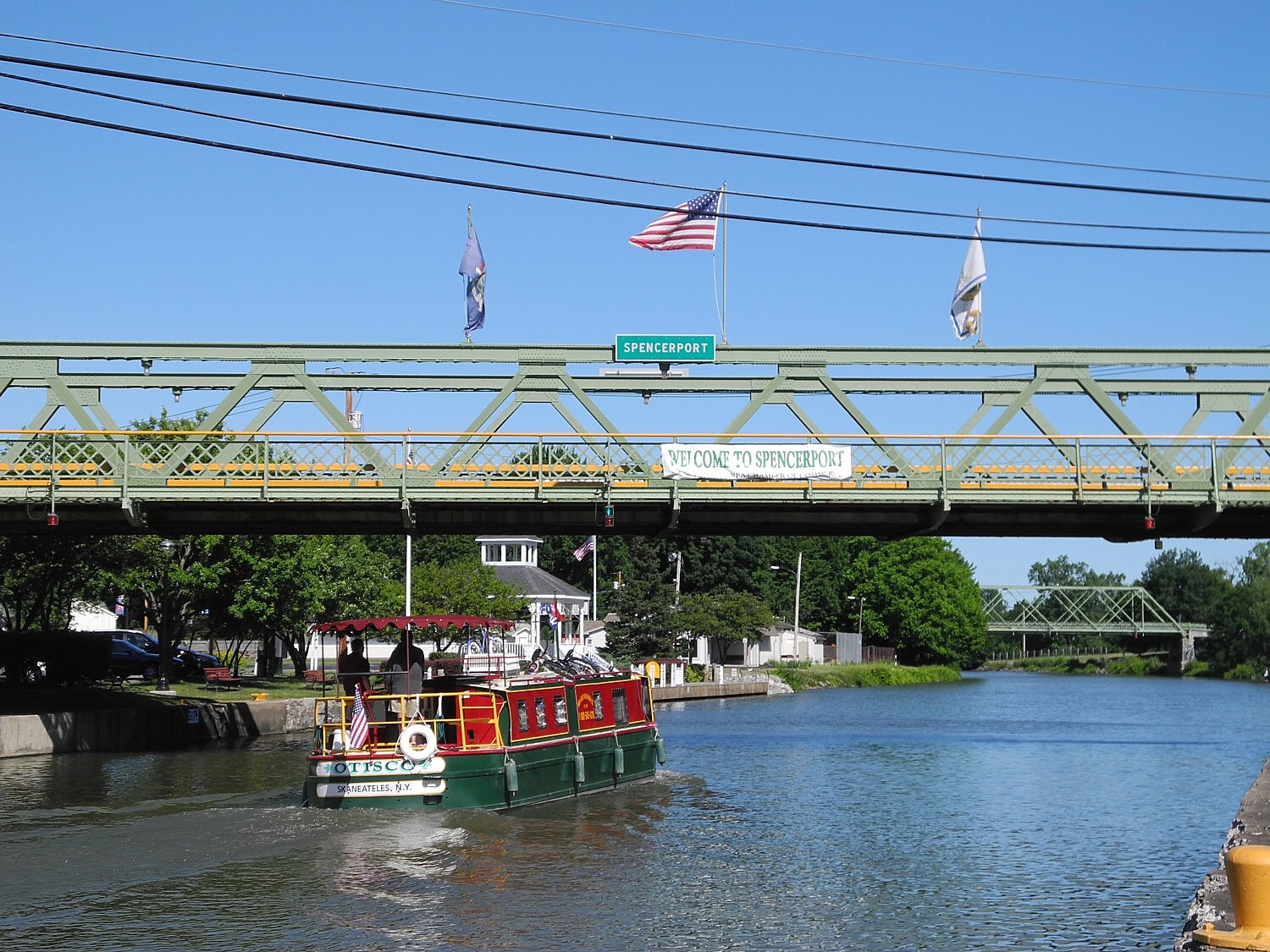
First exercised by President Theodore Roosevelt in 1906 to designate Devils Tower National Monument in Wyoming, the authority of the Antiquities Act has been used by 16 presidents since 1906 to protect unique natural and historic features in America, such as the Grand Canyon, the Statue of Liberty, and Colorado’s Canyons of the Ancients.
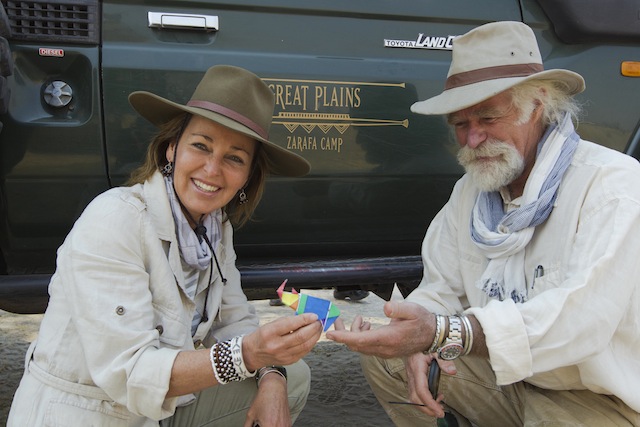
Wildlife filmmakers, conservationists and National Geographic Explorers–in–Residence Dereck & Beverly Joubert, who are at the forefront of this project, are getting into the spirit of the selfie campaign to raise money to relocate rhinos even from the wilderness in Botswana.
Great Plains Conservation and &Beyond have joined forces to translocate up to 100 rhinos from high poaching zones to safe havens within Botswana.
“It is a costly and challenging endeavor but we believe it is an urgent and necessary strategy to sustain this threatened species,” say Wildlife filmmakers, conservationists, CEO of Great Plains Conervation and National Geographic Explorers–in–Residence, Dereck & Beverly Jouber,
In order to raise the funds for the first 10 rhinos that will be moved early in 2015, they have created a crowd–funding campaign (http://www.trevolta.com/rhinos). Each donation earns you a gift, from wildlife films to fine art prints. A $1 donation earns a donor a rhino shaped origami template to create your own origami rhino.
“We are on a mission to create a global rhino origami army to raise awareness of the issues surrounding rhino poaching and the campaign.
Already photos have been coming in from around the world.”
Join in and post your origami rhino selfies from around the world, from Table Mountain in Cape Town to Times Square in New York and add the hashtag #RhinosWithoutBorders or #RhinoMove.
“The challenge is on and we’ll be on the lookout for the most extreme rhino selfies!
“So far the campaign has raised $184,187 but together we can continue to Make A Difference Now.”
To read CNN article on Rhinos Without Borders click here